The World's Largest Sailing Yacht Is Now Carrying Passengers — and It Rewrites What a Cruise Ship Can Be
The Orient Express Corinthian, a 220-meter wind-powered yacht with three SolidSail rigs, has begun its inaugural Mediterranean season carrying just 110 guests.
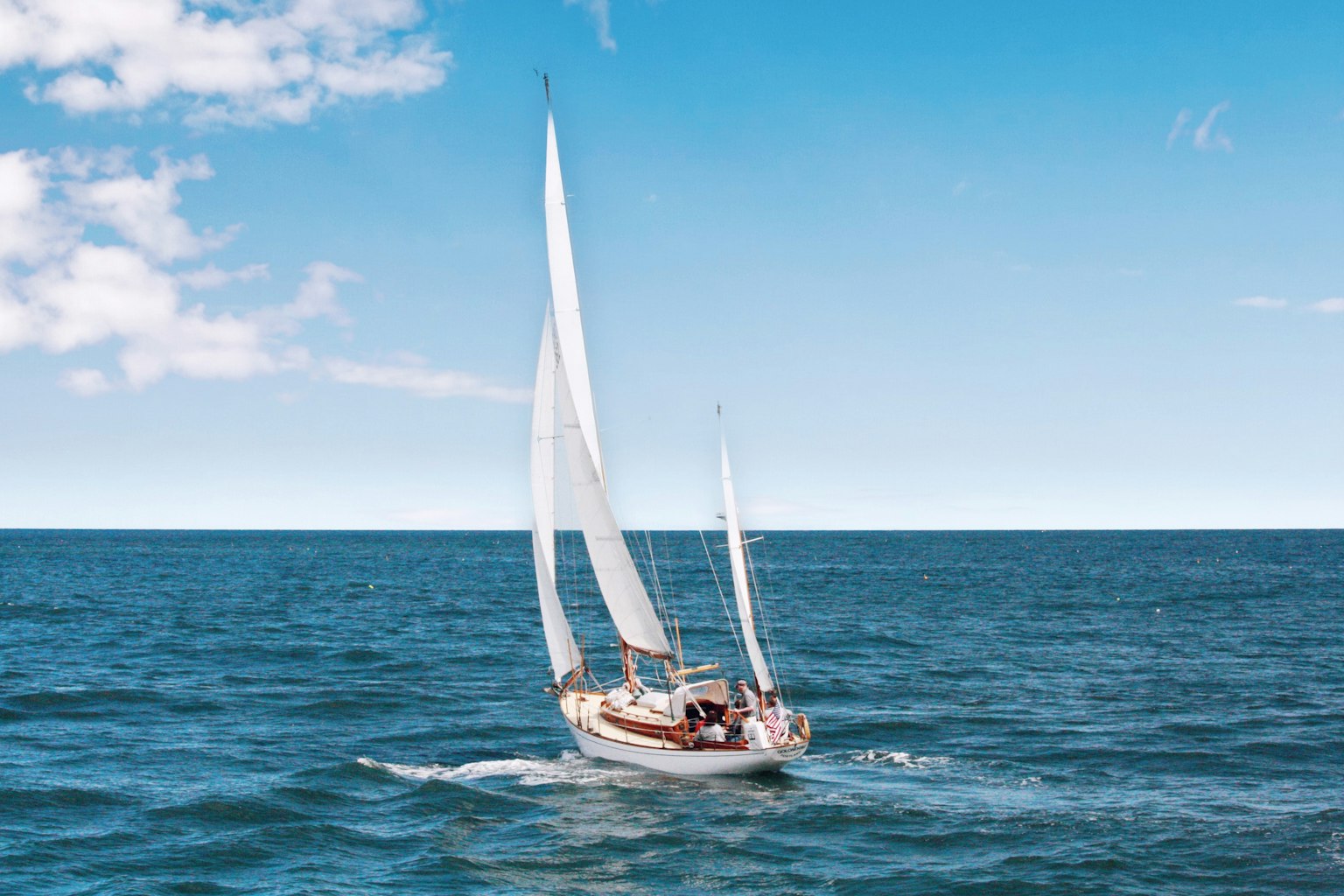
The Orient Express Corinthian has left the shipyard, been formally named, and is currently sailing the Mediterranean with guests aboard. If you follow the cruise industry closely, you already know the name. But what’s easy to miss in the headlines is just how different this ship actually is from everything else at sea right now — and what it signals about where ultra-luxury cruising is heading.
This isn’t a slightly smaller ship with fancier furniture. It’s a structural rethink of the entire concept.
A Brand Built on Land, Now Launched at Sea
Orient Express has spent more than a century as a land-based luxury institution — trains, hotels, and the romance of slow, deliberate travel. The Corinthian is the brand’s first vessel, and it was named on April 29, 2026, at the Chantiers de l’Atlantique shipyard in Saint-Nazaire, France — the same yard that produced the legendary ocean liners Normandie and Île-de-France. The ship departed for the French Riviera on May 2.
The Corinthian is 220 meters long (roughly 720 feet), displaces 15,000 tonnes, and measures 26,300 gross tons. None of those numbers are what make it remarkable. What makes it remarkable is how it moves.
Three Sails, No Pumps, and a Record Speed Under Wind Alone
The ship carries three automated rigid SolidSail rigs, each spanning 1,500 square meters and rising more than 100 meters above the waterline. They rotate 360 degrees and tilt up to 70 degrees, allowing them to capture wind from nearly any angle. In favorable conditions, they can deliver 100% wind-powered propulsion.
During sea trials, the Corinthian achieved 12 knots using sail power alone in 20-knot winds. That figure, reported by Cruise News IO, is not just a marketing claim — it’s a documented trial result from a working vessel at sea.
The SolidSail system was developed by Chantiers de l’Atlantique specifically for large ship applications, and the Corinthian is the first cruise vessel ever equipped with it. A hybrid LNG propulsion system backs it up when wind is insufficient. The ship also uses dynamic positioning technology, which eliminates the need to drop anchor entirely — a meaningful environmental consideration in sensitive coastal waters.
Chantiers de l’Atlantique CEO Laurent Castaing described the ship as “a concrete, technical response to the decarbonization challenges facing maritime transport.” That framing is significant. This isn’t greenwashing dressed up as a feature. The engineering was built in from the keel up.
110 Guests. 54 Suites. One Butler Per Cabin.
The guest experience is built around radical intimacy of scale. The Corinthian carries a maximum of approximately 110 guests across 54 suites, which range from 45 to 230 square meters (roughly 484 to 2,475 square feet) distributed across four decks. Every suite includes panoramic views, premium materials, and dedicated butler service.
The ship has five restaurants, with private dining overseen by chef Yannick Alléno. There is also an Art Deco speakeasy among eight bars, a 115-seat cabaret theater, a recording studio, a Guerlain spa, a 54-foot swimming lane, and a marina. For a ship carrying 110 people, the breadth of those amenities is difficult to contextualize against conventional cruise ships.
For additional peace of mind in sensitive marine environments, the Corinthian uses AI-assisted marine mammal detection to reduce collision risk — a detail that speaks to how thoroughly the environmental brief was integrated across the entire design.
The 2026 Season and What Comes Next
The inaugural season runs May through October 2026, with itineraries across the Mediterranean and Adriatic. An autumn transatlantic crossing is planned, followed by a Caribbean winter season. In 2027, the Corinthian shifts to Eastern Mediterranean and Northern Europe itineraries.
Voyages are structured as one- to four-night sailings, which can be combined for longer journeys — a scheduling approach that mirrors how luxury land travel works and gives guests flexibility to curate a longer experience.
A sister ship, the Orient Express Olympian, is already under construction at Penhoët and is scheduled for 2027 delivery. Accor CEO Sébastien Bazin, whose hospitality group owns the Orient Express brand, said the Corinthian “embodies this vision with majesty and boldness.”
Why This Ship Matters Beyond Its Passenger List
The Corinthian will carry very few people per voyage. Its suites are priced at the extreme end of the luxury spectrum, and its guest capacity means it will never move the needle on overall cruise industry passenger counts. In a purely commercial sense, it is a niche product.
But niche products in the cruise industry have a way of becoming blueprints. The SolidSail system is now proven at sea on a passenger vessel. The integration of wind propulsion, LNG hybrid power, anchorless dynamic positioning, and AI wildlife detection represents a complete emissions-reduction architecture — one that larger shipbuilders will study closely as regulatory pressure on cruise emissions intensifies across European ports.
The industry-wide bet on liquefied natural gas as a transition fuel has always had a horizon problem: LNG reduces emissions but doesn’t eliminate them. Wind propulsion, at meaningful scale, starts to sketch what the step beyond LNG actually looks like.
The Orient Express Corinthian didn’t just enter service. It handed the rest of the industry a technical proof of concept.
Source: Orient Express Corinthian Begins Mediterranean Season Under Sail — Cruise News IO