The World's Largest Sailing Ship Just Came to Life — and It's Rewriting What a Cruise Can Be
The Orient Express Corinthian, a 720-foot ship with three automated rigid sails and 54 suites, was christened in France and sails the Mediterranean from May 2.
There have been bigger ships. There have been faster ships. There have been flashier ships. But there has never been anything quite like what was unveiled in Saint-Nazaire, France on April 29, 2026.
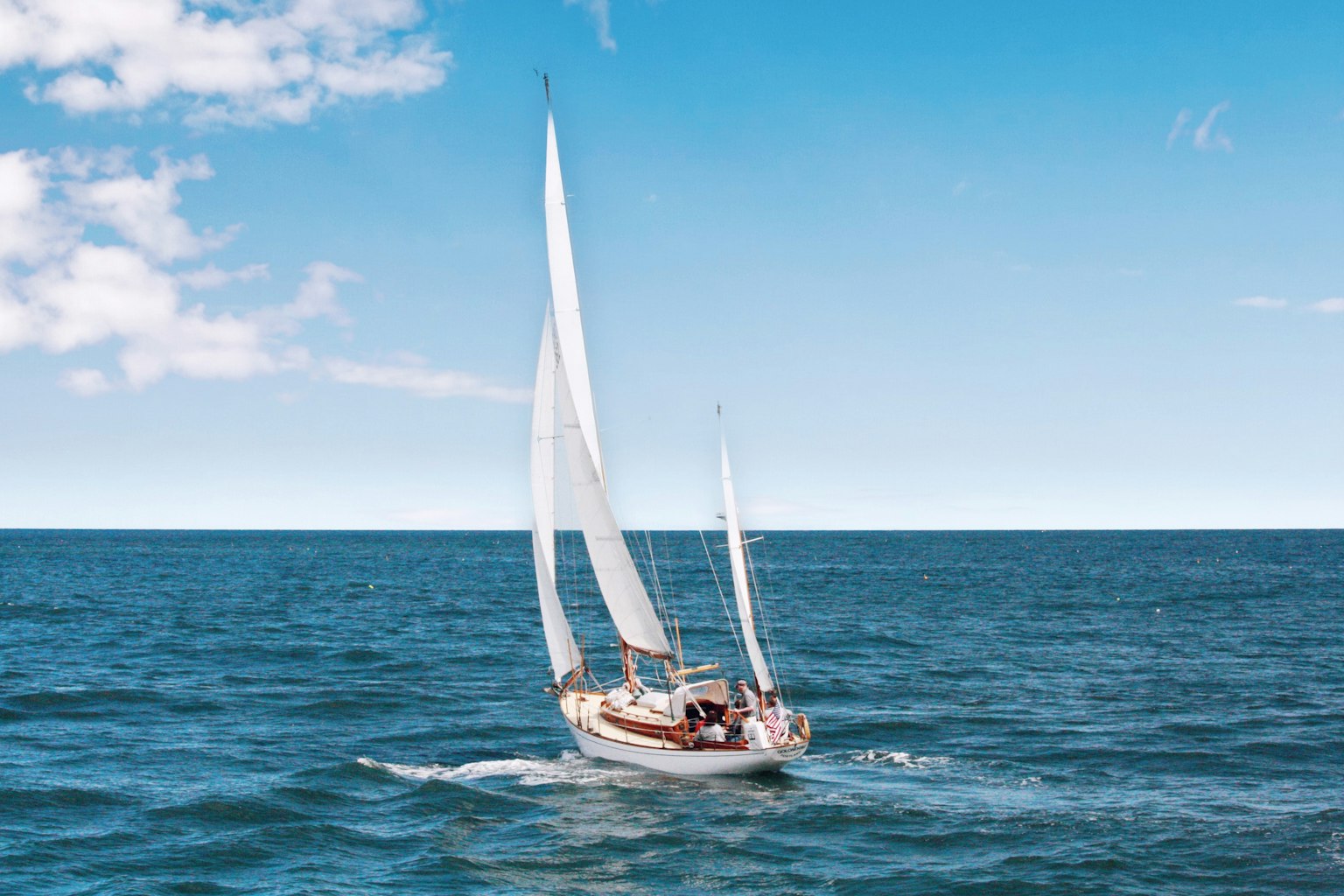
The Orient Express Corinthian — 720 feet long, 15,000 tonnes, powered by three automated rigid sails each the size of a football field — was officially christened at the historic Joubert graving dock, the same shipyard that built some of the world’s greatest ocean liners. In three days, on May 2, it will leave France and sail toward the French Riviera to begin its inaugural Mediterranean season. And with it, the cruise industry will never look quite the same.
Ten Years to Build a Ship That Sails on Air
The Corinthian is not a cruise ship that happens to have sails. It is a sailing vessel — a genuine one — that happens to carry 54 suites, a Guerlain spa, five restaurants helmed by Michelin-starred chef Yannick Alléno, and an Art Deco speakeasy with eight bars.
The engineering achievement at the heart of this vessel is the SolidSail wind propulsion system, developed by shipbuilder Chantiers de l’Atlantique after a decade of research. Three rigid carbon sails, each spanning 1,500 square meters and rising over 320 feet above the waterline, are fully automated and capable of canting up to 70 degrees. In sea trials conducted in February 2026, the ship reached 12 knots under sail power alone in 20-knot winds. In favorable conditions, the Corinthian can operate on 100% wind propulsion — no engines, no fuel burn, just physics.
As Laurent Castaing, CEO of Chantiers de l’Atlantique, put it at the christening ceremony: “720 feet, 15,000 tonnes carried by the wind… the fruit of ten years of research.”
A hybrid LNG propulsion system backs up the sails when needed, and the ship carries the best EEDI (Energy Efficiency Design Index) rating in its class. AI-assisted marine mammal detection and dynamic positioning technology eliminate the need for anchoring entirely — the ship simply holds station using its own systems, protecting the seabeds below.
This Is Not a Cruise Ship. It’s a Cultural Institution That Floats.
The Orient Express name carries a specific kind of weight. It conjures the golden age of travel — mystery, elegance, unhurried time, the romance of going somewhere by the most beautiful means possible rather than the fastest. The Corinthian has been designed to translate all of that to the sea.
Architect Maxime d’Angeac led the interiors, drawing on Art Deco influences while keeping the aesthetic unmistakably contemporary. Approximately 2,000 craftsmen and artists contributed to the ship’s fit-out. The 54 suites — ranging from 45 to 230 square meters — all feature panoramic 3.60-meter windows. There is a 16.5-meter swimming lane, a 115-seat cabaret, and a recording studio. Every cabin comes with dedicated butler service. Pricing is fully inclusive.
Accor CEO Sébastien Bazin described the vision simply: “A journey rooted in discovery, unhurried time, excellence, and elegance.”
The Route: Mediterranean First, Then the Caribbean
From the French Riviera, the Corinthian will spend May through October 2026 sailing the Mediterranean and Adriatic before crossing the Atlantic to winter in the Caribbean. Itineraries run from one to four nights — short passages designed not around covering distance, but around the experience of sailing itself. The idea, per Orient Express, is that each leg can be combined with another to build a fully bespoke, open-ended voyage.
This is not a ship that docks you at a port for six hours before moving on. The Corinthian is the destination.
Why This Matters for the Cruise Industry
We have watched the cruise industry spend the last decade in a size war — ships getting larger, passenger counts climbing, onboard features growing more elaborate. The Corinthian points in a completely different direction.
It is small by modern cruise standards. It carries a fraction of the passengers of a contemporary mega-ship. Its appeal is rooted not in spectacle but in scarcity, craft, and the very specific joy of sailing under real wind.
At a moment when ultra-luxury travel is surging — and when environmental credibility has become a genuine differentiator rather than a checkbox — the Corinthian arrives as a kind of answer to a question the industry has been quietly asking: what does cruise travel look like when you strip away the noise and build something that genuinely could not have existed before now?
The SolidSail system, the AI-driven positioning, the zero-anchor policy — these are not marketing talking points. They are engineering choices that required ten years and the full resources of one of Europe’s greatest shipyards to realize.
The Orient Express Corinthian sets sail May 2, 2026. We will be watching closely.
This post is based on the official naming ceremony announcement published by Orient Express and Chantiers de l’Atlantique. Read the original source here.