The New Cruise Line That Might Never Set Sail Is Running Out of Time
Corazul Cruceros, a Spanish startup promising authentic cruises for Spanish-speaking travelers, is running out of time and money before its first ship sails.
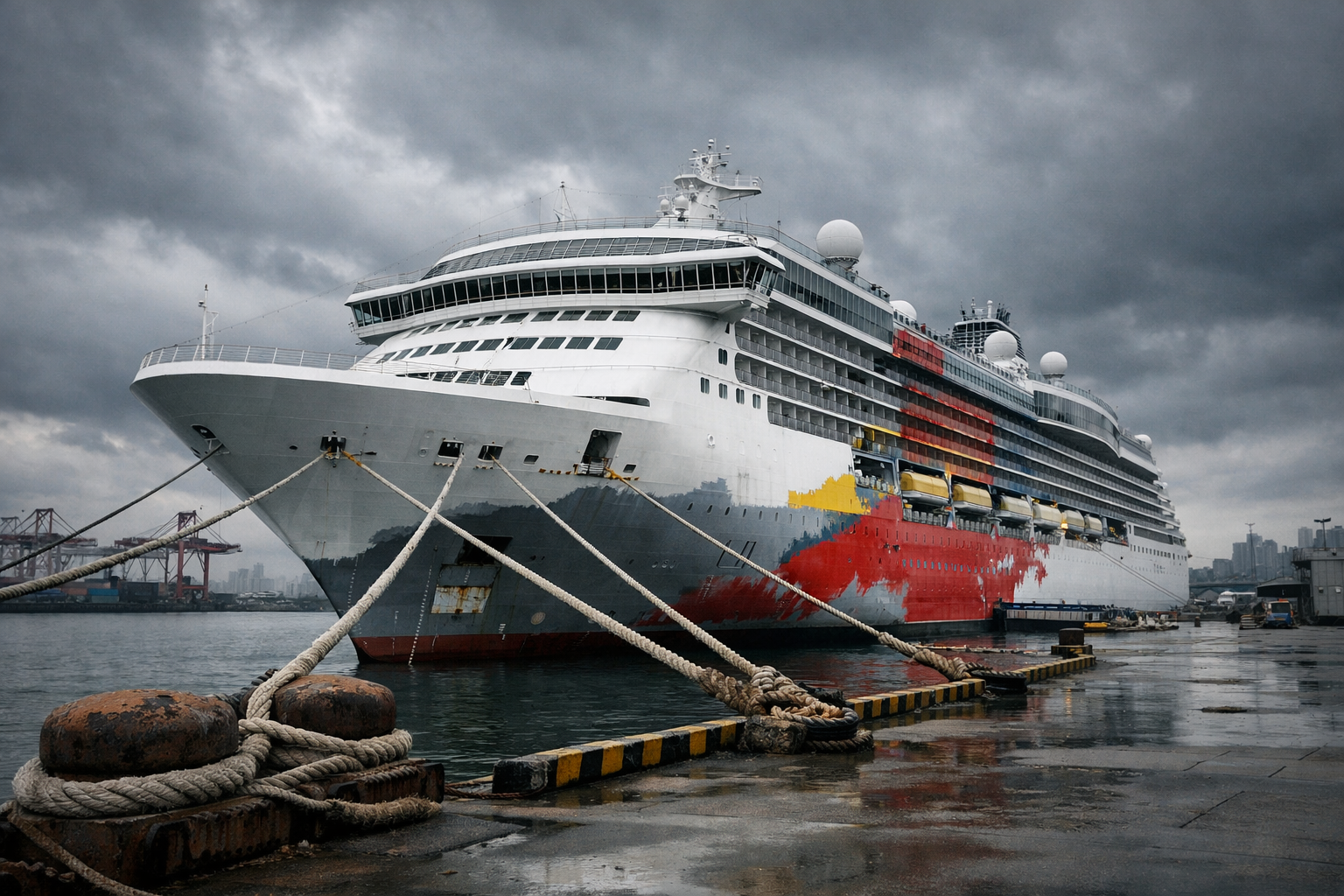
A brand-new cruise line promising to reshape Spanish-language cruising is dangerously close to collapse before a single Mediterranean sailing ever departs. Corazul Cruceros — a Spanish startup that had ambitious plans to launch its first ship into summer Mediterranean service as early as July — is now fighting to survive, with financing falling through and industry insiders growing increasingly skeptical the line will ever enter service as planned.
According to a report published June 1 by Cruise Industry News, sources familiar with the situation say the deal to reposition the company’s ship from Asia to Europe has collapsed, with Corazul “failing to come up with the required financing.” At the same time, travel agents — the company’s only sales channel — have shown a sluggish commercial response to the product, leaving the startup caught in a vicious cycle of weak bookings and an inability to secure the capital it needs to move forward.
A Promising Concept That Stalled at the Starting Line
Corazul Cruceros debuted with a genuinely interesting value proposition. The brand positioned itself as a culturally authentic cruise experience for Spanish-speaking travelers, targeting a market that has historically been underserved by the major lines. Their ship, the Buenavista (formerly known as Oriana and later Piano Land), was slated to operate a summer Mediterranean program followed by Caribbean cruises and a winter Brazil season — a route network that made geographic and demographic sense for a Spanish-market brand.
The business model, however, raised eyebrows from the start. Corazul chose a strictly business-to-business approach, meaning passengers cannot book directly with the line. All reservations flow through travel agents. While this model has worked for niche operators in other markets, it creates a significant dependency: without enthusiastic agent uptake, there is no revenue pipeline, and without a revenue pipeline, there is no ship.
That dependency has become the line’s Achilles heel.
The Clock Is Running Out
With the Buenavista still sitting in Asia as of early June and the planned July launch now less than six weeks away, the window for repositioning, rebranding, and refit work has essentially closed. The report notes that crew members are being asked to sign contract extensions — a telling detail that suggests the ship is not preparing for a European departure. Instead, sources indicate the vessel may simply resume operations in Hong Kong rather than make the transatlantic journey to the Mediterranean.
Corazul Cruceros executives have not responded to requests for comment, according to Cruise Industry News. The company’s vessel management contract with BSM Cruise Services was quietly announced via LinkedIn rather than through any formal press release — itself a sign that the public-facing narrative and the operational reality may not be aligned.
What This Means for the Spanish Cruise Market
The potential failure of Corazul Cruceros before it even launches is a cautionary tale about the sheer difficulty of starting a new cruise line, even in an era when the overall industry is booming. Cruise startups face extraordinary capital requirements: repositioning a ship from Asia to Europe alone can cost millions of dollars, before a single ticket is sold or a single meal is served onboard.
There is also a structural challenge specific to the B2B-only model in a cautious booking environment. Travel agents are understandably reluctant to actively promote a new, unproven brand — especially one that hasn’t yet demonstrated it can actually operate a ship. Without direct-to-consumer marketing to build brand awareness and generate demand, Corazul was relying entirely on agents to do the heavy lifting, with little momentum to show them.
For the Spanish-language market, this is an unfortunate outcome if the line does fold. The demand for culturally tailored cruise experiences among Spanish-speaking travelers is real, and the concept behind Corazul was genuinely appealing. But good concepts don’t keep ships fueled, and enthusiasm doesn’t substitute for capital.
Don’t Book Just Yet
For any travelers who may have inquired about or tentatively planned a Corazul Cruceros sailing this summer, the situation warrants serious caution. Until the company makes a formal statement — either confirming a revised launch timeline or acknowledging the suspension of the summer program — the status of those sailings must be considered uncertain at best.
We’ll be watching this one closely. If a startup cruise line does manage to pull off a last-minute reprieve and get the Buenavista to the Mediterranean, it would be one of the more remarkable logistics stories in recent cruise industry history. But based on everything the industry is hearing right now, that outcome looks increasingly unlikely.
Related news
MSC World Asia Clears Sea Trials, Debut Set for December
Princess Cruises' Biggest Europe Season Ever Is Now Open for Booking
The Arabian Gulf's Loss Is the Mediterranean's Gain — And Celestyal Has No Plans to Go Back