The Cruise Ship of the Future Has No Funnel — and Could Cut Emissions by 95%
Meyer Werft unveiled Project Vision: a battery-electric cruise ship concept with no funnel, 1,856 passengers, and a promised 95% cut in greenhouse emissions.
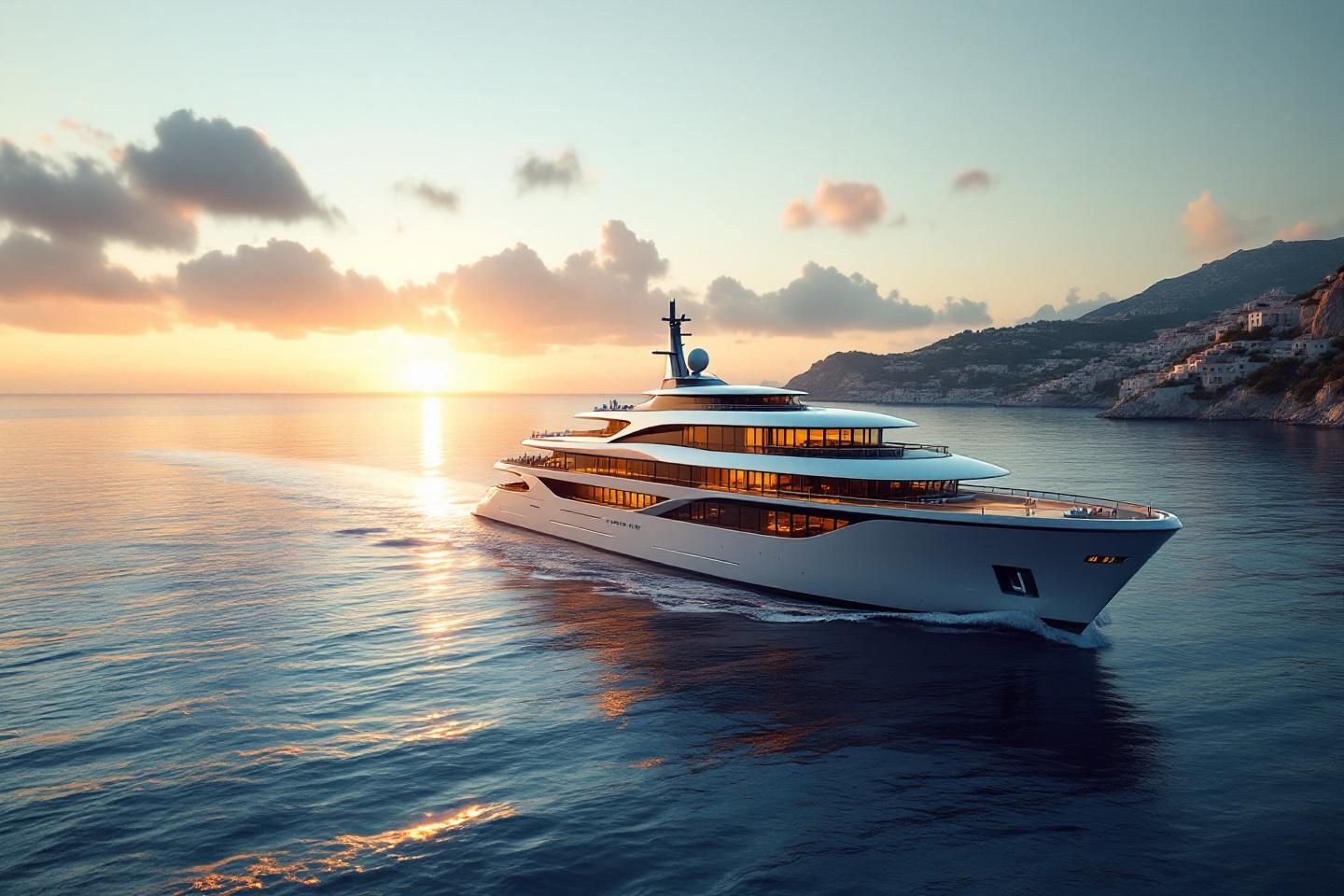
The cruise industry’s biggest annual gathering is underway in Miami this week, and the most jaw-dropping announcement so far has nothing to do with a new pool deck or a fancier steakhouse. German shipbuilder Meyer Werft has unveiled a concept for what it calls the world’s first 100% battery-electric cruise ship — and if you thought electric vehicles were ambitious, wait until you see what happens when you scale that idea to 275 meters of floating resort.
The concept, dubbed Project Vision, was revealed at Seatrade Cruise Global in Miami Beach on April 13, 2026, and it represents the most serious attempt yet to reimagine what a cruise ship looks like when you remove its dependency on fossil fuels entirely.
What Project Vision Actually Is
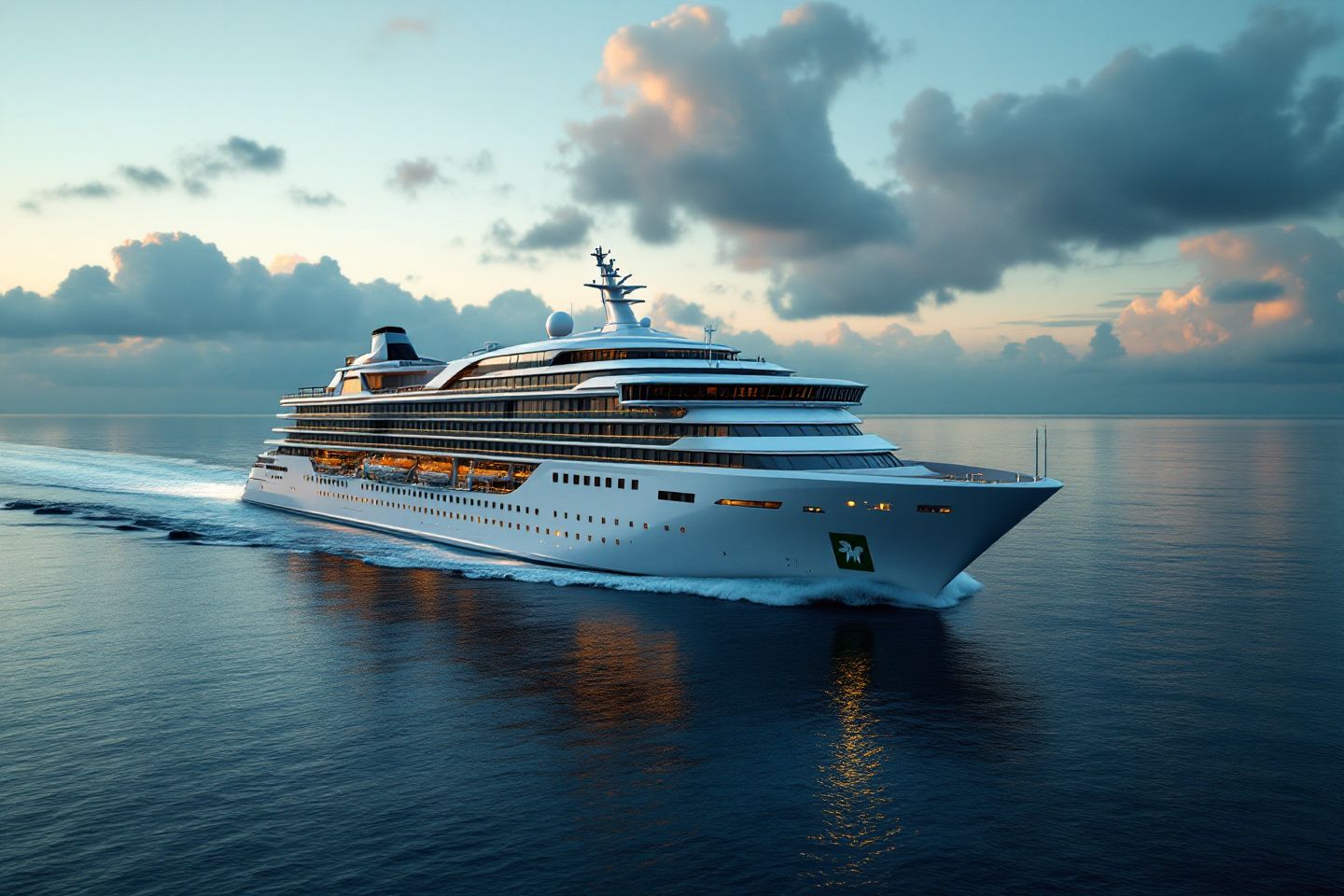
Vision is not a rendering exercise or a distant thought experiment. It is a fully costed, technically specified vessel concept ready for an order today — with a delivery window of 2031 if a cruise line places a contract in 2026.
The ship measures 275 meters in length and can accommodate 1,856 passengers, placing it in the mid-size category: larger than a boutique expedition ship but considerably more intimate than the megaships currently dominating the order books of Royal Caribbean and Norwegian Cruise Line. At approximately 82,000 gross tons, it sits in the same range as ships like Celebrity Edge or Holland America’s Koningsdam — proven performers with broad market appeal.
The propulsion system is supplied by Corvus Energy, a Norwegian battery technology company that has already equipped more than half of the world’s hybrid and fully electric seagoing vessels. According to Corvus Energy CEO Fredrik Witte, the Project Vision announcement is a milestone for the entire maritime sector: “Scaling to fully electric cruise ships shows the world that the technology is safe, mature and ready” for large-scale deployment.
Those are not the words of someone hedging their bets.
The Numbers That Matter Most
The headline figure is a 95% reduction in greenhouse gas emissions compared to a conventionally powered cruise ship of equivalent size. That number is not achieved through carbon offsets or accounting adjustments — it reflects the straightforward physics of replacing fuel-burning engines with battery-electric propulsion.
For context, the cruise industry has faced sustained scrutiny over its environmental footprint, with ships historically burning heavy fuel oil and emitting significant quantities of CO2, sulfur oxides, and nitrogen oxides. Battery-electric propulsion eliminates combustion entirely during battery-powered operation, removing the emissions problem at its source rather than managing it downstream.
The battery system is sized to handle typical European cruise routes. Meyer Werft specifically cites the Barcelona to Civitavecchia (Rome) route as an example — a crossing of roughly 500 to 550 nautical miles that represents the kind of multi-day, port-to-port sailing that forms the backbone of Mediterranean cruise itineraries. For transatlantic voyages or longer open-ocean passages where range becomes a constraint, Vision can be configured as a hybrid vessel with small backup generators.
A Ship That Looks Different Because It Has To
Here is where Project Vision becomes genuinely interesting for cruise enthusiasts rather than just industry observers: when you remove the engines, the ship changes shape.
Conventional cruise ships are built around their engineering infrastructure. Funnels, exhaust treatment systems, and the mechanical spaces required for large diesel or LNG powerplants consume significant volume and dictate the ship’s profile. Vision eliminates all of that.
Without a funnel — that signature visual element that has defined cruise ship silhouettes for over a century — the aft deck opens up. Meyer Werft’s design fills that freed space with an indoor aqua park at the stern, a facility that would be usable year-round regardless of weather because it no longer has to share real estate with a smokestack. The sun deck gains unobstructed sightlines. Fully glazed, weather-protected outdoor areas become possible in configurations that simply would not work on a ship with exhaust infrastructure running through the upper decks.
The absence of large main engines also has an effect that passengers notice immediately: substantially reduced noise and vibration throughout the ship. Anyone who has occupied a cabin near the engine room on a conventional vessel will understand the significance of that improvement.
The Infrastructure Puzzle
Battery-electric propulsion solves one problem while creating another: a large battery-powered ship needs somewhere to recharge. Meyer Werft acknowledges this directly and frames it as a solvable logistical challenge rather than a fundamental barrier.
The company projects that by 2030, approximately 100 European seaports will have maritime charging infrastructure capable of supporting a vessel like Vision. Europe’s established network of cruise ports — Barcelona, Civitavecchia, Piraeus, Palma, Dubrovnik, and dozens more — are the natural candidates, and regulatory pressure from the European Union’s Fit for 55 package and the FuelEU Maritime regulation is already compelling ports to invest in shore power and alternative fueling infrastructure.
It is worth noting that the charging requirement is not unique to cruise ships. The entire maritime sector is wrestling with port electrification, and vessels far smaller than Vision — ferries, ro-ro ships, container feeders — are already operating on battery-electric systems out of European ports. Vision would demand more power delivered faster, but it is building on a trajectory already in motion.
Why This Matters Right Now
We are watching this announcement at a moment when the cruise orderbook has hit a record $86.2 billion, with 15 new oceangoing ships scheduled to enter service in 2026 alone. The industry is in full expansion mode, placing enormous bets on new tonnage that will be sailing for 25 to 30 years.
A ship ordered today and delivered in 2031 will still be in active service in 2056. The emissions profile of every vessel entering the fleet right now is not just a 2031 problem — it is a 2050 problem. Regulators know this. Investors are increasingly asking about it. And a growing segment of consumers, particularly younger travelers who will be the cruise industry’s core demographic over the next two decades, factor environmental performance into their purchasing decisions.
Meyer Werft is not a fringe player making a speculative pitch. It is one of the most respected shipyards in the world, with 61 cruise ships built for operators including Royal Caribbean, Celebrity Cruises, Disney Cruise Line, AIDA, and TUI Cruises. When Meyer Werft puts forward a concept at this level of technical specificity and invites orders, the industry listens.
What Comes Next
The honest answer is that we do not yet know which cruise line, if any, will be the first to sign a contract for a fully battery-electric vessel of this scale. The economics need to pencil out — battery systems carry a significant upfront cost premium over conventional propulsion — and operators will weigh that against regulatory risk, consumer demand, and the reputational value of leading rather than following on decarbonization.
But the fact that Meyer Werft is presenting Project Vision to an audience of cruise executives and decision-makers at Seatrade Cruise Global — the industry’s most significant annual event — suggests this is less of a conversation starter and more of a sales pitch. The shipyard believes this ship can be sold. The technology is ready. The design is complete. The delivery slot exists.
For cruise enthusiasts, the prospect of boarding a ship that sails without a funnel, runs nearly silently at sea, and leaves a 95% smaller carbon footprint than the ships we sail on today is no longer science fiction. It is a proposal sitting on a conference table in Miami, waiting for someone to sign on the dotted line.