Cruise Ships Could Run on Used Cooking Oil. MSC Just Proved It Works.
MSC Cruises and Eni completed a landmark HVO biofuel trial on MSC Opera, cutting GHG emissions 80% and NOx 16% with zero engine modifications.
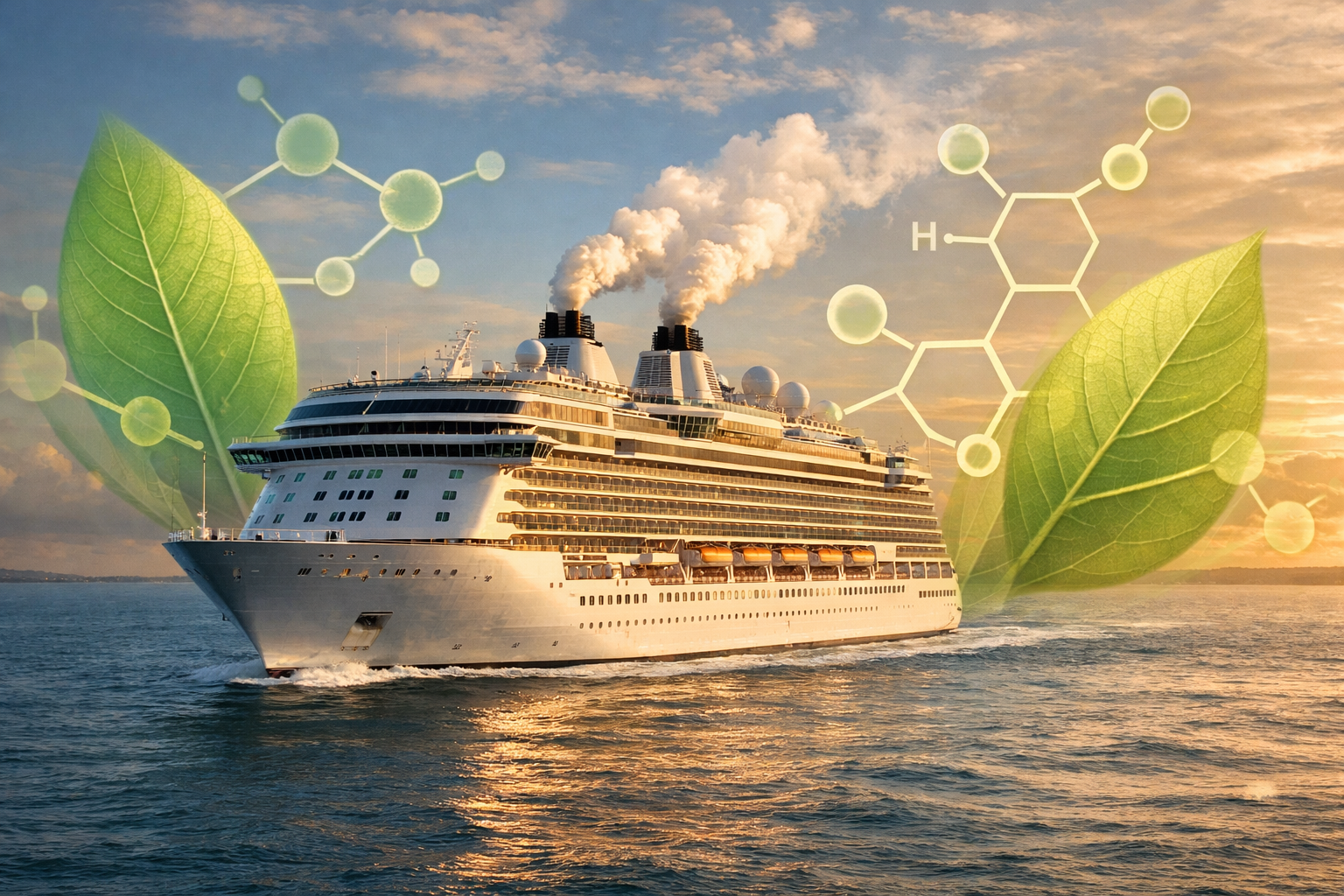
A landmark trial completed aboard the MSC Opera has delivered the clearest evidence yet that cruise ships can run on biofuel derived from waste products — with dramatic reductions in emissions and, crucially, zero modifications to the ship’s engines.
MSC Cruises and Italian energy company Eni announced the successful completion of the HVO (Hydrogenated Vegetable Oil) biofuel trial in May 2026, with results independently validated by Bureau Veritas and assessed by engine manufacturer Wärtsilä. The findings, reported by Cruise Industry News, represent one of the most rigorous real-world biofuel tests the cruise industry has seen.
What Actually Happened Onboard MSC Opera
For approximately 2,000 hours of engine operation, one of MSC Opera’s engines ran on 100% pure HVO diesel — no blending with conventional marine fuel, and no engine modifications whatsoever. Engineers and independent observers recorded performance data throughout, tracking both emissions output and engine behavior.
The results were significant:
- NOx (nitrogen oxide) emissions fell 16% compared to conventional marine fuel
- Particulate matter emissions were meaningfully reduced
- Greenhouse gas emissions dropped approximately 80% — a figure reflecting the biogenic origin of the fuel’s feedstocks
- Engine performance remained consistent with normal operations on traditional fossil fuel
That last point matters enormously. One of the persistent arguments against biofuel adoption in the maritime sector has been the concern that alternative fuels require costly retrofits or risk engine reliability. The MSC Opera trial directly challenges that narrative.
Where the Fuel Comes From
The HVO diesel used in the trial was produced by Enilive — Eni’s biorefining subsidiary — at its facilities in Venice and Gela, Italy. The feedstocks are deliberately low on the sustainability hierarchy: used cooking oils, animal fats, and residues from the agri-food industry. These are materials that would otherwise require disposal, making the fuel’s lifecycle emissions profile substantially better than crops grown specifically for biofuel production.
Enilive CEO Stefano Ballista stated that the fuel “can be used in its pure form in marine engines validated for its use,” framing it as an immediately deployable compliance pathway for the FuelEU Maritime regulations coming into force across European shipping.
Currently, Enilive’s marine HVO diesel is available for direct barge delivery to vessels at three Italian ports: Genoa, Ravenna, and Venice.
The Industry Significance
This trial lands at a moment when the cruise industry faces mounting regulatory pressure. FuelEU Maritime regulations are tightening lifecycle GHG intensity requirements across European waters, and cruise lines — which predominantly operate European routes in summer — must demonstrate credible pathways toward decarbonization.
MSC’s Chief Energy Transition Officer, Michele Francioni, was direct about the company’s intentions, describing the HVO test as having “satisfactorily confirmed the technical feasibility of 100% HVO” and positioning biofuels as playing “an important role in the decarbonization of shipping” alongside LNG fuels. MSC Cruises has committed to achieving net-zero greenhouse gas emissions by 2050.
The “alongside LNG” framing is notable. MSC has invested heavily in LNG-capable ships — including its World class vessels — and the company appears to be positioning HVO as a complementary near-term tool rather than a replacement strategy. That dual-fuel philosophy reflects a broader industry hedging approach: no single alternative fuel is likely to solve the emissions problem alone.
What This Means for Cruisers
In the short term, very little changes for passengers. HVO costs more than conventional marine fuel, supply chains are still limited geographically, and the economics of scaling biofuel delivery to entire fleets remain challenging. The 2,000-hour trial on one engine of one ship is a proof of concept, not a fleet rollout.
But the significance of independent validation — Bureau Veritas certifying the results, Wärtsilä providing technical confirmation — moves HVO from a theoretical option to a documented one. Regulators, investors, and port authorities now have hard data to point to.
For the cruise industry as a whole, the MSC-Eni trial strengthens the case that the existing fleet — not just newly ordered ships — can meaningfully cut emissions without waiting for next-generation vessels or unproven technologies. If biofuel supply at European ports expands and economics improve, the path from “MSC Opera trial” to “fleet-level adoption” becomes considerably shorter.
The ocean the MSC Opera sailed while running on used cooking oil looked the same as always. The difference was invisible — and that, arguably, is the whole point.
Related news
The Cruise Industry Has Been Estimating Emissions for Years. MSC Just Proved the Estimates Were Wrong.
MSC Cruises Just Made the Biggest Shipbuilding Bet of the Decade
MSC Just Dropped €3.5 Billion on TWO New Mega Ships—Here's What That Means for Cruising