China's Two Giant Cruise Ships Met at Sea — and It's a Bigger Deal Than You Think
China's two domestically built cruise ships, Adora Magic City and Adora Flora City, passed each other at sea for the first time on May 20, 2026.
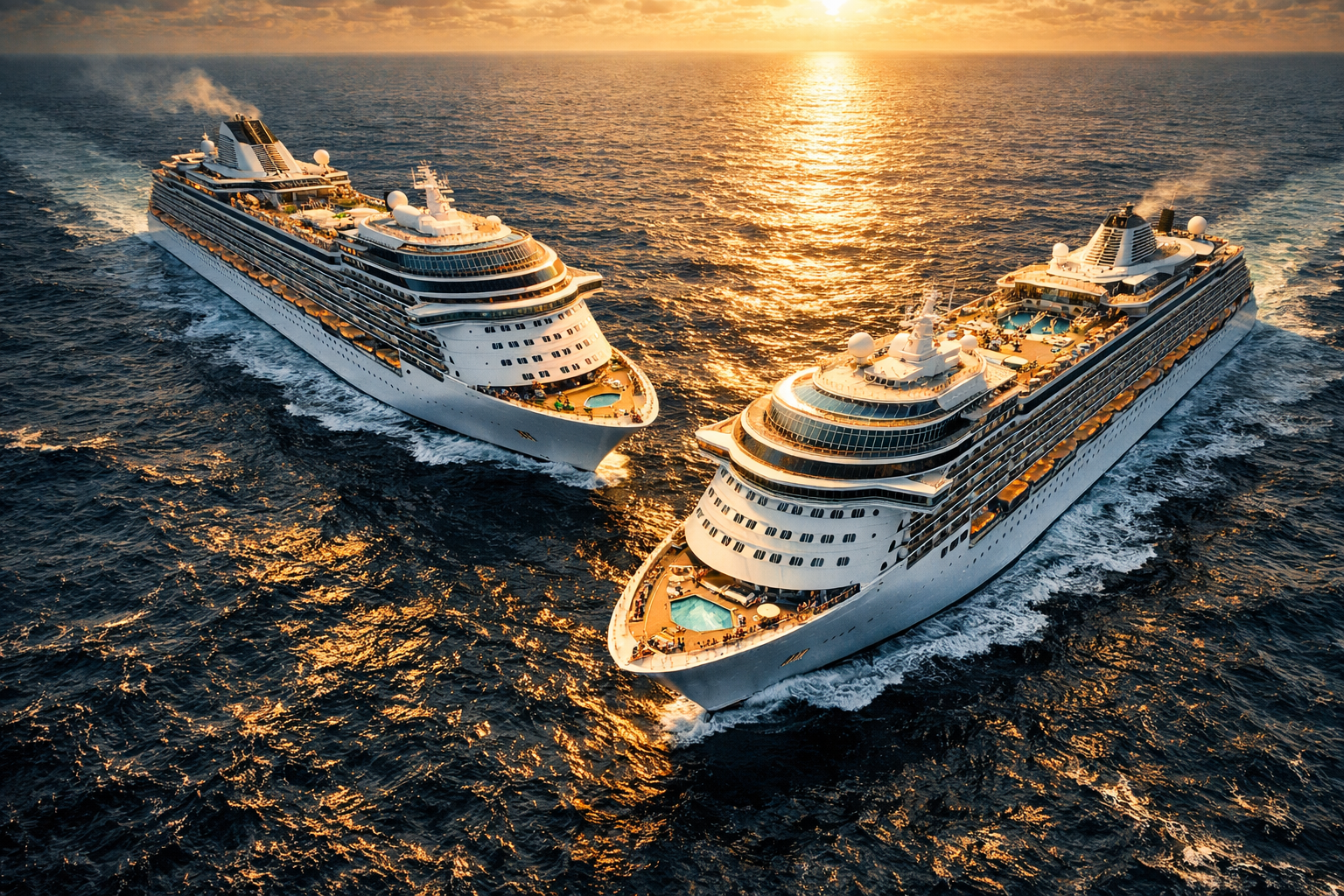
On May 20, 2026, something quietly remarkable happened in the waters off the Chinese coast. The Adora Magic City and the Adora Flora City — China’s only two domestically built large cruise ships — passed each other at sea for the very first time. One was returning from Busan, South Korea. The other was mid-way through a 12-day sea trial, fresh out of the Shanghai shipyard that built her.
It lasted seconds. It made no headlines in the Western press. But for anyone who follows the cruise industry, it was worth stopping to notice.
From Zero to Two Ships in Three Years
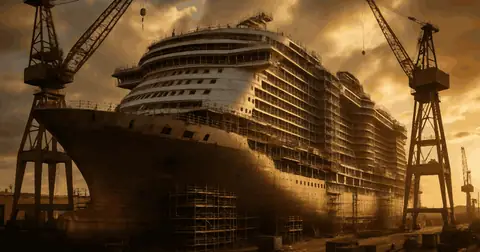
Not long ago, China had no domestically built ocean cruise ships at all. Every vessel operating in Chinese waters flew a foreign flag and carried foreign-designed hardware. That changed in January 2024 when the Adora Magic City — built by Shanghai Waigaoqiao Shipbuilding, a subsidiary of China State Shipbuilding Corporation (CSSC) — entered service as China’s first homegrown large cruise ship.
Now her sister is nearly ready. The Adora Flora City departed Shanghai on May 16 to begin sea trials, with 937 engineering and technical personnel from 12 countries aboard to run through 149 separate test and verification tasks covering propulsion, power stations, and automation systems. According to Xinhua, the ship is scheduled for delivery on November 6, 2026, after which she will sail her maiden voyage — a 17-day “Maritime Silk Road” cruise departing Guangzhou’s Nansha International Cruise Home Port on November 22, calling at Singapore, Vietnam, Malaysia, Brunei, Indonesia, and the Philippines.
Bigger, Better, Faster Built
The Adora Flora City is not just a repeat of her predecessor — she is a deliberate upgrade. At 341 meters long and 141,900 gross tons, she is larger than the Adora Magic City (324 meters, 136,200 GT). Those extra 17 meters were used wisely: the central atrium has been doubled in size, and public areas have been expanded without significantly adding cabin count. The ship carries 2,130 cabins and suites and can accommodate up to 5,232 passengers at full capacity.
Perhaps more telling than the ship itself is how quickly she was built. Construction began in August 2022 and completed over 20 percent faster than the first vessel — a sign that the shipyard is not just learning, it is accelerating.
The vessel contains 4,700 kilometers of cabling and over 25 million individual components. It is, in the parlance of maritime engineering, extraordinarily complex — and China built it.
What This Means for Cruise Travelers
For now, the Adora Flora City’s inaugural itinerary — a Southeast Asia sweep from Guangzhou — is aimed squarely at Chinese passengers. Adora Cruises, the joint venture between CSSC and Carnival Corporation, has made clear that domestic demand is the primary market. China represents one of the world’s fastest-growing cruise audiences, and having two ships capable of sailing from Chinese home ports without the logistical friction of foreign-flagged vessels is a meaningful commercial advantage.
But the longer-term picture is more interesting. Adora Cruises has already signed a memorandum of understanding with CSSC for two additional ships — with an option for a third — targeting delivery around 2030. The company has also stated its intention to “accelerate the pace of Chinese cruise expansion to the international markets,” including overseas homeport operations.
That phrase is worth paying attention to. Today, Chinese-built ships sail Chinese passengers on Chinese itineraries. If Adora’s ambitions play out, the next decade could see China-flagged vessels competing directly in the global cruise market — joining the conversation that has long been dominated by Carnival, Royal Caribbean, and MSC.
A Moment Worth Marking
There is something almost cinematic about May 20, 2026 — two ships, both products of the same ambition and the same shipyard, crossing paths in open water. The Adora Magic City, already proven in service. The Adora Flora City, still being tested, still becoming.
For cruise travelers, the practical takeaway is simple: Southeast Asian itineraries out of Guangzhou are about to get a serious new option, and the competitive landscape in Asia-Pacific cruising is shifting. For anyone watching the industry long-term, the view from above those two ships passing each other is a picture of where the cruise world is heading.
Source: China’s second homegrown large cruise ship begins first sea trial — Xinhua
Related news
China Forms Asia's Largest State-Backed Cruise Fleet Through Major Merger
59 Years After It Pioneered the Route, Princess Just Sent Its Biggest Ship Through the Panama Canal
The Cruise Industry's $77 Billion Shipbuilding Spree Could Transform Your Next Vacation