Australia Broke Its Cruise Passenger Record — Then Got Some Very Bad News
A record 1.45 million Australians cruised in 2025, but CLIA warns rising costs and regulatory uncertainty are pushing ships out of Australian waters.
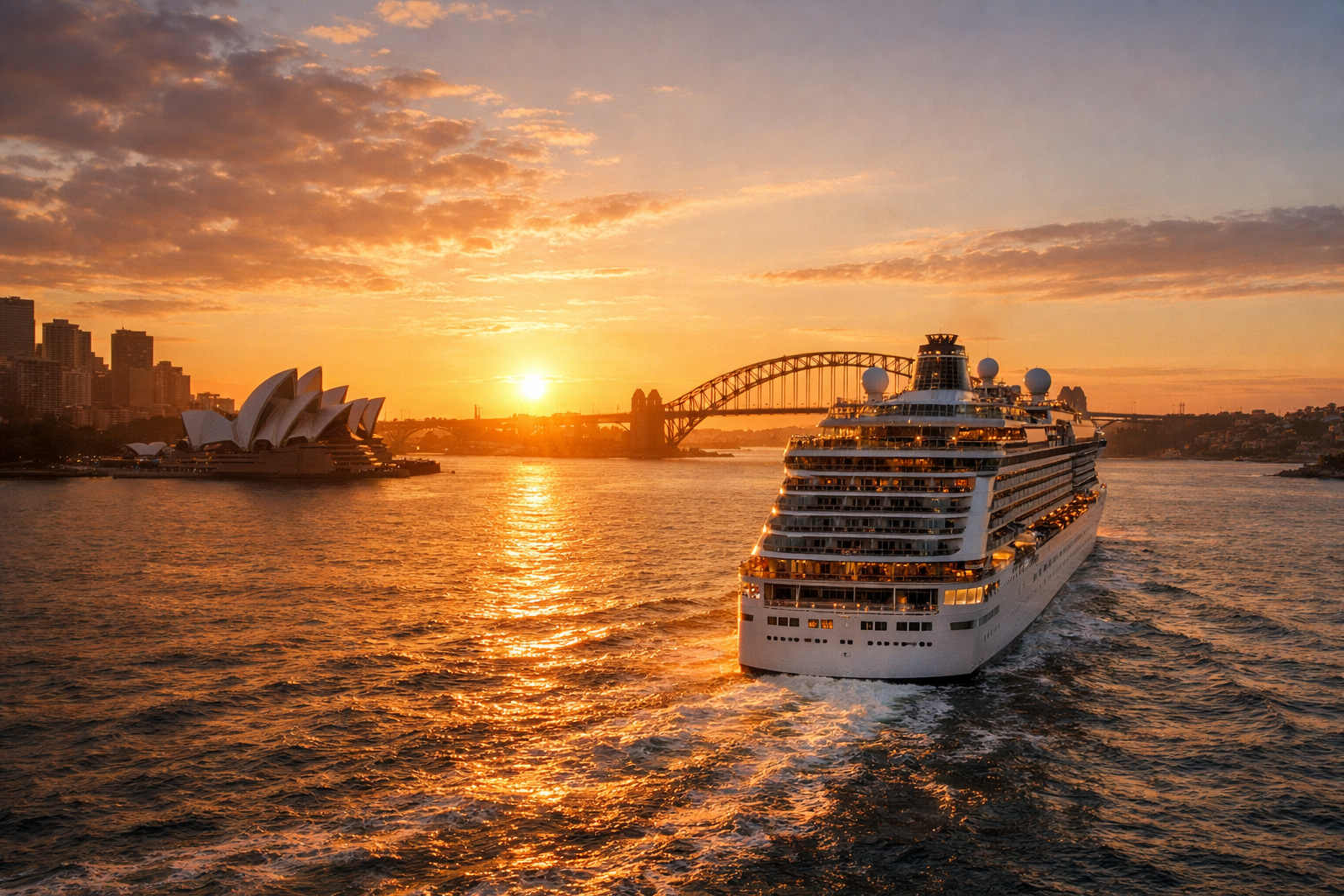
Australia just broke its all-time cruise passenger record — and the industry immediately issued a warning.
According to data released by Cruise Lines International Association (CLIA) Australasia on April 26, 2026, a record 1.45 million Australians took an ocean cruise in 2025. That is a 9.5 percent jump over 2024, and it smashes the previous all-time high of 1.35 million set back in 2018 before the pandemic upended everything. The Australian cruise market now contributes more than $7.32 billion to the national economy and supports over 22,000 jobs.
On paper, it looks like a triumph. And in many ways it is. But there is a catch — and it is a significant one.
The Record Comes With a Warning Label
Joel Katz, CLIA’s Executive Director in Australasia, did not mince words in the announcement: “Australia is struggling to attract ships to our own waters because of regulatory uncertainties and rising costs.”
The concern is not that Australians have stopped cruising — clearly, they have not. The concern is where those cruises are happening. According to the same CLIA data, 286,000 Australians cruised outside the local region in 2025, a 17 percent increase year-over-year. Compare that to the 8 percent growth in local cruising, and a clear trend emerges: Australian demand is outpacing the supply of ships willing to base themselves in Australian and South Pacific waters.
In other words, Australians are not giving up on cruising. They are flying to other countries to do it — because the ships are leaving.
Where the Ships Are Going (and Why Australians Are Chasing Them)
The breakdown of where Australians cruised outside the region in 2025 tells the story clearly. The Mediterranean drew 92,000 Australian passengers, Asia claimed 65,000, Alaska pulled in 36,000, and the Caribbean saw 25,000. These are not small numbers — they represent hundreds of thousands of passengers boarding long-haul flights to reach cruise ports in Europe, North America, and Asia, because those itineraries and ships simply are not available close to home.
CLIA Australasia attributes this flight of vessels to two interconnected problems: regulatory uncertainty and rising operational costs. Several notable cruise brands have quietly reduced or eliminated their Australian deployments in recent years, and the data confirms the market is feeling it.
The result is a compressing local product. Average cruise length in Australia dropped from 8.0 days to just 7.5 days in 2025. That is consistent with an environment where fewer large ships are operating longer regional itineraries — and where the ships that remain are skewing toward shorter voyages.
One Bright Spot: Who Is Cruising Now
Not everything in the report is a warning sign. The passenger profile data tells a story of a market actively broadening its base.
The average Australian cruiser is now 47.3 years old, down from 48.4. More meaningfully, one-third of all Australian cruisers are now under 40 — a remarkable demographic shift that mirrors the global pattern of younger travelers embracing cruising at a faster rate than any previous generation. That figure carries real implications for the long-term health of the market: these passengers will be cruising for decades.
Repeat intent is also remarkably strong. Nearly 90 percent of Australian cruisers say they intend to cruise again — a loyalty figure that would make most travel categories envious. And interest among non-cruisers remains high, with 75.6 percent of Australians who have not cruised saying they would consider it.
The demand side of this market is not the problem.
A Market at a Crossroads
Australia is the world’s fourth largest cruise source market — behind only the United States, Germany, and the United Kingdom. That ranking reflects genuine, sustained consumer enthusiasm for cruising across a population that is geographically isolated and chronically underserved by domestic alternatives.
The paradox the industry is facing is almost painful in its clarity: the more Australians want to cruise, the more pressure it puts on a domestic supply that is actually shrinking. And the more supply shrinks, the more Australians book sailings overseas — which in turn reduces the economic case for cruise lines to redeploy ships to Australian waters. It is a cycle that benefits no one, least of all the Australian tourism economy.
Katz’s comment about Australia “losing tourism to other countries” is the crux of it. Every Australian who flies to Barcelona or Miami to board a ship is a passenger — and all the associated spend on port fees, shore excursions, hotel nights, and local economy spending — that could have stayed in Australia.
What Needs to Change
CLIA has not laid out a detailed regulatory wishlist in this announcement, but the message between the lines is clear: the policy environment needs to become more hospitable to cruise operators if Australia wants to hold onto — and grow — the fleet capacity that its passenger numbers clearly justify.
For travelers, the practical reality is that booking Australian and South Pacific cruises is likely to remain competitive and potentially pricier, as supply stays constrained relative to demand. Anyone with an eye on a Sydney-to-Fiji voyage, a New Zealand circumnavigation, or a Kimberley expedition itinerary should book early — and should not assume the ship doing it this year will necessarily be back next season.
Australia has the passengers. What it needs now is the ships.
Source: Late Cruise News, April 26, 2026 — reporting on CLIA Australasia data.
Related news
Cruising Hit 37.2 Million Passengers in 2025 — and the Industry Has Never Been More Confident

China's Two Giant Cruise Ships Met at Sea — and It's a Bigger Deal Than You Think
Port Tampa Bay Is About to Break Its Own Record — And the Numbers Are Staggering