When the Danube Runs Low: River Cruising's Dry Summer
A Viking river ship ran aground on a record-low Danube. What Europe's low-water summer means for river cruisers — and how to plan around it.
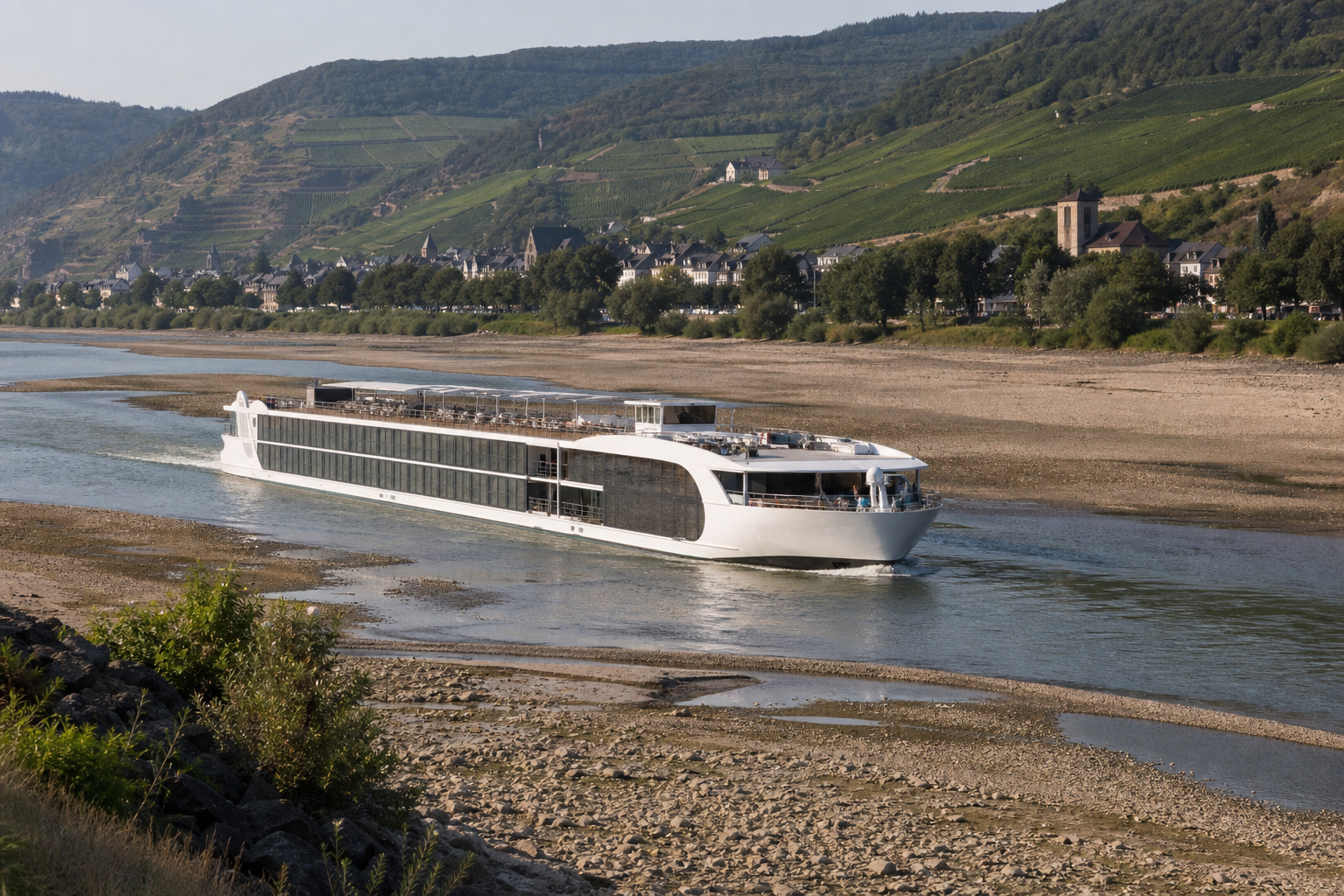
A Viking river cruise ship ran aground on the Danube on July 28, 2026, after making contact with a sandbank in extremely low water near Vidin, Bulgaria. All 238 people aboard the Viking Ullur — 186 passengers and 52 crew — were safely evacuated to shore, with no injuries reported, according to maritime outlet Marine Insight. The grounding is one vivid symptom of a much bigger problem this summer: the Danube has dropped to its lowest levels in three decades, and it’s beginning to reshape how river cruises actually run.
If you have a European river sailing booked for late summer, this is worth understanding — not to panic, but to plan. Here’s what happened, why it’s happening, and how we’d approach a river cruise while the rivers are this thin.
What happened on the Danube
Per Marine Insight’s reporting, the Viking Ullur touched a sandbank while navigating an unusually shallow stretch of the Danube and became stuck. The rescue wasn’t quick or simple: the first vessel sent to help couldn’t get close enough in the low water, so a second ship had to be dispatched to reach the stranded passengers. Everyone was brought ashore safely and, notably, guests continued their day trip in Bucharest rather than having their vacation cut short entirely.
As of that reporting, attempts to refloat the ship had not succeeded — a reminder that once a vessel settles onto a sandbar in dropping water, getting it off can take days, not hours.
Why the rivers are so low
The root cause is straightforward: not enough water. Marine Insight attributes the record-low Danube to reduced rainfall combined with prolonged, intense summer heat — the kind of drought-and-heatwave pattern that pulls river levels down faster than the system can recover. The outlet notes the Danube has reached its lowest point in roughly 30 years.
That matters because river cruise ships are, by design, long and flat-bottomed to fit under low bridges and along narrow channels. They draw relatively little water, but “relatively little” still isn’t “none.” When a river loses enough depth, even a shallow-draft vessel can run out of navigable channel — and the safe path narrows to a thread that shifts as sandbanks emerge.
It’s not just one ship
The Viking Ullur grounding grabbed headlines, but the disruption is broader. Marine Insight reports that Avalon Waterways cancelled some sailings on both the Danube and the Rhine because of the same low-water conditions. When a river becomes impassable in spots, lines generally have a few options, none of them ideal:
| Operator response | What it means for you |
|---|---|
| Ship swaps | You change vessels mid-trip to keep moving past a shallow stretch |
| Coach transfers | Buses carry you around the un-navigable section to rejoin a ship |
| Itinerary changes | Ports get reordered, added, or dropped based on where water allows |
| Cancellation | The sailing doesn’t operate; you’re rebooked or refunded |
None of these ruin a trip on their own — plenty of guests barely notice a well-managed ship swap — but they’re a real possibility in a low-water summer, and they’re worth building into your expectations.
How we’d plan a river cruise right now
We’re not telling anyone to cancel a European river cruise. Lines have handled low water for years, and the Viking Ullur’s passengers still got their Bucharest day. But a few habits go a long way when the rivers are running this low:
- Buy travel insurance that covers itinerary changes and missed connections. A river-level cancellation is exactly the scenario these policies exist for.
- Book flexible air, and pad your arrival. If a ship swap moves your embarkation port, a tight flight schedule is where trips actually fall apart.
- Watch the shoulder timing. Late summer, after a dry stretch, is historically the highest-risk window for low water. Spring and early summer sailings tend to face fewer level problems.
- Ask your line about its low-water policy before you sail. Knowing whether you’ll get coach transfers, a ship swap, or a refund removes most of the day-of stress.
The bigger picture
One grounded ship on the Danube is a dramatic snapshot, but the real story is the trend behind it: hotter, drier European summers are turning low water from an occasional headache into a recurring feature of the river-cruise calendar. For travelers, the takeaway isn’t fear — it’s flexibility. The itinerary printed on your booking is a plan, and this summer, more than most, it pays to treat it as one.
Source: Marine Insight — “Viking Cruise Ship With 200 Guests Runs Aground In Danube Due To Low Water Levels”