Miami Votes to Seize PortMiami's Only Fuel Depot
Miami-Dade voted 11–1 to use eminent domain on PortMiami's sole fuel depot after a developer bought it for $180M and plans luxury condos in its place.
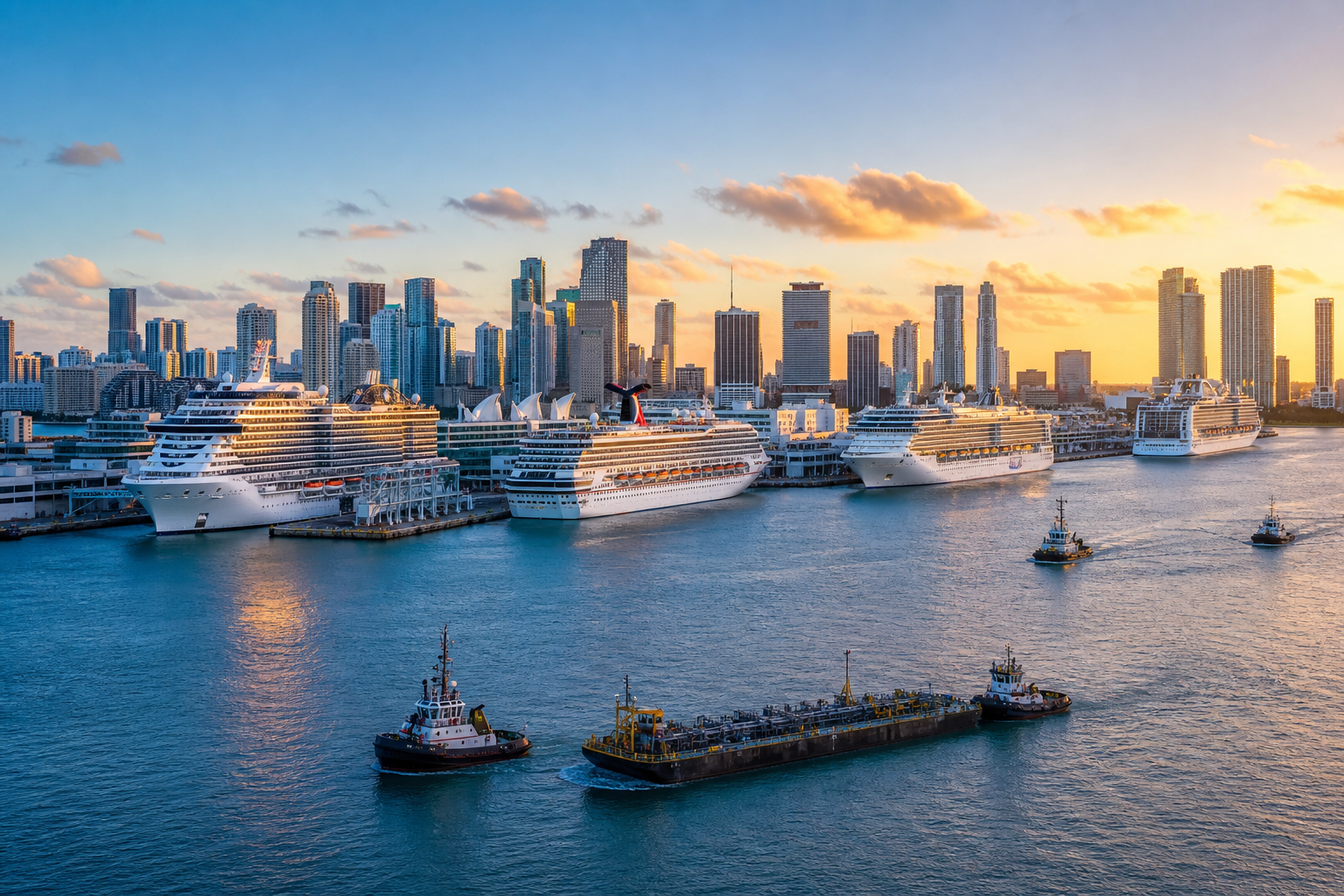
One of the world’s busiest cruise ports is locked in a high-stakes legal battle over its sole fuel supply — and the outcome could reshape how cruise ships operate in and out of Miami for years to come.
Miami-Dade County commissioners voted 11–1 on June 16 to pursue eminent domain against the Fisher Island fuel depot, the only bunkering facility that keeps PortMiami’s cruise ships fueled and moving. The target: a nearly 10-acre tank farm that a Chicago-based developer, HRP Group, purchased for $180 million last year and now wants to replace with two luxury condo towers.
According to CBS Miami’s reporting on the county commission vote, Miami-Dade Mayor Daniella Levine Cava confirmed the county intends to proceed with the acquisition.
What’s at Stake for Cruisers
PortMiami is one of the world’s busiest cruise ports, consistently ranking among the top two homeports for cruise passengers globally. Barges transport bunker fuel from the Fisher Island depot directly to ships during turnarounds — a process that happens in hours, between embarkation and the next sailing. Without that facility, the alternative options (longer barge runs from distant terminals, truck convoys with volume constraints) add time and cost to every turnaround.
In practical terms for anyone booked on a Miami sailing: if this dispute drags on without resolution, cruise lines face operational friction that could push departure windows later, increase onboard costs, or — in the longer run — quietly shift some deployments to Port Everglades or Port Canaveral, where fueling is less complicated.
PortMiami generates roughly $61 billion in annual economic activity and supports more than 340,000 jobs, according to county officials. The fuel depot is not a peripheral concern — it is load-bearing infrastructure.
How We Got Here: A $400 Million Miscalculation
The county’s situation is largely self-inflicted. According to CBS Miami, Miami-Dade passed on a negotiated deal to acquire the fuel depot at a price the mayor called “simply too high” — $400 million, more than double what HRP paid months earlier. Engineering estimates for building an alternative depot from scratch run between $733 million and $1.12 billion, making the rejected $400 million offer look considerably more attractive in hindsight.
The fallout was immediate: Chief Operating Officer Jimmy Morales abruptly retired in the days following the commission vote. The director of PortMiami also departed. The developer, for its part, is not backing down — HRP CEO Roberto Perez called the eminent domain action “unconstitutional” and vowed to aggressively contest it in court.
Fisher Island residents have already filed a federal lawsuit challenging the county’s authority to use eminent domain on the property, adding another layer of legal complexity.
A Dispute With No Easy Off-Ramp
Here is where things stand, by the numbers:
| Item | Detail |
|---|---|
| Fuel depot size | Nearly 10 acres on Fisher Island |
| HRP purchase price | $180 million |
| County’s rejected offer | $400 million |
| Cost to build alternative depot | $733M – $1.12B (engineering estimate) |
| Commission vote | 11–1 in favor of eminent domain |
| Legal challenges | Federal lawsuit from Fisher Island residents; developer contesting |
| Officials departed | County administrator + PortMiami director |
The math is unflattering for Miami-Dade any way you cut it. Eminent domain proceedings take time — often years — and HRP has both the financial motivation and stated determination to fight every step. Building an entirely new fuel depot at those estimated costs and timelines is a multi-year undertaking even if permits and community approvals go smoothly, which they rarely do near a luxury island development.
In the meantime, PortMiami is operating on existing arrangements, but with material uncertainty hanging over its refueling logistics.
What Cruise Lines Are Likely Doing Right Now
We’ve covered this port for years, and the pattern in situations like this is consistent: cruise lines don’t announce homeport changes based on an unresolved legal dispute. What they do is quietly pressure-test alternatives.
Fleet planners look at turnaround windows. If Miami’s fueling window gets less predictable, ships that were penciled in for Miami homeporting in 2027 or 2028 get a second look at Port Everglades. No announcement, no drama — just a deployment decision made eighteen months out that favors the port with fewer friction points.
The county’s best move is speed: fast-track a binding interim bunkering agreement with a third-party provider, advance the on-port facility site plan aggressively, and communicate a credible timeline to cruise line fleet planners. The ships themselves don’t care about the legal fight. They care about whether fuel is there when they pull in.
The Bottom Line
This is not a cruise disruption today. Ships are sailing, fueling is happening, and PortMiami is fully operational. But the Fisher Island dispute has moved from a slow-burn planning problem to an active legal confrontation with real institutional consequences — fired officials, a developer filing for court protection, and a $1 billion-plus price tag on the backup plan.
For anyone planning a cruise from Miami: book your sailing with confidence. But watch this story. If the legal battle runs long and no interim solution materializes, it is the kind of infrastructure dispute that, twelve months from now, starts quietly showing up in homeport decisions that affect which ships are where.