
How Big Are Modern Cruise Ships?
A data guide to cruise ship sizes: gross tonnage explained, the world's largest ships, class comparisons, and how size shapes your cruise.
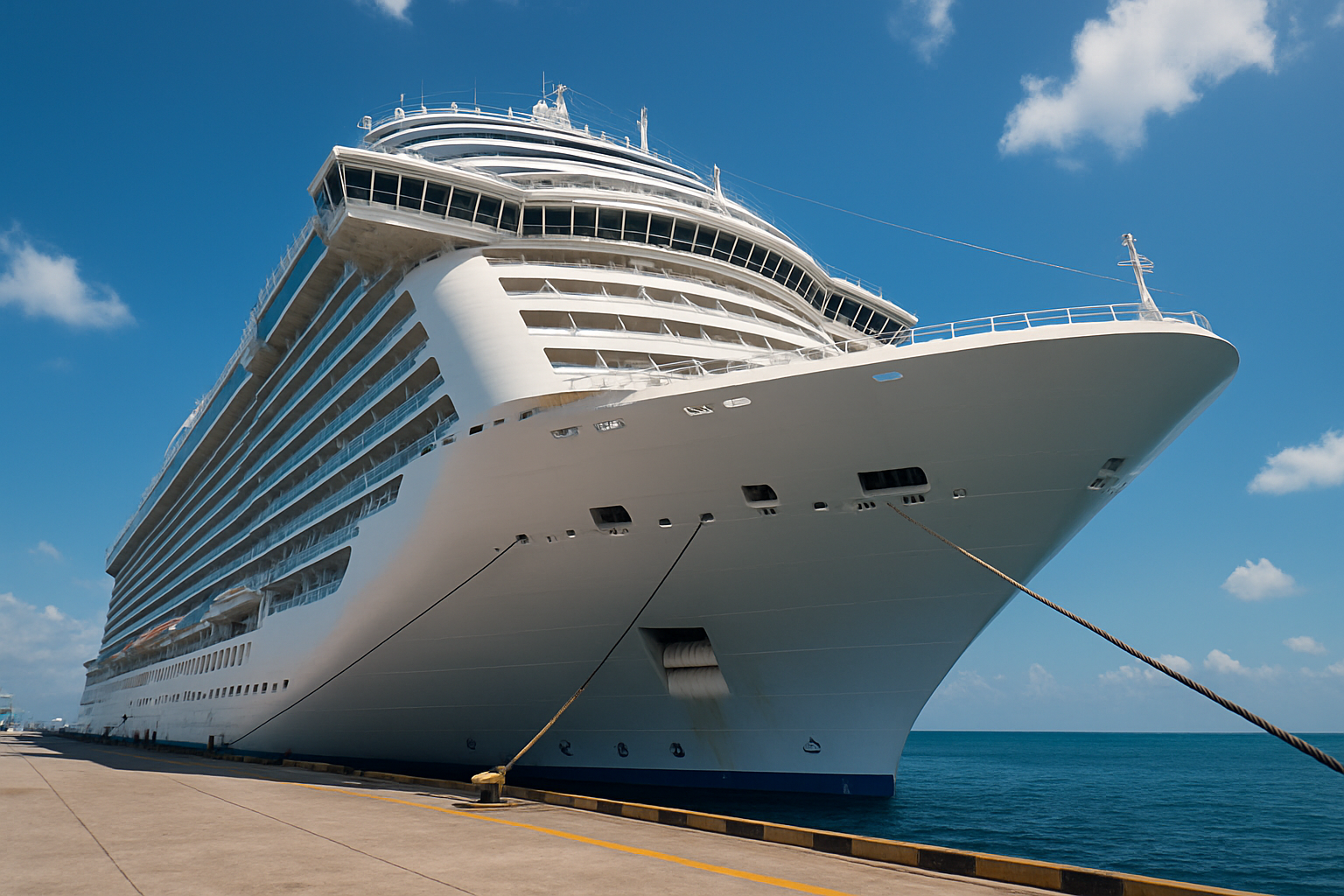
Standing at the base of a cruise ship at the pier is one of those experiences that simply does not translate to photographs. The hull rising above you is the height of a 20-story office building. The ship stretches so far in each direction that you cannot see both ends from the middle. It floats — somehow — on a hull containing enough steel to build a small skyscraper.
So how big are cruise ships, exactly? The answer depends on which ship and which measurement you use, but the numbers across every metric are genuinely staggering. This guide breaks down the key size metrics, explains what “gross tonnage” actually means (it is not what most people think), compares the current largest ships in the world, and explains how ship size shapes the experience of cruising. For a broader look at how all the engineering and operations behind these floating cities actually work, head to the How Cruise Ships Work hub.
The Key Measurements That Define Cruise Ship Size
Cruise ships are described using several distinct metrics, and they measure very different things. Understanding each one helps you make sense of the numbers.
Gross Tonnage (GT)
This is the single most commonly cited size figure for cruise ships, and it is almost universally misunderstood. Gross tonnage does not measure weight. It measures enclosed volume — specifically, the total internal volume of the ship’s enclosed spaces, expressed in units where 1 GT equals 100 cubic feet (2.83 cubic meters).
Royal Caribbean’s Icon of the Seas, currently the world’s largest cruise ship, has a gross tonnage of 248,663 GT. That means its enclosed internal volume totals roughly 248,663 × 100 cubic feet. Weight is a separate matter entirely; a ship’s actual displacement (how much water it pushes aside, which equals its actual weight) is a different figure that cruise lines rarely publicize.
Length Overall (LOA)
Length overall is the ship’s full length from the very tip of the bow to the stern — the figure people most intuitively grasp. Modern mega-ships run 1,100–1,200 feet (335–365 meters) in length. For reference, the Titanic measured 882 feet (269 meters). The Nimitz-class U.S. Navy aircraft carriers run about 1,092 feet (333 meters). Icon of the Seas at 1,198 feet (365 meters) is longer than both.
Beam (Width)
Beam is the ship’s width at its widest point. For mega-ships this runs 150–215 feet (46–65 meters). The widest cruise ships today — Royal Caribbean’s Icon- and Wonder-class vessels — have beams wide enough that the ship could not transit the old Panama Canal locks (whose maximum beam was 106 feet). They are built specifically for the newer, wider locks or for routes that do not require canal transit at all.
Draft
Draft is how deep the ship sits below the waterline. Most large cruise ships draft 25–32 feet (7.6–9.8 meters). This figure matters practically: it determines which ports the ship can enter. Many small Caribbean ports, river embarkation points, and shallow harbors are inaccessible to large-draft ships, which is why boutique lines operating smaller vessels often reach ports the mega-ships cannot.
Passenger Capacity
Cruise ships report two capacity figures. Double occupancy capacity assumes every cabin has exactly two guests — the industry standard baseline used for space ratios. Maximum capacity fills every berth including third and fourth beds in family cabins and sofa beds in suites. A ship rated at 5,600 passengers at double occupancy may have a maximum capacity of 7,600 or more.
Crew Count
Modern large cruise ships carry between 2,000 and 2,300+ crew members. The crew-to-passenger ratio on mainstream lines runs roughly 1 crew member per 2.5–3 passengers, though luxury lines run closer to 1:1.5 or even 1:1 at the top end.
Number of Decks
Large cruise ships run 18–20 passenger decks, though the total number of decks including crew spaces and machinery rooms is higher. The “Sky Deck” or topmost passenger deck on a mega-ship typically sits 200+ feet above the waterline.
Cruise Ship Size Classes: From Boutique to Mega
The industry informally sorts ships into four broad size tiers based on gross tonnage. Each tier offers a meaningfully different experience on the water.
Small / Boutique Ships — Under 30,000 GT
| Metric | Typical Range |
|---|---|
| Gross Tonnage | 2,000–30,000 GT |
| Length | 300–700 ft (91–213 m) |
| Passengers (double occ.) | 100–700 |
| Crew | 100–400 |
Ships in this class include expedition vessels (Hurtigruten, Lindblad), luxury yachts (Ritz-Carlton Yacht Collection, Scenic Eclipse), and older river-adjacent vessels. Their small size lets them access ports and anchorages that larger ships cannot: remote Arctic fjords, shallow Caribbean bays, smaller Mediterranean towns. The tradeoff is fewer onboard amenities — often no pool, no casino, and limited dining choices — and a higher per-day cost.
The experience is intimate by design. You will know most of the other guests by name within two days.
Mid-Size Ships — 30,000–70,000 GT
| Metric | Typical Range |
|---|---|
| Gross Tonnage | 30,000–70,000 GT |
| Length | 700–950 ft (213–290 m) |
| Passengers (double occ.) | 700–2,200 |
| Crew | 400–900 |
This class covers a large swath of the modern fleet — Holland America’s classic Statendam-class ships, older Princess vessels, and premium lines like Oceania and Azamara. Mid-size ships still fit most major ports worldwide, including many that restrict mega-ships. They offer a full range of onboard amenities — multiple pools, specialty restaurants, fitness centers — without the scale that some passengers find overwhelming.
Space ratios (GT per passenger) on mid-size ships tend to be more generous than on mainstream mega-ships, meaning less crowding even at full capacity.
Large Ships — 70,000–120,000 GT
| Metric | Typical Range |
|---|---|
| Gross Tonnage | 70,000–120,000 GT |
| Length | 900–1,000 ft (274–305 m) |
| Passengers (double occ.) | 2,200–3,500 |
| Crew | 900–1,400 |
The workhorse class of the modern industry. Royal Caribbean’s Freedom-class ships (Freedom of the Seas: 154,407 GT, grandfathered into this discussion as a transitional vessel), Carnival’s Mardi Gras-era ships (Carnival Jubilee: 180,000+ GT — actually straddling the next tier), NCL’s Breakaway-class, and MSC’s Meraviglia-class all occupy this general space.
Large ships offer a full resort-at-sea experience: multiple pool decks, waterslides, rock climbing walls, 10+ dining venues, casinos, spas, and Broadway-style entertainment. They are big enough that you will not see everything on a single sailing.
Mega Ships — 120,000 GT and Above
| Metric | Typical Range |
|---|---|
| Gross Tonnage | 120,000–250,000+ GT |
| Length | 1,000–1,200 ft (305–365 m) |
| Passengers (double occ.) | 3,500–7,600 |
| Crew | 1,500–2,300+ |
This is where the industry has been pushing hard for the last 15 years. Royal Caribbean’s Oasis-class (starting with Oasis of the Seas in 2009 at 225,282 GT), MSC’s World-class, and the current Icon-class represent the absolute frontier of cruise ship size. These ships are not just large — they are categorically different objects. They have neighborhoods, Central Park areas with live trees, dedicated suite “villages,” multiple distinct entertainment districts, and more than 40 dining venues.
The question of whether bigger is better is genuinely contested in the cruise community, and we will get to that.
The Top 5 Largest Cruise Ships in the World
As of 2026, these are the five largest cruise ships ever built, ranked by gross tonnage.
1. Icon of the Seas — Royal Caribbean International
| Stat | Figure |
|---|---|
| Gross Tonnage | 248,663 GT |
| Length | 1,198 ft (365 m) |
| Beam | 215 ft (65.7 m) |
| Draft | 30.7 ft (9.4 m) |
| Passenger Capacity (double occ.) | 5,610 |
| Max Passenger Capacity | 7,600 |
| Crew | 2,350 |
| Decks | 20 passenger decks |
| Debuted | January 2024 |
Icon of the Seas launched in January 2024 and immediately became the largest cruise ship ever built, surpassing its predecessor Wonder of the Seas by a significant margin. It features eight neighborhoods, six waterslides, the largest waterpark at sea, 40+ dining venues, and a dedicated family entertainment zone. You can track its current position and itinerary at the Icon of the Seas ship page.
2. Wonder of the Seas — Royal Caribbean International
| Stat | Figure |
|---|---|
| Gross Tonnage | 236,857 GT |
| Length | 1,188 ft (362 m) |
| Beam | 210 ft (64 m) |
| Passenger Capacity (double occ.) | 5,734 |
| Crew | 2,300 |
| Decks | 18 passenger decks |
| Debuted | March 2022 |
Wonder of the Seas held the title of world’s largest cruise ship for almost two years before Icon surpassed it. It introduced the Suite Neighborhood concept — a dedicated enclave for suite guests with private pool, lounge, and restaurant.
3. Symphony of the Seas — Royal Caribbean International
| Stat | Figure |
|---|---|
| Gross Tonnage | 228,081 GT |
| Length | 1,184 ft (361 m) |
| Beam | 218 ft (66 m) |
| Passenger Capacity (double occ.) | 5,518 |
| Crew | 2,200 |
| Debuted | March 2018 |
The fourth Oasis-class ship, Symphony of the Seas stretched the platform with additional dining and entertainment space. It has been based primarily in Miami, sailing Eastern and Western Caribbean itineraries.
4. Harmony of the Seas — Royal Caribbean International
| Stat | Figure |
|---|---|
| Gross Tonnage | 226,963 GT |
| Length | 1,188 ft (362 m) |
| Passenger Capacity (double occ.) | 5,479 |
| Crew | 2,100 |
| Debuted | May 2016 |
The third Oasis-class ship and the first to add the Perfect Storm waterslide complex that became a signature feature of the class. Harmony was also the first in the class to homeport in Europe (Southampton), demonstrating that European ports could accommodate mega-ship arrivals.
5. MSC World Europa — MSC Cruises
| Stat | Figure |
|---|---|
| Gross Tonnage | 215,863 GT |
| Length | 1,094 ft (333 m) |
| Beam | 206 ft (63 m) |
| Passenger Capacity (double occ.) | 6,762 |
| Max Passenger Capacity | 7,282 |
| Crew | 2,138 |
| Debuted | November 2022 |
MSC World Europa is the largest cruise ship not operated by Royal Caribbean, and the largest LNG-powered cruise ship in the world. Its double-occupancy capacity of 6,762 passengers is the highest of any ship in this list — a reflection of MSC’s lower space ratio compared to Royal Caribbean’s offerings. It debuted as the official ship of the FIFA World Cup Qatar 2022.
How Big Is a Cruise Ship Compared to Familiar Things?
These comparisons help put the numbers into human-scale context.
| Reference Point | Length | How Icon of the Seas Compares |
|---|---|---|
| Titanic (1912) | 882 ft (269 m) | Icon is 316 ft longer |
| Nimitz-class aircraft carrier | 1,092 ft (333 m) | Icon is 106 ft longer |
| Empire State Building (height) | 1,250 ft (381 m) | Icon laid on its side would not reach the top |
| American football field | 360 ft (110 m) | Icon is 3.3 football fields long |
| Eiffel Tower (height) | 1,083 ft (330 m) | Close — Icon is slightly longer |
| Chrysler Building (height) | 1,046 ft (319 m) | Icon laid on its side is longer |
The displacement weight comparison is equally striking. Icon of the Seas displaces approximately 250,000 metric tons of water when fully loaded. For context, a Nimitz-class aircraft carrier displaces about 104,000 metric tons. Icon weighs more than twice a nuclear aircraft carrier.
A Brief History of How Cruise Ship Sizes Grew
The growth trajectory of cruise ships over the last 60 years is one of the more dramatic engineering stories in modern transportation.
1960s — The Classic Ocean Liner Era. The SS France (1961), at 66,348 GT, was considered enormous at the time — a ship with 2,044 passengers and 1,044 crew. The Queen Elizabeth 2 (1969) came in at 70,327 GT.
1980s — The Miami-Caribbean Boom. Carnival launched the Tropicale in 1982 at 36,674 GT, helping define the modern Caribbean cruise ship. By the late 1980s, Sovereign of the Seas (1988) at 73,192 GT set a new record and established Royal Caribbean’s ambition.
1990s — Breaking 100,000 GT. The Grand Princess (1998) became the first cruise ship to exceed 100,000 GT (109,000 GT), pioneering the “Sports Court” and large balcony cabin standard that the industry still follows today.
2000s — The 150,000 GT Club. Freedom of the Seas (2006) at 154,407 GT introduced the rock-climbing wall and FlowRider surf simulator format. Queen Mary 2 (2004) at 148,528 GT brought ocean-liner heritage into the mega-ship era.
2009 — The Oasis Moment. Oasis of the Seas launched at 225,282 GT — a 45% jump over the previous record. It was a genuine discontinuity: neighborhoods, a Central Park with living trees, and a 750-seat main theater changed what “large cruise ship” meant.
2024 — Icon of the Seas. The 248,663 GT Icon of the Seas represents a further 10% growth over the Oasis-class, with an emphasis on families, private outdoor spaces, and a dedicated aqua park rather than pure scale for its own sake.
The trend has not been purely linear. Several major lines — including Seabourn, Silversea, and Scenic — have deliberately moved in the opposite direction, investing in smaller ultra-luxury vessels under 20,000 GT. The market for boutique and expedition cruising is growing alongside, not instead of, the mega-ship category.
How Ship Size Affects Your Cruise Experience
Understanding how big cruise ships are is not just an interesting data exercise — size has real, practical consequences for the experience you will have on board.
Space Ratios and Crowding
The cruise industry uses a metric called the Space Ratio (Gross Tonnage divided by double-occupancy passenger capacity) to measure how spacious a ship actually feels per person. Higher is better.
| Ship / Type | Approx. Space Ratio |
|---|---|
| Small luxury yacht (e.g., Scenic Eclipse) | 80–120+ |
| Mid-size premium (e.g., Oceania Riviera) | 45–60 |
| Large mainstream (e.g., Celebrity Apex) | 40–50 |
| Icon of the Seas | ~44 |
| MSC World Europa | ~32 |
A space ratio below 30 tends to feel crowded at full capacity. MSC World Europa’s 32 reflects the line’s aggressive capacity packing. Icon of the Seas at ~44 is actually reasonable for a ship its size — Royal Caribbean has consistently maintained higher space ratios than MSC on comparable tonnage.
Port Access
Mega-ships can only call at ports with deep enough water, long enough pier infrastructure, and tender or docking capacity for thousands of simultaneous passengers. This rules out a long list of attractive destinations:
- Most Greek island anchorages restrict or limit mega-ships (Mykonos, Santorini)
- Smaller Caribbean ports like Gustavia (St. Barths) accommodate only boutique vessels
- Many Norwegian fjords have new environmental restrictions barring large-emission ships
- River embarkation points everywhere require small ships
If your priority is reaching remote or exclusive ports, ship size matters enormously. Small expedition ships can anchor in places a mega-ship can never reach.
Onboard Amenities and Entertainment
This is where bigger genuinely wins. Icon of the Seas offers six waterslides, an ice rink, a surf simulator, 40+ restaurants and bars, a casino, multiple theaters, a dedicated kids’ water park, a Central Park neighborhood, a suite-only complex, and a Royal Promenade shopping boulevard. No 10,000 GT boutique ship comes close.
For passengers who want a destination unto itself — families in particular — the mega-ship experience is unmatched. For passengers who want the ship to be transportation to interesting places, the mega-ship can feel like too much, or worse, like it crowds out the destination itself.
Embarkation and Disembarkation
Getting 7,000 passengers on and off a ship on the same morning is a logistical exercise that, even when well-managed, involves significant queuing. The largest ships have improved processes (Royal Caribbean uses facial recognition and app-based check-in), but turnaround day on a mega-ship is a different experience than boarding a 300-passenger expedition vessel.
The Verdict: How Big Is Too Big?
There is no single right answer to how big a cruise ship should be. The data makes it clear that the industry has grown its flagship vessels by roughly 4× in gross tonnage since 1988, and that growth has been driven by genuine passenger demand — the largest ships are consistently among the most booked.
But the industry has also learned that size is not the only axis of competition. The most discussed ships in recent years include both Icon of the Seas (248,663 GT) and Scenic Eclipse II (17,000 GT) — the biggest and the boutique, both regarded as category leaders.
What “how big are cruise ships” really means in practice is: what do you want the cruise to be? A floating city with every amenity stacked 20 decks high, or a nimble vessel that can anchor somewhere no tour bus can reach? For a complete look at how the mechanics and systems behind ships of every size actually function, explore the How Cruise Ships Work hub — from propulsion to navigation to how 2,300 crew members keep everything running at sea.
Related guides
Part of our How Cruise Ships Work hub.