After 36 Years and 5.3 Million Kilometres, Japan Said Goodbye to a Cruise Legend
Over 7,000 people gathered at Yokohama to bid farewell to the Nippon Maru, the ship that helped build Japan's cruise culture across 36 years of voyages.
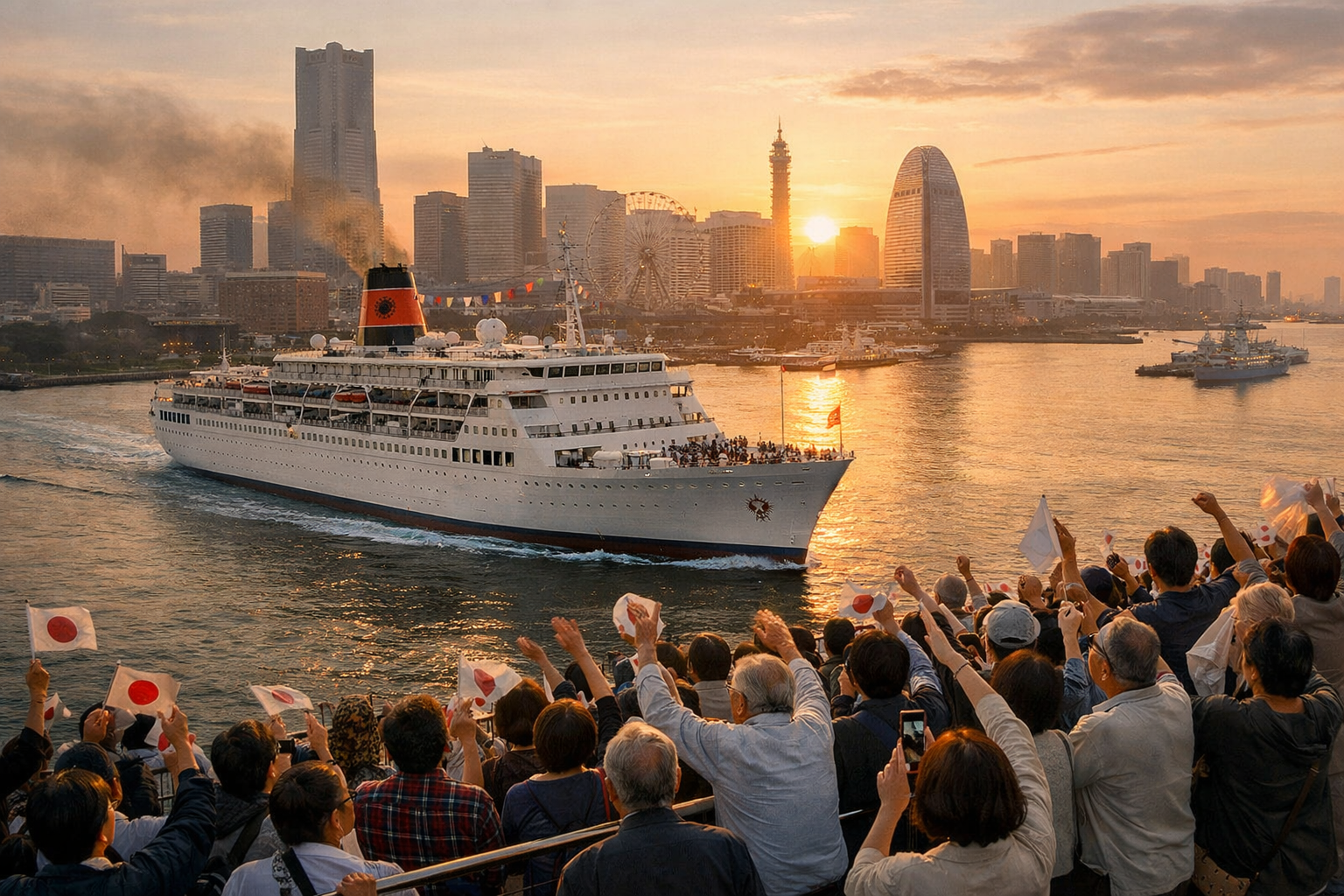
The scene at Yokohama’s Osanbashi International Passenger Terminal on May 10, 2026 was unlike anything you typically see at a cruise port. More than 7,000 people crowded the terminal rooftop — not to board a ship, but to say farewell to one. As the Nippon Maru glided into her final berth at approximately 8 a.m., ending a quiet three-day Pacific farewell voyage, those gathered waved, cheered, and wept for a vessel that had carried 600,000 passengers and become a genuine symbol of Japanese cruise culture over the course of 36 years.
It was, by any measure, a rare moment in the cruise industry.
A Ship That Grew Up Alongside an Entire Cruise Culture
When the Nippon Maru entered service in 1990 — built at the Mitsubishi Heavy Industries Shipyard and operated under Mitsui O.S.K. Lines — Japan’s leisure cruise industry was still in its infancy. The 21,903-gross-ton vessel, with 190 guest cabins and capacity for around 600 passengers, wasn’t just another ship joining a fleet. It was, in many respects, the ship that helped normalize cruising as a vacation concept for Japanese travelers.
Over the next three and a half decades, the Nippon Maru would sail more than 2,000 voyages, call at over 400 ports across Japan and around the world, and cover 5.3 million kilometres — the equivalent of 133 circumnavigations of the globe. She underwent two major refurbishments, in 2010 and again in 2020, keeping her relevant across multiple generations of cruisers.
For many of those 600,000 guests, she was their first cruise. For some, she was their only cruise.
”Thank You, and Well Done”
The retirement ceremony was, by all accounts, deeply personal. Captain Koichi Uchida addressed the crowds and the ship itself: “From one-night stays to round-the-world cruises, we set out on many voyages where we could share the excitement with our guests. Thank you and well done.”
Fumie Ono, director of Yokohama’s Port and Harbor Bureau, told attendees: “We are truly honored that Yokohama was chosen as the location for such an important final occasion.”
Even an 11-year-old attendee named Ayane Senoue, who had sailed aboard the ship, told reporters she remembered the “amazing” hospitality and how much fun the onboard events had been. That kind of multi-generational connection — grandparents who first sailed her in the 1990s, children experiencing her near the end — speaks to something that numbers alone can’t capture.
The retirement was announced back in June 2025, giving loyal passengers and crew members time to book final voyages and prepare their goodbyes. The last sailing was fittingly understated: three days in the Pacific off eastern Japan’s coastline, with special dinners featuring seasonal ingredients from the route’s associated ports.
What This Means for Japanese Cruising
With the Nippon Maru’s retirement, only two Japanese-flagged cruise ships remain in active service: the Asuka II and the Asuka III. That’s a remarkably thin fleet for a country with Japan’s population and coastline — though that context also underscores just how significant the Nippon Maru’s presence was for so long.
Mitsui Ocean Cruises is not stepping back from the market. The company expects to debut the Mitsui Ocean Sakura — the former Seabourn Sojourn — in September 2026, a larger and more modern vessel that signals the company’s ambition to grow into a new era of Japanese cruise demand rather than retreat from it.
But that’s a future chapter. For now, the industry marked a genuine ending.
Why This Story Matters Beyond Japan
The cruise world spends a lot of time celebrating ship launches — ribbon cuttings, naming ceremonies, the first passengers stepping aboard a gleaming new hull. We cover fewer retirements, perhaps because departures feel less commercially interesting than arrivals. But the farewell to the Nippon Maru is a reminder that the relationships passengers form with ships are real and lasting.
Seven thousand people don’t show up at dawn to wave goodbye to a piece of hardware. They show up because the ship meant something to them — because it was the backdrop to a honeymoon, or a milestone birthday, or simply to the version of themselves that first discovered what it felt like to watch a port city shrink in the ship’s wake.
That’s the part of cruising no spec sheet can quantify. And it’s worth pausing, amid all the coverage of new ships and expanding fleets, to acknowledge when one of the quiet originals finally comes home for the last time.
Related news
Azamara Is Making Its Biggest Bet Yet — and Asia Is the Prize
Oceania's First Sonata-Class Ship Hits the Water
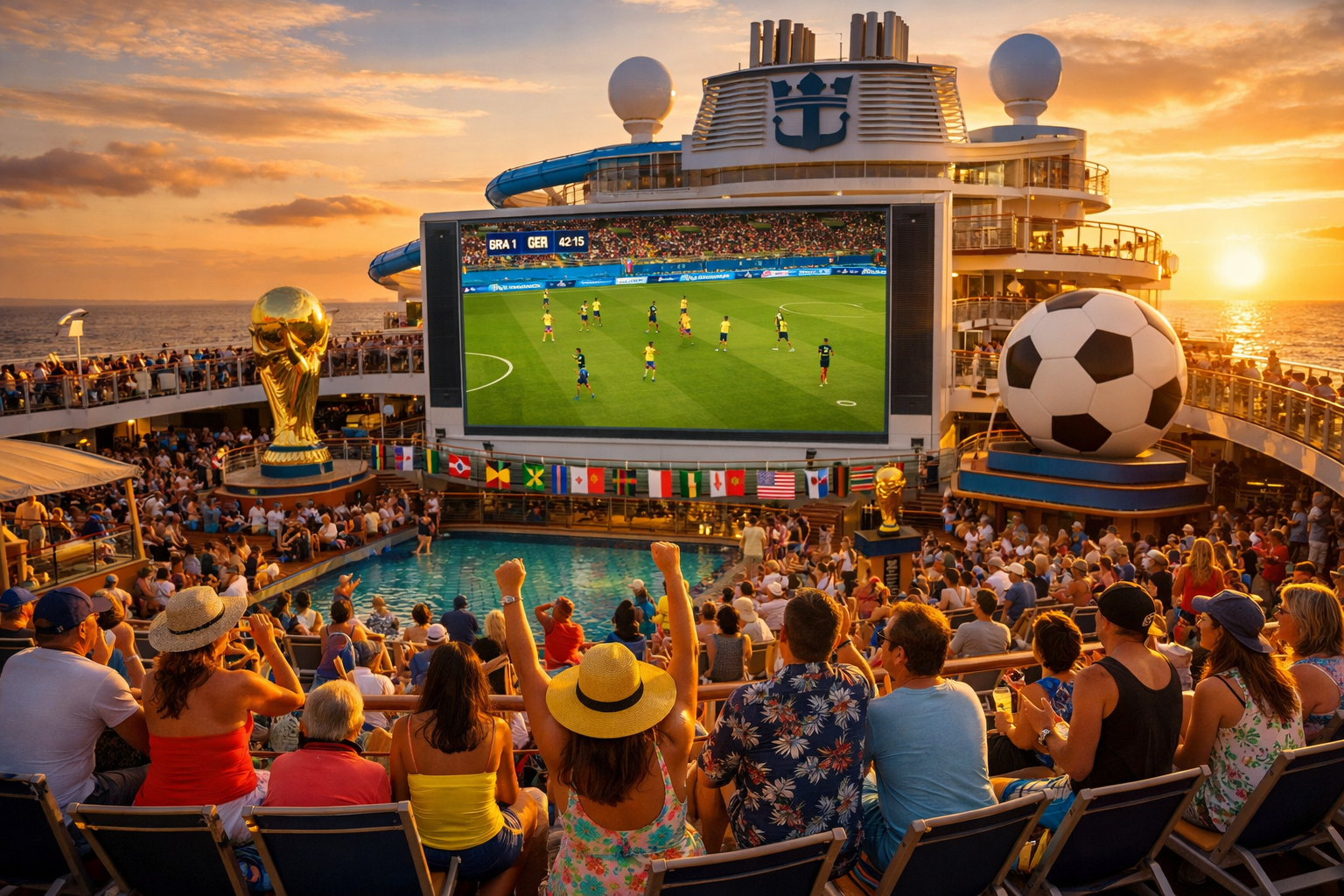
Royal Caribbean Is Turning Its Entire Fleet Into World Cup Watch Parties This Summer