Dover's Four-Ship Day: The Moment Britain's Busiest Cruise Port Rewrote Its Own Record Books
On May 8, 2026, the Port of Dover welcomed four cruise ships at once for the first time in its 30-year history, a record backed by major infrastructure investment.
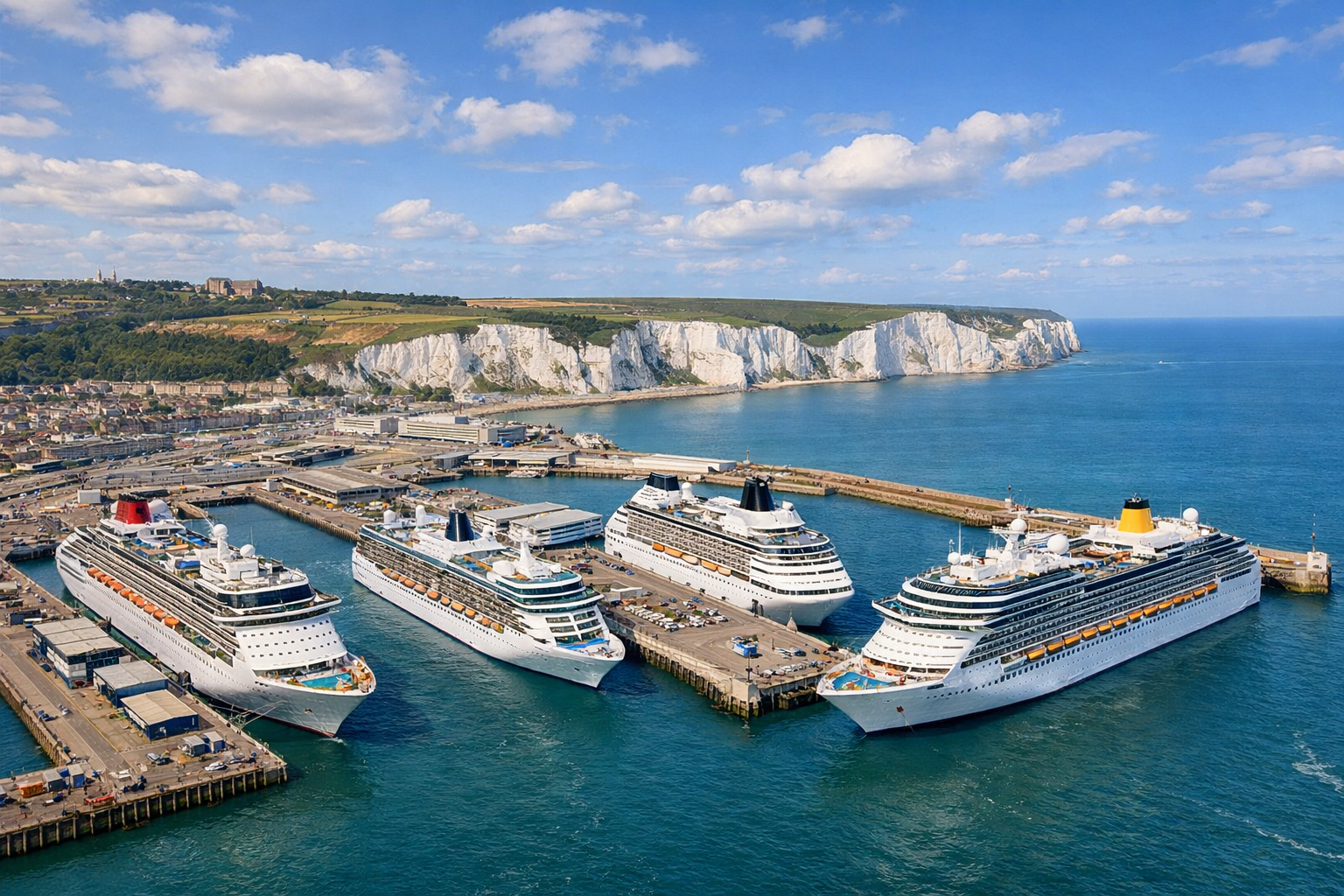
For three decades, the Port of Dover has been quietly punching above its weight in the world of cruise. Tucked beneath the famous white cliffs, it has grown from a single cruise terminal opened in 1996 into one of the UK’s most strategically important maritime gateways. But on Friday, May 8, 2026, Dover did something it had never done in its entire 30-year cruise history: it welcomed four ships at once.
Source: Port of Dover — “Dover Welcomes Four Cruise Ships In One Day For The First Time”
The Ships That Made History
The lineup on that record-breaking Friday was a snapshot of modern cruising in miniature — mainstream, premium, expedition, and ultra-luxury, all sharing the same stretch of Kent waterfront.
Celebrity Eclipse represented the big-ship mainstream market, a 2,850-passenger vessel familiar to millions of North American and European cruisers. Alongside her sat Viking Sky, the sleek ocean ship that has come to define Viking’s quiet conquest of the upscale cruising segment. Then came MS Fram, operated by HX (formerly Hurtigruten Expeditions), an expedition vessel built for polar waters and adventure itineraries. Completing the quartet was Le Bellot, a Ponant luxury ship that typically ferries just a few hundred well-heeled passengers to far-flung destinations.
Four ships. Four completely different cruising philosophies. One harbor.
”World Class” — and Three Decades in the Making
Peter Wright, Head of Cruise at the Port of Dover, didn’t undersell the moment. “Delivering these four vessels demonstrates the significant capability that we have as a cruise port,” he said in the official announcement. He described the terminals and waterfront as “bustling with guests from all over the world,” and called Dover what it has quietly become over the past three decades: “a world class destination.”
The milestone is the product of years of infrastructure investment that often goes unnoticed by the passengers benefiting from it. Most recently, the port installed new quick-release hooks capable of accommodating vessels up to 350 meters in length — a 30-meter capacity increase over previous fittings. To put that in context, 350 meters covers nearly every ocean-going cruise ship currently in service, including many of the largest ships afloat.
A new passenger boarding bridge is also slated for operation at Cruise Terminal 1 in 2027, signaling that Dover isn’t treating this milestone as an endpoint — it’s treating it as a launchpad.
What Was Happening on Board
The May 8 milestone wasn’t just logistically impressive. It happened to coincide with the Cruise Lines International Association’s annual Expedition Summit, hosted aboard MS Fram. Around 100 travel advisors gathered on the HX vessel for the event, which meant that the day Dover achieved its busiest-ever cruise operations, it was simultaneously hosting a room full of the industry’s travel trade insiders — people whose job it is to send passengers to ships like these.
It’s the kind of symmetry that cruise PR teams dream about.
Why This Matters Beyond the Headlines
The Port of Dover is far more than a cruise terminal. It handles £144 billion in trade annually, represents roughly 33% of all UK-EU goods trade, and welcomes over 11 million passengers each year across all operations. Cruise is a relatively small piece of that enormous puzzle — but it’s a growing one.
The 2026 cruise season at Dover includes 115 cruise calls from 22 different cruise lines, expected to deliver around 200,000 cruise guests through the port. That figure has climbed steadily year after year, and infrastructure investment has had to keep pace.
There’s also an environmental dimension worth noting. Dover recently became the first UK port to achieve carbon net zero for Scope 1 and 2 emissions — a significant credential at a time when cruise lines are under intense scrutiny over their environmental footprints. For cruise lines increasingly looking to demonstrate their sustainability commitments to passengers, choosing a net-zero port is the kind of detail that matters.
The Bigger Picture for UK Cruising
Dover’s record day is a marker in the broader story of cruise’s rise in the UK market. Britain has historically been one of the world’s strongest cruise-consuming nations — and increasingly, it’s also a departure market rather than just a fly-cruise destination. More passengers are choosing to board ships from UK ports and sail directly, bypassing the additional cost and complexity of transatlantic flights.
That trend is good news for ports like Dover, Southampton, and the other hubs competing for cruise business along the British coastline. When a port can handle four ships simultaneously — and do it on what amounts to a routine Friday — it sends a clear signal to cruise lines planning future deployments: the infrastructure is there, the appetite is real, and the white cliffs are open for business.
Thirty years after Dover’s first cruise terminal opened, the port didn’t just celebrate its anniversary. It raised the bar entirely.
Related news
Los Angeles Unveils Game-Changing Plan That Could Reshape West Coast Cruising
Ponant Will Send Two Ships to French Polynesia This Winter—Including Six Ports No Cruise Line Has Touched
Texas Just Became America's Next Major Cruise Capital—Here's What It Means for You