Why Charleston Is Moving Its Cruise Ships Off Its Historic Waterfront
Charleston's Union Pier hosted its final cruise ship as operations move to Columbus Street Terminal. What it means if you have a Charleston cruise booked.
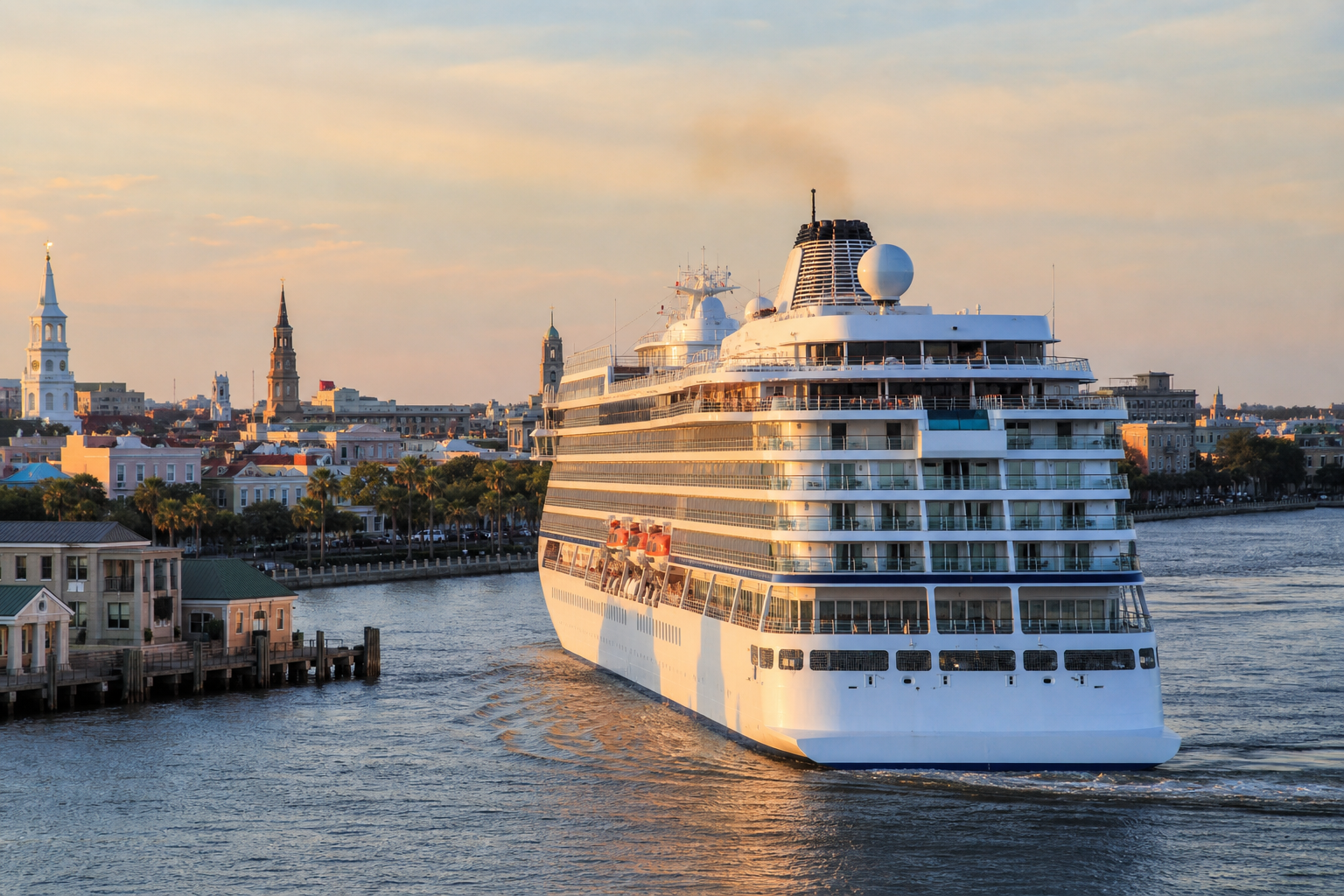
Charleston has stopped hosting cruise ships at its historic Union Pier Terminal. On June 30, 2026, Norwegian Cruise Line’s Norwegian Jewel became the last cruise ship to ever make a passenger call at Union Pier, and the port’s cruise operations have now relocated a short distance up the harbor to the Columbus Street Terminal. If you have a Charleston sailing on your calendar, your terminal and your embarkation-day logistics have quietly changed — even though your itinerary looks identical on paper.
That’s the practical headline. But the bigger story, as reported by Charleston CBS affiliate Live 5 News, is that a working waterfront most cruisers took for granted is being handed back to the city — and turned into something else entirely.
What actually happened
For years, cruise ships slid right up to the edge of downtown Charleston at Union Pier, one of the most walkable, camera-friendly embarkation spots on the US East Coast. That era is over. According to Live 5 News, the South Carolina State Ports Authority is stepping away from cruise operations at Union Pier, and the 65-acre waterfront site is being turned over to Beemok — the family office of businessman Ben Navarro — for redevelopment.
The plan isn’t another terminal. It’s a mixed-use neighborhood: housing, shops, restaurants, and, notably, public green space and waterfront access on land that has been industrial port for generations. Beemok leader Miller Harper framed it as a promise being kept: “Trust is earned through action over time, and this is another step toward delivering on the commitments we’ve made to Charleston.”
Cruise ships aren’t leaving Charleston, though. They’re relocating to the Columbus Street Terminal, in a more industrial stretch of the peninsula, which now handles the city’s cruise operations.
Here’s a quick before-and-after for cruisers:
| Union Pier Terminal (old) | Columbus Street Terminal (new) | |
|---|---|---|
| Status | Closed to cruise as of June 30, 2026 | Now handles Charleston’s cruise operations |
| Last ship | Last: Norwegian Jewel (June 30, 2026) | — |
| Setting | Edge of the historic downtown | Industrial port zone, near the old site |
| Future use | Mixed-use waterfront neighborhood | Ongoing cruise operations |
Why a city would give up its cruise front row
This is the part that makes the Charleston story more interesting than a routine terminal swap. Most port cities spend the 2020s chasing more cruise traffic. Charleston is deliberately moving it away from its most valuable downtown real estate.
Mayor William Cogswell put the logic bluntly to Live 5 News: “One of the beautiful things about Charleston is we’re not a resort… we are a functioning city.” That’s a philosophy, not just a zoning decision. Charleston has spent years wrestling with how much tourism its compact, flood-prone historic peninsula can absorb before the thing tourists come to see starts to erode.
We’ve watched this tension play out in cruise ports all over the world — Venice pushing big ships out of its lagoon, several European capitals capping daily arrivals. Charleston’s version is quieter but arguably more decisive: instead of capping ships, it’s reclaiming the land the ships used to sit on. Live 5 News reports the redevelopment even ties into broader infrastructure work, including addressing flooding across the eastern half of the peninsula — the kind of problem a parking-lot-and-pier cruise terminal does nothing to solve.
What it means if you have a Charleston cruise booked
A few things worth knowing before your sailing:
- Your terminal address changes. Double-check your cruise documents for the Columbus Street Terminal and don’t autopilot to the old Union Pier location — especially if you’ve cruised from Charleston before.
- The “walk off the ship into downtown” magic is diminished. Union Pier’s charm was that it dumped you at the doorstep of Charleston’s historic district. Columbus Street sits in a more industrial zone, so budget for a rideshare or transfer if you’re planning to explore the city on either end of your trip.
- Parking and drop-off patterns are new. Any tips you got from a friend’s pre-2026 Charleston cruise may no longer apply. Treat this like a first-time embarkation port until the new routines settle.
- Confirm your specific call directly with your cruise line. Charleston’s cruise operations have relocated to Columbus Street Terminal, but some scheduled calls have seen disruptions. Rather than assume, check your ship’s status with your line so you’re not surprised at the pier.
The bottom line
Charleston didn’t lose its cruise business; it relocated it and handed the prime waterfront back to residents. For cruisers, the immediate impact is logistical — new terminal, new arrival routine, a little less downtown-at-your-doorstep convenience. For the wider industry, it’s a notable data point: a marquee US port decided its downtown was worth more as a neighborhood than as a cruise berth. As redevelopment of the Union Pier site unfolds over the coming years, Charleston will be a case study in whether a city can stay cruise-friendly and livable at the same time.