Who's Watching the Ships? The CDC Gutted Its Cruise Inspection Program
The CDC's Vessel Sanitation Program lost all its full-time inspectors in 2025. With cruise outbreaks rising and one epidemiologist left, the gap is widening.
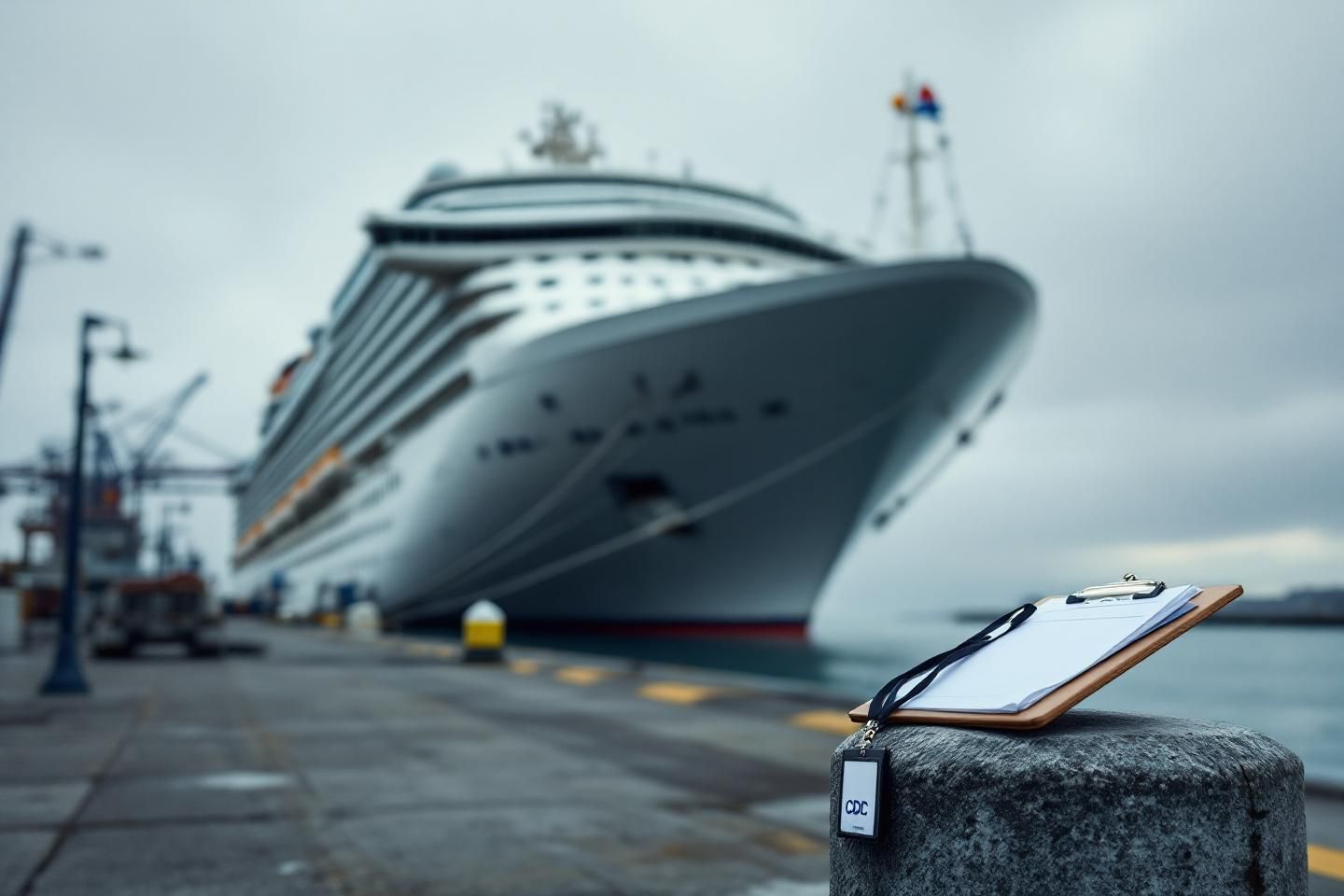
There’s a quiet crisis unfolding in cruise ship oversight that deserves far more attention than it’s getting. According to a report from CBS News, all full-time employees working in the CDC’s Vessel Sanitation Program (VSP) have been laid off — leaving the program that is supposed to keep cruise ships clean and outbreak-free operating on a skeleton crew of 12 U.S. Public Health Service officers, with only one epidemiologist available to investigate disease outbreaks. That epidemiologist is still in the early stages of training.
This happened in 2025, under sweeping agency-wide reductions directed by HHS Secretary Robert F. Kennedy Jr. that affected roughly 2,400 CDC employees. The timing couldn’t be worse.
What the Vessel Sanitation Program Actually Does
The VSP exists for one core purpose: to stop cruise ships from becoming floating petri dishes. It does this through twice-yearly inspections of large vessels — inspections that evaluate everything from water treatment systems and food storage to pest control and waste handling. The program also maintains outbreak response capabilities, so when norovirus or another pathogen tears through a ship’s passenger population, trained federal epidemiologists can investigate, contain, and report.
That last piece — the outbreak response — is where the damage is most acute. The VSP epidemiologist who led outbreak investigations on cruise ships was terminated. The one replacement is in training. Nearly 200 inspections were conducted in the last fiscal year. The math doesn’t add up.
A former division head quoted by CBS News put it bluntly: “None of the civilian staff are there to support them” for sustained operations. CDC officials called HHS’s assurances that everything would continue normally “frustrating.”
A Particularly Poorly Timed Cut
Here’s the detail that makes this story especially hard to dismiss: the cruise lines themselves fund the VSP. Their fees — not taxpayer dollars — pay for the program’s inspections. The layoffs saved the federal government exactly zero dollars. Whatever the rationale behind HHS’s broader cuts, this particular program wasn’t costing taxpayers a cent.
And yet the inspectors are gone anyway.
Meanwhile, the cruise industry is in the middle of what CBS News describes as a difficult stretch for shipboard outbreaks. At least 12 documented cruise ship outbreaks occurred in 2025, mostly norovirus — already a high figure compared to 18 total for all of 2024. That 2024 number represented a full year; 2025 is tracking toward a similar or higher rate. A record norovirus surge, driven by a new strain, has been spreading through the broader U.S. population. Cruise ships — with their shared dining spaces, buffet lines, and close quarters — are predictably amplified environments.
The hantavirus outbreak aboard the MV Hondius drew global headlines this month and renewed scrutiny of cruise health oversight. While that particular incident originated on a Dutch-flagged ship that hadn’t recently docked at a U.S. port (meaning CDC jurisdiction didn’t apply), it put a spotlight on exactly the kind of public health infrastructure that’s now been dismantled domestically.
What Reduced Inspections Mean in Practice
Inspector training takes approximately six months. That means even if the agency begins rebuilding its civilian workforce tomorrow, the VSP won’t have a functional inspection team in the near term. The 12 remaining Public Health Service officers are military-commissioned, not civilian inspectors — a different skill set, a different chain of command, and a group that will now carry an increased administrative burden on top of their inspection duties.
More administrative work means less time on ships. Fewer eyes on ships means problems get missed — or caught only after passengers are already sick.
The practical concern isn’t hypothetical. According to CBS News, staff were in the middle of responding to two active outbreaks when they were dismissed. Whatever institutional knowledge those inspectors carried — sources, ship-specific records, relationships with cruise line safety officers — walked out with them.
The Industry’s Uncomfortable Position
The cruise lines have largely stayed quiet on this. That’s understandable from a PR standpoint: the last thing any cruise brand wants to do is draw more attention to reduced oversight of its ships. But the silence is telling. The industry fought hard for the VSP’s existence back when it was established; the program gave cruise companies a credible third-party verification system they could point to as evidence of safety standards. Without it functioning properly, that assurance weakens.
There’s a reasonable argument that large cruise companies, with their own internal safety and sanitation teams, can maintain standards without federal inspectors looking over their shoulders. Royal Caribbean, Carnival, and Norwegian all run sophisticated shipboard hygiene programs. But those programs are self-reported, self-monitored. The VSP’s value was precisely that it was independent.
What Cruisers Should Know
If you’re booked on a cruise in 2026, we’re not suggesting you cancel. Cruise ships are not uniquely dangerous places, and the industry’s overall safety record is strong. But a few practical considerations are worth keeping in mind:
Pack hand hygiene seriously. Norovirus spreads through contact with contaminated surfaces. Alcohol-based sanitizer won’t kill it — use soap and water whenever you can, especially before eating.
Pay attention to early symptoms. Norovirus moves fast on ships. If you start feeling nauseous, report it to the medical center immediately rather than waiting it out. Early isolation limits spread.
Check VSP inspection scores before you book. The CDC still publishes historical inspection data at wwwn.cdc.gov/InspectionQueryTool/InspectionSearch.aspx. Whether future inspections will be conducted with the same regularity is now an open question.
Consider travel insurance with medical coverage. If an outbreak sidelines you mid-cruise, a policy that covers trip interruption and onboard medical costs is worth having.
The Broader Picture
Cruise inspections were never glamorous news. The VSP operated quietly in the background, and most passengers never thought twice about it. That’s exactly the kind of infrastructure that tends to get cut without much public outcry — until something goes wrong.
We’re in a period where multiple cruise outbreaks are being tracked simultaneously, a novel hantavirus cluster has the world watching cruise ship health protocols, and the federal program designed to catch shipboard problems before they become crises is running at a fraction of its former capacity.
The ships are still sailing. The question now is who’s really watching them.
Source: CBS News — CDC’s cruise ship inspectors laid off amid bad year for outbreaks