
Printable Cruise Packing List (Free PDF)
A free printable cruise packing list covering every category, with quantity guidance, prohibited items, and what the ship provides. Print it and check it off.
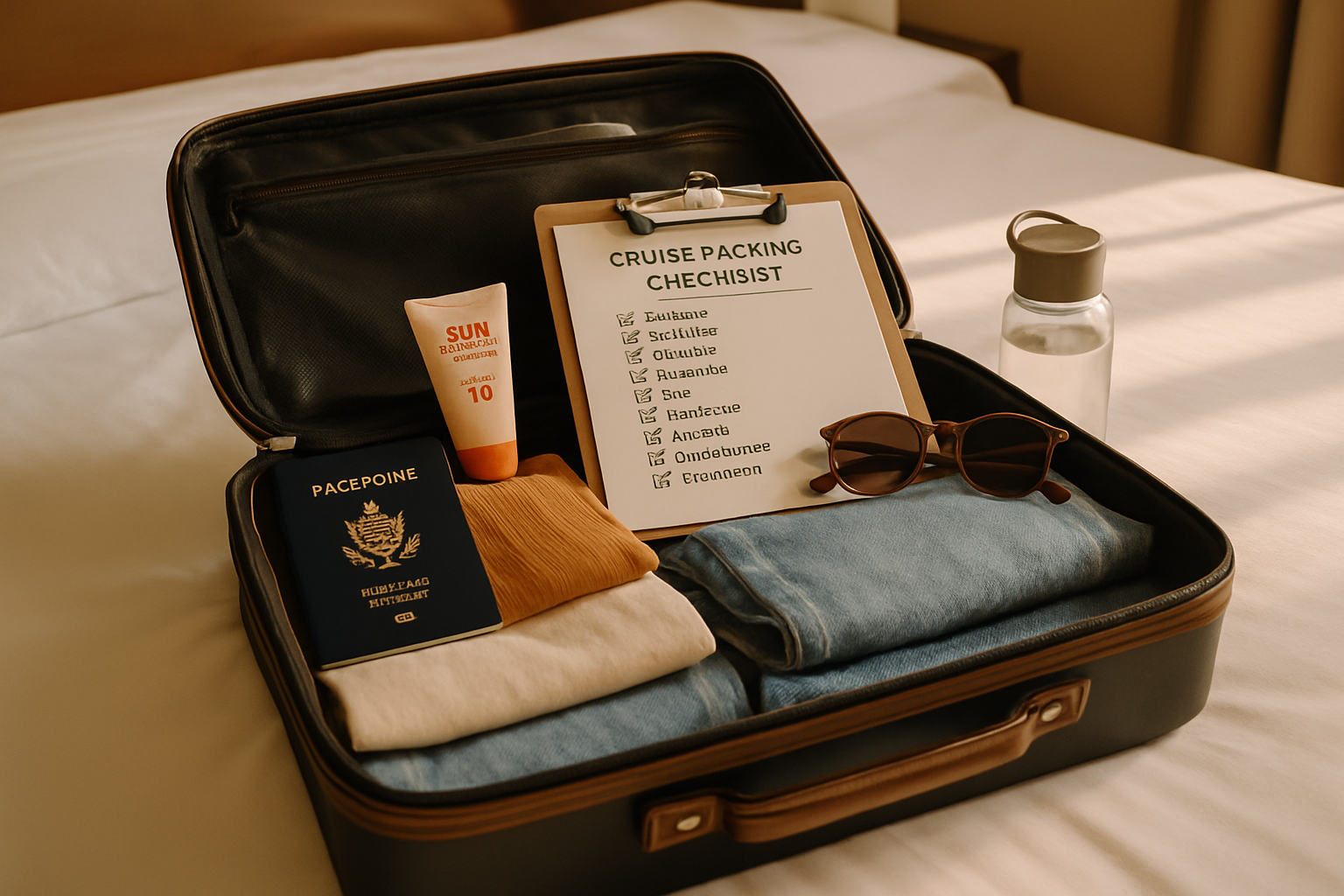
You’ve booked your cruise, counted down the days, and now you’re standing in front of an empty suitcase two nights before departure wondering what you’re forgetting. It’s a universal experience — and it’s entirely avoidable. A solid printable cruise packing list turns that chaos into a 30-minute process you can knock out in advance. Keep it on the fridge, check items off as you toss them in, and board the ship knowing you’ve got everything you need.
This is the complete, category-by-category cruise packing checklist — built from the reality of shipboard life, not a generic travel template. We’ve included quantity guidance, a frank list of what the ship already provides so you don’t overpack, a rundown of prohibited items, and callouts for destination-specific needs. Head to our Cruise Packing hub for a full library of traveler- and destination-specific lists once you’ve worked through this master version.
Documents and Travel Essentials
These are the items that, if forgotten, can genuinely ruin your trip. Pack them in a dedicated pouch or folder that goes in your carry-on — not your checked luggage.
- Passport (valid for at least 6 months beyond your return date — some destinations require this even for U.S. citizens)
- Cruise line boarding documents (printed or downloaded to your phone with screenshots in case of no signal)
- Government-issued photo ID (as a backup; required for some ports)
- Travel insurance documentation (policy number and 24-hour emergency contact)
- Credit cards (2 minimum — one for onboard spend, one as backup)
- Cash in small bills (for tips at ports, taxi drivers, and local vendors who don’t take cards)
- Health insurance card
- Prescription documentation from your doctor for any controlled medications
- Emergency contact list (printed, not just stored in your phone)
- Shore excursion confirmation emails (printed or screenshot — wifi at ports is unreliable)
One practical tip: photograph every document with your phone before you leave home and store copies in cloud storage. If a wallet gets lost at a port, you’ll still have everything you need to get back on the ship.
Clothing
The most common mistake cruisers make is overpacking clothes. Ship laundry services exist (though they cost money), and you’ll be wearing swimwear and casual gear the majority of the time. Use this as your baseline:
- Casual daytime outfits: 1 per sea day + 1 extra (for a 7-night cruise: 3–4 casual outfits)
- Smart casual / dinner outfits: 1 per evening (most cruise lines require this for the main dining room)
- Formal or semi-formal: 1–2 outfits for formal nights (check your cruise line’s dress code — see cruise dress codes by line for specifics)
- Swimsuits: 2–3 (one to wear, one to dry — you’ll use them constantly on sea days and beach ports)
- Cover-up or light sarong: 1
- Comfortable walking shoes: 1 pair (non-slip soles matter on ships and wet port docks)
- Dress shoes or sandals: 1 pair
- Flip flops or pool slides: 1 pair
- Lightweight layers / cardigan: 2 (ship air conditioning is aggressive; dining rooms and theaters are cold)
- Workout clothes: 1–2 sets if you plan to use the gym or running track
- Pajamas: 2 sets
- Underwear and socks: 1 per day + 2–3 extras
- Sunhat or baseball cap: 1
- Light rain jacket or packable poncho: 1 (especially important for Alaska or spring sailings)
For destination-specific wardrobe guidance, check our Caribbean cruise packing list and Alaska cruise packing list — the requirements are significantly different between a beach destination and a fjord.
Toiletries and Health
Most cruise ships provide basic shampoo, conditioner, and body wash in staterooms. Quality varies significantly by cruise line — luxury lines provide premium products, while budget lines may offer generic dispensers. Either way, if you have strong product preferences, bring your own.
Personal Care
- Toothbrush and toothpaste
- Deodorant
- Razor and shaving cream
- Facial moisturizer (ships are dry — the recycled air will wreck your skin)
- Lip balm with SPF
- Feminine hygiene products
- Contact lenses, lens solution, and glasses
- Makeup and makeup remover
Sun and Sea
- Reef-safe sunscreen: SPF 30 or higher — many Caribbean destinations now require it by law, and ships increasingly mandate it around pool areas
- After-sun lotion or aloe gel
- Insect repellent (essential for tropical ports — bring the good stuff, not a travel-size afterthought)
Medications
- All prescription medications in original labeled bottles (pack more than you need — at least a 2-day buffer in case of a delayed disembarkation)
- Motion sickness medication (Sea-Bands, Dramamine, or prescription patches — get these before you sail; ship pharmacies charge significant markups)
- Pain relievers
- Antihistamines
- Antidiarrheal medication
- Antacid
- Cold and sinus relief
- Any vitamins or supplements you take regularly
The ship’s medical center can handle genuine emergencies, but at premium prices. Stock your medicine cabinet properly before you board.
Electronics and Gadgets
The golden rule: only bring electronics you’ll genuinely use. A camera you never take out of the case is dead weight.
- Smartphone (download the cruise line’s app before sailing — it controls everything from dining reservations to room service on most modern ships)
- Portable charger / power bank (at least 10,000mAh — shore excursion days can mean 8+ hours away from a outlet)
- Universal power adapter (some ships have limited outlet types and locations)
- Power strip without surge protection (with a flat plug — cruise ships prohibit surge-protected strips; bring a standard multi-outlet extension instead)
- Camera (if you want more than your phone can do)
- Waterproof phone case or dry bag (for beach ports and water excursions)
- Headphones or earbuds (for flights, long sea days, and respecting your cabin neighbors)
- E-reader or tablet (sea days are long and wonderful for reading)
- Laptop (only if you genuinely need to work — adds weight for minimal onboard benefit)
On cruise ship wifi: it’s expensive and slower than you expect. For serious guidance on managing connectivity costs, read our cruise wifi guide.
Your Day-of-Embarkation Bag
Your checked luggage won’t arrive at your stateroom until mid-afternoon on embarkation day — sometimes as late as 5:00 or 6:00 PM. Pack a separate carry-on bag with everything you need to enjoy the first several hours on board:
- Boarding documents and ID
- Medications (never check medications)
- Swimsuit and change of clothes
- Sunscreen
- Phone charger
- A small amount of cash
- Any valuables (jewelry, electronics)
- Snacks if you have dietary restrictions (the buffet opens quickly, but it helps to have backup)
This bag is what keeps embarkation day from being miserable while you wait for your luggage.
Formal Night Extras
Most 7-night cruises include 1–2 formal or gala nights. The specific requirements depend on your cruise line — some have gone fully “smart casual,” while others still do black-tie optional events.
For formal nights, consider packing:
- For women: a cocktail dress, formal gown, or dressy separates; heels or elegant flats; small evening clutch; jewelry
- For men: a dark suit or tuxedo; dress shirt and tie; dress shoes; pocket square if you’re feeling fancy
If you’re unsure what’s required, check the cruise line’s dress code policy before you pack. Bringing an overly formal outfit you’ll never wear is a waste of suitcase space, but showing up to the Captain’s Dinner in shorts will be uncomfortable for everyone.
Things People Always Forget
These are the items that appear on virtually every “wish I’d brought this” list from experienced cruisers:
- Reusable water bottle — refill it at the ship’s water stations instead of paying for bottled water at ports
- Laundry bags — for separating dirty clothes from clean (your future self will thank you)
- Over-the-door shoe organizer — cruise staterooms are small; this instantly triples your bathroom storage
- Magnetic hooks — ship walls are magnetic steel; hooks let you hang bags, towels, and lanyards without damaging walls
- Highlighter or pen — for marking up port maps and excursion schedules on paper (analog still works perfectly on a ship)
- Small day bag or backpack — for carrying essentials during shore excursions
- Ziplock bags — in multiple sizes; endlessly useful for wet swimsuits, snacks, and waterproofing valuables
- Seasickness medication — even if you’ve never been seasick (open-ocean crossings can surprise you)
- Night light — staterooms are genuinely pitch-black; a small LED nightlight is helpful for 3am bathroom navigation
- Lanyard for your cruise card — your room key and onboard charge card is a single card you’ll use constantly; a lanyard prevents you from losing it
- A printed copy of the ship’s daily schedule — the app is great until your phone dies
For a more thorough breakdown of what to bring and why, our guide on what to bring on a cruise goes deeper on priorities for different trip types.
What NOT to Pack
Prohibited Items (Will Be Confiscated)
Cruise lines enforce strict security screening at embarkation. The following items are prohibited on virtually all major cruise lines:
- Alcohol brought on board in luggage (most lines allow 1–2 bottles of wine at embarkation, but policies vary — check your line’s rules)
- Surge-protected power strips (fire hazard)
- Candles, incense, or any open-flame items
- Irons and steamers (fire hazard — ships have laundrettes with irons available)
- Marijuana and most controlled substances (even if legal in your departure state)
- Hoverboards and e-scooters
- Drones (not allowed to fly on or near the ship in most cases; check your specific itinerary)
- Weapons of any kind
Security will screen your bags at check-in. Prohibited items will be confiscated, and in some cases can result in denied boarding.
Things the Ship Already Provides (Don’t Waste Space)
- Hairdryer (in every cabin — quality varies but they exist)
- Bath towels and beach towels (the ship provides both; you don’t need to pack towels)
- Basic shampoo, conditioner, and body wash
- Daily changes of bed linens
- Hangers in the closet
- Soap
- Ice (available from your room steward or the ice machine on your deck)
- Maps of ports (available at the guest services desk)
- Daily schedule of events (delivered to your room each evening)
Destination Matters: Adjust This List for Your Itinerary
A Caribbean cruise packing list looks nothing like an Alaska cruise packing list. In the Caribbean, your priorities are reef-safe sunscreen, lightweight breathable clothing, and water shoes for rocky beaches. In Alaska, you’re packing waterproof layers, wool socks, gloves, and binoculars for wildlife viewing.
Refer to our destination-specific guides for a tailored breakdown:
- Caribbean cruise packing list — sun, heat, beach ports, snorkel gear recommendations
- Alaska cruise packing list — layering systems, rain gear, cold weather essentials, and what to skip
For everything else in the packing universe — what first-timers miss, dress codes by cruise line, what to wear for specific activities — our full Cruise Packing hub has you covered.
How to Use This as Your Free Printable Checklist
Print this page (use your browser’s print function and select “print to PDF” to save a PDF version), or copy the categories into a note-taking app like Notion, Apple Notes, or Google Keep. Work through it category by category starting about a week before your sail date — not the night before.
The discipline that separates stress-free cruisers from frantic ones is simple: pack early, check things off as they go in, and give yourself a day to notice what you missed before it’s too late to get it.
A good printable cruise packing list isn’t just a memory aid — it’s the thing that lets you actually relax when you board. You already know everything’s in the bag.
For more packing resources sorted by destination, traveler type, and cruise line style, visit the Cruise Packing hub.
Related guides
Part of our Cruise Packing hub.