
Mediterranean Cruise Guide: Routes & Ports
Plan your Mediterranean cruise with confidence. Compare Western vs Eastern Med routes, find the best time to go, and get port-by-port tips for top stops.
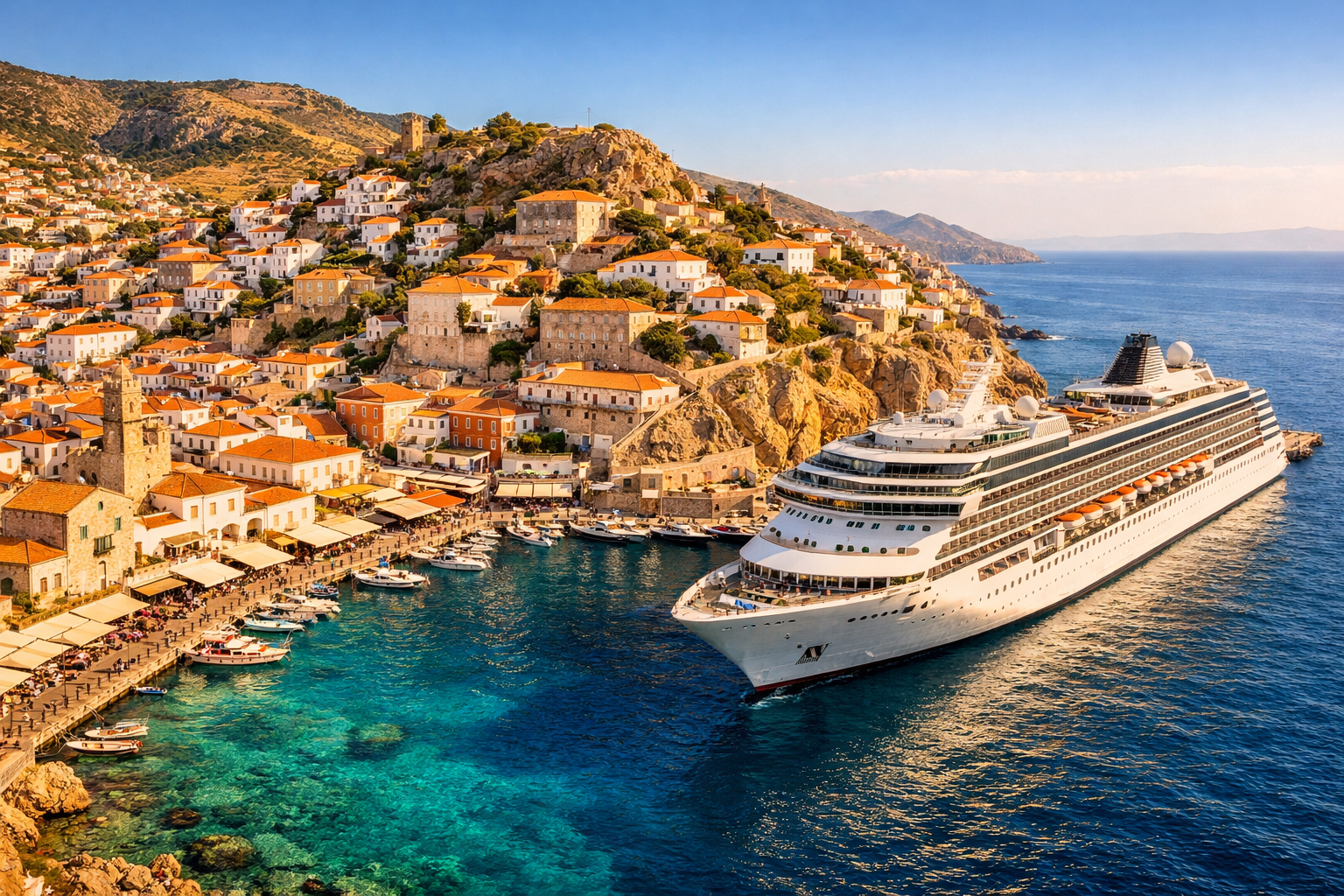
A Mediterranean cruise is the kind of trip that reframes how you think about history, food, and geography. In the span of a single week, you might stand in a Roman forum, eat lunch overlooking the Amalfi Coast, walk a volcanic island that erupted two thousand years ago, and watch the sun set over the Acropolis — all without unpacking more than once. If you’ve been on the fence about Europe by sea, this guide will help you plan it properly.
Whether you’re trying to figure out the difference between Western and Eastern Med itineraries, wondering when to go to avoid the summer crush, or hunting for the ports that actually deliver on the postcard promise, this is the complete resource. For a broader look at cruise regions around the world, start with our Cruise Destinations & Ports hub.
Western vs. Eastern Mediterranean: Which Route Is Right for You?
The single most consequential decision in Mediterranean cruise planning is choosing between the Western and Eastern Mediterranean. Both are excellent. They are not interchangeable.
Western Mediterranean
Western Med itineraries typically depart from Barcelona or Rome (Civitavecchia) and loop through a combination of Spanish, French, and Italian ports — often with a stop in Monte Carlo or Kotor thrown in. A classic 7-night Western Med itinerary might look like:
Barcelona — Marseille/Provence — Genoa or La Spezia (Florence/Pisa) — Civitavecchia (Rome) — Naples/Pompeii — Palma de Mallorca — back to Barcelona.
Best for: First-time Med cruisers, travelers who prioritize Italy and the French Riviera, and those who want the convenience of flying into one major hub (Barcelona or Rome) and staying regional.
The Western Med is the more well-worn circuit. Ports are efficient, excursions are plentiful, and the cultural density per port day is extraordinary. Rome, Florence, Pompeii, and the Cinque Terre are all within reach of ship calls.
Eastern Mediterranean
Eastern Med itineraries reach Greece, Turkey, Croatia, and sometimes Israel, Egypt, or Montenegro. Typical routing out of Athens (Piraeus) or Venice/Trieste might include Mykonos, Santorini, Ephesus (Kusadasi), Istanbul, Dubrovnik, and Kotor. Some itineraries extend to Cyprus, Rhodes, or Crete.
Best for: Travelers drawn to ancient history (Greece and Turkey deliver this in extraordinary depth), couples seeking the visual drama of Santorini and the Aegean, and anyone who wants the contrast of Greek island culture alongside the grandeur of Istanbul.
The Eastern Med has a higher ceiling for transformative experiences — Ephesus alone is worth building an itinerary around — but the logistics can be slightly more complex. Turnaround ports like Athens and Venice require more planning on either end of the trip.
The Hybrid Option
Many 10- to 14-night itineraries bridge both regions, often repositioning from Barcelona to Athens or the reverse. If you’re crossing from North America or Australia specifically for this trip, a longer sailing makes the transatlantic or transpacific flight investment worthwhile. These longer sailings typically add Dubrovnik, Kotor, and Valletta (Malta) to a Western Med base — some of the most visually striking ports on the entire route.
Best Time to Cruise the Mediterranean
The Mediterranean operates a cruise season from roughly early April through late November. How each month plays out matters more here than in almost any other destination, because the difference between May and August is dramatic — in crowd volume, pricing, and the simple comfort of being outside.
May and June: The Sweet Spot
May is as close to a consensus “best month” as exists in Med cruising. Temperatures in most ports range from 20–25°C (68–77°F). You can walk Pompeii in the morning without wilting. Santorini’s caldera path doesn’t become a human traffic jam until July. Hotel and flight prices haven’t fully hit peak season yet. Spring wildflowers still line the Greek hillsides.
June remains excellent, with slightly warmer temperatures and the beginning of peak cruise scheduling — more ship options, more itineraries. By late June the crowds at the most popular sites are building, but the experience is still very manageable.
July and August: Peak Season Trade-Offs
July and August are the busiest months on the Mediterranean by a wide margin. Temperatures regularly hit 30–35°C (86–95°F) in Greece and southern Italy. Santorini’s famous sunsets require arriving early to get a decent vantage point. Shore excursion lines at the Colosseum and Acropolis are long.
That said, peak season has real advantages: the water is warmest for swimming, every excursion operator is running full schedules, and the Med’s island life is at its most vibrant. If July or August is when you can travel, go — just book excursions months in advance and prepare for heat.
Pricing is highest in July and August. For 2026 sailings, peak-season Mediterranean cruise fares were running 25–35% above shoulder-season equivalents on major lines.
September and October: The Savvy Choice
September is the insider pick among experienced Mediterranean cruisers. The summer heat dissipates to a comfortable 22–27°C (72–81°F). Seas are warm — ideal for swimming. The tourist crowds thin noticeably after the first week of September. Prices drop. Santorini and Dubrovnik, which can feel overwhelmed in August, become genuinely pleasurable again.
October extends the shoulder season further: temperatures cool to 18–22°C (64–72°F) in most ports, which some travelers prefer for intensive walking days in Rome or Athens. By late October, some ports and excursions start winding down their shoulder-season operations, and itinerary frequency drops.
November to March: Off Season
Most major cruise lines reduce or suspend Mediterranean schedules from November through March. A handful of repositioning cruises and year-round ships operate through the winter, often with dramatically discounted fares. Mediterranean winters are mild by northern European standards but include significant rainfall, especially in the western basin. If a price-driven, crowd-free experience appeals to you and your expectations around weather are calibrated accordingly, a winter Med sailing can be remarkable value.
Top Ports in Detail
Barcelona, Spain
Barcelona is both an embarkation hub and one of the genuinely great cruise ports in the world. The city delivers at every level — Gaudí’s Sagrada Família and Park Güell for architecture, the Barri Gòtic for medieval street wandering, La Boqueria for food immersion, and Barceloneta beach if the ship is in early enough.
If you’re embarking or disembarking here, build in at least one pre- or post-cruise night. Barcelona rewards time, and one port day isn’t enough.
Practical note: The port is walkable to the lower edge of the old city. Las Ramblas is a 10-minute walk from the cruise terminal, though watch for pickpockets in the immediate area.
Rome (Civitavecchia), Italy
Rome’s cruise port is 80 kilometers from the city center — a 60–75 minute drive by shuttle or organized excursion. This is the most logistically demanding port on the Western Med circuit, but the payoff is Rome.
If you’re on a 7-hour port day, you have time for either the Vatican complex (St. Peter’s Basilica, the Sistine Chapel, the museums) or the Roman Forum and Colosseum area — not both at full depth. Make a decision in advance, book skip-the-line entry, and build in transit time at both ends.
Practical note: The cruise line shuttle to Rome is convenient but expensive. Licensed local taxi drivers outside the port offer comparable pricing for groups of three or more, and private driver services are worth comparing for 4+ passengers.
Santorini, Greece
Santorini is the Mediterranean cruise image — white cube houses, blue-domed churches, the caldera dropping hundreds of meters to the sea below. The reality matches the photograph, which is remarkable. It is also among the most visited small islands on earth, and the experience of arriving alongside three other cruise ships simultaneously is something to plan around.
The main village of Oia (pronounced “Ee-ah”) sits at the northern tip of the crescent island and is the postcard location. Getting there from the tender port at Skala Fira requires either the cable car (usually a significant queue), the donkey path (steep, smells as described), or an organized bus or taxi. Allow adequate time.
Best excursion: A private or small-group catamaran sailing around the caldera, visiting the hot springs, swimming in volcanic water, and watching the sunset from the water rather than the crowded clifftops.
Practical note: Santorini is a tender port — your ship anchors offshore and you take small boats to shore. In rough weather, tendering is occasionally cancelled. It’s rare in summer but worth knowing.
Athens (Piraeus), Greece
The port of Piraeus is about 12 kilometers from central Athens. The Acropolis and the Parthenon are the centerpiece: even heavily visited, they retain a power that photographs don’t fully convey. The site opens at 8 a.m. — go as early as possible. The Acropolis Museum at the base of the hill is worth 90 minutes and provides context the hilltop site can’t.
Beyond the Acropolis, the Plaka district offers a warren of cafe-lined lanes below the hill, and the National Archaeological Museum — slightly further away — houses the finest collection of ancient Greek art in the world.
Practical note: If Athens is your embarkation or disembarkation point, the city has developed considerably as a destination. Koukaki and Monastiraki neighborhoods are both excellent bases. Track live Mediterranean cruise ship movements through our Mediterranean cruise tracker and Europe cruise tracker to see what ships are in Piraeus on a given day.
Dubrovnik, Croatia
Dubrovnik has a problem familiar to very beautiful places: it’s almost too popular. During peak summer months the Old Town — a UNESCO World Heritage Site of polished limestone streets and baroque churches, entirely enclosed within medieval walls — receives more visitors than its infrastructure comfortably absorbs. Cruise ships contribute meaningfully to this.
With that context set: Dubrovnik is still worth the visit. Walk the city walls (2km circuit, extraordinary views). Cable car to Mount Srđ for panoramic perspective. The Old Town’s Stradun street is one of the most beautiful main streets in Europe. Book the wall walk first thing when you arrive to stay ahead of the crowds.
Best strategy for peak season: Get off the ship among the first tenders or shuttle passengers, walk the walls before 9 a.m., explore the Old Town, and be back on the ship by early afternoon before the crush is worst.
Naples and Pompeii, Italy
Naples is the port for two of the Western Med’s great excursions: Pompeii and the Amalfi Coast. You generally can’t do both justice in a single port day — pick one.
Pompeii is a genuinely extraordinary place. The Roman city buried by Vesuvius’s eruption in 79 AD is large, well-preserved, and haunting in ways no amount of preparation quite readies you for. The site requires 3–4 hours to see properly. Take an audio guide or book a guide on-site — context transforms the experience.
The Amalfi Coast is a scenic drive (Positano, Ravello, the cliff-hanging road) that works best as a private driver arrangement rather than a bus excursion. Traffic on the coast road can be severe in high season. Allow for variability and return time.
Naples city itself is underrated as a port stop: the street food is superb (this is the city that invented pizza as we know it), the archaeological museum houses the finest collection of artifacts from Pompeii, and the centro storico is a UNESCO site in its own right.
Best Cruise Lines for the Mediterranean
MSC Cruises has the largest Mediterranean fleet of any single line, with year-round operations and an extensive range of ships. They offer competitive pricing, particularly for European travelers, and home ports in Genoa, Civitavecchia, Barcelona, and Marseille.
Celebrity Cruises offers a premium product particularly well-suited to the Med: included drinks and Wi-Fi on many fare categories, sharp food, and the modern Edge-class ships have large verandas ideal for sailing past coastal scenery.
Norwegian Cruise Line brings Freestyle Dining (no fixed dinner times or seating assignments) and a strong value proposition on their larger ships, with extensive Med itineraries from Barcelona and Rome.
Viking Ocean Cruises operates smaller, more intimate ships (under 1,000 passengers) with an itinerary design philosophy that prioritizes port time over sea-day programming. For travelers who want to maximize time ashore, Viking’s Med sailings are worth serious consideration.
Royal Caribbean brings their full suite of onboard entertainment to the Med on their larger ships, which suits families and those who want the “theme park on water” experience alongside the historic ports.
Practical Planning: What to Know Before You Book
Shoulder season pricing is significantly better. May and September offer 20–35% savings over peak July–August fares on most lines. If your schedule is flexible, the financial and experiential case for shoulder season is strong.
Pre- and post-cruise nights matter more here than in most destinations. Embarkation ports like Barcelona, Rome, and Athens deserve independent time. Book at least one night on either side if you can.
Shore excursion decisions shape the trip. The Med’s most popular sites — Pompeii, the Acropolis, the Vatican, Oia — all have managed access and can be overwhelming if you arrive without a plan. Ship excursions offer convenience and guaranteed return; independent arrangements (private drivers, licensed guides, direct tickets) often offer better value and more flexibility. Research in advance.
Pack for walking on uneven surfaces. Roman cobblestones, Santorini’s stepped paths, Dubrovnik’s limestone streets — a Mediterranean cruise involves a lot of walking on uneven terrain. Comfortable, broken-in shoes make or break port days.
Tender ports require patience. Santorini, Kotor, and some smaller Greek island stops are tender ports. Factor extra time into your plan for tendering, particularly if you have a time-sensitive excursion.
Plan Your Mediterranean Cruise
A Mediterranean cruise rewards research more than almost any other itinerary type. The ports are dense with history, the options for any given port day are genuinely competing, and the difference between a memorable shore excursion and a frustrating one often comes down to advance planning.
If you’re drawn to the Greek islands specifically, compare notes with our Alaska cruise guide and Hawaii cruise guide for how destination-specific planning differs by region — and our Bahamas cruise guide if you’re weighing a shorter first cruise before committing to an international itinerary.
For current ships sailing the region, use our live Mediterranean cruise tracker and Europe cruise tracker — both pull real-time AIS data so you can see exactly what’s in port on any given day.
The Mediterranean has been drawing travelers for three thousand years. A cruise is still one of the most efficient, comfortable ways to move through it. Go in May or September, book your must-do excursions early, and save the Santorini sunset for the last evening before you tender back.
Related guides
Part of our Cruise Destinations & Ports hub.