
Cruise Wear for Women: Outfits & Codes
Day-by-day outfit ideas, dress codes, and weather-specific tips for women packing for a cruise.
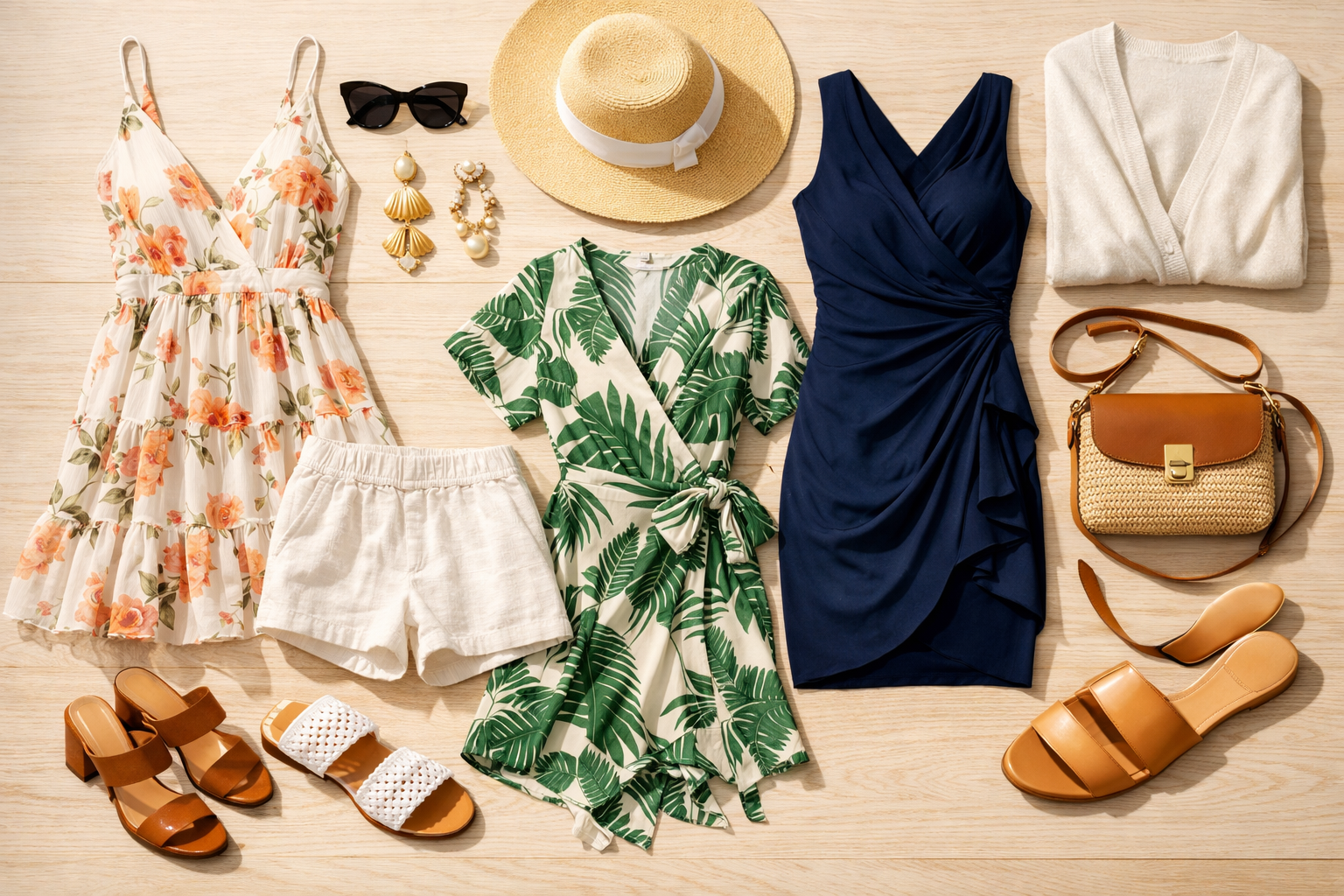
Figuring out cruise wear for women is one of the most common sources of pre-trip anxiety — and also one of the most over-complicated. You’re packing for a vacation that runs from poolside lounging to candlelit dinners, from hiking a volcanic island to dancing in a nightclub at sea. That’s a wide range of dress codes in a single suitcase.
The good news: cruise ship dress codes are more forgiving than they look on paper, and with a clear framework you can build a wardrobe that handles every occasion without overpacking. This guide breaks down exactly what to wear, when to wear it, and how to build a capsule cruise wardrobe that covers everything.
For a broader look at what to bring beyond clothing, see our full guide on what to bring on a cruise and our Cruise Packing hub.
Understanding Cruise Ship Dress Codes
Every cruise line uses its own terminology, but the industry has converged on three primary dress code tiers you’ll encounter in practice. Knowing these upfront makes every packing decision easier.
Resort Casual (Daytime and Casual Evenings)
This is the default dress code for most of the ship, most of the time. Think beach-to-bar: comfortable, put-together, not formal. Sundresses, shorts with a nice top, lightweight linen trousers, casual maxi skirts — all of these work perfectly. The key restriction is that swimwear stays on the pool deck. You cannot walk into the Lido buffet or the casual dining venues in a wet bikini or with a swimsuit as your only coverage. A cover-up, shorts, or a wrap counts; a towel does not.
Resort casual is enforced loosely on most mass-market lines (Carnival, Norwegian, MSC) and slightly more firmly on premium lines (Celebrity, Holland America, Princess). On luxury lines (Regent, Silversea, Seabourn), the standard is higher across the board even during casual evenings.
Smart Casual (Main Dining Room Evenings)
Smart casual is the evening standard for the main dining room (MDR) on non-formal nights. Most 7-night cruises have 5–6 smart casual evenings and 1–2 formal nights.
For women, smart casual means a step above resort wear without crossing into cocktail territory. What works:
- A casual sundress or midi dress
- Dress pants or a skirt with a blouse
- Dressy jeans (dark wash, no distressing) paired with a nice top and heels or wedges
- A wrap dress — arguably the most versatile single item you can pack
What does not work: tank tops, flip-flops, athletic wear, cutoff shorts, or swimsuit cover-ups used as tops.
The enforcement reality: on Carnival and Norwegian, the MDR dress code is lightly enforced and you’re unlikely to be turned away for anything presentable. On Celebrity, Princess, and Holland America, staff are more consistent about it. On luxury lines, smart casual is genuinely smart — think resort-chic rather than dressed-down.
Formal Night (Elegant Evening)
Formal night — sometimes called “Elegant Evening” on Princess or “Gala Night” on MSC — is the most photographed night of the cruise and the one that generates the most packing questions.
For women, formal night calls for:
- A cocktail dress (knee-length to tea-length) in a solid color or classic print
- A floor-length formal gown or evening dress
- Dressy separates: a formal blouse with wide-leg trousers or a maxi skirt
- A pantsuit in a formal fabric (silk, satin, velvet)
What actually gets enforced: on Royal Caribbean, Carnival, and Norwegian, formal night has become more of a “dress up if you want to” suggestion. You won’t be denied entry for wearing a nice sundress. On Celebrity, Princess, and Holland America, the standard is genuinely held — casual wear in the MDR on formal night does get redirected to casual dining venues. On luxury lines, formal night means formal.
One practical note: you do not need a gown unless you want one. A well-chosen cocktail dress photographs beautifully, packs flat, and works for formal night on any mainstream cruise line.
Daytime Outfits: What to Wear on the Ship
Sea Days at the Pool
Sea days are the most relaxed dressing occasions of the cruise. The pool deck is swimsuit territory — bikinis, one-pieces, tankinis, all perfectly appropriate. The considerations are practical rather than stylistic:
Swimwear strategy: Pack at least two swimsuits so one is always dry. If you swim or use the hot tub daily, two suits is the minimum; three is comfortable. Quick-dry fabrics (nylon, polyester) are better than cotton blends, which stay damp for hours and chafe.
Cover-ups: A lightweight cover-up or sarong lets you move from pool to bar to buffet without fully changing. The most practical styles are loose-fitting with some coverage — open-weave tunics, linen shirts, or a kaftan. Bring two so one is always clean.
Sandals: Flat sandals or pool slides for the pool deck. Note that many pool areas require footwear (no bare feet in dining areas or the casino). A pair of comfortable walking sandals that can go from pool to casual lunch covers this without needing separate shoes.
Casual Daytime: Port Days and Sea Day Exploration
When you’re not in swimwear, daytime on the ship or in port calls for comfortable, breathable clothing that works across environments.
What to reach for:
- Lightweight sundresses (double as casual evening wear with a heel swap)
- Shorts with a linen blouse or casual top
- Linen or cotton wide-leg pants for cooler interior spaces
- A light cardigan or denim jacket — ship interiors are heavily air-conditioned, sometimes to arctic levels
The cardigan or light jacket is the most underrated item in cruise wear for women. You will be cold in the main dining room, the theater, the casino, and the corridor to your cabin. Bring at least one, ideally two, regardless of where you’re sailing.
Evening Outfits: What to Wear to Dinner
The Versatile Cruise Dress
The most efficient evening packing strategy for women is building around 3–4 dresses that can each work in different contexts:
- One formal or cocktail dress for formal night(s). Dark colors (navy, black, burgundy) photograph well and hide the inevitable dinner spill.
- Two to three wrap dresses or midi dresses that work for smart casual evenings. These pack without wrinkling, photograph well, and can be dressed up or down with accessories.
- One casual sundress that crosses between daytime and casual evening with a change of shoes.
From these four pieces, a 7-night cruise wardrobe for evenings is fully covered. You can repeat the wrap dresses on different nights — no one is tracking your outfits on a ship full of strangers.
Shoes: The Real Packing Challenge
Shoes are where cruise packing for women gets complicated, because footwear takes up enormous suitcase space and each category genuinely requires a different style:
- Flat sandals or pool slides — pool deck and casual day use
- Comfortable walking shoes — closed-toe for shore excursions (see below)
- Block heels or wedges — the practical evening shoe. Kitten heels and stilettos on a moving ship on wet teak decking are genuinely dangerous and uncomfortable
- One pair of dressy flats or low heels — for formal night if you want a dressier option without a heel
That is four pairs minimum. Most experienced cruisers manage with exactly these four. If the itinerary includes hiking excursions, athletic sneakers replace or supplement the walking shoe.
Accessories
The right accessories transform a small travel wardrobe into something that feels varied. Bring a few statement pieces rather than many small ones:
- A statement necklace changes a plain dress into an event outfit
- Two or three pairs of earrings spanning casual to formal
- A small evening clutch for formal nights and nice dinners
- A crossbody bag for port days (more secure than a tote in crowded port areas)
- A light wrap or pashmina that doubles as an evening accessory and an air-conditioning defense
Shore Excursion Outfits
Shore excursions need their own planning category because the clothing requirements are often the opposite of evening wear.
Beach and Water Excursions
For beach days, snorkeling, or kayaking excursions: a swimsuit under a cover-up, water shoes or sandals, and a rash guard if you’re prone to sunburn. Rash guards provide better sun protection than sunscreen alone and dry quickly.
A dry bag or waterproof tote protects your phone and essentials when you’re near the water — do not rely on your regular purse.
Active Excursions: Hiking, Zip-Lining, Walking Tours
The most common excursion footwear mistake is wearing ship sandals for a shore excursion that involves actual terrain. Zip-lines, walking tours on cobblestone, and any hiking require closed-toe shoes with grip. Your flat sandals will not work for this, and most excursion operators will turn you away without appropriate footwear.
What to wear for active excursions:
- Closed-toe walking shoes or athletic sneakers
- Moisture-wicking shorts or lightweight quick-dry pants
- A breathable athletic top or casual t-shirt
- A hat with a brim for sun protection
- A small daypack for water, sunscreen, and your camera
What to wear for city and cultural tours: Many cultural sites — churches, temples, historic monuments — require covered shoulders and covered knees. A lightweight linen blouse with loose trousers or a maxi skirt is the most versatile combination for cultural touring. If you’re in shorts and want to visit a cathedral, a packable sarong tied at the waist and draped over the shoulders solves the problem in seconds.
General Port Advice
Port areas near the cruise pier are typically tourist-oriented and relaxed about dress. Once you move further into cities and towns, standard travel sensibility applies: avoid flashy jewelry, secure your bag, and dress in a way that doesn’t draw unnecessary attention. Leave the formal jewelry in your cabin safe on port days.
Destination and Weather Considerations
Caribbean, Bahamas, and Mexico
The warmest and most relaxed dress environments. Lightweight fabrics — linen, cotton, moisture-wicking synthetics — are ideal. Even at night, you won’t need heavy layers on the ship unless you’re sensitive to aggressive air conditioning.
Pack for the heat: sundresses, shorts, swimwear, and a single light cardigan. Formal night outfits in light or breathable fabrics (chiffon, jersey) are more comfortable than structured wool or heavy materials.
Alaska and Northern Europe
Cold-weather destinations require a completely different approach. See our Caribbean cruise packing list for warm-weather specifics; for colder itineraries, the principles are the same but the clothing weight shifts significantly.
For Alaska: layers are everything. A thermal base, a mid-layer fleece, and a waterproof outer shell covers the excursion side. Evening wear still follows the standard dress code tiers, but you’ll want to add a blazer or structured jacket where a Caribbean cruise uses a light wrap.
Mediterranean and Europe
Mediterranean summers are hot — similar to the Caribbean in July and August. Spring and fall sailings require more versatile layering. European cultural sites place a premium on covered clothing, so pack blouses and trousers that cover shoulders and knees for the touring days, even if it means wearing them over a sundress base layer.
Fabrics That Actually Work at Sea
Not all fabrics travel equally well on a cruise. You’re dealing with humidity, salt air, potential motion sickness-level sweating, and the need to look presentable at dinner after a full day in port.
Best fabrics for cruise wear for women:
- Jersey and knit fabrics — wrinkle-resistant, comfortable, dry quickly, can be dressed up or down
- Linen — breathable and destination-appropriate, but wrinkles badly; use for casual daytime when imperfection is fine
- Chiffon and georgette — elegant evening options that pack light and flow beautifully without wrinkling as badly as structured fabric
- Polyester-blend “travel” fabrics — specifically engineered for packing, wrinkle resistance, and moisture management; worth the investment for key pieces
- Quick-dry nylon — non-negotiable for swimwear and excursion clothing in humid climates
Fabrics to minimize:
- 100% cotton — wrinkles badly, stays wet, takes forever to dry; fine for casual daytime pieces, impractical for anything you need to look presentable in
- Structured wool — too heavy and too warm for most cruise itineraries; if you need the weight, pack a lightweight wool blend
- Silk — beautiful but requires careful handling, stains easily, and doesn’t survive salt air and sunscreen well unless you’re meticulous
A Practical Packing Framework for 7 Nights
Rather than building a packing list from scratch, start with this framework and adjust for your specific itinerary:
Swimwear and pool:
- 2–3 swimsuits
- 2 cover-ups
- Flat sandals or pool slides
Casual daytime:
- 4–5 casual tops or blouses
- 2–3 pairs of shorts or casual pants
- 1–2 casual sundresses
- 1–2 light cardigans or a denim jacket
Shore excursions:
- 1–2 athletic or moisture-wicking tops
- 1 pair of closed-toe walking shoes or sneakers
- 1 pair of quick-dry shorts or lightweight pants
- 1 packable sarong (covers many problems)
- 1 compact daypack
Evenings:
- 2–3 wrap dresses or midi dresses for smart casual evenings
- 1 cocktail dress or formal option for formal night(s)
- Block heels or wedges for evenings
- Statement accessories to vary the look night to night
Shoes total: 4 pairs — pool sandals, walking shoes, block heels or wedges, optional dressy flat
This wardrobe handles every occasion on a standard 7-night cruise without requiring an oversized bag.
What to Leave at Home
A few items that end up in cruise suitcases and shouldn’t:
An iron or garment steamer. Irons are prohibited. Most ships have self-service laundry rooms with irons available, and the laundry service can press formal items. Alternatively, pack wrinkle-resistant fabrics and hang items in the bathroom during a hot shower to release creases.
Multiple formal gowns. Unless you’re on a luxury line with multiple formal nights and a genuine desire to wear them, one formal option is sufficient. The effort-to-payoff ratio for packing multiple gowns on a 7-night mainstream cruise is not there.
All of your jewelry. Bring a few pieces you’d be genuinely upset to lose but don’t bring irreplaceable or high-value jewelry. The cabin safe exists but port pickpocketing and on-ship petty theft are real risks over the course of a week.
New shoes. Any shoe that has not been broken in before the cruise will destroy your feet on the first shore excursion day. Break in your walking shoes at home.
Final Thoughts on Cruise Attire for Women
The women who pack best for cruises think in systems rather than individual outfits. A handful of versatile dresses, a consistent shoe strategy, lightweight accessories that pack in a small pouch, and fabrics chosen for durability in humid conditions — that combination handles everything a standard cruise throws at you.
The biggest mistake is over-packing for formal nights and under-packing for comfort. You need one strong formal outfit, not four. You need excellent walking shoes for port days, not an extra cocktail dress.
For a complete packing checklist covering everything from documents to medications, see our guide on what to bring on a cruise. If you’re heading to the Caribbean specifically, the Caribbean cruise packing list covers destination-specific essentials including reef-safe sunscreen requirements, excursion gear, and what the ship provides.
Everything else in the Cruise Packing hub covers the gear, toiletries, and logistics side of the equation. The clothing side, once you’ve built your system, is the easy part.
Related guides
Part of our Cruise Packing hub.