
Carnival vs Royal Caribbean: Which Wins?
Carnival vs Royal Caribbean compared on price, ships, dining, entertainment, cabins, and destinations, so you can pick the right line for your trip.
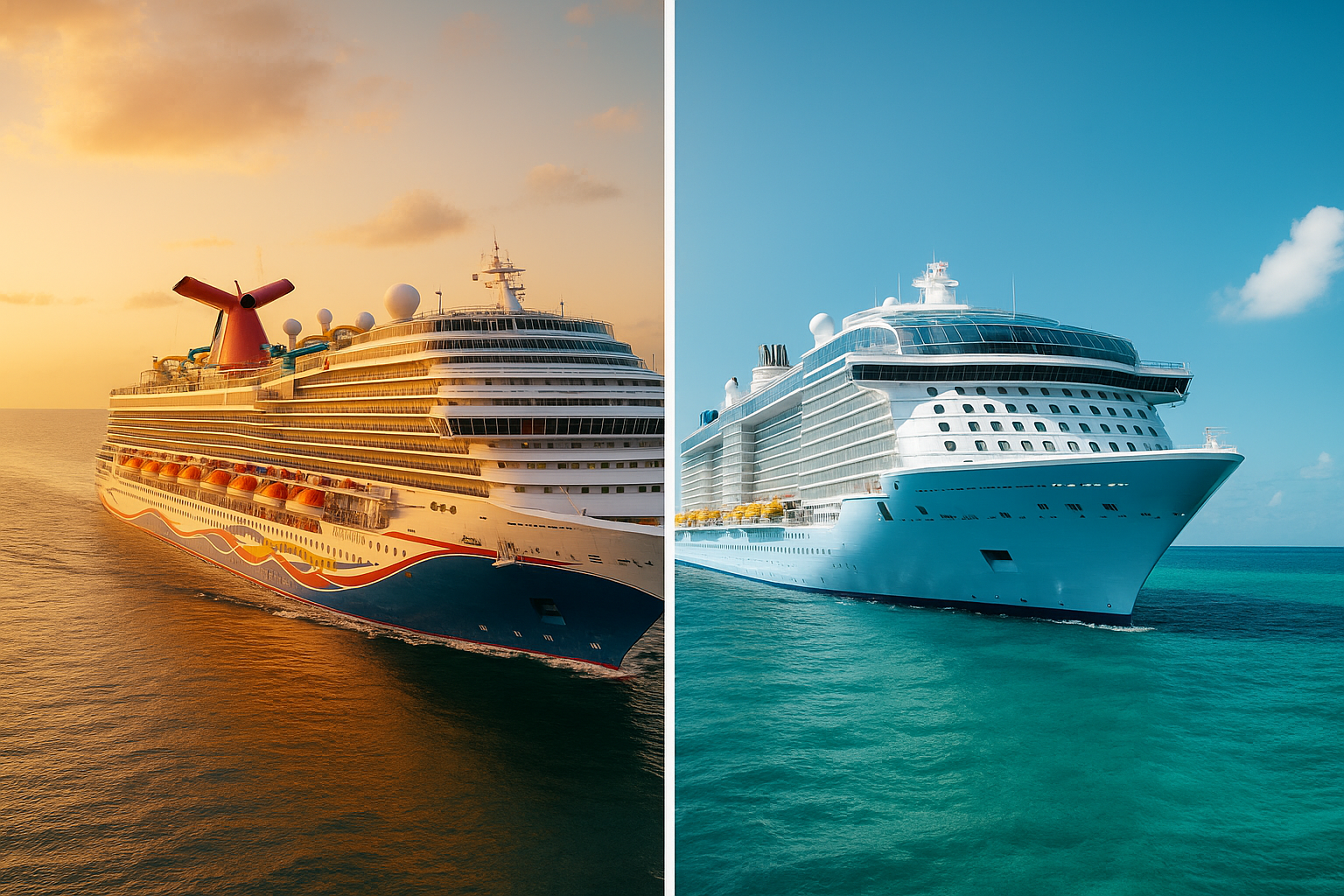
So you’ve narrowed it down to two names — Carnival and Royal Caribbean — and now you’re staring at booking pages, trying to figure out which one actually deserves your vacation dollars. You’re not alone. These are the two biggest cruise lines on the planet, and the question of “carnival vs royal caribbean” is one of the most searched decisions in all of travel planning.
The honest answer? Both are excellent. But they are built for different kinds of travelers, and picking the wrong one can turn a dream vacation into a mildly disappointing one. This guide gives you a direct, no-fluff breakdown across every major category so you can make the call with confidence.
For a broader look at how these two stack up against other brands, start with our Cruise Lines hub, where we track every major operator side by side.
Quick Overview: Carnival vs Royal Caribbean at a Glance
Before diving into the details, here’s the head-to-head summary for people who want the short version.
| Category | Carnival | Royal Caribbean |
|---|---|---|
| Average 7-night fare (per person) | ~$534–$544 | ~$630–$680 |
| Fleet size | ~29 ships | ~29–30 ships |
| Signature ships | Mardi Gras, Celebration | Icon of the Seas, Star of the Seas |
| Best for | Budget travelers, party atmosphere, short getaways | Families, activity seekers, variety of destinations |
| Drink package (per person/day) | ~$83.94 (CHEERS!) | ~$56–$120 (Deluxe Package) |
| Daily gratuities | $17/day (standard cabins) | $18.50/day (standard cabins) |
| Private island | Half Moon Cay, Celebration Key | Perfect Day at CocoCay |
| Destinations | Caribbean-heavy, some Alaska/Europe | Caribbean, Alaska, Europe, Asia, global |
| Onboard vibe | Loud, festive, unpretentious | Action-packed, resort-style, polished |
The one-sentence verdict: Carnival wins on price and party energy; Royal Caribbean wins on breadth of activities, destinations, and overall polish.
Pricing and Value
Base Fares
Carnival is consistently cheaper to board. A typical 7-night Caribbean sailing runs roughly $534–$544 per person for an interior cabin, compared to $630–$680 on Royal Caribbean — a gap of about 15–20%. That difference compounds fast for a family of four.
However, base fares are only part of the story. Royal Caribbean’s newer mega-ships include more complimentary amenities that would cost extra on other lines, which can narrow the gap depending on how you cruise.
Drink Packages
Carnival’s CHEERS! package costs $83.94 per person, per day (with the 18% gratuity included) when purchased in advance. Onboard, that rises to $89.94. It covers cocktails, beer, wine, and non-alcoholic drinks up to a cap of 15 alcoholic drinks per day.
Royal Caribbean’s Deluxe Beverage Package is more variable — pricing swings from $56 to $120 per person, per day depending on the ship, sailing date, and how far in advance you buy. That 18% gratuity is added on top. Watch for Royal Caribbean’s frequent promotions bundling drink packages into the base fare.
Wi-Fi
Both lines charge for internet. Royal Caribbean’s Surf + Stream package runs approximately $20–$35 per device per day. Carnival’s social media and streaming packages are comparable in price. Neither line includes Wi-Fi in standard fares, though suite guests sometimes receive complimentary access.
Gratuities
As of April 2026, Carnival charges $17.00 per person per day for standard cabins and $19.00 for suites. Royal Caribbean charges $18.50 per person per day for standard cabins and $21.00 for suites. Over a 7-night sailing, that’s a $10.50 per-person difference — meaningful but not dramatic.
Bottom line on value: Carnival is the cheaper entry point. Royal Caribbean offers more for the money if you’re comparing experiences rather than just sticker prices.
Ships and Fleet
Carnival’s Fleet
Carnival operates roughly 29 ships, with the Excel-class representing its flagship generation. Ships in this class — including Mardi Gras, Carnival Celebration, Carnival Jubilee, and the upcoming Carnival Festivale (2027) and Carnival Tropicale (2028) — carry 6,400+ guests and are packed with signature features:
- BOLT: The Ultimate Seacoaster — an at-sea roller coaster
- Carnival Waterworks waterslide parks
- Loft 19 adults-only rooftop retreat
- Summer Landing outdoor area with multiple pools
- Excel’s Serenity Adults-Only Retreat
The Excel class is competitive but tops out around 180,000 gross tons. Carnival’s older ships are smaller and more approachable, which some cruisers actually prefer.
Royal Caribbean’s Fleet
Royal Caribbean has been building the largest cruise ships ever constructed. The Icon class — led by Icon of the Seas (2024), Star of the Seas (2025), and Legend of the Seas (coming 2026) — are the most talked-about ships in the industry, each measuring 1,196 feet long across 20 decks with:
- iFly indoor skydiving simulator
- FlowRider surf simulators
- Rock climbing walls
- Go-kart tracks (on certain ships)
- North Star observation capsule
- Ziplines
- Eight distinct neighborhood zones onboard
- Seven pools and 40+ dining and bar venues
The scale is genuinely different. Royal Caribbean’s biggest ships feel less like cruise ships and more like floating theme parks.
Bottom line on ships: If you want the most technologically advanced, largest ships afloat, Royal Caribbean has no peer right now. Carnival’s Excel class is excellent, but it’s competing in a different weight class.
Food and Dining
Carnival
Carnival’s dining program is widely praised as a strong value. The main dining room serves three-course dinners with rotating menus — quality is solid and consistently better than you might expect at this price point. Key complimentary options include the Lido Marketplace buffet, Guy Fieri’s Guy’s Burger Joint, the Blue Iguana Cantina (Mexican), and a deli.
Specialty dining includes Fahrenheit 555 Steakhouse, Cucina del Capitano (Italian), Ji Ji Asian Kitchen, and the Bonsai Sushi venue. Prices for specialty restaurants run $15–$45 per person.
Royal Caribbean
Royal Caribbean’s complimentary dining is comparable in scope — main dining rooms, Windjammer buffet, Sorrento’s pizza, and Park Café — but specialty dining is where it pulls ahead in sheer variety. Options include Chops Grille (steakhouse), Giovanni’s Table (Italian), Izumi (Asian fusion/hibachi), 150 Central Park (on Oasis-class ships), and multiple others depending on the vessel.
On Icon-class ships, the dining roster expands significantly with venues like Empire Supper Club, Pier 7, and dedicated neighborhood restaurants that aren’t available anywhere else at sea.
Bottom line on food: Carnival delivers excellent value for the money. Royal Caribbean’s newer ships offer more dining variety, but you’ll pay more to access it. Neither line is going to be mistaken for a luxury cruise — but both will keep you well-fed.
Entertainment and Activities
This is one of the sharpest dividing lines between the two lines.
Carnival
Carnival leans into its “Fun Ship” identity with:
- Punchliner Comedy Club (rotating headline comedians)
- Playlist Productions themed live shows
- Piano bars, karaoke, and trivia nights
- Seuss at Sea and Camp Ocean kids’ programming
- Robust casino operations
- The BOLT roller coaster and waterslides on Excel-class ships
- Hasbro, The Game Show on some ships
The entertainment is fun, accessible, and appropriately unpretentious. It’s not going to blow anyone away, but it keeps everyone busy.
Royal Caribbean
Royal Caribbean invests heavily in entertainment infrastructure that simply can’t exist on smaller ships:
- AquaTheater — outdoor amphitheater with acrobatic dive shows
- Broadway-caliber shows (Grease, Mamma Mia, Hairspray depending on ship)
- iFly and FlowRider simulators
- Rock climbing, zip lines, go-karts
- The Perfect Storm waterslide trio
- Laser tag and escape rooms on newer ships
- Casinos and extensive nightlife venues
- Kids’ clubs segmented by age with dedicated activities
For families with teenagers, Royal Caribbean is almost impossible to beat. The activity density keeps even the most restless cruisers occupied.
Bottom line on entertainment: Royal Caribbean wins this category decisively, particularly for active families and thrill-seekers.
Cabins and Staterooms
Categories
Both lines offer interior, oceanview, balcony, and suite categories. The range is similar; pricing differences show up primarily because Royal Caribbean’s newer ships command a premium.
Balcony Pricing
Balcony cabins on Carnival typically run $100–$200 per person less than comparable Royal Caribbean balconies on the same itinerary length. On a 7-night sailing, a Carnival balcony might average $900–$1,200 per person while Royal Caribbean runs $1,100–$1,500.
Suite Experience
Royal Caribbean’s Suite Class program — especially on Icon and Oasis-class ships — is genuinely elevated. The Star Class suite tier includes a dedicated Royal Genie concierge, reserved seating at shows, unlimited specialty dining, premium beverage packages, and priority boarding. It’s a fundamentally different product.
Carnival’s suites are comfortable and offer some priority perks, but the suite program doesn’t match Royal Caribbean’s depth for high-end travelers.
Bottom line on cabins: Carnival offers better value per square foot at the standard cabin level. Royal Caribbean’s suite experience is in a different league for those willing to pay for it.
Destinations and Itineraries
Caribbean
Both lines are deeply Caribbean-focused. The difference is in breadth: Royal Caribbean sails to more ports across the Eastern, Western, and Southern Caribbean, while Carnival leans more heavily on Bahamas and Western Caribbean routes, especially from its Florida and Gulf Coast homeports.
Alaska and Europe
Royal Caribbean runs more robust Alaska and European programs. Carnival does offer these itineraries seasonally, but the variety and frequency are narrower.
Private Islands
This is a genuinely interesting comparison.
Royal Caribbean’s Perfect Day at CocoCay (Bahamas) is the gold standard in private island destinations. After a $250 million renovation, it features Thrill Waterpark with the 135-foot Daredevil’s Peak waterslide — the tallest in the Caribbean — an enormous freshwater Oasis Lagoon, complimentary beach access, and paid-upgrade beach clubs and cabanas. Complimentary food is included for all guests.
Carnival’s Celebration Key opened in July 2025 after a $600 million investment. It features a 275,000 square-foot lagoon (more than eight times larger than CocoCay’s), a 10-story Suncastle with dual waterslides, 166-seat swim-up bar, and a distinct beach club atmosphere. Food is complimentary at Captain’s Galley Food Hall, but the selection is more limited than CocoCay’s all-day buffet.
Carnival’s Half Moon Cay is quieter and more beautiful in a natural beach sense — think soft white sand, calm turquoise water, and horseback riding in the surf. It’s less of a theme park and more of an actual island escape.
Bottom line on destinations: Royal Caribbean offers more variety globally and has the edge with CocoCay. Carnival’s Celebration Key is a genuine competitor, and Half Moon Cay is arguably the most naturally beautiful private beach in the Bahamas.
Who Each Line Is Best For
Carnival Is Best For:
- Budget travelers who want a real Caribbean vacation without spending premium prices
- Party-goers and younger crowds who want a high-energy social scene
- First-time cruisers who want an accessible, unpretentious introduction to cruising
- Short getaways — Carnival dominates the 3–5 night market from ports like Miami, Tampa, and Galveston
- Families on a tighter budget who still want waterslides and kids’ clubs without overspending
- Gulf Coast departures — Carnival has the strongest homeport network from Texas and the Southeast
Royal Caribbean Is Best For:
- Active families with older kids and teenagers who need a firehose of activities
- Couples seeking a more polished experience without going fully luxury
- Travelers who want global variety — Alaska, Europe, Asia, the Mediterranean
- Suite travelers who want a genuinely premium onboard product
- Repeat cruisers who’ve done Caribbean basics and want more
- Thrill-seekers who want roller coasters, skydiving simulators, and waterparks all on one ship
Final Verdict: Carnival vs Royal Caribbean
Here’s the honest summary: neither line is universally better. The right choice depends entirely on what you’re optimizing for.
Choose Carnival if price is your primary concern, you want a festive high-energy atmosphere, or you’re departing from a Gulf Coast or Southeast homeport on a short sailing. Carnival punches above its weight on food quality and delivers genuine fun without requiring you to spend a fortune.
Choose Royal Caribbean if you’re traveling with active kids or teenagers, you want access to the most technologically advanced ships ever built, or you’re planning an itinerary beyond the standard Caribbean loop. The premium is real, but so is the return.
Both lines are operated by Carnival cruise line and Royal Caribbean cruise line respectively — two of the most financially stable and operationally experienced operators in the industry.
For a deeper look at how these two compare against the full field, read our best cruise lines compared guide, or check out our cruise line family tree: who owns what to understand the corporate structure behind every major brand.
Whatever you decide, you’re choosing between two industry leaders that have collectively moved hundreds of millions of passengers. The real question is which one fits your vacation — and now you have everything you need to answer it. Browse the full breakdown of every major operator at the Cruise Lines hub, and start comparing sailings on your dates.
Related guides
Part of our Cruise Lines hub.