
Best Cruise Cabin Location to Book
How to pick the best cruise cabin location: midship vs aft vs forward, deck selection, and the noise traps and seasickness pitfalls to avoid.
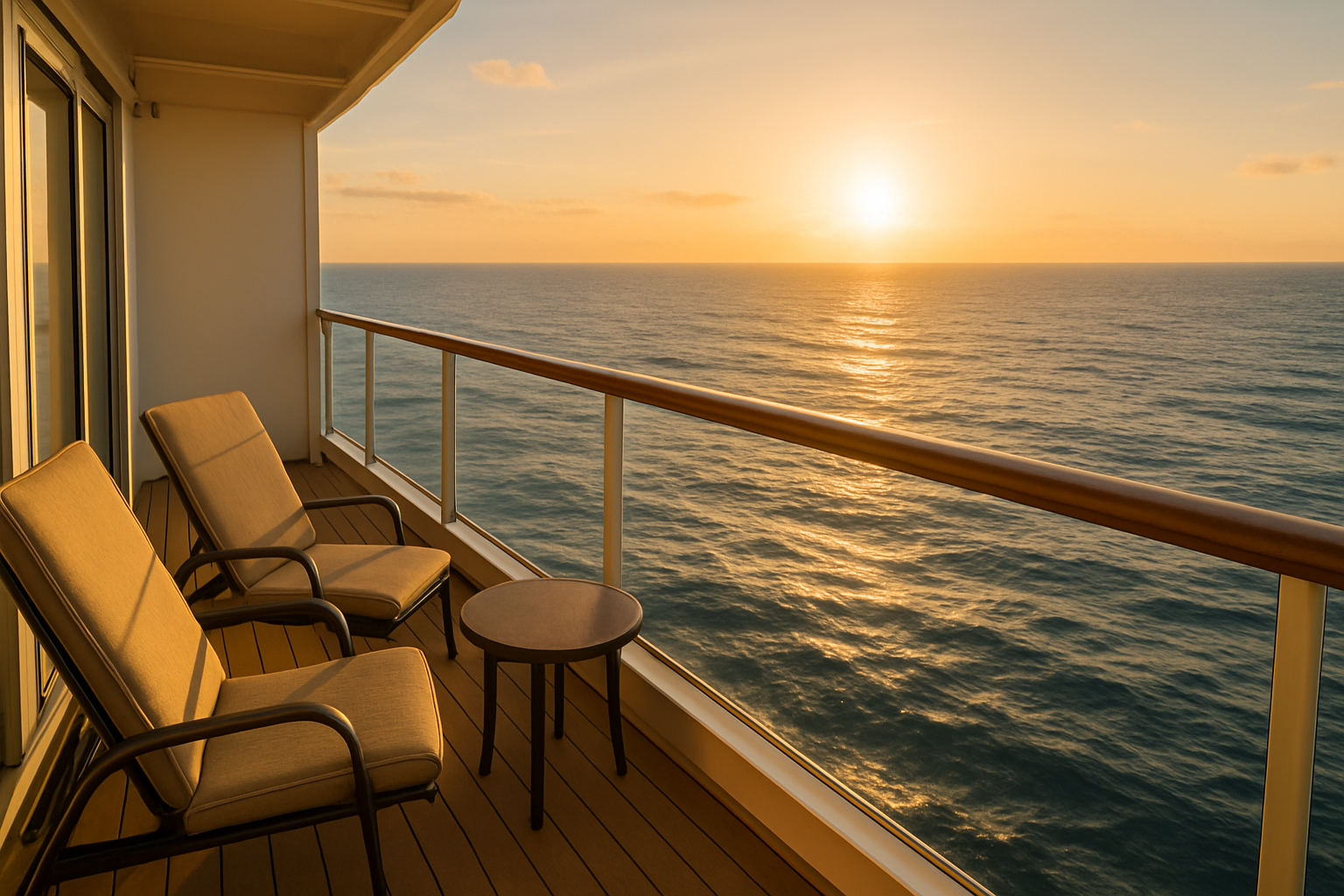
Choosing a cruise ship cabin is more than picking a category and clicking confirm. The specific location of your room on the ship — which deck, how far forward or aft, which side — will directly affect how much motion you feel, how well you sleep, how often you’re disturbed by noise, and what you see from your window or balcony. Get it right and your cabin becomes a genuine retreat. Get it wrong and you’ll spend a week listening to nightclub bass through your floor or waking up seasick at 3 AM.
This is your complete cruise cabin location guide. Whether you’re a first-timer trying to figure out what “midship” actually means or a returning cruiser who got burned by a bad cabin and wants to do better, this walkthrough covers everything you need to know before locking in a room. Start with our Plan a Cruise hub if you’re still in the early stages of figuring out your trip.
Why Cabin Location Matters More Than Most People Realize
Most first-time cruisers obsess over cabin category — interior, oceanview, balcony, or suite — without paying any attention to the actual cabin number. That’s understandable. The category determines your price, your view, and your amenities.
But two balcony cabins on the same ship can deliver completely different experiences depending on where they sit. One might be a quiet sanctuary with stunning aft views of the ocean. The other might be directly above the ship’s main nightclub with sound vibrations rattling the walls until 2 AM. Same category, same deck even — wildly different experience.
The best cruise cabin location comes down to three overlapping factors: motion, noise, and views. Here’s how each one maps to ship geography.
Forward vs. Midship vs. Aft: The Single Most Important Decision
The position of your cabin along the length of the ship — forward (front), midship (middle), or aft (rear) — affects both how much motion you feel and the character of your surroundings.
Midship Cabins: The Consistently Smart Choice
Midship cabins sit near the center of the ship, roughly where the vessel’s axis of rotation is located. When a ship pitches and rolls in swells, passengers in midship cabins feel the least movement. This is physics: you’re closest to the pivot point, so the arc of motion is smallest.
If you’re even slightly concerned about seasickness — or if this is your first cruise and you genuinely don’t know how you’ll handle open-ocean motion — book midship. It’s the safest default. Our guide on how to avoid seasickness on a cruise covers the full picture, but location is one of the most reliable preventive measures you have before you ever set foot on the ship.
Midship cabins also tend to be closer to elevators and central amenities, which cuts down on walking time — a real convenience on a ship that might stretch 1,100 feet from bow to stern.
The downside: midship balcony cabins are the most popular and often sell first or carry a slight premium. Book early if you want your pick.
Forward Cabins: Bow Views and Quiet Halls
Forward cabins occupy the front third of the ship. They often have the advantage of quieter corridors — fewer passengers are heading to the bow end of any given deck compared to the busy midship area. On some ships, forward-facing penthouse suites or cabins with bow-facing windows offer genuinely spectacular views of the ship cutting through the sea.
The trade-off is motion. The bow of a ship rises and falls more dramatically than the center in rough seas. If you’re prone to seasickness, forward cabins — especially on lower decks where the hull movement is amplified — can be rough in challenging conditions.
There’s also a practical noise issue specific to forward lower-deck cabins: anchor chain noise. When the ship drops anchor in a tender port at 6 AM, the chain runs through the hawse pipe in the bow and makes a noise that sounds like a freight train passing through your room. Always check whether your forward cabin is directly above or adjacent to the anchor chain locker before booking.
Aft Cabins: The Hidden Gem (With Caveats)
Aft cabins sit at the stern of the ship, and among experienced cruisers, they’re some of the most coveted rooms on any vessel. The reason is simple: aft balconies face the ship’s wake. You sit on your private balcony watching the churning white water spreading out behind you, a view that’s unique to this position and unavailable from any other cabin location.
Aft balconies also tend to be wider than side-facing balconies — the geometry of the ship’s tapering stern creates more generous outdoor space — and they’re often shielded from wind on one side, making them more usable at sea.
The caveats are real, though. Engine and propeller vibration is most noticeable at the stern, particularly on lower aft decks and when the ship is maneuvering slowly into port. Some passengers find it a minor background hum; others find it sleep-disrupting. Upper aft decks on modern ships tend to minimize this. Soot from the ship’s exhaust stacks can also settle on aft balconies, leaving a fine black residue — particularly when the ship is operating at low speeds or departing port. Worth checking reviews for the specific ship you’re considering.
High Deck vs. Low Deck: The View and Stability Trade-Off
Deck selection adds another dimension to the best cruise cabin location equation.
Higher Decks: Views and Premium Pricing
Balcony cabins on higher decks sit further above the waterline, which typically means better views — the horizon is unobstructed, you’re above the lifeboats that can block sight lines on lower decks, and you have a more dramatic sense of height above the sea. Upper-deck cabins are also usually the first to sell and the last to be discounted.
The physics of ship motion work against higher decks, though. Think of a ship as a pendulum: the higher you are above the waterline, the greater the arc you swing through when the ship rolls. Passengers in high-deck cabins feel more side-to-side motion in beam seas compared to those in low-deck equivalents.
Higher decks are also farther from the gangway, tender boarding areas, and often the main dining rooms — which can mean a lot of elevator time during port-intensive itineraries.
Lower Decks: Stability and Practicality
Lower-deck cabins sit closer to the waterline and the ship’s center of gravity. They feel more stable in rough seas, which makes them the sensible choice if you’re prioritizing motion comfort over views. They’re generally priced lower, too.
The main disadvantages are practical. Views from lower-deck balconies may be partially blocked by lifeboats — always verify this for your specific cabin on the deck plan. Lower decks also mean more walking when you’re heading up to the pool, restaurants, or entertainment venues.
The sweet spot that most experienced cruisers target: midship, middle decks. Not so high that you feel the roll, not so low that lifeboats block your view. It’s the cabin location equivalent of the middle seat on a bus — exactly where things are smoothest.
Port Side vs. Starboard Side: Does It Matter?
For most itineraries, port (left) vs. starboard (right) matters mainly for views in port and sunlight patterns at sea.
On itineraries where the ship spends the morning alongside a dock, knowing which side faces the pier vs. the open sea can make a real difference. Balcony cabins on the dock side will look at the port terminal; cabins on the sea side will have open water views. This varies by ship, itinerary, and port — but it’s worth researching for itineraries like Norwegian fjords or Alaska’s Inside Passage, where the scenery is dramatically one-sided.
Sunlight follows a similar logic. On east-west routes, south-facing balconies (starboard in the Northern Hemisphere heading west) catch more sun during the day. If you want to sip morning coffee in the sun vs. afternoon shade, it’s worth checking the itinerary’s general direction of travel.
For most Caribbean or Mediterranean itineraries with varied port calls, port vs. starboard makes minimal practical difference. Don’t overthink it unless you’re on a scenic route where it matters.
Interior vs. Oceanview vs. Balcony vs. Suite: Location Considerations by Category
Cabin category intersects with location in ways that aren’t always obvious. Our detailed guide on how to choose a cruise cabin covers the category decision thoroughly. Here’s how location strategy changes by category:
Interior Cabins
Interior cabins have no windows, so views are irrelevant. Your location priorities shift entirely to noise and motion. Midship, middle deck is ideal. The one noise issue that’s especially important for interior cabins: since you have no natural light anyway, you’re more dependent on a quiet environment for good sleep. Avoid interior cabins directly adjacent to elevator banks, crew service corridors, or laundry facilities.
Oceanview and Porthole Cabins
Check the deck plan carefully before booking any oceanview cabin. On older ships, some “oceanview” cabins have portholes partially blocked by davits, lifeboats, or structural outcroppings. Verify that your specific cabin number has an unobstructed view — cruise ship review databases like CruiseCritic’s cabin review tool are invaluable here.
Balcony Cabins
Balcony location is where cabin selection gets most consequential. You’re paying a premium specifically to use that outdoor space, so you want to be sure it’s actually usable and offers genuine views. Key checks:
- Is the balcony above a lifeboat that cuts off the lower half of your view?
- Is it on a deck with an overhanging public deck above that limits your sky view?
- Is it aft, with potential soot deposits or engine vibration?
- Is it on the side that will face the pier at every port?
For balcony cabins, always pull up the deck plan and identify not just your deck but also the deck above and the deck below.
Suites
Suite location is often less flexible — there are fewer of them and they occupy fixed positions on the ship, typically high decks forward or aft. Many premium suites on ships like Norwegian’s Haven or MSC’s Yacht Club operate as self-contained enclaves with their own areas, so external noise factors matter less. Focus on the specific amenities of the suite deck rather than trying to apply the general rules above.
The Noise Factor: Cabins to Avoid
Noise is one of the most common sources of cruise cabin regret, and it’s almost entirely avoidable if you check the deck plan before booking. Here are the specific locations to avoid:
Below the pool deck. Deck chairs scraping on the teak at 6 AM, passengers doing laps early in the morning, and service staff setting up towel stations — the pool deck generates consistent early-morning noise. Avoid cabins directly below it.
Above or below entertainment venues. Main theaters, nightclubs, and live music venues generate significant bass vibration and crowd noise that carries through the decks. Check whether any entertainment venue is one deck above or below your cabin.
Adjacent to elevator banks. Elevator mechanics, doors opening and closing, and the ambient noise of passenger traffic make elevator-adjacent cabins among the noisiest on any ship. Look for cabins that are at least two or three rooms away from the nearest elevator.
Near the laundry facilities or crew service areas. Crew laundry runs around the clock and generates noise and occasional mechanical sounds. Service corridors see early-morning traffic when crew are setting up for breakfast.
Forward lower decks near the anchor. As mentioned, anchor operations can wake you up with significant noise in tender ports.
How to Research Cabin Location Before You Book
The deck plan is your primary tool. Every major cruise line publishes detailed deck plans on their booking pages — use them. Here’s a practical approach:
- Identify the category and general location you want (midship, middle deck, balcony).
- Pull up the deck plan and find cabin clusters that match.
- Check the deck above and below your target cabin for entertainment venues, pool decks, or other noise sources.
- Look up your specific cabin numbers on CruiseCritic’s cabin review database, where past passengers often leave detailed notes about noise, obstructions, and specific quirks.
- Search for “[ship name] deck plan” on YouTube — many experienced cruisers have posted walkthroughs of specific ships that will tell you more than a static image can.
Never book a guaranteed cabin if location matters to you. Guaranteed cabins offer the lowest price in a category in exchange for letting the cruise line assign your specific room. You might get upgraded — or you might get the worst cabin in the category. If you’ve done your homework and know exactly which cabin numbers you want, pay the small premium to select your room.
Quick Reference: Best Cruise Cabin Location by Priority
| Your priority | Best location |
|---|---|
| Minimize seasickness | Midship, lower-middle deck |
| Best balcony views | Upper aft or forward penthouse |
| Quietest cabin | Midship, away from elevators and venues |
| Best value comfort | Midship, mid-deck interior or balcony |
| Scenic route (fjords, Alaska) | Sea-facing side, any deck |
| Special occasion / suite | Ship-specific — research the suite deck |
What First-Timers Often Get Wrong
The most common mistake first-time cruisers make is treating the cabin as an afterthought — picking a category, taking whatever cabin number comes up first, and moving on. Location matters enough to spend 20 minutes with a deck plan before confirming.
The second most common mistake is booking a guaranteed cabin to save $50 and ending up in the one room on the ship directly above the disco. The savings rarely outweigh the disruption.
If you’re still getting oriented to how cruise planning works in general, the first-time cruiser guide walks through all the decisions — cabin being one of many — that add up to a trip that actually works for you.
The Bottom Line on Cruise Cabin Location
The best cruise cabin location for most people is midship, middle deck, away from elevator banks and entertainment venues. If you’re on a scenic itinerary, add “sea-facing side” to that. If you’re after balcony views and can tolerate slightly more motion, an upper aft cabin is often the most rewarding room on the ship.
What you’re really doing when you research cabin location is eliminating the risk of paying good money for an experience that’s diminished by something entirely preventable. Twenty minutes with a deck plan before booking can be the difference between a cruise you’ll remember fondly and one where you spent a week wishing you’d picked a different room.
For more guidance on every aspect of planning your trip from scratch, visit the Plan a Cruise hub.
Related guides
Part of our Plan a Cruise hub.