
When a Cruise Ship Became the Only Doctor for Miles: Seabourn Pursuit's Extraordinary Stop at Robinson Crusoe Island
The Seabourn Pursuit's April 4 call at Chile's remote Robinson Crusoe Island turned into something far more meaningful than a scenic port stop — the ship's medical team provided X-ray services to islanders who had gone without diagnostic imaging for months.
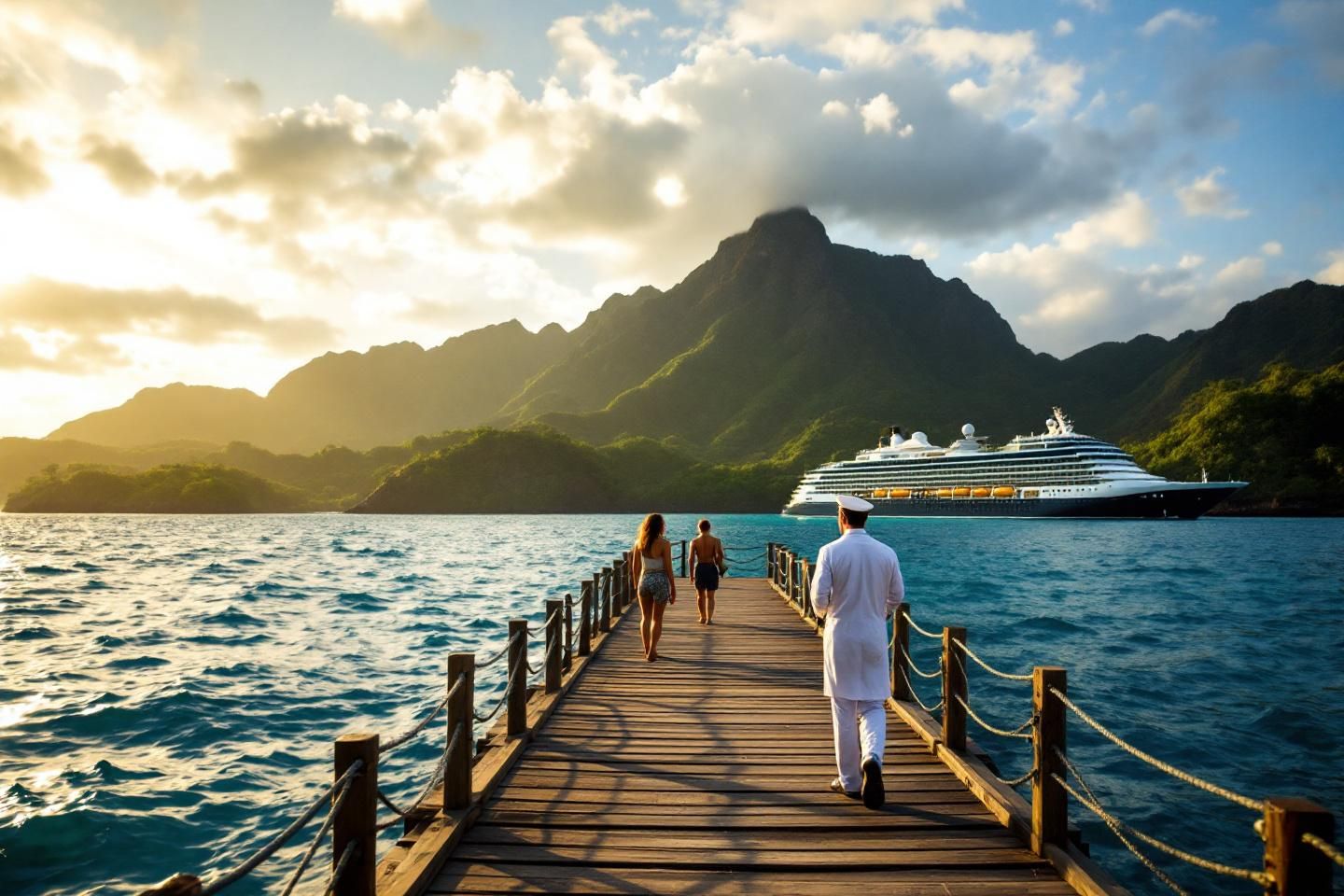
When a Cruise Ship Became the Only Doctor for Miles: Seabourn Pursuit’s Extraordinary Stop at Robinson Crusoe Island
Most cruise port calls follow a familiar rhythm: passengers go ashore, explore, shop, eat, and return by sailaway. But when the Seabourn Pursuit anchored off Chile’s Robinson Crusoe Island on April 4, 2026, something far more meaningful unfolded on that remote Pacific shore.
According to Cruise Industry News, the ship’s medical team brought X-ray equipment ashore to provide diagnostic imaging services to island residents — services the community had been completely without since February 2026.
An Island Left Without a Critical Tool
Robinson Crusoe Island sits in the Juan Fernández Archipelago, roughly 500 miles off the coast of Santiago, Chile. It is one of the more genuinely isolated inhabited places on Earth — a rugged, volcanic island with a small permanent population, no regular medical flights, and limited access to the kind of infrastructure most of us take for granted.
When the island’s only X-ray machine stopped functioning earlier this year, residents facing injuries or conditions requiring diagnostic imaging had only one option: make the lengthy journey to the Chilean mainland. For a tight-knit island community, that’s not a minor inconvenience — it means delayed diagnoses, deferred treatment, and real suffering.
By the time the Seabourn Pursuit was scheduled to call, local health officials had a growing backlog of patients. So they did something practical and direct: they reached out to the ship ahead of the visit and formally requested assistance.
The Ship Said Yes
That request set in motion what became a community health clinic at sea — or rather, at the pier.
Dr. Nicolaas van der Merwe, the Seabourn Pursuit’s senior doctor, led the medical team in conducting X-ray examinations for island residents ranging in age from four to 71. The images were read remotely by HealthcareLive, a telemedicine partner, enabling local doctors to finally move forward with diagnoses and treatment plans that had been on hold for months.
Dr. van der Merwe captured the moment simply: “It was a privilege to work alongside the local medical team, and the gratitude from patients and families is something our crew will always remember.”
That quote says a lot. The word “privilege” is doing serious work there — this wasn’t a burden the ship’s team reluctantly absorbed. It was a genuine opportunity to give something back to a community they were passing through.
A Reminder of What Expedition Cruising Can Be
The cruise industry spends enormous energy marketing the destinations ships visit. But what the Seabourn Pursuit did at Robinson Crusoe Island points to a dimension of expedition cruising that rarely makes it into the brochures: the relationship between a ship and the places it visits.
Expedition-style vessels, by their nature, call at ports that don’t see a lot of traffic. They anchor off coastlines that aren’t equipped with sprawling terminals or souvenir districts. The communities they visit are often small, remote, and resource-constrained. And in those places, a ship carrying trained medical staff, modern diagnostic equipment, and a telemedicine network isn’t just a tourist vessel — it’s infrastructure.
This isn’t the first time a cruise ship has provided medical support to a remote community, and it won’t be the last. But it is a particularly clear example of what happens when a cruise line (and its crew) treats a port call as a relationship rather than a transaction.
What This Moment Means for the Bigger Picture
We’re at an interesting inflection point for the expedition cruise segment. As more lines launch purpose-built expedition vessels and compete for the same small pool of adventurous, affluent travelers, the differentiation increasingly comes down to intangibles: the quality of the onboard lecturers, the access the itinerary provides, and — perhaps most importantly — the values the line demonstrates when no one is watching the marketing.
Seabourn didn’t have to say yes to the island health officials’ request. The stop would have gone smoothly either way. Passengers would have had their scenic morning ashore, returned for lunch, and the ship would have sailed on. That they chose to do something harder and more meaningful with that time reflects well on the line — and, frankly, on the expedition cruising model more broadly.
For the four-year-old and the 71-year-old who got their X-rays that April morning on a remote Chilean island, the Seabourn Pursuit’s visit meant something that no amount of brochure copy could manufacture.
That’s the kind of story worth telling.