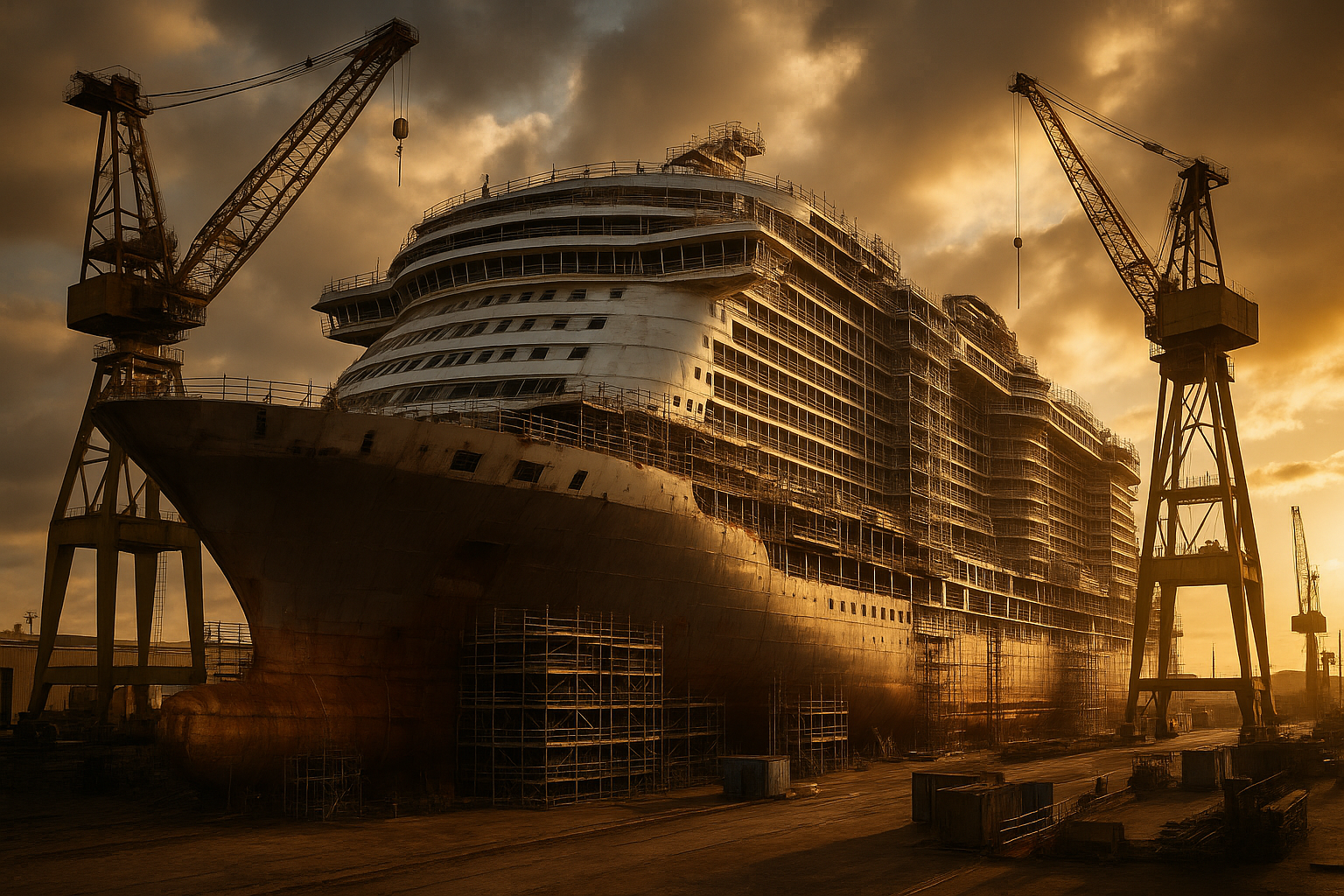
Seven Giants: Royal Caribbean's Plan to Build the World's Largest Cruise Ships Through 2030 Is Now Official
Royal Caribbean has confirmed orders for a sixth and seventh Icon Class ship from Meyer Turku, locking in a new world's-largest cruise ship every year through 2030.
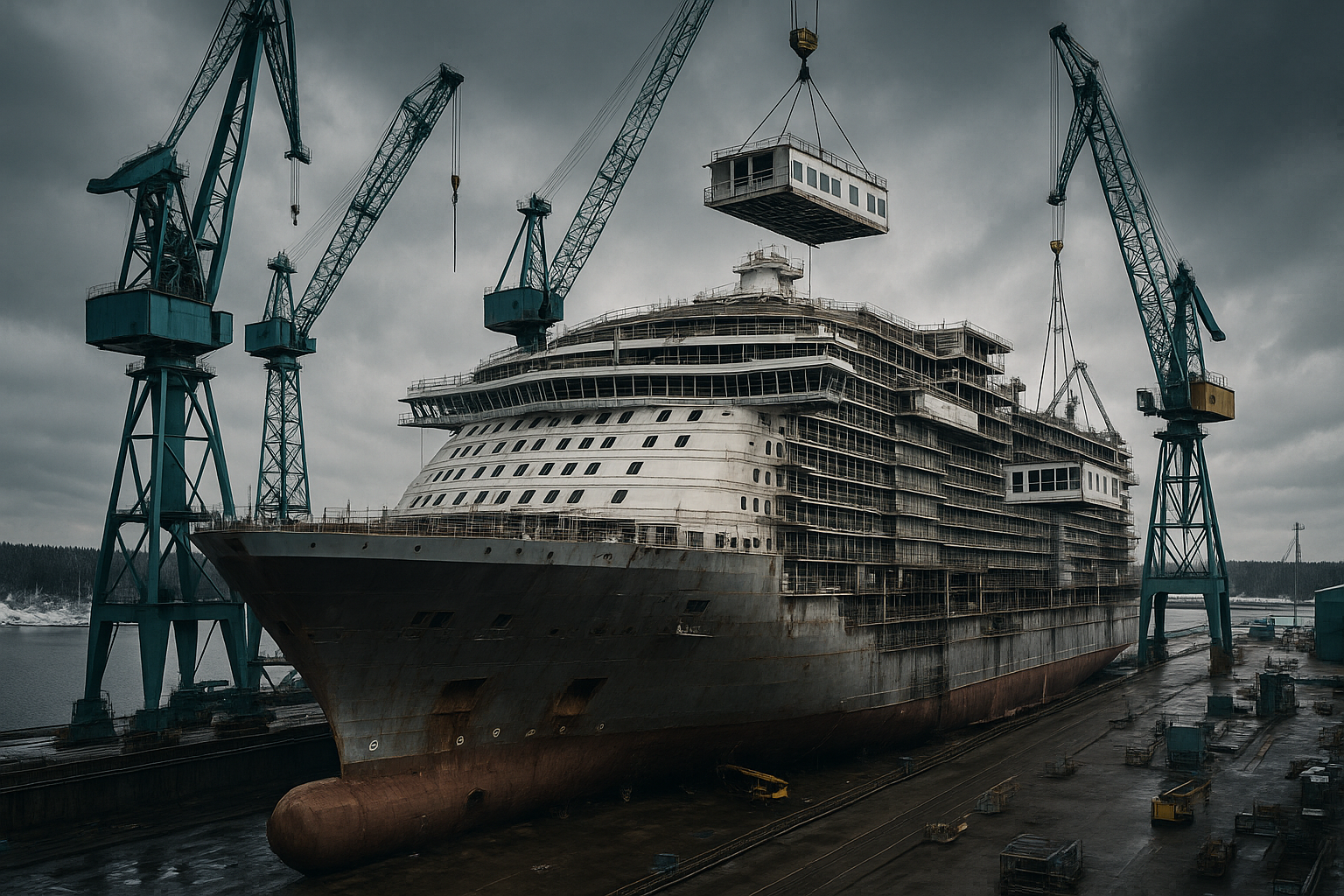
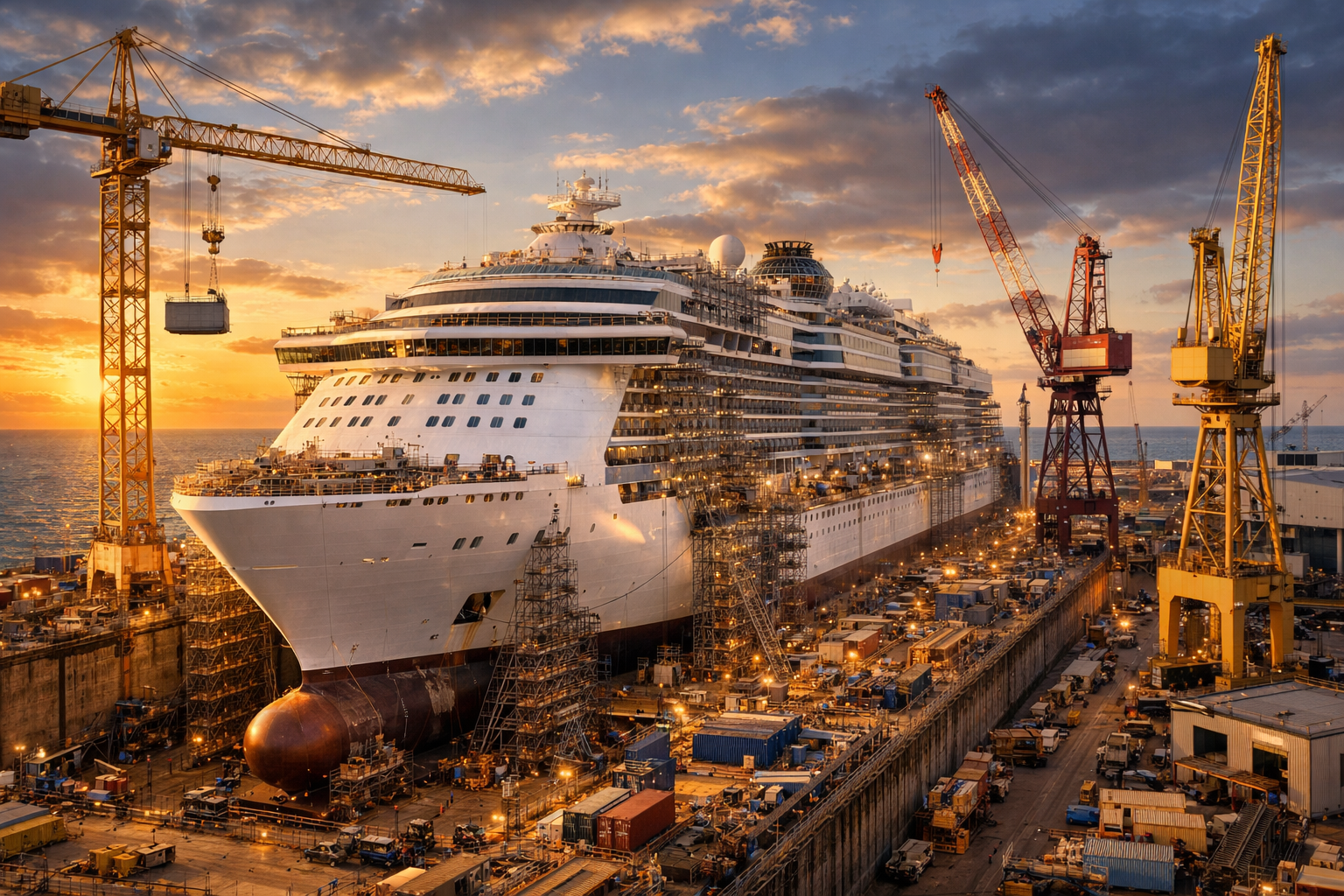
When Royal Caribbean launched Icon of the Seas in early 2024, it opened a chapter it clearly had no intention of closing anytime soon. On April 27, 2026, Royal Caribbean Group made that ambition official, confirming orders for a sixth and seventh Icon Class cruise ship with Finnish shipyard Meyer Turku, according to Travel Market Report. The two vessels are scheduled for delivery in 2029 and 2030, cementing a cadence of one new Icon Class ship per year for the rest of the decade.
It’s a declaration of where the cruise industry is headed — and at what scale.
What Was Announced
Royal Caribbean Group confirmed with Meyer Turku the formal orders for Icon 6 (delivery 2029) and Icon 7 (delivery 2030), part of an expanded long-term framework agreement that secures the cruise line’s access to the Finnish shipyard’s capacity all the way through 2036. The deal also encompasses the previously announced Icon 5, which is set to arrive in 2028.
That means Royal Caribbean has a clear and uninterrupted pipeline of the world’s most ambitious cruise ships stretching across a full decade:
- Icon 3 — Legend of the Seas: Debuting July 2026
- Icon 4 — Hero of the Seas: Arriving 2027
- Icon 5: Delivery 2028
- Icon 6: Delivery 2029
- Icon 7: Delivery 2030
One new world-record-contending ship, every single year, for the rest of the decade. The logistics alone are staggering.
The Partnership Behind the Ships
Meyer Turku has now been building ships for Royal Caribbean Group for over 30 years, delivering 25 vessels across that partnership. But even by those standards, this new agreement represents an extraordinary deepening of the relationship. Securing capacity through 2036 is not a routine business decision — it’s a long-term strategic bet that demand for ultra-large cruise ships will not only hold but grow throughout the 2030s.
Casimir Lindholm, Meyer Turku’s CEO, called the order “a significant recognition of Meyer Turku and the Finnish maritime industry’s talent and expertise.” That recognition comes with real economic weight: the shipyard and its network of suppliers employ roughly 13,000 workers and contribute more than €1 billion annually to Finland’s economy. Each Icon Class ship represents one of the single largest industrial projects undertaken in the country, making these orders as significant for Finland as they are for Royal Caribbean.
Jason Liberty, Royal Caribbean Group’s chairman and CEO, framed the announcement with characteristic confidence, stating that “the Icon Class reflects our bold creativity and engineering excellence that continues to define what a vacation can be.”
Why This Matters Beyond the Orderbook
At its surface, this looks like a business-as-usual orderbook expansion from the world’s largest cruise company. But there are a few dimensions worth unpacking.
The bet on bigness is accelerating, not pausing. There was a moment after Icon of the Seas launched when some in the travel industry wondered whether the mega-ship concept had reached its natural ceiling — that guests might tire of ships with 7,600 berths, multiple neighborhoods, and price tags that stretch into the billions. Royal Caribbean’s answer, in the form of two more confirmed orders, is unequivocal: the appetite is there, and they intend to feed it.
Annual deployment creates a marketing machine. By staggering Icon Class deliveries one per year, Royal Caribbean ensures a constant news cycle and booking catalyst. Each new ship generates global headlines, drives a wave of new-to-cruise passengers curious about the latest iteration, and keeps the brand at the center of the travel conversation. This is a deliberate rhythm, not an accident.
The Discovery Class adds another dimension. Alongside the Icon expansions, Royal Caribbean is also building two Discovery Class ships at French shipyard Chantiers de l’Atlantique, arriving in 2029 and 2032. These vessels represent a different design philosophy — likely smaller, more destination-focused ships aimed at a different traveler segment. The dual-track strategy suggests Royal Caribbean isn’t just doubling down on megaships; it’s building a portfolio designed to attract a broader spectrum of cruise passengers simultaneously.
This locks up premium shipbuilding capacity. With Meyer Turku committed through 2036, Royal Caribbean has effectively claimed a significant share of the world’s top-tier cruise shipbuilding resources for years to come. Competitors looking to build similarly ambitious vessels will face a constrained market for comparable expertise and dry dock space — a competitive moat that extends well beyond the ships themselves.
What It Means for Cruisers
For travelers, the immediate implication is a long runway of increasingly refined Icon Class experiences. Each successive ship in the series has incorporated lessons from the vessels before it — Star of the Seas, which debuted in August 2025, was built with guest feedback from Icon of the Seas’ inaugural season informing every detail. By the time Icon 6 and 7 enter service, the class will have had five years of real-world operational data to draw from.
That iterative refinement matters. The Icon Class formula — neighborhood concept, multi-pool configurations, LNG propulsion, modular cabin installation — is complex and still relatively young. Icons 6 and 7 will likely be the most polished versions yet of a concept that is already the most popular in the cruise industry by almost any measure.
For those planning cruises in 2029 and 2030, there will be something genuinely new to consider each year. And for those already partial to the Icon experience, the news that Royal Caribbean intends to keep building them — annually, reliably, through the end of the decade — is about as confident a signal as the industry sends.
The Bigger Picture
The cruise industry has weathered enough turbulence over the past several years — pandemic shutdowns, fuel volatility, geopolitical disruptions — that a commitment of this magnitude carries genuine weight. This isn’t a letter of intent or a preliminary agreement. This is a confirmed orderbook extending to 2030, backed by a framework agreement running to 2036, between two organizations that have worked together for three decades.
Royal Caribbean isn’t hedging. It’s building.
The only real question left for anyone watching the megaship era unfold is simple: at some point between Icon 6 and Icon 7, does someone ask about Icon 8?
Based on everything we’ve seen this week, the answer is probably already yes.
Related news
What Does It Take to Build the World's Biggest Cruise Ship? Legend of the Seas Just Showed Us.
Royal Caribbean's Newest Giant Takes Shape: Icon 4 Hits Major Construction Milestone
The Cruise Industry's $80 Billion Bet: 79 New Ships Are Coming by 2037