
17 Ships on Order: NCLH's Bold New Bet Is a Message to the Whole Industry
Days into the job, NCLH's new CEO signed a three-ship deal with Fincantieri covering Norwegian, Oceania, and Regent. Here's what it signals for cruisers.
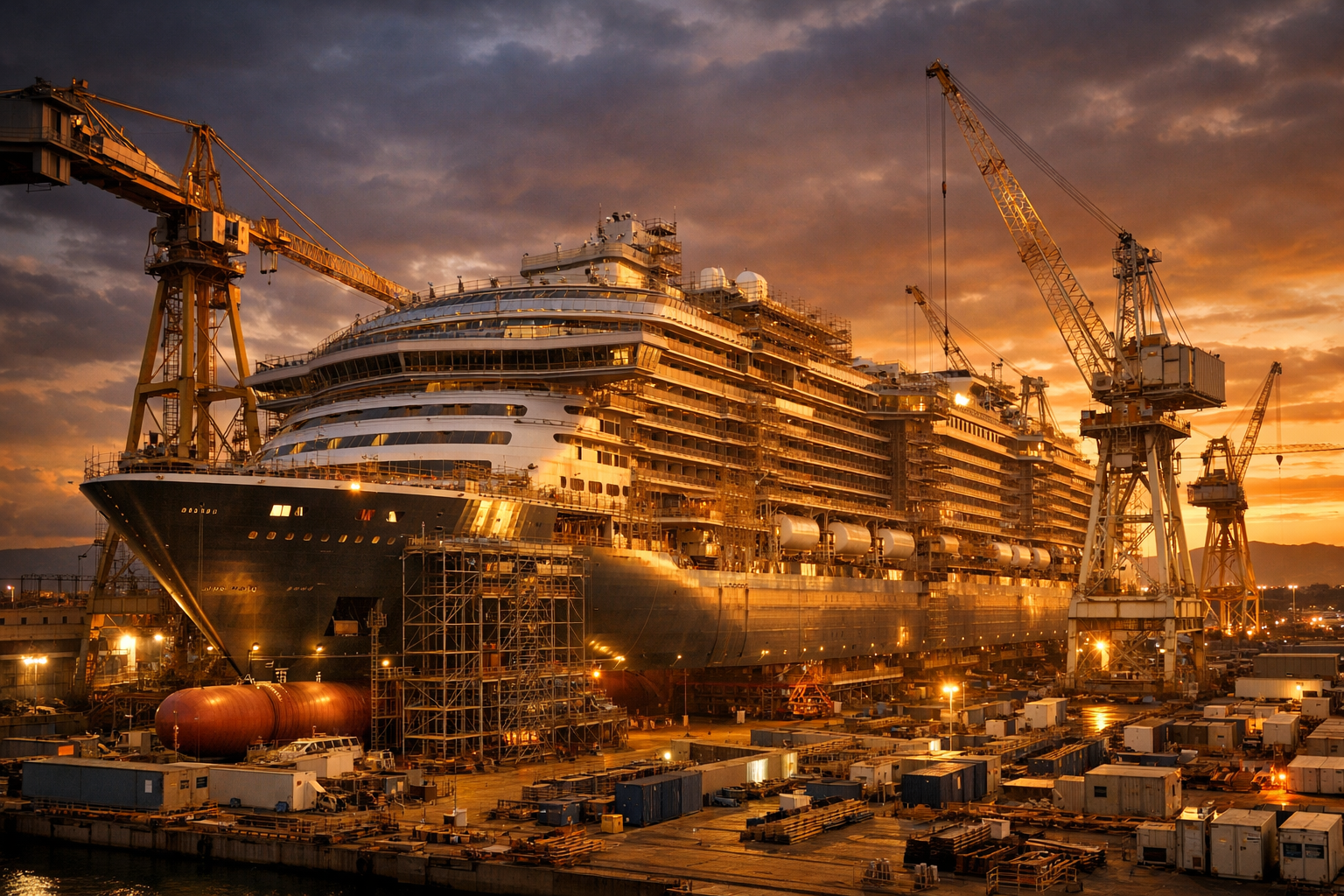
Norwegian Cruise Line Holdings is sending a signal — and it’s a loud one.
Just four days after appointing a new CEO, the parent company of Norwegian Cruise Line, Oceania Cruises, and Regent Seven Seas Cruises signed a major shipbuilding agreement with Italian shipyard Fincantieri for three additional new ships, according to a press release published February 16, 2026. The deal brings NCLH’s total newbuild orderbook to 17 ships — one of the most expansive pipelines in the company’s history.
The ships are slated for delivery between 2036 and 2037, and the timing of this announcement is anything but accidental.
One New Ship for Each Brand
The agreement covers all three NCLH brands simultaneously, which is notable in itself. Here’s how the fleet breaks down:
- Norwegian Cruise Line receives one new vessel, structured as a sister ship to its previously announced newbuilds
- Oceania Cruises gets a sister ship to the upcoming Oceania Sonata
- Regent Seven Seas Cruises adds a sister ship to the Seven Seas Prestige
Building sister ships is a deliberate strategy. It reduces construction costs, compresses training time for crew, and speeds up the pace at which a line can deploy proven experiences across multiple vessels. For guests, it means the best of what’s coming on Sonata or Prestige eventually gets duplicated — and accessible on a second ship.
The Numbers Behind the Deal
NCLH currently operates 34 ships with over 71,000 berths across its three brands, serving approximately 700 destinations worldwide. With 17 newbuilds now on order through 2037, the company is projecting a 4 percent compound annual growth rate in capacity — a measured but consistent expansion.
Financing will be handled primarily through Export Credit Agency arrangements, a common tool for large shipbuilding deals that keeps near-term cash flow pressures low. NCLH says the deal is expected to have “minimal near-term impact on leverage.”
All three ships will be built at Fincantieri’s shipyards in Italy, continuing a partnership that has produced some of the most celebrated vessels in the premium and luxury cruise segments.
A New CEO’s First Move
It would be easy to read this announcement as routine fleet planning — except for the context surrounding it.
John W. Chidsey was named NCLH’s President and CEO on February 12, 2026, replacing Harry Sommer in what the company described as a “strategic leadership change.” The board made clear they were looking for someone who would bring, in the words of chairperson Stella David, “operational rigor and accountability.” The departure came amid pressure from Elliott Investment Management, an activist investor that had built a stake exceeding 10 percent in NCLH and publicly criticized the company’s margin performance and executive decision-making.
Four days later, Chidsey’s name was on a three-ship deal with one of the world’s most prestigious shipbuilders.
In his statement accompanying the announcement, Chidsey framed it squarely around discipline: “This agreement secures access to valuable shipyard capacity through the end of 2037, supporting our long-term growth while maintaining financial discipline.”
That phrase — “financial discipline” — is doing a lot of work. It’s aimed as much at Wall Street and activist investors as it is at travel agents and cruise enthusiasts. Locking in shipyard slots now, while doing so with export credit financing and sister-ship efficiencies, is exactly the kind of move a turnaround-minded executive makes early to demonstrate strategic intent without burning cash.
What This Means for Cruisers
For guests sailing with Norwegian, Oceania, or Regent, the implications are largely positive — even if the payoff is a decade away.
Sister ships tend to carry forward the features that worked best on their predecessors, refined based on passenger feedback. If Oceania Sonata delivers on its promise as a next-generation small-ship experience, the sister vessel will likely iterate on that blueprint. The same logic applies to Regent’s Seven Seas Prestige.
It also means all three brands remain committed to growth. There’s been speculation in some quarters about whether NCLH might streamline its portfolio under new leadership. This announcement suggests the opposite: the company intends to invest in all three brands and expand each of them into the mid-2030s.
For those considering a longer-horizon booking — a future milestone cruise, a bucket-list sailing — knowing that these brands are actively expanding fleet capacity is meaningful context.
The Bigger Picture
The cruise industry as a whole entered 2026 with 74 ships on order across all lines, representing billions in committed capital. NCLH’s 17-ship orderbook places it firmly in the expansion camp, not the consolidation camp.
Whether Chidsey can deliver on the operational improvements that Elliott Investment Management and the board are demanding remains to be seen. Financial results for Q4 2025 are due March 2, 2026, and those numbers will tell a more complete story about where NCLH stands.
But for now, ordering three ships across three brands within a week of taking the helm is a statement. It says: we’re not shrinking. We’re building.
And in the cruise industry, building is almost always the right message to send.