
MSC Is Sailing Into Alaska for the First Time — and It's Bringing a Whale Scientist Along
MSC Cruises has never operated a single Alaska sailing. That changes in May 2026 when the refurbished MSC Poesia launches from Seattle with an ORCA marine conservation observer on the bridge monitoring whales in real time.
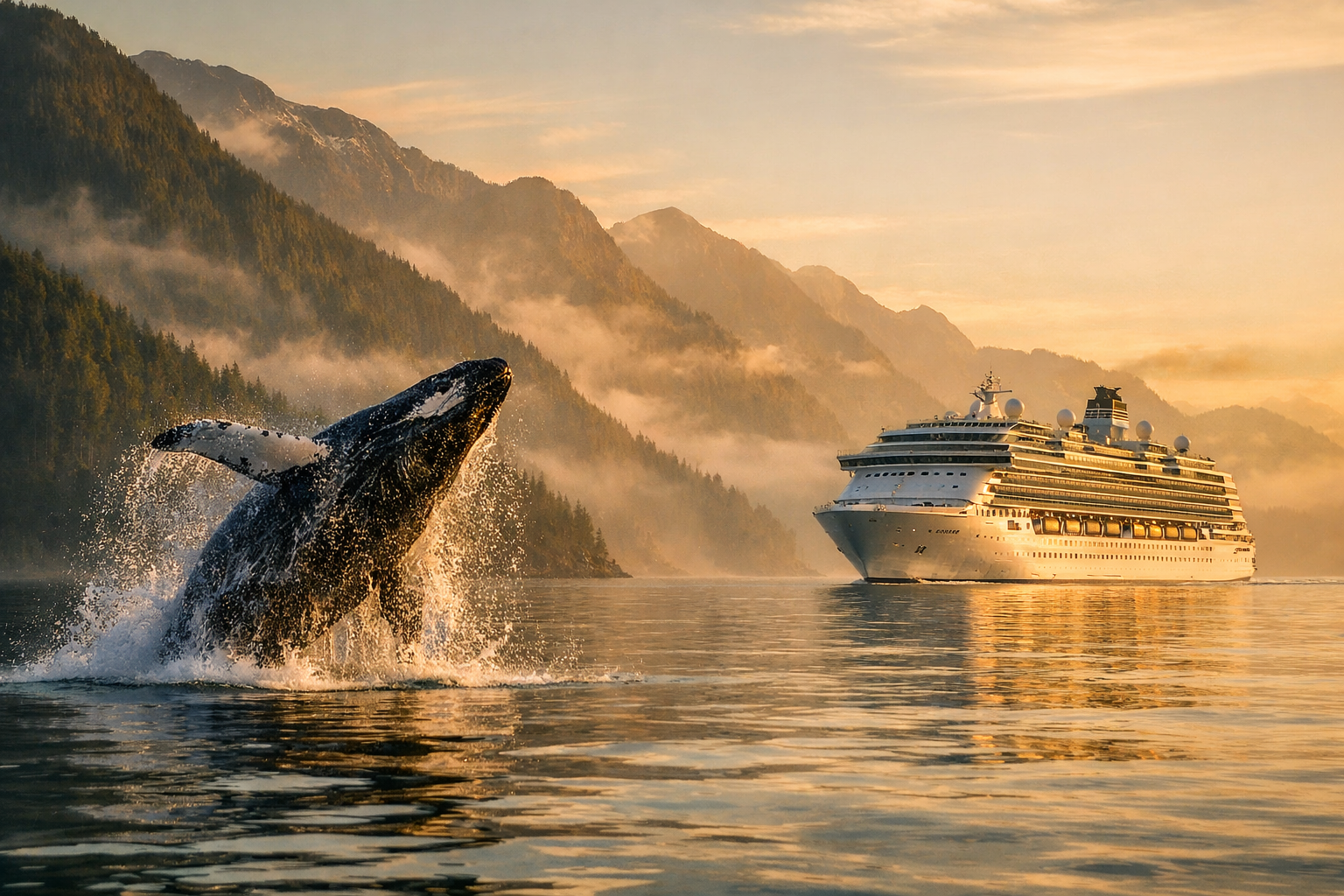
MSC Cruises has never operated a single Alaska sailing. That changes in May 2026, and right now — while you’re reading this — the ship that will make it happen is sitting in a Malta shipyard getting rebuilt from the inside out.
The MSC Poesia entered drydock at the Palumbo Shipyard in Malta on February 13 and won’t emerge until April 6, undergoing one of the most extensive renovations MSC has undertaken in years. But the upgrades are only part of the story. When the Poesia finally sails north to Seattle this spring, it will carry something no amount of interior design can replicate: a dedicated Marine Mammal Observer from the conservation charity ORCA, tasked with monitoring whales in real time from the ship’s bridge.
Together, the refurbishment and the conservation partnership tell a revealing story about where MSC Cruises is headed — and how carefully it’s thinking about the cost of getting there wrong.
What’s Being Done to the Ship
The MSC Poesia is a 92,600-gross-ton, 3,223-passenger vessel that launched in 2008. After 18 years of service, the ship is getting a transformation designed to bring it in line with MSC’s modern fleet standards.
The centerpiece of the refit is the addition of the MSC Yacht Club — the line’s signature ship-within-a-ship concept — for the first time on this vessel. The Yacht Club will introduce 63 new suites across five categories, including a Royal Suite that accommodates up to six guests and features a private whirlpool, a 78-square-meter terrace, and an outdoor shower with panoramic ocean views. All suites include marble bathrooms, butler service, complimentary minibar, and 24-hour room service. The Yacht Club’s private sundeck adds two hot tubs, a grill, and a dedicated bar.
On the dining side, the Poesia is getting a Butcher’s Cut steakhouse, a redesigned Kaito Sushi Bar, and the All-Stars Sports Bar — the same sports bar that debuted on MSC World America. These additions represent a meaningful upgrade for a ship whose current dining lineup was designed nearly two decades ago.
The wellness facilities are receiving equal attention. The MSC Aurea Spa is being reimagined with a sauna boasting ocean views, new steam rooms, a salt room, a Kneipp path, and emotional showers. The fitness center is being rebuilt with ocean-facing workout areas, a yoga room, a jogging track, and Technogym equipment. The scale of what’s being done to this ship, in this compressed timeline, reflects how seriously MSC is treating its Alaska debut.
Why Alaska, Why Now
MSC Cruises is the world’s largest cruise line by passenger capacity, operating a fleet of over 20 ships across virtually every major global market. Alaska has been a conspicuous absence on that map — until now.
Beginning May 11, 2026, the MSC Poesia will operate seven-night roundtrip sailings from Seattle along the Inside Passage, calling at Ketchikan, Icy Strait Point, Juneau, Tracy Arm Fjord, and Victoria, British Columbia. Seattle becomes the line’s fifth U.S. homeport. MSC has already opened bookings for a second Alaska season in summer 2027, signaling this is not an experiment.
The Alaska cruise market is one of the most competitive and environmentally scrutinized in the world. Regulators, Indigenous communities, and conservation groups pay close attention to how cruise lines conduct themselves in these waters. Entering this market as the industry’s largest operator, without a track record in the region, carries reputational stakes that MSC clearly recognizes.
The ORCA Partnership Is the Part Worth Watching
Here is where the story gets genuinely interesting.
In early February, MSC announced a formal collaboration with ORCA — a UK-based marine conservation charity with 25 years of experience monitoring whale and dolphin populations in Atlantic and Pacific waters. An ORCA-trained Marine Mammal Observer will board the MSC Poesia from late July through late August 2026, the peak of both whale activity and vessel traffic in Alaskan waters.
The observer’s role goes well beyond symbolic presence. The specialist will monitor and document whale and marine mammal sightings from the bridge and outer deck, recording species, group sizes, locations, and how animals respond to the ship’s presence, speed, and maneuvers. That data will be used to build datasets that inform safer navigation in sensitive areas — and will be shared with the broader scientific community.
Bridge and deck teams will also receive targeted training in marine mammal identification, distance estimation, and early detection protocols. ORCA will independently vet the whale-watching shore excursions MSC offers through its tour program, ensuring that operators meet best-practice standards for minimizing stress to marine animals.
Passengers get to participate directly. The ORCA observer will give public talks onboard and invite guests to log their own whale and dolphin sightings using ORCA’s citizen science protocols.
This is not a brochure-friendly greenwashing exercise. Building actual behavioral datasets, training navigation crews on real-time whale avoidance, and submitting that research to the scientific community creates accountability. The data ORCA collects in 2026 will inform whale-avoidance training across multiple shipping and cruise operators and may feed into regulatory discussions about best practices in Alaska’s critical whale habitats.
What This Tells Us About the Cruise Industry’s Direction
MSC’s approach here reflects a broader shift in how major cruise lines are entering new markets. The days of simply showing up with a refurbished ship and hoping for the best are fading — particularly in destinations like Alaska, where both regulators and a rapidly growing segment of eco-conscious travelers are watching closely.
The line could have entered Alaska without the ORCA partnership. The conservation program adds cost, complexity, and a degree of external scrutiny that MSC is voluntarily inviting. The fact that it chose to build this partnership into its inaugural season — and announced it at a CLIA symposium in Anchorage specifically — suggests the move is calculated to establish credibility with local stakeholders from day one.
There’s also the question of scale. MSC already has Alaska summer 2027 on sale. A second Alaska season is a long-term commitment, and long-term commitments in sensitive destinations require more than good intentions. They require documented evidence of responsible operations. That’s what the ORCA observer is there to generate.
The MSC Poesia will exit its Malta drydock in early April, position to Seattle, and sail its first Alaska departure on May 11. Whether MSC’s inaugural Alaska season becomes the template for responsible expansion — or a cautionary tale — is a story that’s only just beginning.