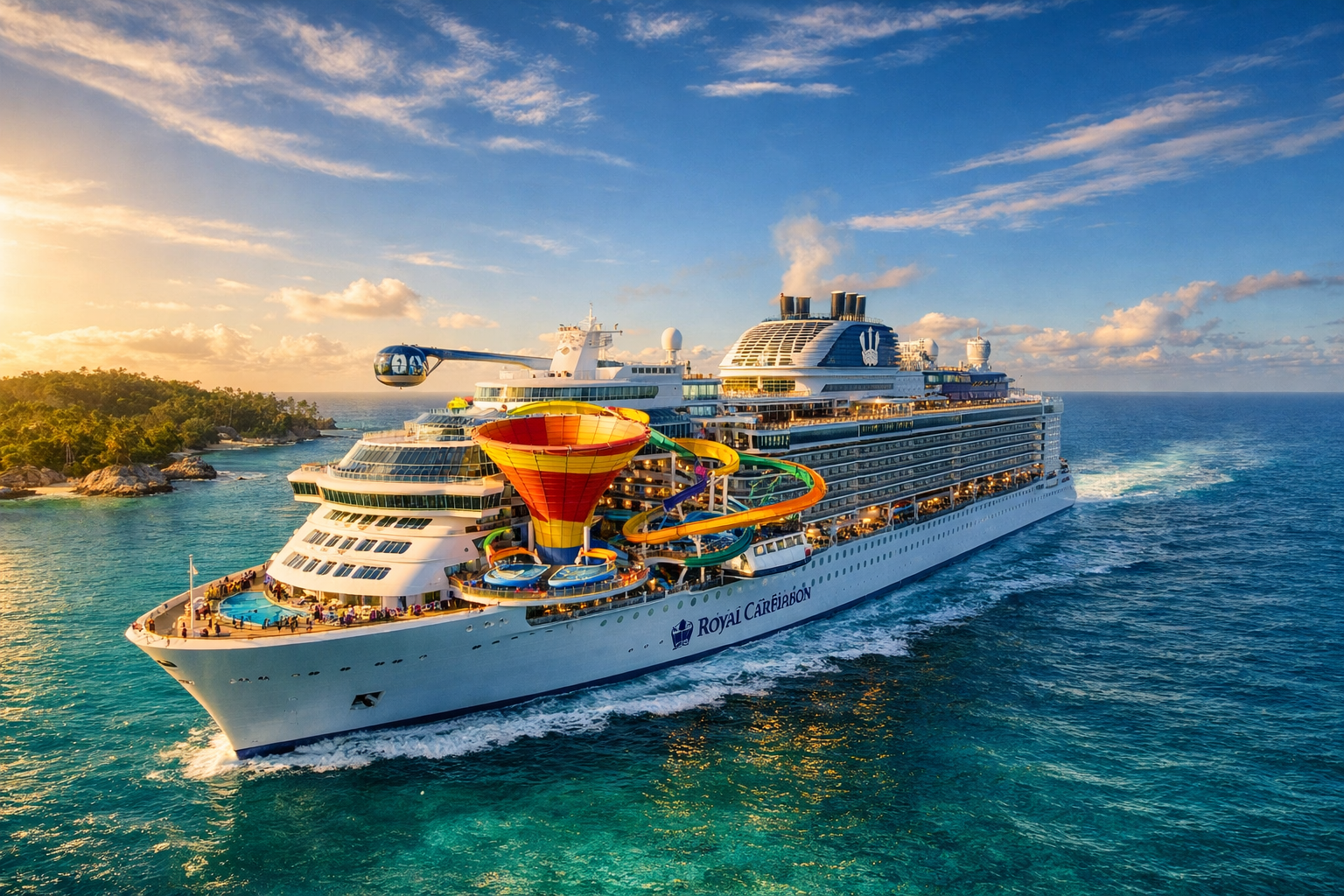
What Does It Take to Build the World's Biggest Cruise Ship? Legend of the Seas Just Showed Us.
Royal Caribbean's Legend of the Seas wrapped ten days of Baltic sea trials with no major issues, clearing the third Icon-class ship for its July 4 debut.
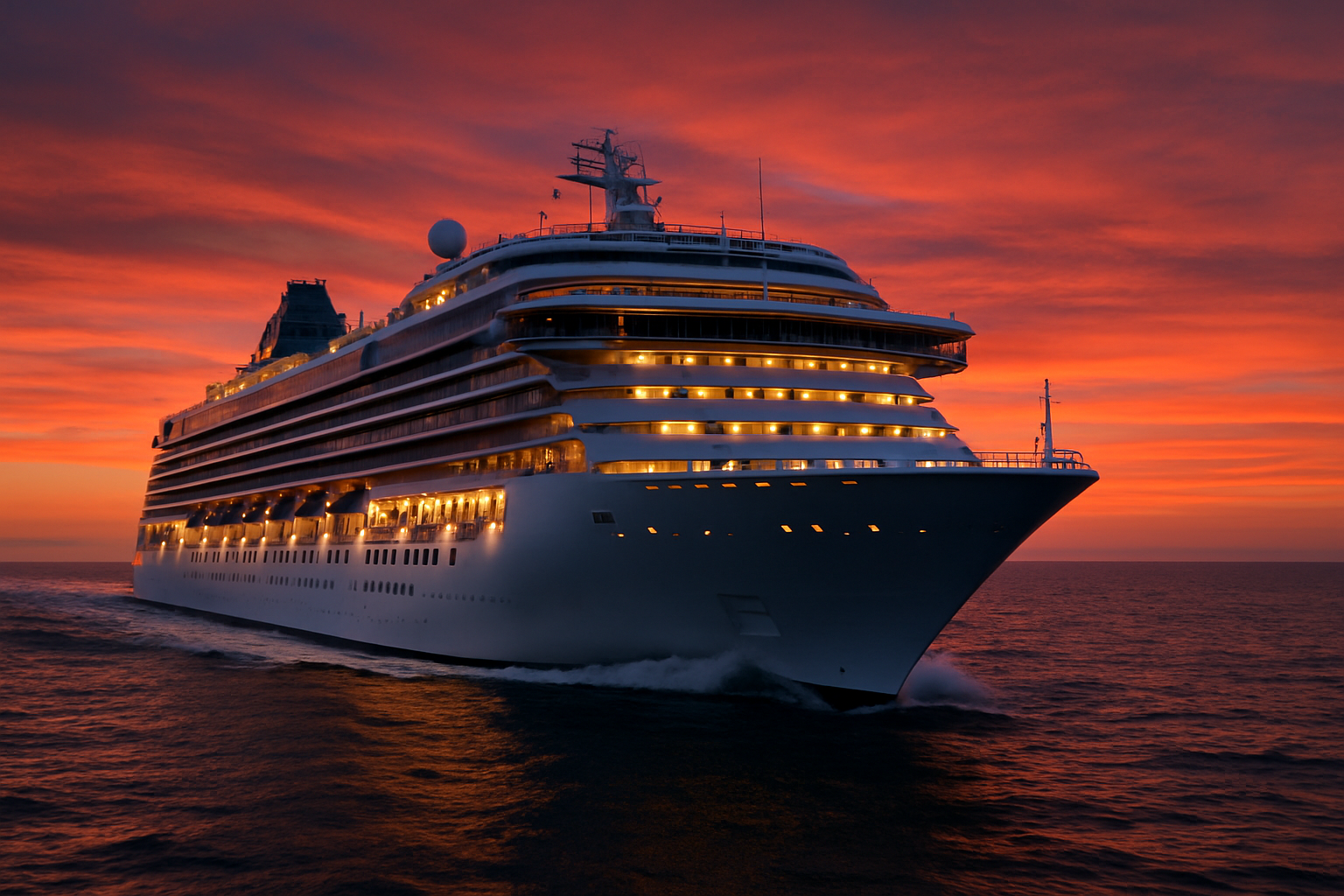
On May 1, 2026, Royal Caribbean’s Legend of the Seas quietly returned to the Meyer Turku shipyard in Finland after ten days of intensive sea trials in the Baltic — and what those trials revealed tells us a lot about just how serious the cruise industry has gotten about engineering at scale.
The third ship in Royal Caribbean’s record-breaking Icon Class, Legend of the Seas completed approximately 2,400 nautical miles of testing before returning to dock. According to a report from Nomad Lawyer, the trials evaluated high-speed acceleration, emergency deceleration, precise navigation, and propulsion performance — and no major technical issues were recorded during the testing window. The ship has now entered the outfitting phase, where thousands of workers will install flooring, furniture, lighting, and decorative elements across its vast public spaces in preparation for its July 4, 2026 debut.
It’s a milestone that deserves more attention than it typically gets. Sea trials are the moment of truth for any new ship — the point at which years of engineering ambition either holds up under real-world conditions or reveals uncomfortable surprises. For a vessel of this scale, the stakes couldn’t be higher.
What the Sea Trials Actually Involved
Over more than 2,000 engineers and technical specialists joined Legend of the Seas for the ten-day Baltic Sea test campaign. That’s not a small crew doing a quick shake-down. That’s a full mobilization — the kind of operational deployment you’d expect from a serious industrial testing program.
The tests themselves focused on the fundamentals: how the ship accelerates, how it stops in an emergency, how precisely it can be navigated at varying speeds, and how the LNG-powered propulsion system performs under load. These aren’t glamorous benchmarks, but they are the ones that determine whether 7,000 passengers will be safe and comfortable on the open ocean.
The fact that Legend returned to the shipyard with no major issues recorded is significant. Icon-class ships are among the most complex moving structures ever built. They carry onboard water parks, multiple neighborhoods, dozens of dining venues, and the kind of infrastructure that makes a small city look simple. Getting all of that to function correctly — let alone flawlessly — is an extraordinary engineering accomplishment.
The Third Icon, and Why That Matters
Legend of the Seas joins Icon of the Seas (launched January 2024) and Star of the Seas (debuted summer 2025) as the third ship in the Icon Class. But calling it a copy of its predecessors would be selling it short.
For one thing, Legend will be the first Icon-class ship to sail in Europe. Its inaugural season launches July 4 from Rome (Civitavecchia), with seven-night Western Mediterranean cruises calling at Marseille, Barcelona, and Florence/Pisa. That’s a meaningful distinction — the Icon Class was first introduced to North American and Caribbean waters, and bringing this scale of ship to the Mediterranean is a different kind of logistical proposition entirely.
The ship also introduces some unique features that differentiate it from Icon and Star. The Hollywoodland Supper Club replaces the Empire Supper Club found on Icon of the Seas, shifting the themed dining experience from 1920s New York to the golden age of Hollywood — spanning the 1910s through the 1950s. And with 28 dining venues, Legend edges ahead of its siblings in sheer culinary breadth, making it the most restaurant-dense cruise ship ever built at the time of its launch.
Then there is Skipper, a Golden Retriever puppy born in February 2026 who will live aboard Legend full-time as the ship’s official Chief Dog Officer. It is the kind of detail that sounds frivolous until you consider that Royal Caribbean knows exactly what it is doing with guest experience design — and a resident dog is, by any measure, a genuinely novel amenity.
From Finland to the Mediterranean to Fort Lauderdale
After completing its European inaugural season, Legend of the Seas will make a transatlantic crossing on October 25, 2026, homeporting in Fort Lauderdale, Florida, where it will operate six- to eight-night Western and Southern Caribbean sailings, including visits to Perfect Day at CocoCay, Royal Caribbean’s private island destination in The Bahamas.
That itinerary arc — Europe first, then the Caribbean — is an interesting strategic choice. It signals that Royal Caribbean is confident enough in the Icon Class product to debut it in a market that tends to skew toward experienced, discerning cruisers who have high expectations for ships they’ve never sailed before. If Legend of the Seas can win over Mediterranean cruisers the way Icon won over Caribbean loyalists, it will be a meaningful proof point for the class’s global appeal.
Why the Outfitting Phase Is Where It All Comes Together
With sea trials complete and no critical mechanical issues on record, Legend enters what is arguably its most visible transformation phase. The structure works. The engines perform. Now comes the part that passengers will actually see and touch: the finishes, the furniture, the art installations, the restaurant fit-outs, the lighting design across eight distinct neighborhoods.
This is where the technical achievement of building an Icon-class ship meets the hospitality philosophy that Royal Caribbean has spent years refining. The neighborhoods concept — dividing the ship into distinct experiential zones rather than a single undifferentiated resort environment — was one of the defining innovations of the original Icon of the Seas. Legend will carry that forward while adding its own character.
The July 4 debut gives the shipyard roughly two months to complete that transformation. Given what just returned from the Baltic without a single reported system failure, the odds look good.
The Bigger Picture
It would be easy to reduce a story like this to a headline — “third Icon-class ship passes sea trials” — and move on. But the completed trials of Legend of the Seas represent something worth pausing on: a demonstration that the cruise industry has mastered the engineering of ships at a scale that would have seemed implausible a decade ago.
Royal Caribbean has now successfully built and delivered two Icon-class ships, with a third just weeks away from its inaugural voyage. The company has already ordered a sixth and seventh Icon-class vessel, due in 2029 and 2030. The sea trials of Legend of the Seas aren’t just a step in one ship’s construction timeline — they’re confirmation that this category of ship is now a proven, repeatable product.
For travelers considering Legend of the Seas, the practical takeaway is simple: the ship works, the debut is on schedule, and Mediterranean bookings are open. For the rest of us watching the industry, it’s a reminder that the ambition required to build something this large — and pull it off — is still worth appreciating.
Related news
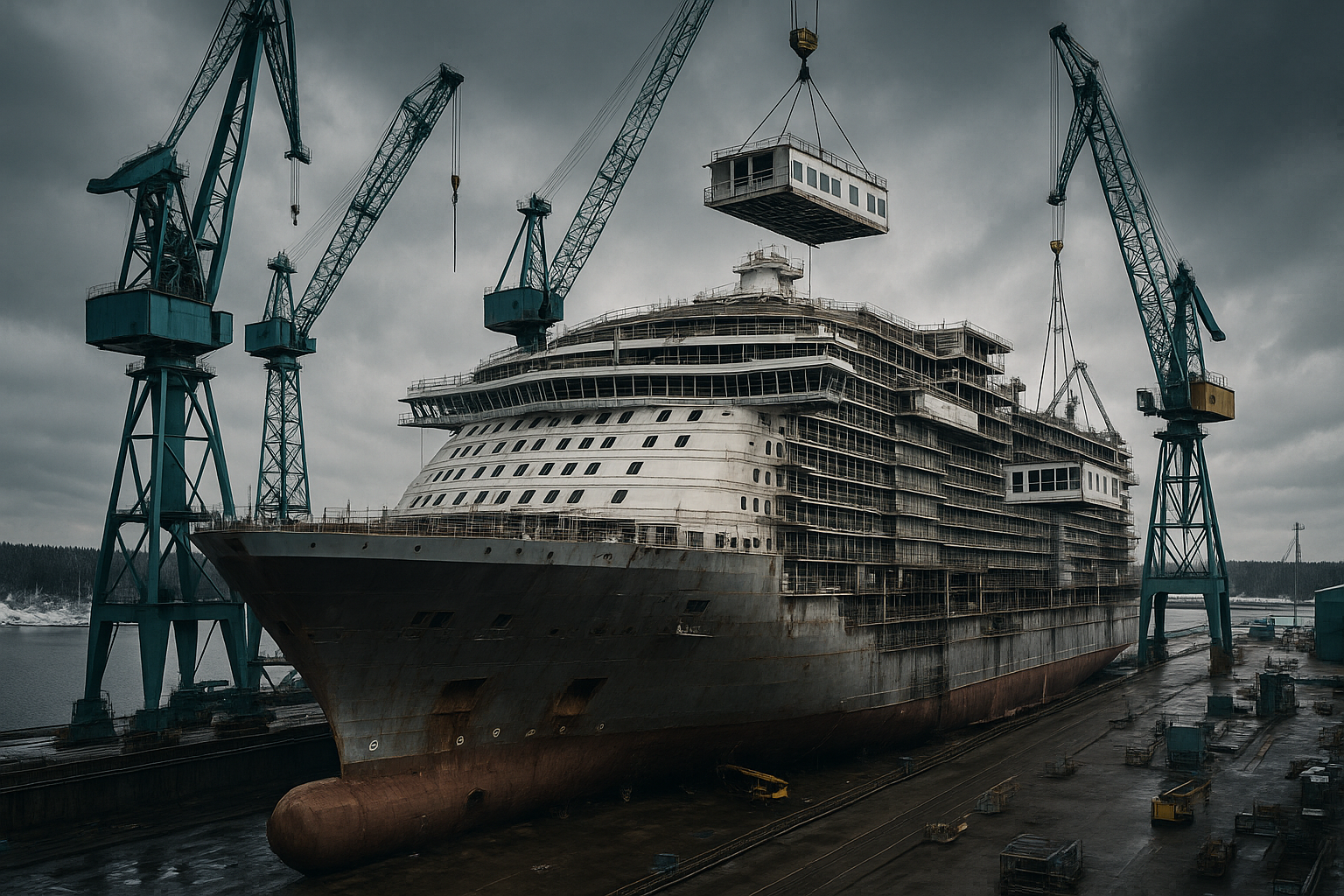
Seven Giants: Royal Caribbean's Plan to Build the World's Largest Cruise Ships Through 2030 Is Now Official
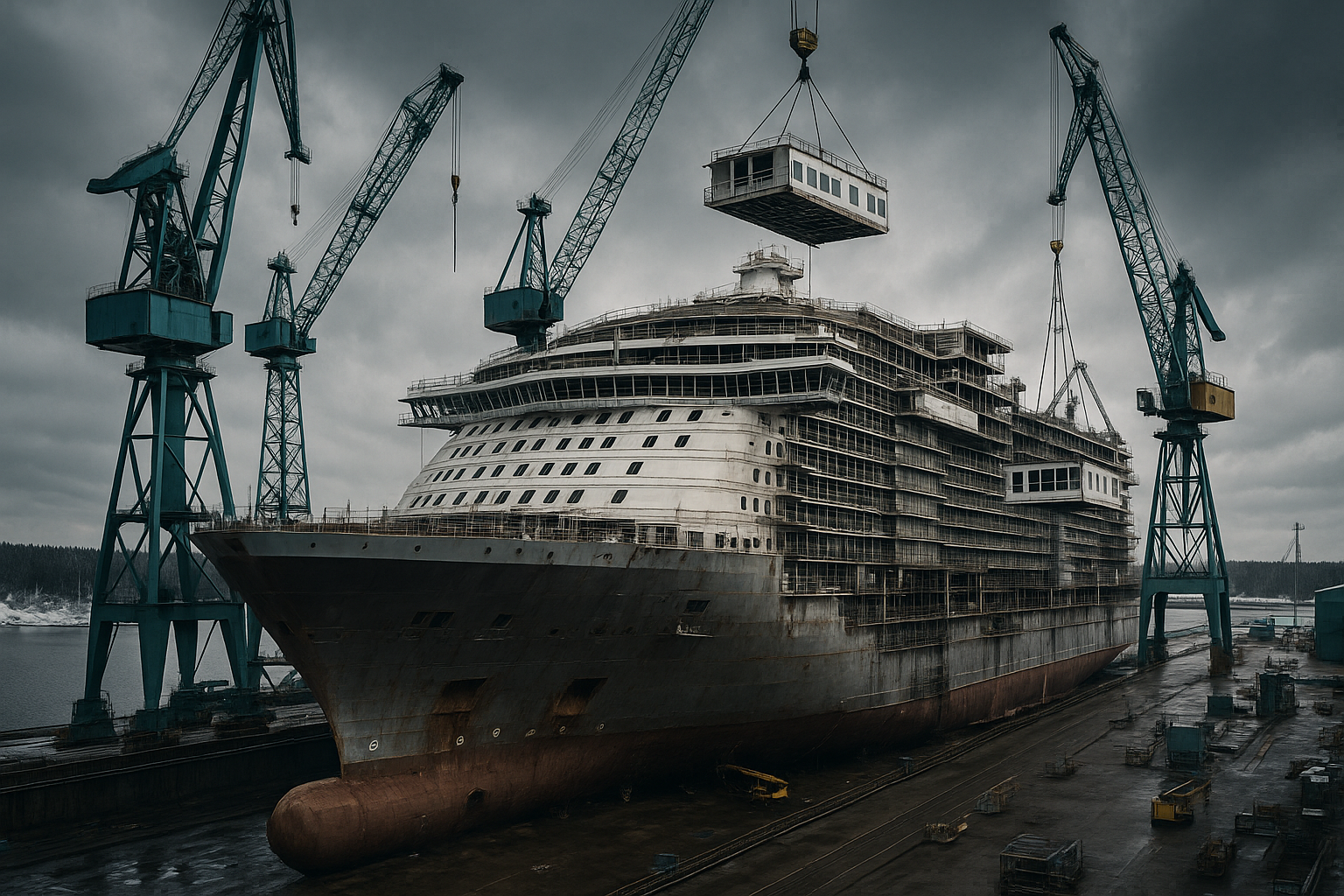
Royal Caribbean's Newest Giant Takes Shape: Icon 4 Hits Major Construction Milestone
Royal Caribbean Just Let Cameras Inside Legend of the Seas — Here's What's Different