
The Cruise Industry's $80 Billion Bet: 79 New Ships Are Coming by 2037
Cruise lines have 79 new ships on order through 2037, representing an $80 billion investment in sustained demand. Here's what this historic shipbuilding boom means for travelers.
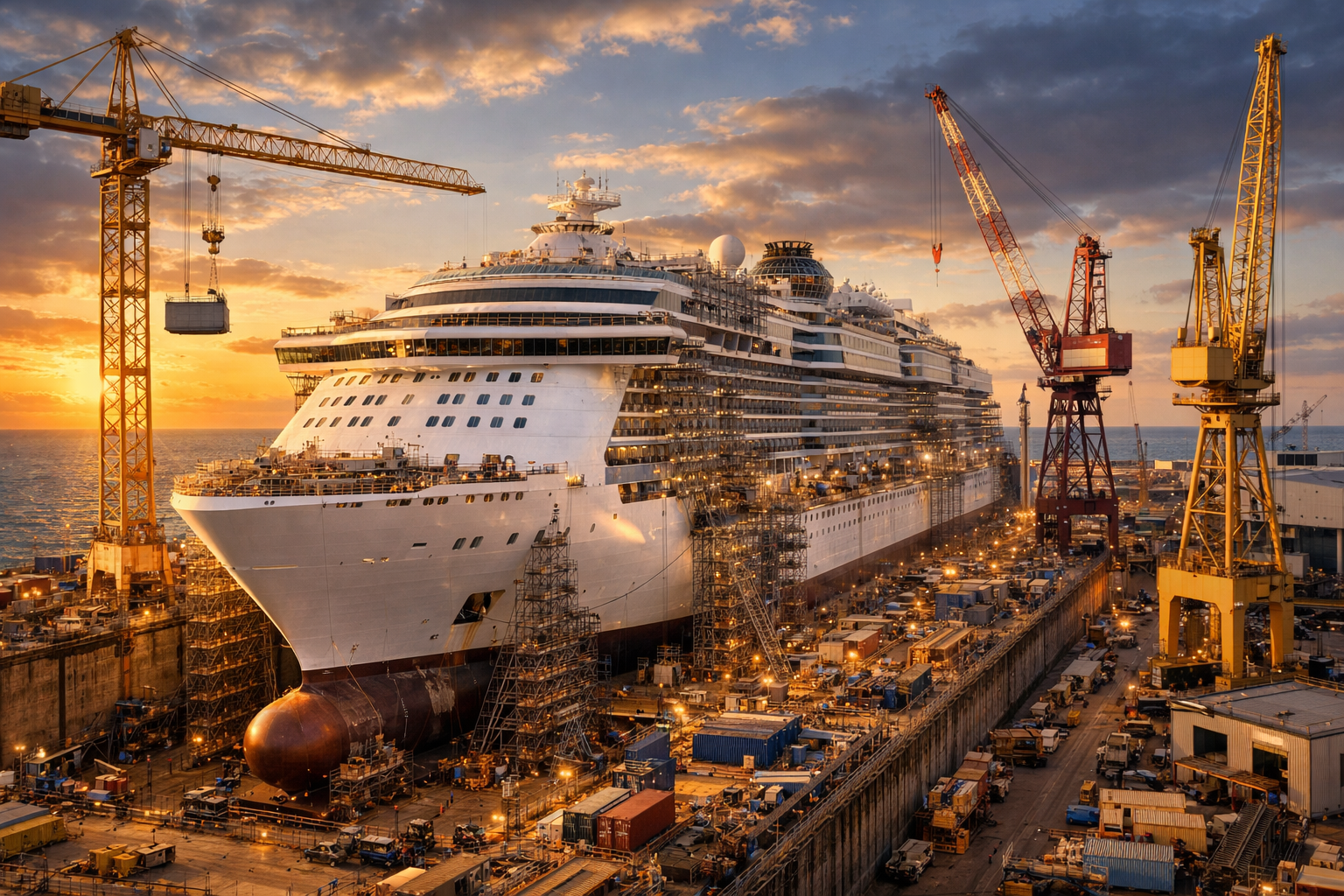
The global cruise industry just published its most comprehensive shipbuilding scorecard of the year, and the numbers are staggering. According to Cruise Industry News’ updated orderbook report, cruise operators around the world will collectively spend approximately $80 billion on new vessels between now and 2037 — a figure that reflects not just ambition, but an industry-wide conviction that demand for cruising is not slowing down any time soon.
Seventy-nine newbuilds. Nearly 205,000 new berths. An average cost of roughly $1 billion per ship. Whether you’re a seasoned cruiser or still planning your first sailing, those numbers have direct implications for the kind of vacations that will be available to you in the years ahead.
The Scale of What’s Being Built
To put 79 ships in context: that’s essentially the cruise industry adding a mid-sized fleet’s worth of capacity every two to three years through the mid-2030s.
The average vessel in this orderbook weighs in at 115,486 gross tons and carries 2,586 passengers — both figures that reflect the industry’s continued drift toward larger, more amenity-rich ships. Thirteen new cruise ships are already entering service in 2026 alone, with 15 more scheduled for 2027. The pipeline then remains robust well into the next decade.
What’s notable is not just the volume, but the breadth. This isn’t a Royal Caribbean and Carnival story. The current orderbook spans major mainstream players, luxury brands, expedition operators, and even a handful of smaller niche lines all betting on the same underlying thesis: people want to cruise, and they want more choices when they do.
Who’s Building What
The major players are each moving in distinctive directions, and for travelers, understanding those directions matters when you’re deciding where to put your vacation dollars.
Royal Caribbean is pressing forward with two new Discovery-class ships slated for delivery between 2029 and 2032. These vessels are expected to build on the formula the line has refined through its Icon-class — massive, resort-style ships packed with onboard attractions. If you loved what Icon of the Seas and Star of the Seas introduced, Discovery-class ships will likely continue that trajectory.
Norwegian Cruise Line Holdings secured a three-ship deal with Fincantieri covering deliveries as far out as 2036 and 2037, with vessels spread across its three brands — Norwegian Cruise Line, Oceania Cruises, and Regent Seven Seas Cruises. For those who cruise Norwegian’s mid-market freestyle product, that signals continued investment in the brand. For Oceania and Regent loyalists, it suggests the luxury end of the NCLH portfolio is far from an afterthought.
MSC Cruises has four large ships confirmed at Meyer Werft with two additional options, with deliveries spread across 2030 to 2034. MSC has been the most aggressive European builder for years, and this commitment keeps that trajectory intact.
Viking is adding two expedition vessels alongside additional ocean ship options, doubling down on the explorer market that has fueled so much of the brand’s recent growth. Atlas Ocean Voyages, one of the smaller expedition players, is going a different route entirely — a 400-passenger sailing ship built at a Chinese yard, signaling that wind-assisted propulsion is moving from concept to reality even for boutique operators.
What $80 Billion of Confidence Actually Signals
There’s a temptation to read a shipbuilding boom primarily as a story about industry ego or corporate one-upmanship. But the more important read is simpler: cruise lines don’t order billion-dollar ships unless they’re confident people will fill them.
These commitments involve contracts signed years in advance, massive deposits, and supply chain obligations that can’t easily be unwound. The cruise industry’s orderbook has never been this large in absolute dollar terms. That’s a statement about where demand is headed — and it’s a statement the industry is making with its balance sheet, not just its press releases.
For context, cruising currently reaches a small fraction of the global travel market. Industry analysts have long argued that the addressable audience for cruising is far larger than the number of people who currently book it. The new capacity coming online is, in part, a bet on converting more of those potential first-timers.
What It Means for You as a Traveler
More ships coming means more options — but it also raises some practical questions worth thinking through if you’re planning future sailings.
Pricing dynamics will shift. More capacity entering the market puts pressure on fares, at least in theory. The last few years have seen cruise pricing remain elevated as demand outpaced supply post-pandemic. As 205,000 new berths come online through 2037, that imbalance will gradually correct. The smartest cruisers tend to watch this closely — more supply typically means more promotional fares and greater last-minute availability, especially outside peak periods.
Destination strategies will evolve. With larger average ship sizes comes a trickier puzzle for itinerary planners: not every port can physically accommodate these vessels, and the ports that can are already crowded. Expect to see continued investment in private destination infrastructure — whether purpose-built islands or exclusive shore excursion zones — as lines try to create experiences that don’t depend on shared port access.
Ship technology is advancing fast. The current orderbook isn’t just adding berths — it’s adding ships built to standards that vessels from even five years ago can’t match. LNG propulsion, shore power connectivity, fuel cell readiness, and advanced emissions management are increasingly standard features rather than novelties. Cruisers who care about the environmental footprint of their vacation will have meaningfully better options by the early 2030s than they do today.
The luxury end is growing fast. A notable chunk of the orderbook sits in the premium and luxury tiers. Lines like Explora Journeys, Regent Seven Seas, Seabourn, and Crystal are all building new hardware, which means genuine competition and genuine innovation in a segment that was previously dominated by a handful of players with aging fleets.
The Bigger Picture
An $80 billion orderbook through 2037 is, at its core, a declaration that the cruise industry believes its best years are ahead of it. The report describes this wave of investment as reflecting “the industry’s confidence in sustained cruise demand over the next decade” — and there’s no reason to read that as marketing language. These are real ships, real contracts, real money.
For the cruise enthusiast, that’s a fundamentally exciting backdrop. The ships being ordered today will be the ships you sail on in 2029, 2031, 2034. The experiences being designed right now — the dining concepts, the entertainment formats, the cabin configurations — are taking shape in shipyards across Italy, Germany, Finland, and China as you read this.
The industry is betting big on your curiosity. Based on everything in that orderbook, it thinks you’ll show up.
Source: Orderbook Update: Cruise Lines to Invest $80 Billion in New Ships by 2037 — Cruise Industry News, April 1, 2026.