
Caribbean Cruise Chaos: Military Strike on Venezuela Leaves Thousands Stranded
A U.S. military operation in Venezuela triggered widespread airspace closures across the Caribbean, stranding over 48,000 travelers and forcing multiple cruise lines to delay departures and alter itineraries during peak winter season.
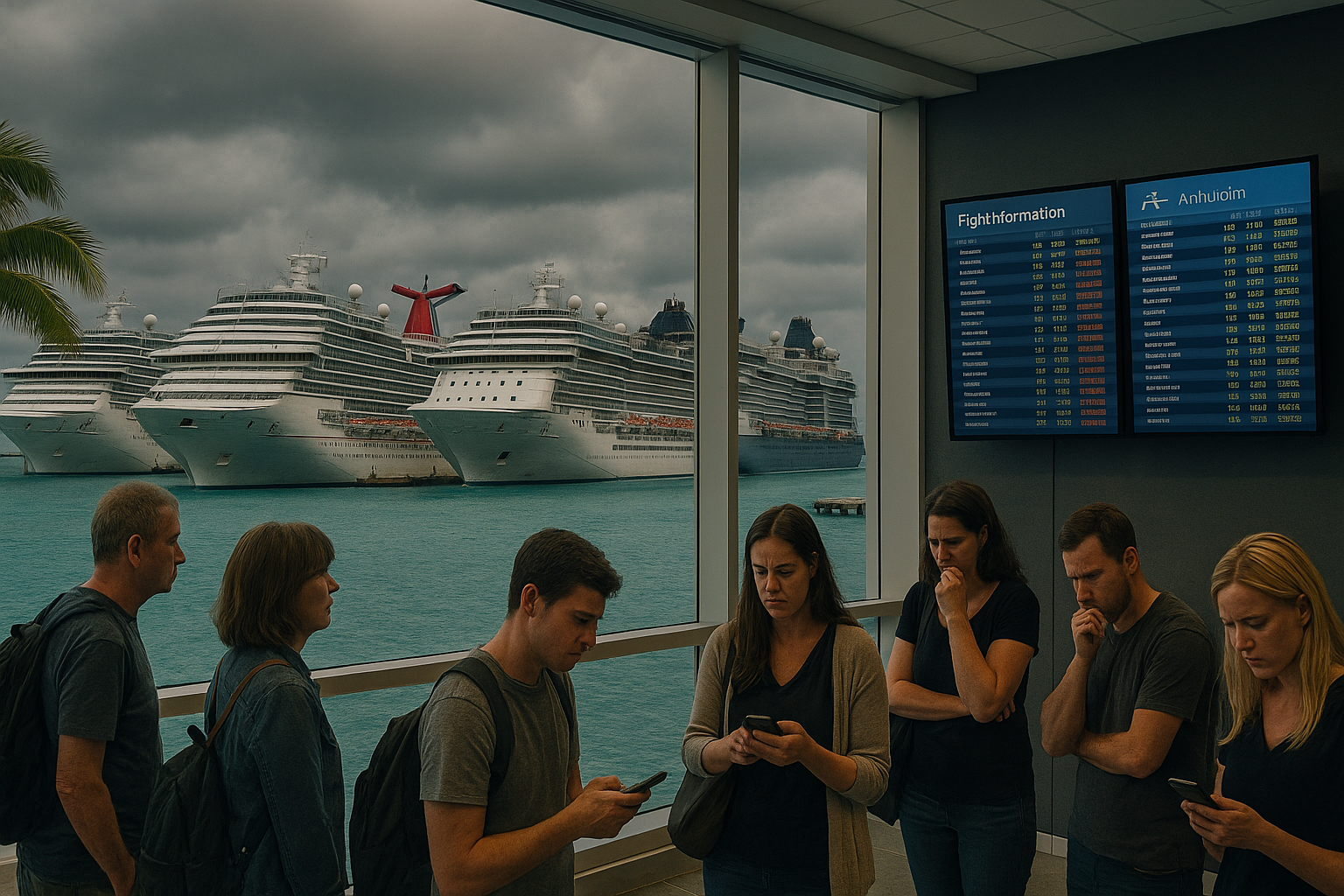
The peaceful rhythm of Caribbean cruise season came to a jarring halt this weekend when a U.S. military operation in Venezuela triggered the most significant travel disruption the region has seen in years. What began as a pre-dawn military strike on Saturday morning cascaded into a crisis affecting tens of thousands of cruise passengers and forcing nearly every major cruise line operating in the Eastern Caribbean to scramble for solutions.
When Military Action Meets Vacation Season
In the early hours of January 3, 2026, U.S. military forces launched Operation Absolute Resolve, conducting airstrikes across northern Venezuela and ultimately capturing Venezuelan President Nicolás Maduro. Within hours, the Federal Aviation Administration imposed sweeping airspace restrictions across the Caribbean region, implementing a Notice to Airmen (NOTAM) that prohibited U.S.-registered aircraft from operating in Venezuelan airspace and surrounding areas.
The timing could not have been worse for the cruise industry. Early January represents the absolute peak of Caribbean cruise season, when ships sail at maximum capacity and ports handle their highest passenger volumes of the year. The FAA restrictions came into effect at 6:00 UTC on January 3, immediately grounding hundreds of flights and leaving cruise passengers with an impossible question: How do we get to our ship?
The Human Cost: 48,000 Stranded Travelers
The numbers tell a staggering story. At San Juan’s Luis Muñoz Marín International Airport alone—the primary gateway to Puerto Rico and a crucial hub for Caribbean cruise travel—more than 300 flights were canceled on Saturday. The result? Over 48,000 passengers stranded during what should have been the height of winter travel season.
For cruise passengers, the situation created a unique nightmare. Unlike typical travelers who can simply rebook flights and adjust hotel reservations, cruise passengers face immovable deadlines. When your ship sails at 5:00 PM and you’re stuck in Miami or Atlanta with no way to reach San Juan, you’re not just missing a flight—you’re missing an entire vacation you’ve planned and paid for months in advance.
Princess Cruises Makes an Unprecedented Call
Against this backdrop of chaos, Princess Cruises made a decision that rippled across the industry. Rather than sail on schedule and leave stranded passengers behind, the cruise line announced it would hold the Grand Princess in San Juan for an additional day and night, according to Cruise Hive.
The 107,517-gross-ton ship was originally scheduled to depart Sunday evening. Instead, Princess pushed the departure to Monday, January 5, at 6:00 PM—giving affected passengers nearly 48 additional hours to reach the port once flights resumed. Passengers who managed to arrive on Sunday could board and spend the night docked in San Juan, though they would receive a prorated refund for one missed night of their cruise fare.
This wasn’t just a minor schedule adjustment. The decision forced Princess to completely restructure the itinerary, eliminating the planned port call in St. Thomas and sailing directly to St. Kitts instead. It represented a significant operational challenge and financial cost for the cruise line—but it also demonstrated a commitment to passenger welfare that other lines would soon emulate.
A Cascade of Disruptions Across the Fleet
The airspace closure affected virtually every cruise line operating in the Eastern Caribbean. Royal Caribbean’s Jewel of the Seas and Brilliance of the Seas both faced delays, with Jewel of the Seas remaining in San Juan for several extra hours and not departing until approximately 10:30 PM—a delay that required careful coordination with port authorities and subsequent ports of call.
Norwegian Cruise Line’s Norwegian Epic encountered similar challenges, as did two of Windstar Cruises’ vessels. The cruise line confirmed that Wind Surf and Wind Spirit would both delay their departures until January 5, directly citing the closure of airports in St. Maarten and Bridgetown, which disrupted “guest turnaround operations”—cruise industry parlance for the carefully choreographed process of disembarking one set of passengers while boarding another.
Virgin Voyages took perhaps the most aggressive approach to the crisis, completely rerouting Valiant Lady to skip planned calls at Aruba and Curaçao—both located within 220 nautical miles of Venezuela and deemed too close to the military action for comfort. The cruise line offered full voyage credits to affected passengers, essentially giving them a free future cruise to compensate for the significantly altered itinerary.
Even ultra-luxury lines felt the impact. Ritz-Carlton Yacht Collection’s Ilma, along with Explora I and Emerald Azzurra, all experienced delays and disruptions that affected their meticulously planned itineraries and their high-paying clientele.
The Rapid Recovery
By Sunday, January 4, the situation began to normalize as quickly as it had deteriorated. The FAA lifted its airspace restrictions shortly after midnight, and airlines immediately moved to add dozens of extra flights throughout the Eastern Caribbean. FlightAware data showed a dramatic improvement: Sunday saw only about 20 cancellations in San Juan, compared to 400 the previous day.
Delta Air Lines and United Airlines led the recovery effort, with United restarting service to San Juan on Saturday night and Delta resuming flights to 13 Caribbean airports by Sunday. The National Business Aviation Association notified members that the ban for U.S.-registered aircraft had been lifted, clearing the way for private jets to resume Caribbean operations as well.
What This Means for Future Cruise Travel
This incident exposes a vulnerability in the Caribbean cruise ecosystem that few had previously considered: the region’s heavy dependence on U.S. airspace and air carriers, combined with its proximity to geopolitically unstable areas. While the cruise lines responded admirably under the circumstances, the disruption raises important questions about contingency planning and passenger protection.
For travelers, the crisis offers several crucial lessons. First, the value of travel insurance that specifically covers geopolitical events became painfully clear—many standard policies exclude disruptions caused by military action. Second, the importance of arriving at embarkation ports at least one day early was reinforced; passengers who had built that buffer into their plans were largely unaffected.
Third, the incident demonstrated that cruise lines vary significantly in how they handle extraordinary circumstances. Princess Cruises’ decision to delay departure by an entire day stands in contrast to some competitors who maintained schedules and left passengers to sort out their own solutions. That kind of passenger-first approach may become a more important factor in cruise line selection going forward.
The Bigger Picture
Beyond the immediate travel chaos, this event represents an unprecedented intersection of military action, commercial aviation, and the cruise industry. The rapid capture of a sitting head of state followed by immediate airspace restrictions affecting one of the world’s most popular cruise destinations created a scenario no contingency plan had fully anticipated.
As cruise lines and passengers alike process what happened this weekend, we’re likely to see industry-wide reviews of emergency protocols, particularly around communication with passengers facing travel disruptions. We may also see increased focus on diversifying Caribbean itineraries to reduce dependence on any single hub port or airport gateway.
For now, operations have largely returned to normal. Flights are operating, ships are sailing, and the tens of thousands of affected passengers are either aboard their vessels or making alternative arrangements. But the 48-hour period from January 3-5, 2026 will long be remembered as the weekend when geopolitical tensions brought Caribbean cruise season to an unexpected standstill—and when the industry’s response revealed both its vulnerabilities and its commitment to the passengers who trust it with their vacation dreams.