
Two TUI Cruise Ships Are Still Stranded in the Gulf — and Nobody Knows When They're Getting Out
TUI Cruises evacuated all passengers from two ships stranded in the Persian Gulf, but Mein Schiff 4 and Mein Schiff 5 remain docked with no exit route in sight.
Two TUI Cruise Ships Are Still Stranded in the Gulf — and Nobody Knows When They’re Getting Out
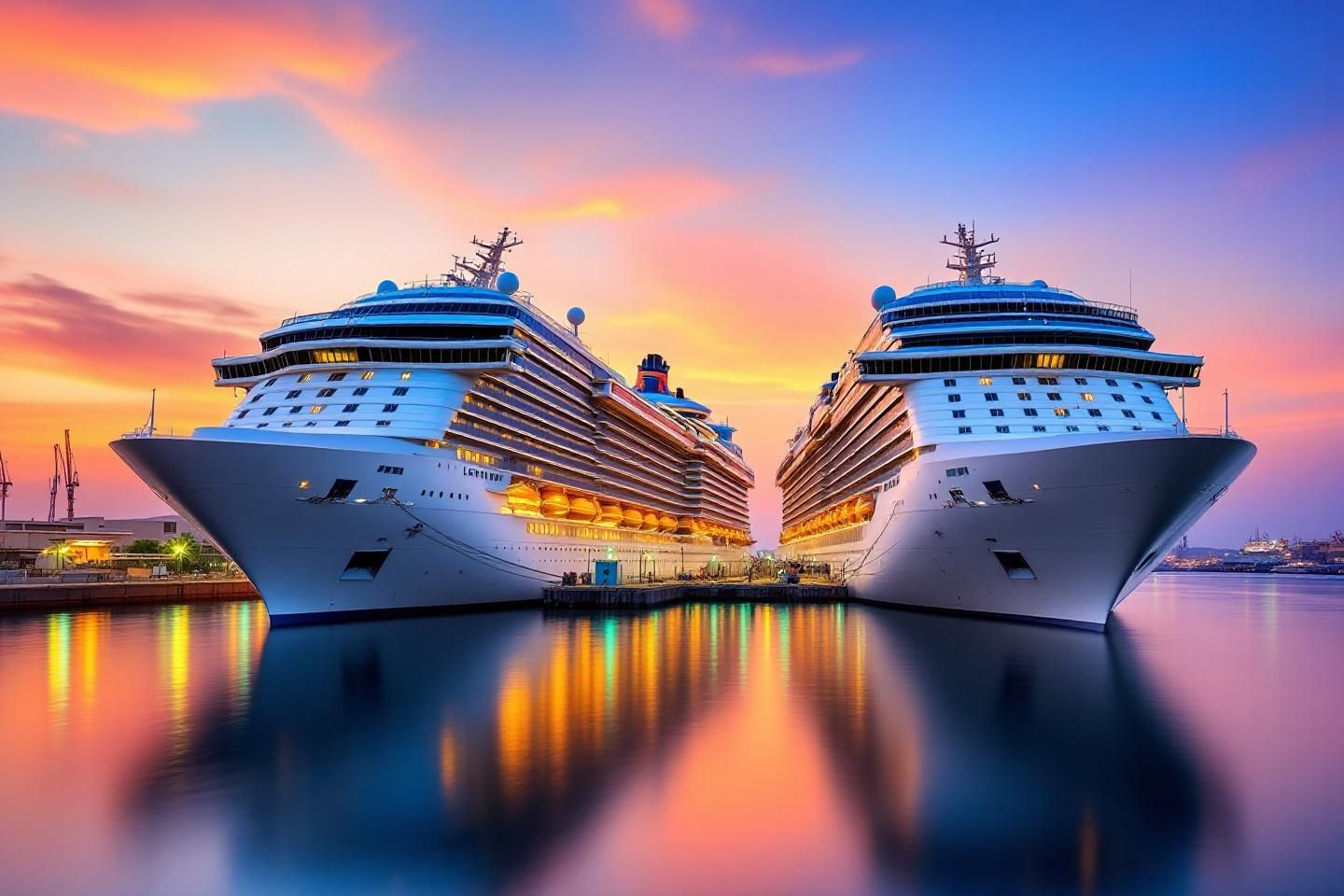
When a conflict erupts in the Middle East, the fallout doesn’t stay on land. Right now, two large TUI Cruises ships — Mein Schiff 4 and Mein Schiff 5 — are sitting idle in Gulf ports with skeleton crews aboard, waiting for a waterway that Iran has effectively shut down to reopen. According to Cruise Industry News, TUI Cruises confirmed this week that it has now completed the evacuation of all guests from both vessels — but the ships themselves aren’t going anywhere anytime soon.
What Happened
On February 28, 2026, a joint US and Israeli military strike on Iran triggered an escalating chain of events that quickly engulfed the Persian Gulf region. Iranian retaliation followed, and with it came the closure of the Strait of Hormuz — the narrow chokepoint that connects the Persian Gulf to the Arabian Sea and through which any ship departing the region must pass. Almost overnight, cruise ships that had been sailing routine Gulf itineraries found themselves geographically trapped.
Mein Schiff 4 was docked in Abu Dhabi, UAE. Mein Schiff 5 was in Doha, Qatar. With the Strait of Hormuz blockaded, neither ship had a viable route out.
The Evacuation
Getting roughly 2,500 passengers home turned out to be far more complicated than simply booking return flights. Airspace closures over Iran, Iraq, and parts of the Persian Gulf severely limited options, particularly for guests aboard Mein Schiff 5 in Doha.
For passengers on Mein Schiff 4 in Abu Dhabi, TUI was able to organize flights out of Dubai and nearby Muscat, Oman — a relatively more manageable extraction. The situation in Doha was messier. With Qatar’s airspace constrained and local flight capacity strained, TUI organized charter flights departing from Riyadh, Saudi Arabia. That meant passengers had to board buses and travel overland through the desert from Doha to Riyadh before they could fly home to Munich, Frankfurt, and Cologne. Qatar Airways also provided some direct flights out of Doha to supplement the effort.
According to Cruise Industry News, TUI has now completed the departure of all guests from both vessels. Portions of the crew have been repatriated as well, with additional crew members scheduled to follow in the coming days.
The Ships Aren’t Going Anywhere
Here’s the part that makes this situation particularly unusual: the ships themselves are still there.
Both Mein Schiff 4 and Mein Schiff 5 remain moored in their respective Gulf ports, each staffed by a reduced crew. The reason is practical — TUI wants to be ready to move the moment a safe corridor through the Strait of Hormuz becomes available. Until that happens, the vessels are effectively in holding mode in the middle of a conflict zone.
TUI has already cancelled all Mein Schiff 4 sailings through March 23 and all Mein Schiff 5 sailings through March 12. Further cancellations are widely expected if the Strait of Hormuz remains closed.
A Wider Industry Disruption
TUI isn’t alone in this. The broader fallout for the cruise industry in the region has been significant. MSC Cruises cancelled all remaining departures of MSC Euribia from Dubai and organized charter flights to repatriate more than 1,500 stranded guests. Celestyal Cruises ended its entire Arabian Gulf season early. AROYA Cruises, the young Saudi Arabia-based line, cancelled the remainder of its 2026 Persian Gulf season — its guests were disembarked in Dubai on March 7. Industry estimates put the total number of affected cruise passengers across the region at around 15,000.
AIDA Cruises and Costa Cruises have already announced they won’t return to the Middle East for the entire 2026-27 winter season.
What This Means for Cruise Travelers
The situation serves as a stark reminder of how quickly geopolitical events can upend travel plans, even on an itinerary that looked perfectly safe when you booked it. The Gulf had become a popular winter cruising destination, particularly for German and European travelers, with lines like TUI, MSC, and Celestyal building out regular seasonal programs there.
For now, that entire market is frozen — and with two large ships still physically stranded in the region, the story is far from over. The cruise industry is watching the Strait of Hormuz the same way the rest of the world is, hoping for a resolution that lets commerce and travel resume. Until then, Mein Schiff 4 and Mein Schiff 5 sit quietly in Gulf ports, crewed but empty, waiting for a war to end.