
Luxury Cruise Ship Trapped in Antarctic Ice Freed by US Coast Guard Icebreaker
The Scenic Eclipse II became trapped in dense pack ice near McMurdo Sound during an Antarctic expedition voyage, requiring assistance from the Coast Guard Cutter Polar Star to break free.
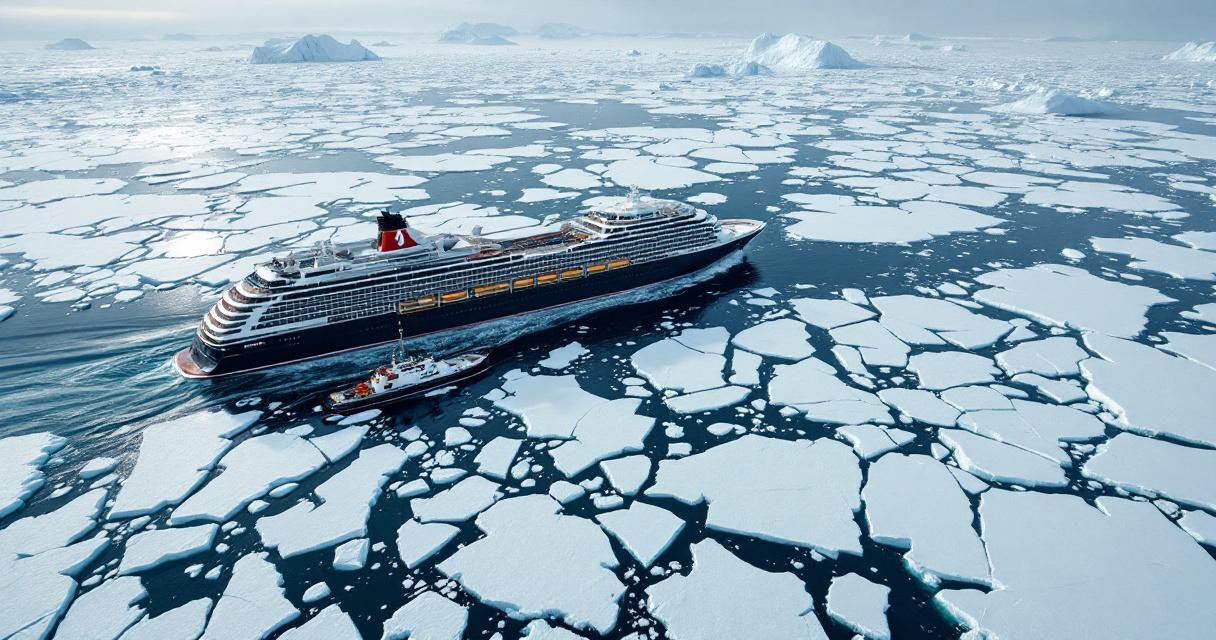
Luxury Cruise Ship Trapped in Antarctic Ice Freed by US Coast Guard Icebreaker
A luxury expedition cruise ship carrying 228 guests found itself in an unexpected predicament during an Antarctic voyage last week when dense pack ice trapped the vessel, requiring assistance from America’s only active heavy icebreaker to break free.
The Scenic Eclipse II, an ultra-luxury expedition ship operated by Australian cruise company Scenic Group, became “beset” in thick pack ice approximately eight nautical miles from McMurdo Sound in the Ross Sea on January 17, 2026, according to a press release from the US Coast Guard.
An Icebreaker to the Rescue
The ship contacted the US Coast Guard Cutter Polar Star around 11 PM local time requesting assistance after becoming trapped in the frozen waters roughly 1,300 kilometers from the South Pole. The Polar Star, which happened to be operating in the region as part of Operation Deep Freeze—a 50-year-old mission supporting scientific research in Antarctica—responded to the distress call.
The Coast Guard crew executed a strategic rescue operation, making two close passes through the ice to create a navigable channel for the trapped luxury vessel. After breaking the Scenic Eclipse II free, the Polar Star escorted the cruise ship approximately four nautical miles to open water, ensuring its safe passage away from the dangerous ice field.
Champagne on the Observation Deck
While the incident might sound harrowing, passengers aboard the Scenic Eclipse II appeared to take the unexpected detour in stride. According to Cruise Passenger Australia, guests were able to watch the dramatic rescue operation unfold from the ship’s Observation Deck—champagne in hand.
A Scenic Group representative downplayed the severity of the situation, stating that “While Scenic Eclipse II was never in need of rescue services, the coordination between both vessels ensured we could navigate the changing pack ice safely and efficiently.”
However, the fact remains that the ship required assistance from a specialized icebreaker to continue its voyage, highlighting the unpredictable and potentially hazardous nature of Antarctic expedition cruising.
The Risks of Polar Expedition Cruising
This incident serves as a stark reminder that Antarctic voyages, while increasingly popular among adventure-seeking cruise passengers, come with inherent risks that traditional Caribbean or Mediterranean itineraries don’t face. Pack ice conditions in the Southern Ocean can change rapidly, creating situations where even modern, ice-strengthened expedition vessels require assistance.
The Scenic Eclipse II is no ordinary cruise ship. This purpose-built expedition vessel features ice-class hull reinforcement specifically designed for polar cruising. Yet even with these specialized capabilities, the unpredictable Antarctic environment proved challenging enough to require the intervention of a purpose-built icebreaker.
The 23-Day Antarctic Expedition
The Scenic Eclipse II had departed from Hobart, Tasmania on January 6, 2026, embarking on an ambitious 23-day, one-way expedition voyage focused on sub-Antarctic and Antarctic exploration. The journey was scheduled to conclude in Dunedin, New Zealand on January 29, 2026.
With capacity for 228 guests, the ultra-luxury vessel offers passengers an intimate expedition experience with all the amenities of a five-star resort. Prices for such Antarctic expeditions can reach well into five figures per person, reflecting both the luxury accommodations and the specialized nature of polar cruising.
Operation Deep Freeze: A Half-Century of Service
The rescue also highlighted the critical role the Coast Guard Cutter Polar Star continues to play in Antarctic operations. The icebreaker was in the region conducting Operation Deep Freeze, an annual mission that supports scientific research stations in Antarctica—a program that has been running for 50 years.
The Polar Star is the United States’ only active heavy icebreaker, making it an irreplaceable asset for both scientific missions and maritime emergencies in polar regions. The vessel’s ability to break through thick ice proved essential in freeing the trapped cruise ship.
What This Means for Antarctic Cruising
As expedition cruising to Antarctica continues to grow in popularity, incidents like this raise important questions about the balance between adventure tourism and safety in one of Earth’s most extreme environments.
Cruise lines operating in Antarctic waters must navigate not only physical ice but also the delicate balance of providing thrilling expedition experiences while ensuring passenger safety. The success of this rescue operation demonstrates the importance of cooperation between commercial cruise operators and government maritime assets in polar regions.
For prospective Antarctic cruise passengers, this incident serves as a reminder that expedition cruising involves real adventure—and real risks. While modern expedition ships like the Scenic Eclipse II are equipped with advanced ice-navigation capabilities, Mother Nature still holds the ultimate authority in polar waters.
The Bottom Line
The successful rescue of the Scenic Eclipse II and its 228 passengers demonstrates both the challenges and the safety networks that exist in Antarctic cruising. While passengers may have enjoyed champagne views of the dramatic icebreaking operation, the incident underscores the reality that polar expedition cruising remains one of the most adventurous—and potentially unpredictable—forms of travel available today.
For those considering an Antarctic voyage, this event shouldn’t necessarily discourage booking. Instead, it highlights the importance of choosing reputable expedition cruise operators with ice-strengthened vessels and experienced polar navigation crews. And perhaps it’s reassuring to know that when things do go wrong in the world’s most remote waters, help is available—even if that help comes from a 50-year-old mission supporting science at the bottom of the world.