
Royal Caribbean Reports Record-Breaking Year as 2026 Outlook Soars Past Expectations
Royal Caribbean's Q4 2025 earnings reveal record bookings and ambitious 2026 guidance. Stock jumps 6% as cruise giant projects 23% EPS growth.
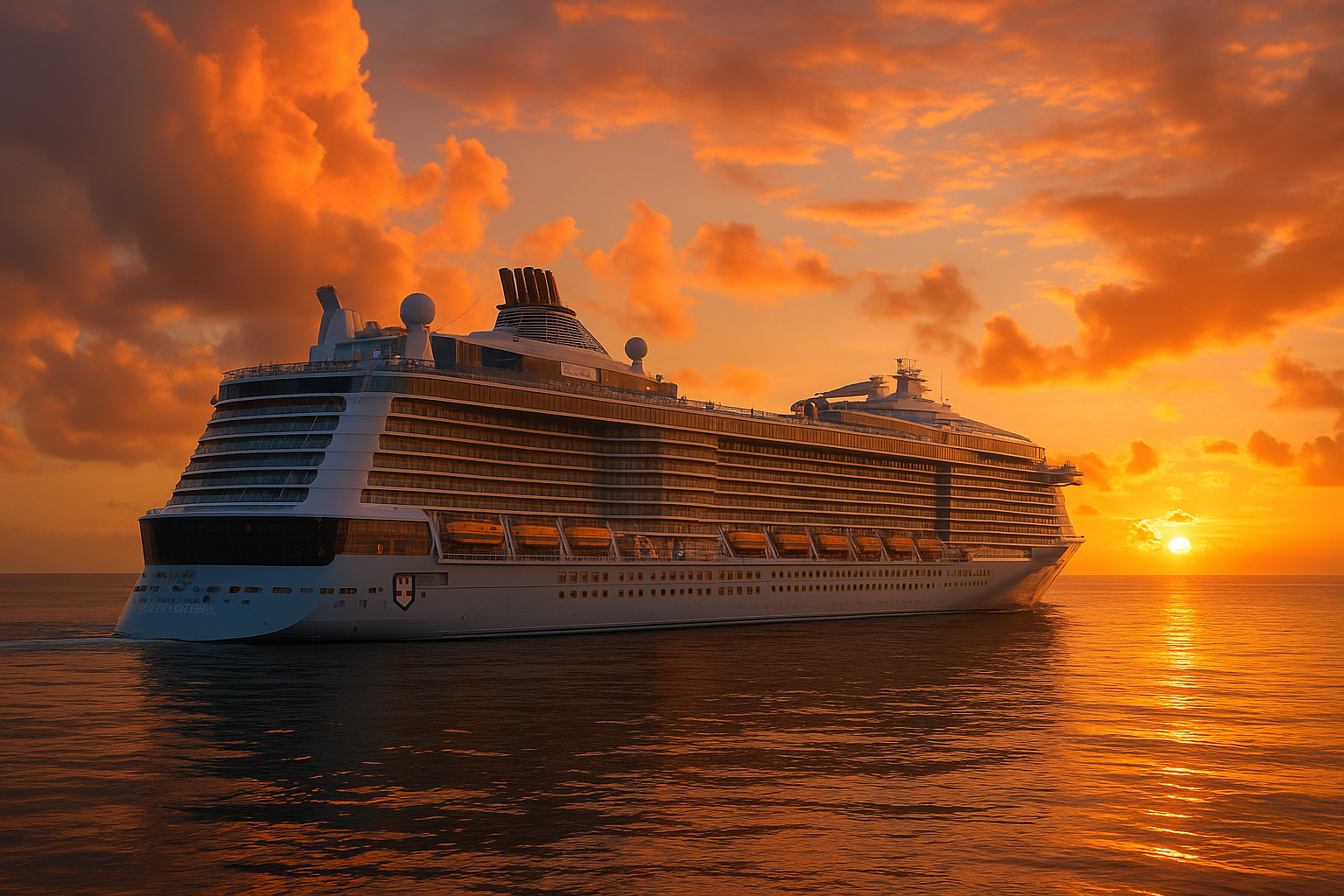
Royal Caribbean Group delivered exceptional financial results for 2025 while issuing guidance that sent investors scrambling to recalculate their positions. The cruise giant’s fourth quarter earnings report, released today, revealed adjusted earnings per share of $15.64 for the full year and projected 2026 EPS between $17.70 and $18.10—a forecast that exceeded analyst expectations and drove the stock up over 6% in pre-market trading.
The Numbers Tell a Story of Unprecedented Momentum
The financial performance speaks volumes about where the cruise industry stands right now. Royal Caribbean carried 9.4 million passengers in 2025, generating $17.9 billion in total revenues and $4.3 billion in net income. The company achieved a load factor of 109.7% for the year, meaning ships sailed consistently above their double-occupancy capacity as guests booked additional berths in cabins.
Fourth quarter results continued this trajectory with net income of $0.8 billion and revenues of $4.3 billion. The company maintained a 108% load factor in Q4 while increasing net yields by 3.1% year-over-year, demonstrating that guests are not only filling ships but paying premium prices to do so.
What the 2026 Guidance Really Means
The 2026 outlook reveals more than just optimistic projections—it signals fundamental shifts in how consumers view cruise vacations. With approximately two-thirds of 2026 capacity already booked at record rates, Royal Caribbean is entering the year with visibility that would make most hospitality companies envious.
The projected adjusted EPS range of $17.70 to $18.10 represents a compound annual growth rate of 23% over two years, a remarkable acceleration for a company of this scale. This growth stems from multiple drivers: 6.7% capacity growth from new ship deliveries, anticipated net yield increases between 2.1% and 4.1%, and operational efficiencies that have kept costs largely flat despite inflationary pressures.
CEO Jason Liberty framed it this way in the earnings announcement: “2025 was an outstanding year, and the momentum is further accelerating into 2026. We see strong and growing preference for our leading brands.” He emphasized the company’s progress toward achieving its Perfecta financial targets by 2027, suggesting management views current performance as a stepping stone rather than a peak.
The Booking Phenomenon Behind the Headlines
Perhaps the most revealing aspect of the report involves booking patterns. Royal Caribbean experienced “the highest seven booking weeks in the company’s history” following Cyber Sales and the onset of Wave season—the critical January through March period when cruise lines traditionally capture the bulk of annual bookings.
This isn’t just about volume. Nearly 50% of the company’s 2025 onboard revenue was pre-booked, with 90% of those transactions flowing through digital channels. Guests are increasingly purchasing shore excursions, specialty dining, beverage packages, and other amenities before boarding, creating revenue predictability and operational advantages that compound throughout the sailing experience.
Close-in bookings remain elevated compared to historical patterns, indicating sustained consumer confidence even as departure dates approach. Both participation rates and pricing for pre-cruise purchases exceed prior-year levels, suggesting guests are willing to commit larger budgets to their cruise vacations earlier in the planning process.
Strategic Investments Positioning for Long-Term Growth
The earnings report outlined several major initiatives that extend Royal Caribbean’s competitive positioning. The company secured firm orders for two Discovery Class ships from Chantiers de l’Atlantique, with deliveries scheduled for 2029 and 2032. These represent continued fleet modernization that will bring new hardware and guest experiences to the portfolio.
More intriguing is the Celebrity River Cruises launch planned for 2027. Royal Caribbean intends to expand this new venture to 20 vessels by 2031, with 10 additional ships already in the pipeline. This diversification into river cruising positions the company to capture demand from travelers who might not consider oceangoing cruises but seek similar vacation experiences.
The private destination strategy continues expanding as well. Royal Caribbean is growing from three private destinations to eight by 2028 through its Perfect Day and Royal Beach Club collections. These controlled environments allow the company to capture more guest spending while delivering curated experiences that differentiate sailings from competitors who rely exclusively on traditional ports.
The Financial Foundation Supporting This Growth
Royal Caribbean closed 2025 with $7.2 billion in liquidity, providing substantial flexibility for both growth investments and shareholder returns. The company repurchased 1.8 million shares for $504 million in the fourth quarter alone, with $1.8 billion remaining under its share repurchase authorization.
Management has hedged 60% of 2026 fuel requirements at approximately $474 per metric ton, insulating a significant portion of operating costs from commodity price volatility. Net cruise costs excluding fuel per available passenger cruise day decreased 0.1% in constant currency, demonstrating cost discipline even as the company scales operations.
The company faces $3.2 billion in debt maturities during 2026, a manageable obligation given current liquidity and cash generation capabilities. Capital expenditures are projected at approximately $5 billion for the year, funding both newbuild deliveries and enhancement projects across the existing fleet.
What This Means for the Cruise Industry
Royal Caribbean’s performance and outlook provide valuable signals about broader cruise industry health. The booking strength, yield growth, and capacity utilization suggest consumer demand has moved beyond pandemic recovery into genuine expansion. Travelers are committing vacation budgets to cruising earlier, spending more per sailing, and returning for repeat experiences.
The pre-cruise digital booking patterns reveal changing consumer behaviors that create operational advantages for cruise lines with sophisticated technology platforms. As guests handle more transactions before boarding, ships can optimize inventory allocation, staffing, and service delivery in ways that weren’t possible when most onboard spending occurred spontaneously during sailings.
The expansion into river cruising and private destinations reflects recognition that cruise companies must offer varied experiences to capture different market segments. Not every potential customer wants a 5,000-passenger megaship sailing Caribbean loops, but many of those same consumers might book river cruises or beach club experiences that leverage cruise companies’ operational expertise and brand equity.
Looking Forward
Royal Caribbean’s earnings report doesn’t just document past performance—it reveals a company executing a coherent long-term strategy while capitalizing on favorable near-term conditions. The combination of new ship deliveries, yield growth, operational efficiency, and product diversification creates multiple pathways for sustained growth even if one or two elements underperform.
The stock market’s positive response, with shares jumping over 6% following the announcement, suggests investors believe management can deliver on its ambitious projections. With two-thirds of 2026 already booked at record pricing and booking momentum continuing, Royal Caribbean has positioned itself to capitalize on what increasingly looks like a multi-year cruise industry expansion rather than a temporary post-pandemic surge.
For cruise enthusiasts, this translates to a company investing aggressively in new ships, destinations, and experiences. For the broader travel industry, it demonstrates that consumers continue viewing cruises as compelling value propositions worthy of premium prices and advance commitments. The question heading into 2026 isn’t whether Royal Caribbean will grow—it’s how much runway remains before market saturation begins constraining these impressive growth rates.