
Royal Caribbean's Newest Giant Takes Shape: Icon 4 Hits Major Construction Milestone
Meyer Turku shipyard begins installing 2,800 cabins on Royal Caribbean's fourth Icon Class ship. The 248,663-ton vessel is on track for a late 2027 debut, continuing the world's largest cruise ship series.
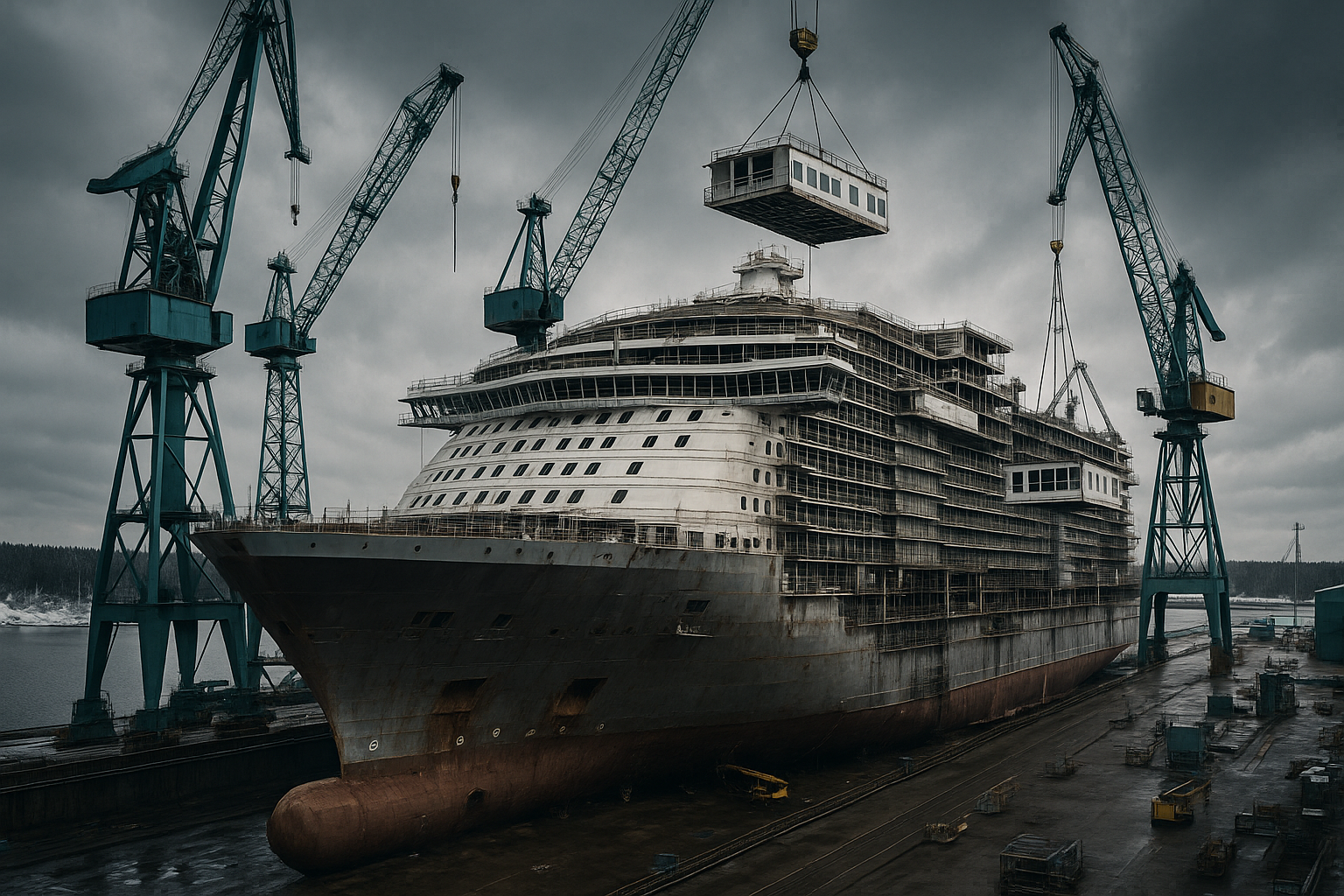
The world’s most ambitious cruise ship series just reached another pivotal moment. On January 9, 2026, Meyer Turku shipyard in Finland lifted the first cabins onto Royal Caribbean’s fourth Icon Class ship, marking a dramatic new phase in the vessel’s construction journey toward its late 2027 debut.
According to Cruise Hive, this milestone represents the beginning of an extensive cabin installation process that will ultimately see 2,800 staterooms fitted throughout the massive 248,663-gross-ton vessel.
Why This Milestone Matters
For cruise enthusiasts tracking the evolution of mega-ships, cabin installation is far more than a construction checkpoint. It signals the ship has progressed from skeletal framework to a vessel taking recognizable form. The cabins aren’t pieced together inside the hull—they arrive as fully prebuilt modular units, manufactured by Meyer Turku’s daughter company, Piikkio Works, located in Piikkio, Finland.
These precision-engineered modules are transported to the shipyard where massive cranes lift them into position within the ship’s superstructure. This modular approach revolutionizes shipbuilding efficiency, allowing interior work to proceed in parallel with hull construction rather than sequentially. The result? Faster build times without sacrificing quality or complexity.
For a ship accommodating 5,610 guests at double occupancy—or up to 7,600 when all berths are filled—the logistics are staggering. Installing 2,800 cabins requires military-grade precision in scheduling, positioning, and integration with the vessel’s intricate electrical, plumbing, and HVAC systems.
Construction Timeline: From Keel to Christening
Icon 4’s journey began in September 2025 with the traditional keel-laying ceremony, a maritime ritual dating back centuries that marks the official start of construction. Now, just four months later, the ship has advanced to the assembly phase where its interior identity begins to take shape.
The timeline ahead remains ambitious but achievable based on Meyer Turku’s proven track record with Icon Class vessels:
- Now through Mid-2026: Widespread cabin installation and interior outfitting
- Summer 2026: Float out from dry dock to outfitting pier
- Q2 2027: Delivery to Royal Caribbean
- Late 2027: Entry into service with inaugural sailings
This schedule positions Icon 4 approximately three years from keel laying to passenger service—a remarkably compressed timeline for a ship of this magnitude and complexity.
The Icon Class Legacy Continues
Icon 4 will become the fourth member of Royal Caribbean’s groundbreaking Icon Class series, joining three sister ships that have already redefined cruising at the highest end of the scale:
Icon of the Seas launched in January 2024 as the world’s largest cruise ship (tied with her sisters), immediately capturing global attention with her revolutionary neighborhood concept, multiple pools, waterslides, and the first-ever suspended infinity pool at sea.
Star of the Seas debuted in August 2025, refining the Icon formula with guest feedback from Icon of the Seas’ inaugural season while maintaining the class’s signature features and massive capacity.
Legend of the Seas is scheduled to begin operations in July 2026 and will become the first Icon Class vessel to operate a full Mediterranean season, bringing the mega-ship experience to European waters in a significant strategic move for Royal Caribbean.
All four vessels share identical specifications: 248,663 gross tons, 20 decks, and accommodation for thousands of guests across a staggering variety of cabin types, from interior staterooms to multi-bedroom suites with private balconies.
Engineering Innovation: LNG and Fuel Cells
Beyond sheer size, Icon 4 represents Royal Caribbean’s commitment to more sustainable cruising. The vessel will be powered by liquefied natural gas (LNG), which produces significantly lower emissions compared to traditional marine fuels. But the innovation doesn’t stop there.
Icon 4 also incorporates fuel cell technology for electrical generation—a cutting-edge approach that converts fuel into electricity through an electrochemical process rather than combustion. This results in even cleaner power generation for onboard systems, reducing the ship’s environmental footprint while maintaining the energy demands of a floating resort city.
This dual approach positions Icon 4 at the forefront of the industry’s transition toward alternative fuels, a trend accelerating across the cruise sector. According to industry reports, 65 percent of vessels entering service in 2026 are powered by alternative fuels, reflecting the maritime industry’s rapid pivot away from conventional diesel.
What Comes Next
With cabin installation underway, Meyer Turku will simultaneously advance other construction phases. The ship’s public spaces—theaters, dining venues, bars, pools, and entertainment areas—will begin taking form. Mechanical systems will be tested and integrated. The distinctive Icon Class neighborhoods will emerge, each with its own character and amenities.
By summer 2026, Icon 4 will float out of dry dock in what’s always a dramatic moment in shipbuilding: a massive vessel touching water for the first time. After float-out, the ship moves to an outfitting pier where final construction, testing, and sea trials occur before delivery to Royal Caribbean.
For cruisers eager to experience the latest iteration of the Icon Class, late 2027 may seem distant. But in the world of mega-ship construction, we’re already past the halfway point. Icon 4 is no longer just blueprints and steel—she’s a ship taking tangible form, one cabin at a time.
The Bottom Line
The cabin installation milestone on Royal Caribbean’s Icon 4 represents more than construction progress. It demonstrates the cruise industry’s unshakeable confidence in continued growth and passenger demand for ever-larger, more innovative vessels. Even as the first Icon Class ships prove their concepts in service, Royal Caribbean is already building the next generation.
When Icon 4 enters service in late 2027, she’ll join a fleet of mega-ships that have fundamentally changed what’s possible at sea. And based on Meyer Turku’s track record and the pace of construction so far, that debut is right on schedule.