
Royal Caribbean Confirms Discovery Class Ships Built for the World's Most Exotic Destinations
Royal Caribbean secures orders for two Discovery Class ships designed for Panama Canal transit and exotic itineraries. The new vessels arrive in 2029 and 2032, with options for four more.
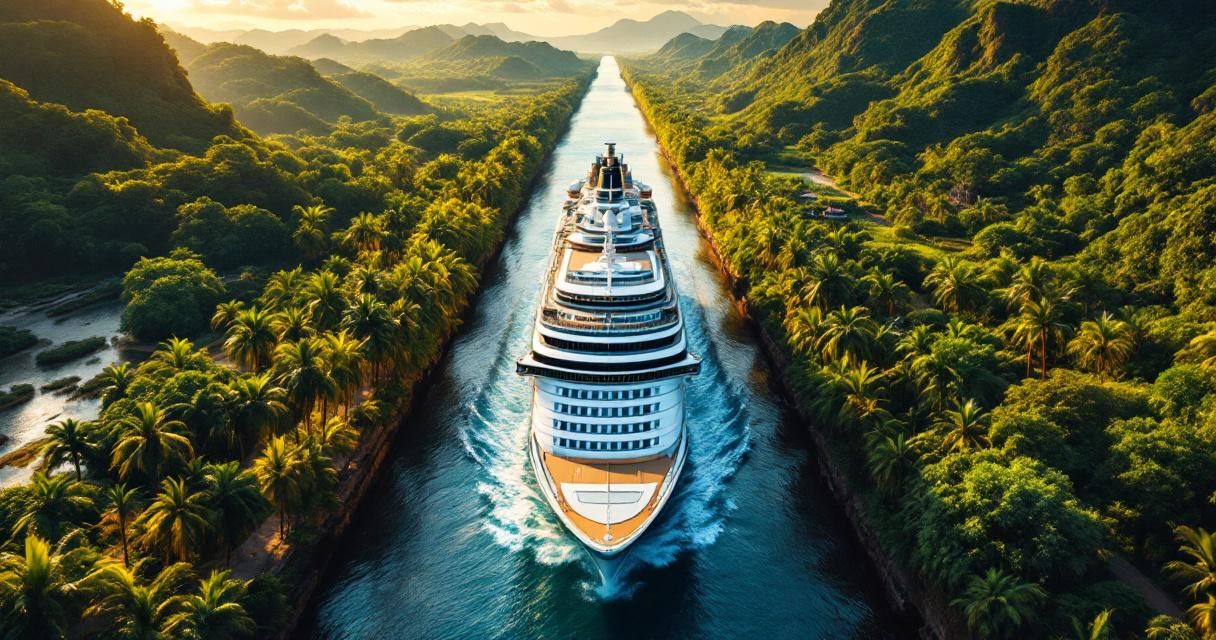
Royal Caribbean Group made its next big fleet move official. The cruise giant confirmed orders for two ships in a brand-new Discovery Class, with the first vessel scheduled to debut in 2029 and the second following in 2032.
But this isn’t just another ship order. The Discovery Class represents a strategic pivot—vessels purpose-built to reach destinations that Royal Caribbean’s massive Icon and Oasis Class ships simply cannot access.
Panama Canal Changes Everything
The defining characteristic of Discovery Class ships is Panama Canal transit capability. While Royal Caribbean hasn’t released exact specifications, this constraint tells us a lot about what to expect.
The largest cruise ship to successfully navigate the Panama Canal was Norwegian Bliss at approximately 168,000 gross tons and 1,094 feet in length. Discovery Class vessels will need to stay within similar dimensions—making them substantially smaller than the 250,800-ton Icon of the Seas or the 227,000-ton Wonder of the Seas.
This size limitation is entirely intentional. As Royal Caribbean Group announced, the Discovery Class will enable “extraordinary, one-of-a-kind experiences” in “truly breathtaking destinations”—the kind of exotic ports that can’t accommodate floating cities.
The Strategic Logic
Royal Caribbean President Michael Bayley has been vocal about what Discovery Class enables. The Panama Canal capability allows ships to operate Alaska summer seasons, then transit to the Caribbean for winter sailings—a flexibility that Icon and Oasis Class ships lack entirely.
Currently, only Royal Caribbean’s aging Radiance Class ships (roughly 90,000 gross tons) can make this transit within the fleet. Discovery Class vessels will be nearly twice that size while maintaining canal capability, delivering far more modern accommodations and amenities without sacrificing routing flexibility.
CEO Jason Liberty framed the announcement as “our continued commitment to shaping the future of vacations,” emphasizing that “these ships will be a showcase of what’s possible when design meets purpose, ultimately bringing the world closer to our guests.”
Building on Four Decades of Partnership
The Discovery Class ships will be constructed at Chantiers de l’Atlantique in Saint-Nazaire, France—the same shipyard that built Royal Caribbean’s revolutionary Oasis Class and the current Icon Class vessels. This partnership stretches back to 1985, with 21 ships delivered to Royal Caribbean Group over the decades.
The firm orders include options for four additional Discovery Class ships, signaling Royal Caribbean’s confidence in this new concept. If all options are exercised, Discovery Class could eventually become one of the company’s largest fleet segments.
A Different Kind of Royal Caribbean Ship
The industry has watched Royal Caribbean chase superlatives for years. Biggest ship. Most waterslides. Tallest dry slide at sea. Discovery Class represents a philosophical shift—building for purpose rather than spectacle.
These won’t be stripped-down expedition ships. Royal Caribbean will bring its signature entertainment, dining variety, and service style to the Discovery Class. But the emphasis shifts from onboard attractions to destination access. The ship becomes a means to reach remarkable places, not the destination itself.
This approach acknowledges a growing segment of cruise consumers who want Royal Caribbean’s reliability and polish but prioritize exploration over mega-ship amenities. It’s a calculated bet that not every cruiser needs a surf simulator or the world’s largest waterpark at sea.
What Destinations Might We See?
While Royal Caribbean hasn’t released specific itineraries, the Panama Canal capability and emphasis on “exotic” destinations provides clues.
South Pacific voyages requiring canal transit from Caribbean deployment bases become possible. Extended Mediterranean seasons with more flexible positioning are achievable. Complex multi-region world cruises that would require South American circumnavigation for larger ships become practical routes.
The Discovery Class could also enable more consistent Alaska deployment from Caribbean homeports, with seasonal transitions that take days rather than weeks. This opens scheduling possibilities that have been impossible with the current fleet mix.
The Bigger Picture
Royal Caribbean’s Discovery Class announcement arrives alongside other major fleet commitments. The company has Icon 4 (2027), Icon 5 (2028), and Oasis 7 (2028) all confirmed, plus the Celebrity River Cruises launch bringing 10 river vessels by 2031.
This diversification strategy positions Royal Caribbean to serve multiple cruise market segments rather than competing for the same mega-ship consumers. Want the spectacle of Icon of the Seas? Book it. Prefer destination-focused sailings on a more accessible vessel? Discovery Class awaits.
For an industry often criticized for building bigger rather than better, Discovery Class represents something genuinely different: ships designed not for what they can contain, but for where they can take you.
The 2029 debut gives Royal Caribbean several years to refine the concept, gather Icon Class feedback, and watch market trends evolve. By the time the first Discovery Class ship launches, the company will know exactly what modern cruisers want from a destination-focused vessel—and whether this strategic bet pays off.