
Regent Seven Seas Just Ordered a Billion-Dollar Ship for 2033—And It Might Redefine Ultra-Luxury Cruising
Norwegian Cruise Line Holdings just announced a €500M-€1B order for a third Prestige-Class ship delivering in 2033. With the largest all-inclusive luxury suite ever and a space-to-guest ratio that's redefining premium cruising, this might be the most ambitious ultra-luxury vessel ever conceived.
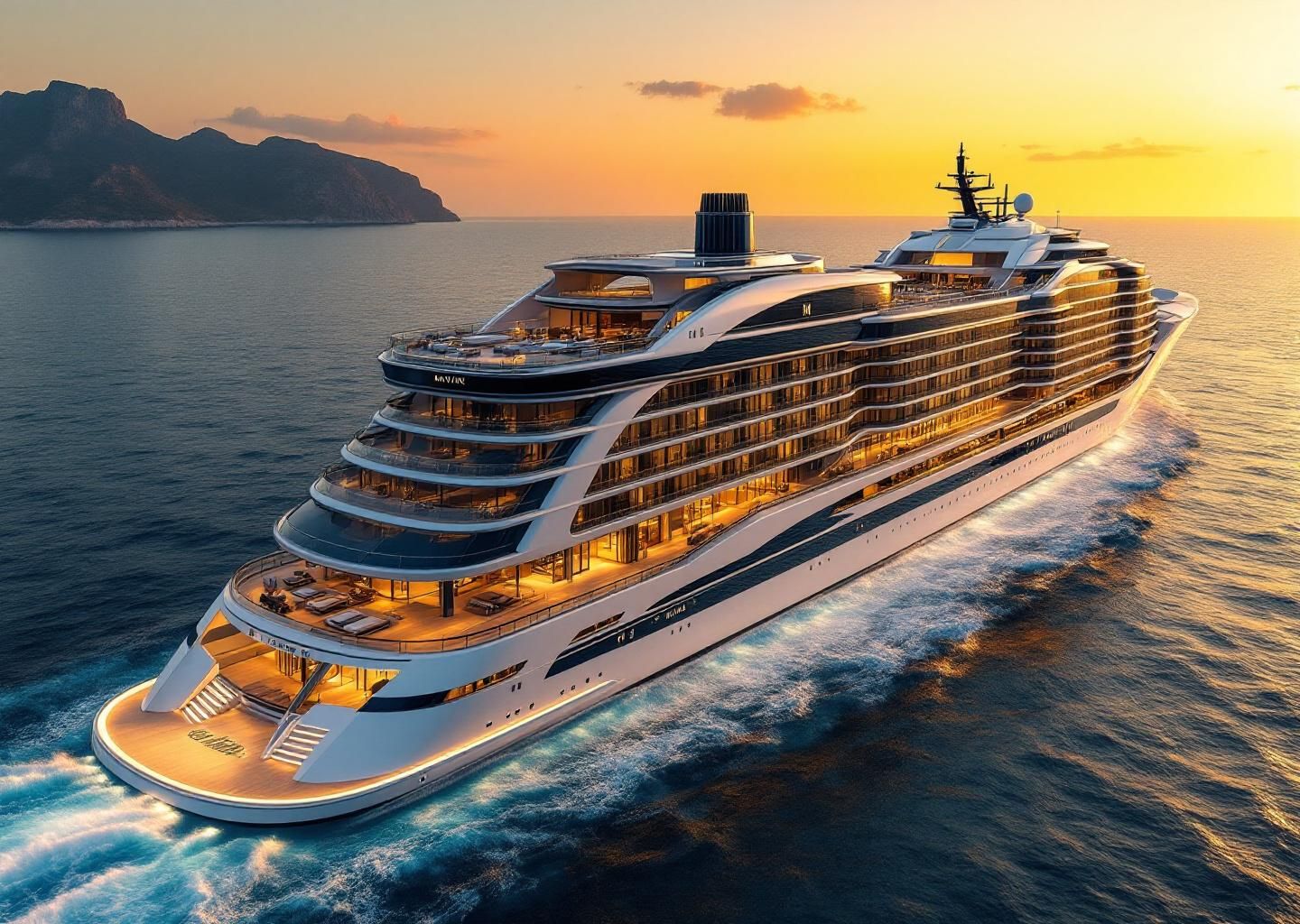
November 10, 2025 — While most cruise lines are playing it safe in uncertain economic times, Norwegian Cruise Line Holdings just made a move that proves luxury travel isn’t slowing down anytime soon. The parent company of Regent Seven Seas Cruises announced a newbuild order with Italian shipbuilder Fincantieri for a third vessel in the revolutionary Prestige-Class series, scheduled for delivery in 2033.
The price tag? Somewhere between 500 million and 1 billion euros. That’s right—billion with a “B.”
But here’s what makes this announcement particularly intriguing: this isn’t just another luxury ship. It’s a calculated bet on the future of ultra-luxury cruising, coming at a time when the industry is still finding its footing post-pandemic and economic headwinds persist.
The Prestige-Class: A New Standard for Luxury at Sea
To understand why this third ship order matters, we need to talk about what makes the Prestige-Class different from everything that came before it.
When the Seven Seas Prestige debuts in 2026—just months from now—it will mark Regent’s first new ship class in a full decade. And the numbers tell a fascinating story about the company’s strategy: these ships will measure 77,000 tons and accommodate 822 guests with a dedicated crew of 630.
Do the math, and you’ll notice something interesting: the Prestige-Class vessels are 40 percent larger than previous Regent ships, yet they accommodate only 10 percent more guests. That’s not an accident. It’s a deliberate statement about what ultra-luxury means in the modern era: space, exclusivity, and an almost absurd level of personalization.
The result? One of the highest space-to-guest ratios in the entire cruise industry.
What You’ll Find Aboard (Spoiler: It’s Excessive in All the Best Ways)
According to the official announcement, these ships will feature 12 distinctive suite categories, including four brand-new designs created specifically for the Prestige-Class. But the crown jewel—literally—is the Skyview Regent Suite, which Regent claims will be “the largest all-inclusive ultra-luxury cruise ship suite in industry history.”
We don’t know the exact square footage yet, but given that claim, we’re talking about something truly extraordinary. For context, current luxury cruise suites top out around 2,000-3,000 square feet. It wouldn’t be surprising to see the Skyview Regent Suite push well beyond that threshold.
Then there’s the dining. Each ship will feature 11 distinct culinary experiences, with plans to announce an additional 12th venue that’s being kept under wraps for now. For a ship carrying just over 800 guests, that’s an impressive ratio—roughly one dining venue for every 70 passengers. Compare that to mass-market cruise ships, where you might have one restaurant for every 500-1,000 guests, and you start to see the difference in approach.
The Strategic Play: Why 2033 Matters
The delivery timeline tells its own story. Regent now has three Prestige-Class ships on order:
- Seven Seas Prestige arriving in 2026
- A second ship scheduled for 2030
- This newly announced third vessel coming in 2033
That’s a carefully paced expansion strategy, with each ship arriving 3-4 years apart. It’s the opposite of the rapid-fire fleet expansion we’ve seen from some mainstream cruise lines, which sometimes launch multiple ships per year.
Jason Montague, Chief Luxury Officer for NCLH, put it clearly in the announcement: “This newbuild order continues our measured, strategic expansion within the luxury space.”
The word “measured” is key here. Regent isn’t flooding the market. They’re carefully adding capacity while maintaining exclusivity—a delicate balance that defines the ultra-luxury segment. Add too many ships too quickly, and you risk diluting the brand’s cachet. Move too slowly, and competitors steal your thunder.
The Fincantieri Connection: Italian Craftsmanship at Sea
The partnership with Fincantieri deserves attention. The Italian shipbuilder has become synonymous with luxury cruise construction, and this contract—valued in Fincantieri’s books as “large” (their designation for deals between €500 million and €1 billion)—cements an already strong relationship between NCLH and the shipyard.
Pierroberto Folgiero, CEO and Managing Director of Fincantieri, noted that “this latest contract confirms the trust NCLH places in Fincantieri’s expertise to deliver innovative, sustainable, and exquisitely crafted ships.”
That emphasis on sustainability is worth noting. While the announcement doesn’t detail specific environmental technologies that will be incorporated into the 2033 vessel, the fact that it’s being mentioned now—eight years before delivery—suggests that environmental performance will be a central design consideration from day one.
And honestly? It has to be. By 2033, environmental regulations for cruise ships will likely be even more stringent than they are today. Any ship being designed now needs to anticipate those future requirements, or risk being obsolete before it even launches.
What This Means for Luxury Cruise Pricing
Here’s the uncomfortable truth about ultra-luxury cruising: it’s getting more expensive. And orders like this one are part of the reason why.
When you’re investing somewhere between half a billion and a billion dollars in a single ship that carries just 822 guests, the economics are straightforward. Those costs have to be recovered through ticket prices, and that means even higher fares for the ultra-luxury segment.
For context, Regent Seven Seas cruises already command some of the highest per-diems in the industry, often ranging from $600-$1,000+ per person per night, depending on the itinerary and suite category. The Prestige-Class vessels, with their larger suites, higher crew ratios, and additional amenities, will likely push those numbers even higher.
But here’s the thing: Regent wouldn’t be ordering a third ship if the demand wasn’t there. The ultra-luxury cruise segment has proven remarkably resilient, even as economic uncertainty has crimped spending in other areas. Affluent travelers continue to prioritize experiences over possessions, and a Prestige-Class cruise delivers experiences by the boatload (pun absolutely intended).
The Competitive Landscape: How This Stacks Up
Regent isn’t operating in a vacuum. Other luxury cruise lines are also expanding, though at different paces and with different strategies.
Silversea (also owned by a major cruise holding company—Royal Caribbean Group in their case) has been adding expedition and destination-focused ships. Viking has been aggressively expanding both its ocean and expedition fleets. And newcomers like Explora Journeys (MSC Group’s luxury brand) are entering the space with their own vision of modern luxury.
What sets Regent’s approach apart is the all-inclusive model combined with traditional luxury. While competitors experiment with à la carte pricing or focus on expedition destinations, Regent is doubling down on spacious accommodations, multiple dining venues, and a truly all-inclusive experience where virtually everything is covered in the upfront price.
It’s a bet that travelers in the ultra-luxury segment want simplicity and predictability along with their caviar and champagne. No surprise charges. No nickle-and-diming. Just comprehensive luxury from start to finish.
The Long View: What 2033 Looks Like From Here
It’s almost surreal to think about what cruising might look like in 2033.
In 2025, we’re still dealing with the reverberations of the pandemic shutdown, debates over environmental impacts, and rapid technological change. By 2033, the industry could look dramatically different. Fuel technologies will evolve. Port infrastructures will adapt. Guest expectations will shift.
Building a ship for delivery that far in the future requires not just optimism, but genuine conviction that the market will still be there—and growing—eight years from now. That Norwegian Cruise Line Holdings is willing to make that bet, with a massive financial commitment, tells you something important about how they view the trajectory of luxury travel.
The alternative reading? They’re worried about shipyard capacity. Major shipbuilders like Fincantieri have orderbooks that extend years into the future. If NCLH didn’t secure this berth now, they might not be able to get one until the late 2030s—by which time their competitors would have newer, flashier ships stealing the spotlight.
The Bottom Line: Is This Good News for Cruise Fans?
If you’re a luxury cruise enthusiast, this announcement is unambiguously good news. More capacity in the ultra-luxury segment means more options, more itineraries, and potentially more competitive pricing (though “competitive” in this segment is relative).
If you’re concerned about cruise industry environmental impacts, the news is more mixed. More ships mean more environmental footprint—but if those ships incorporate cutting-edge sustainable technologies, they could actually be cleaner than older vessels they’re effectively replacing in terms of market positioning.
And if you’re just someone who follows the cruise industry for the sheer spectacle of it all? Well, a billion-dollar floating palace with suites the size of Manhattan apartments and a crew-to-guest ratio that borders on absurd definitely delivers on the spectacle front.
What Happens Next
The Seven Seas Prestige will launch in 2026, giving us our first real look at what the Prestige-Class offers. Early reviews and guest reactions will likely influence design refinements for the second and third vessels, even though the basic architecture is already locked in.
Then in 2030, the second Prestige-Class ship arrives, consolidating the lessons learned from the first vessel’s operational experience. By the time the third ship launches in 2033, Regent will have nearly a decade of operating experience with this class—potentially making it the most refined version yet.
For now, though, this announcement is mostly a statement of confidence. Confidence in the ultra-luxury market. Confidence in the Regent brand. And confidence that even in an uncertain world, there will always be travelers willing to pay premium prices for extraordinary experiences at sea.
And honestly? Given the resilience of the luxury travel sector, that confidence seems well-placed.
The 2033 delivery date might seem like science fiction from our current vantage point. But in the cruise industry, the future is always being built—one massive ship order at a time.