
Queen Mary 2 Conquers the Panama Canal for the First Time in Her 20-Year History
Cunard's legendary ocean liner completed her maiden transit through the Panama Canal on January 26, 2026, marking a milestone moment during her 108-night World Voyage and setting up a reunion with her namesake in Los Angeles.
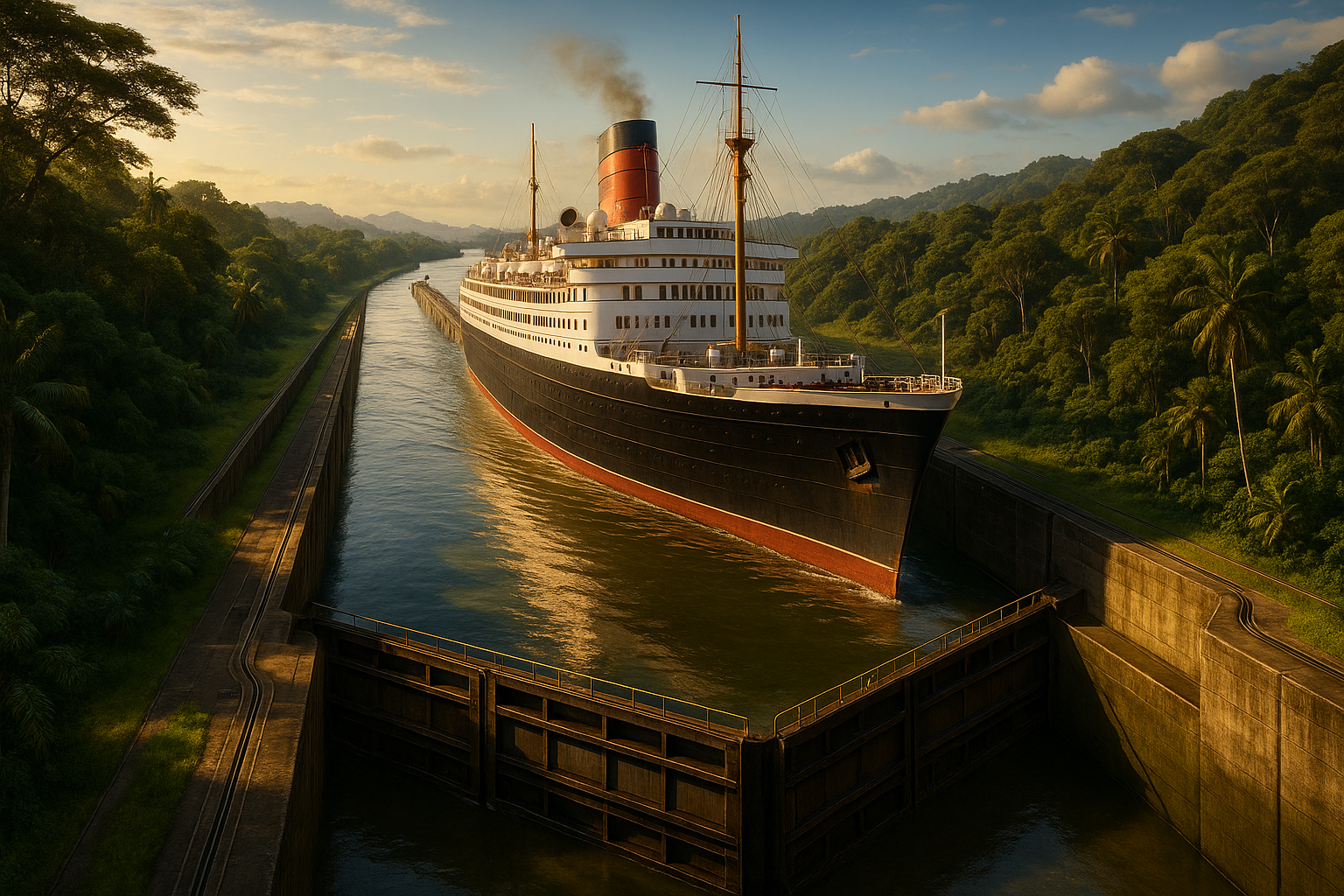
Some maritime firsts take decades to happen. Cunard’s Queen Mary 2, the world’s only purpose-built ocean liner still in service, just checked off a major one: her first-ever transit through the Panama Canal.
On January 26, 2026, passengers aboard the 108-night World Voyage witnessed history as the iconic vessel navigated the canal’s expanded locks for the very first time. According to Cunard’s announcement, the passage began on Saturday, January 24, when QM2 entered the new locks at Agua Clara. After an overnight stop at the Cocoli Mooring Station, she completed her transit and passed beneath the Bridge of the Americas on Sunday, January 25.
Why It Took 20 Years
Queen Mary 2 launched in 2004 as a deliberate throwback to the golden age of transatlantic travel. At 148,528 gross tons and 1,132 feet in length, she was designed primarily for ocean crossings between Southampton and New York—not for squeezing through narrow canal passages.
The original Panama Canal locks, built in 1914, could accommodate vessels up to 965 feet long. Queen Mary 2 exceeded that by nearly 170 feet. For two decades, the canal simply could not handle her.
That changed in 2016 when the Panama Canal Authority completed a $5.25 billion expansion project, adding new locks capable of handling ships up to 1,200 feet long. Suddenly, Queen Mary 2 had clearance—but it took another decade before Cunard incorporated a canal transit into her itinerary.
The Engineering Challenge
Even with the expanded locks, fitting Queen Mary 2 through the Panama Canal is no casual maneuver. The new Agua Clara and Cocoli locks measure 1,400 feet long by 180 feet wide. Queen Mary 2 stretches 1,132 feet with a beam of 135 feet, leaving relatively slim margins on either side.
The transit requires meticulous planning and coordination with canal pilots who specialize in guiding the largest vessels through. Passengers on the World Voyage experienced this precision operation firsthand, watching from the ship’s decks as QM2 inched through the locks with tropical jungle pressing in on both sides.
The overnight stay at Cocoli Mooring Station allowed the ship to begin the transit on one day and complete it the next—a common practice for the largest vessels that need optimal conditions and daylight for the most challenging portions of the passage.
A Reunion 20 Years in the Making
The Panama Canal transit sets up another historic moment: Queen Mary 2’s return to Los Angeles on February 2, 2026. When she arrives at the Port of Los Angeles in San Pedro, she will be reunited with her namesake, the original RMS Queen Mary, for the first time in 20 years.
The original Queen Mary, launched in 1936, has been permanently moored in Long Beach since 1967, serving as a hotel and tourist attraction. The two ships bearing the legendary name have rarely been in the same waters since Queen Mary 2’s maiden voyage.
“As the world’s only ocean liner, Queen Mary 2’s maiden transit through the Panama Canal marks another extraordinary milestone for Cunard,” said Katie McAlister, President of Cunard. The company has built its brand around these kinds of once-in-a-generation moments—experiences that no other cruise line can replicate.
The 108-Night World Voyage
The Panama Canal passage is just one highlight of Queen Mary 2’s ambitious 2026 World Voyage. The journey departed Southampton on January 11, 2026, and will ultimately return guests to the same port after circumnavigating the globe.
The itinerary reads like a greatest hits of world cruising: Hawaii, French Polynesia, New Zealand, Sydney, Singapore, Hong Kong, and Cape Town all feature on the manifest. The ship crossed the International Date Line during her Pacific crossing, adding another milestone to an already remarkable voyage.
After Los Angeles, Queen Mary 2 will continue to San Francisco, Kona, and across the Pacific before reaching Australia. The voyage represents the kind of epic journey that only an ocean liner designed for long-distance travel can comfortably execute.
Cunard’s Canal Ambitions Expand
Queen Mary 2’s successful transit opens the door for more Cunard Panama Canal crossings. The company has already announced several upcoming voyages featuring canal passages:
Queen Elizabeth will transit the canal on September 24, 2026, during a 21-night voyage from Seattle to Miami. This itinerary offers a more accessible option for travelers who cannot commit to a full world voyage but want the experience of a canal passage aboard a Cunard ship.
Queen Anne, Cunard’s newest vessel launched in 2024, will make her Panama Canal debut on January 22, 2027. Her 56-night South America Discovery itinerary visits more than 20 ports of call and represents one of the most comprehensive South American voyages available.
Queen Victoria will include a Panama Canal transit during her January 10, 2027 World Voyage from Southampton. The 117-night journey visits over 30 ports across six continents.
What This Means for Cruisers
The Panama Canal has always been a bucket-list item for cruise enthusiasts. The engineering marvel, combined with the unique experience of watching a massive vessel navigate narrow locks, creates memories that passengers remember for decades.
Having Queen Mary 2 available for canal transits adds a new dimension to the experience. There is something categorically different about transiting the Panama Canal aboard a genuine ocean liner versus a modern cruise ship. The QM2’s throwback design, formal dining traditions, and emphasis on the voyage itself rather than onboard activities creates an atmosphere more aligned with the canal’s own historic significance.
For those who missed this World Voyage, Cunard’s expanded canal programming means more opportunities are coming. The question is whether demand for these crossings will push prices higher as travelers recognize the rarity of combining a Cunard experience with a Panama Canal transit.
Looking Forward
Queen Mary 2’s successful first transit removes any remaining technical barriers to future crossings. The ship proved she can navigate the expanded locks safely and efficiently, paving the way for canal passages to become a regular feature of Cunard itineraries.
For the passengers aboard the 2026 World Voyage, the experience was genuinely historic—the kind of first that cannot be repeated. Everyone who transits the canal on Queen Mary 2 going forward will be following in their wake.
The reunion with the original Queen Mary in Los Angeles adds a poetic note to the achievement. Two ships, separated by 70 years of maritime history, sharing the same harbor once again. Some moments in cruising transcend the ordinary, and this is one of them.