
Ten Cruise Ships, 75,000 Guests: The Day PortMiami Made Maritime History
PortMiami set an all-time single-day record on November 30, 2025, hosting ten cruise ships from seven lines and processing over 75,000 passengers—cementing Miami's status as the Cruise Capital of the World.
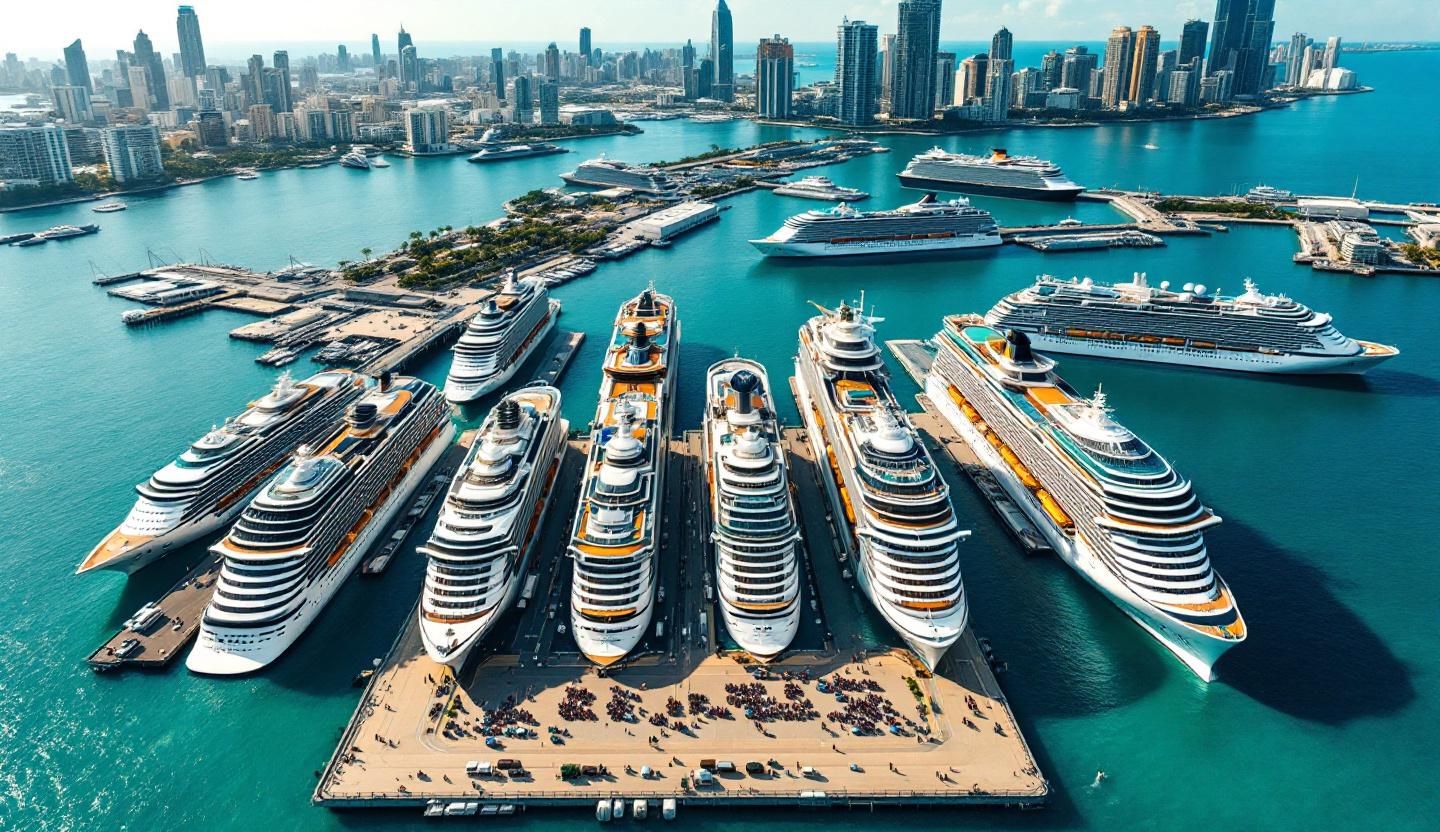
The “Cruise Capital of the World” just proved why it holds that title—in spectacular fashion. On November 30, 2025, PortMiami accomplished something unprecedented in its storied history: hosting ten cruise ships simultaneously while processing more than 75,000 passengers through its terminals in a single day. To put that in perspective, that’s roughly equivalent to the entire population of a mid-sized city boarding and disembarking cruise ships in just 24 hours.
According to Cruise Industry News, the port welcomed exactly 75,201 guests on that record-breaking Sunday, with seven different cruise lines operating turnaround operations simultaneously. The massive lineup included vessels from Azamara, Carnival, Celebrity, MSC, Norwegian, Royal Caribbean, and Virgin Voyages—representing a diverse cross-section of the industry from mass-market to luxury offerings.
A Choreographed Ballet of Mega-Ships
The logistics required to orchestrate such an operation are nothing short of extraordinary. The ten ships that converged on Miami that day included the Azamara Onward, Carnival Celebration, Carnival Horizon, Carnival Sunrise, Celebrity Beyond, MSC Divina, Norwegian Aqua, Independence of the Seas, Symphony of the Seas, and Scarlet Lady. Each of these vessels was conducting turnaround operations—meaning thousands of guests were disembarking while simultaneously, thousands more were boarding for their upcoming voyages.
If you’ve ever experienced the organized chaos of a single cruise ship turnaround, multiply that by ten and compress it into one Sunday afternoon. We’re talking about coordinating luggage operations, customs and immigration processing, provisioning, fueling, waste removal, and all the other behind-the-scenes operations that make a cruise possible—times ten, all happening concurrently.
The ships were positioning for four- to seven-night cruises to the Caribbean and Bahamas, the bread-and-butter itineraries that have made South Florida the undisputed epicenter of the North American cruise industry. These shorter sailings are particularly popular during the winter season, when northerners seek quick escapes to warmer climates and the cruise lines maximize revenue by turning ships around quickly.
Breaking Their Own Record
What makes this achievement even more impressive? PortMiami was breaking its own record. The previous single-day milestone was set just earlier in 2025, on February 8, when the port handled ten ships and close to 68,000 passengers. In less than a year, they managed to surpass that figure by more than 7,000 guests—a 10.6% increase that speaks to both the port’s growing capacity and the cruise industry’s robust recovery and expansion.
This isn’t just about bragging rights. These records demonstrate PortMiami’s operational efficiency and infrastructure capabilities at a time when the global cruise industry is experiencing explosive growth. New, larger ships are entering service at an unprecedented rate, and ports are being forced to adapt or risk losing market share to competitors.
A Record-Breaking Year Across the Board
The single-day achievement is impressive, but it’s actually part of a broader pattern of success for PortMiami. During Fiscal Year 2025 (October 1, 2024, through September 30, 2025), the port welcomed a staggering 8,564,225 cruise passengers—the highest annual count in its history. That represents a 4.02% increase over the previous year’s 8,233,056 passengers, which itself was a record.
Think about that for a moment. PortMiami is processing more than 8.5 million cruise passengers annually. That’s more than the entire population of New York City passing through one port for cruise vacations each year. The economic impact of this activity on Miami-Dade County is enormous, supporting thousands of jobs in hospitality, transportation, provisioning, and related industries.
Interestingly, while PortMiami celebrates these milestones, it’s worth noting the competitive dynamics at play in the cruise port world. Port Canaveral, located about 200 miles north on Florida’s Space Coast, recently claimed the title of world’s busiest cruise port with over 8.6 million revenue passenger movements in its fiscal year 2025. The friendly rivalry between these two Florida powerhouses drives both ports to continually improve their facilities and services, ultimately benefiting cruise passengers and the industry as a whole.
The Infrastructure Behind the Magic
How does a port handle 75,000+ passengers in a single day without descending into chaos? The answer lies in years of strategic infrastructure investment and operational refinement.
PortMiami has been expanding and modernizing its cruise terminals to accommodate the new generation of mega-ships that are becoming industry standard. The port currently operates multiple state-of-the-art cruise terminals, each designed to handle the unique requirements of different cruise lines and ship sizes. These aren’t the cramped, warehouse-style terminals of decades past—modern cruise terminals are sophisticated processing centers with advanced security screening, climate control, and passenger flow management systems.
The port has also invested heavily in berth infrastructure. Accommodating ten ships simultaneously requires not just physical dock space, but also the engineering to support vessels that can weigh over 200,000 gross tons and extend more than 1,100 feet in length. Each berth needs shore power capabilities, water and waste connections, and vehicle access for the hundreds of supply trucks that service each ship during turnaround.
Behind the scenes, PortMiami coordinates closely with multiple stakeholders to make these operations run smoothly: U.S. Customs and Border Protection, the Transportation Security Administration, the U.S. Coast Guard, cruise line shore operations teams, longshoremen, taxi and shuttle services, parking management, and provisioning companies. When you have ten ships in port, you might have 100 or more different organizations all working toward the same goal: getting one set of passengers off and another set on, safely and efficiently.
What This Means for Cruise Travelers
For us as cruise enthusiasts and travelers, PortMiami’s record-breaking performance is excellent news. It demonstrates that cruise infrastructure is keeping pace with industry growth, which should translate to smoother embarkation and debarkation experiences even as ships get larger and passenger numbers increase.
The port’s ability to handle ten ships efficiently also provides reassurance about schedule reliability. When ports struggle with capacity constraints, you see delays, missed port calls, and frustrated passengers. The fact that PortMiami can process 75,000+ passengers in a day without apparent disruption shows they have room to grow and handle unexpected situations like weather delays or itinerary changes.
For those planning future cruises from Miami, this record also signals the port’s commitment to remaining the industry’s premier homeport. With this level of traffic, the port has strong economic incentives to continue investing in improvements, which could mean even better terminal facilities, more efficient security and check-in processes, and enhanced ground transportation options in the years ahead.
The Competitive Landscape
PortMiami’s achievement comes at an interesting time for the cruise industry. According to industry projections, fourteen new vessels are scheduled to enter service in 2026, adding over 33,000 berths to the global fleet at a cost of approximately $11 billion. These new ships will need homeports, and competition among ports for these high-value assignments is fierce.
The seven cruise lines operating from Miami on that record day—Azamara, Carnival, Celebrity, MSC, Norwegian, Royal Caribbean, and Virgin Voyages—represent a healthy diversity that protects the port from over-reliance on any single operator. This diversity also means Miami offers cruisers more choices than virtually any other port: from Azamara’s destination-intensive luxury expeditions to Carnival’s fun-ship philosophy to Virgin Voyages’ adults-only modern approach.
Geographic advantages certainly help. Miami’s location at the tip of Florida provides easy access to the Bahamas, Caribbean, and Mexico—the most popular cruise destinations for North American travelers. The area’s year-round warm weather, excellent airport connectivity through Miami International Airport, and established tourism infrastructure create a perfect storm of advantages that competing ports struggle to match.
Looking Ahead
What’s next for PortMiami? If current trends continue, we could see single-day passenger counts approaching 80,000 or even higher in the coming years. The port has approved plans for additional terminal modernizations and expansions that would increase its capacity to handle even more simultaneous ship operations.
There’s also the question of ship size evolution. The vessels in port on November 30 ranged from the 722-passenger Azamara Onward to the 6,680-passenger Symphony of the Seas. As cruise lines continue deploying larger vessels (Royal Caribbean’s Icon class ships can carry over 7,600 passengers), ports will need to adapt their infrastructure accordingly. PortMiami appears well-positioned for this evolution, with deep channels, modern terminals, and a proven track record of handling the industry’s largest vessels.
The record also underscores Miami-Dade County’s broader positioning as a global maritime hub. PortMiami doesn’t just handle cruise ships—it’s also one of the nation’s busiest cargo ports. The port reported record containerized cargo volumes in Fiscal Year 2025 as well, demonstrating its multifaceted economic importance to the region. This diversification helps ensure continued investment in port infrastructure that benefits both cargo and cruise operations.
The Economic Ripple Effect
While the operational achievement is impressive, we shouldn’t overlook the economic significance. Those 75,201 passengers didn’t just board ships—many of them spent nights in Miami-area hotels before or after their cruises, ate in local restaurants, shopped in area stores, and used local transportation services. Multiply this by hundreds of similar turnaround days throughout the year, and you’re looking at billions of dollars in economic impact.
The cruise industry is one of Miami-Dade County’s largest economic engines, supporting an estimated 40,000+ jobs when you account for direct port employment, cruise line employees, hotel and hospitality workers, transportation providers, tour operators, and the countless businesses that supply goods and services to the ships. Every time PortMiami sets a new record, it reinforces the region’s position as the cruise industry’s global capital and secures the livelihoods of thousands of workers.
A Testament to Industry Resilience
Perhaps most significantly, PortMiami’s record-breaking performance serves as a powerful testament to the cruise industry’s complete recovery and continued growth following the pandemic disruption. Just a few years ago, cruise terminals sat empty and the industry’s future seemed uncertain. Today, we’re seeing passenger volumes that exceed pre-pandemic levels, new ships entering service at a breakneck pace, and ports like Miami pushing the boundaries of what’s operationally possible.
The fact that seven different cruise lines could confidently schedule ten ships for simultaneous turnaround operations speaks to the industry’s current strength and the consumer appetite for cruise vacations. These cruise lines wouldn’t be deploying this much capacity to Miami if they didn’t have the bookings to fill the ships.
The Bottom Line
November 30, 2025, was more than just a record-breaking day for PortMiami—it was a snapshot of the modern cruise industry at its most dynamic. Ten ships, seven cruise lines, 75,201 passengers, and countless behind-the-scenes professionals all came together to create a single day of maritime history.
For cruise enthusiasts, this record reinforces what we already know: Miami is where it’s at for cruise vacations. The port’s proven ability to handle massive passenger volumes efficiently means smoother experiences for travelers and confidence for cruise lines planning future deployments.
As we look ahead to the 2026 cruise season and beyond, we expect PortMiami will continue pushing these boundaries. With new ships entering service, growing consumer demand, and the port’s ongoing infrastructure investments, the record of 75,201 passengers probably won’t stand for long. And that’s exactly how it should be—in the cruise industry, standing still means falling behind.
The next time you’re walking through a PortMiami terminal toward your ship, take a moment to appreciate the incredible operational choreography happening around you. You might be one of 75,000 people moving through the port that day, part of a precisely coordinated operation that represents the cruise industry at its finest.
Based on reporting from Cruise Industry News.