
P&O Cruises Denies Compensation After Ship Breakdown Leaves Passengers Stranded in Barbados
P&O Cruises refuses to compensate passengers after technical problems forced its flagship Britannia to spend six days in Barbados for emergency repairs, telling guests to file insurance claims instead.
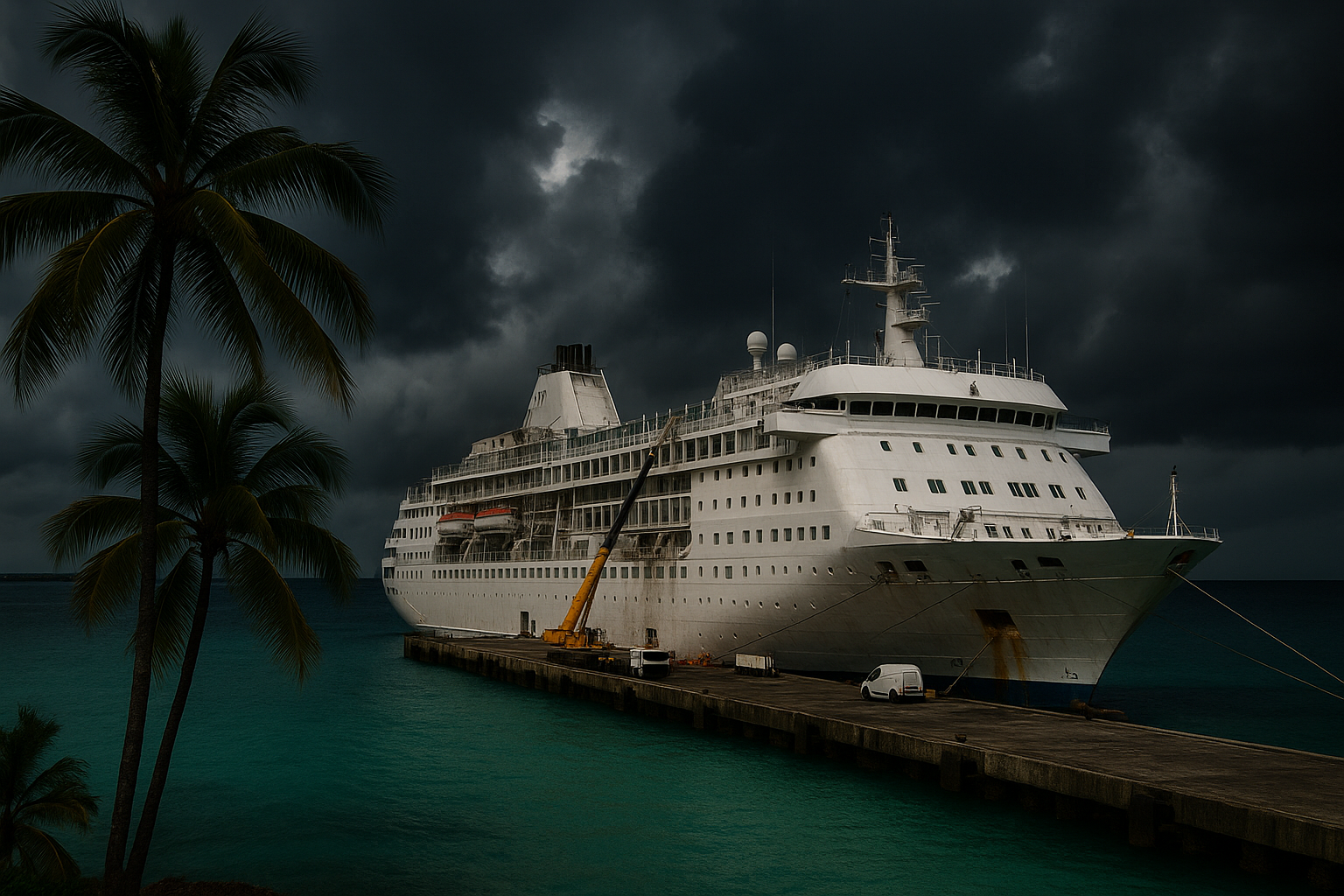
When technical problems forced P&O Cruises’ flagship Britannia to spend six days anchored in Barbados during what should have been a 14-night Caribbean adventure, passengers expected some form of compensation for their disrupted vacation. Instead, they got a letter directing them to call their travel insurance companies.
The decision has sparked outrage among guests who paid premium prices for a New Year’s cruise, only to watch their itinerary collapse as the 143,000-gross-ton vessel limped back to port with what passengers described as power and propulsion failures.
What Happened to Britannia
The trouble began on January 3, 2026, when guests reported a significant power outage while the ship was docked in Curaçao. According to passenger accounts shared on Cruise Hive, the lights went out before backup systems restored electricity roughly 30 minutes later. But that was just the beginning of the problems.
Other passengers reported being told the ship was operating with limited redundancy, with some stating that only one generator was fully functional during portions of the voyage. The ship was forced to reduce speed significantly and return to Barbados for emergency repairs, with one frustrated guest describing Britannia as “limping back” to port.
Six Days in Barbados
When Britannia arrived in Bridgetown on January 3, the ship remained docked until late January 5 for repairs. That meant passengers spent three additional unplanned days in Barbados while technicians worked to fix the vessel’s technical issues.
The situation was complicated by another P&O ship, Arvia, which remained docked at the primary cruise berth longer than scheduled due to a temporary Caribbean airspace shutdown. This prevented fly-cruise passengers from disembarking or embarking as planned. Because Arvia occupied the berth, Britannia couldn’t dock immediately and had to wait at a breakwater until Arvia finally departed late on January 4.
In total, the ship spent six of its 16 cruise days anchored in Barbados, five days at sea, and just five days visiting other Caribbean destinations. Scheduled visits to St. Lucia and Antigua were cancelled entirely, though Antigua was later replaced with a call to Martinique on January 6.
P&O’s Controversial Response
After the cruise ended, P&O Cruises sent a letter to affected passengers that didn’t go over well. Instead of offering refunds or onboard credit for the missed ports and disrupted vacation, the cruise line told guests to file claims with their travel insurance providers.
“If you wish to make a claim with your travel insurance provider for the missed ports of call, please retain a copy of this letter for your records,” the cruise line advised.
The decision represents a hard line from P&O Cruises, especially considering that passengers spent nearly half their cruise days either stuck in one port or at sea trying to reach that port for repairs. For many guests, the New Year’s sailing was a special occasion trip that had been planned and paid for months in advance.
Why This Matters for Future Cruisers
This incident highlights an important reality about cruise travel: when things go wrong, compensation isn’t guaranteed. While cruise lines typically offer some form of reimbursement for missed ports due to weather or other circumstances, technical breakdowns appear to fall into a gray area that many cruise lines handle on a case-by-case basis.
The Britannia situation raises several questions cruise passengers should consider:
Is travel insurance enough? Many travel insurance policies have specific exclusions and may not cover mechanical breakdowns or may only reimburse a portion of missed port days. We recommend reading your policy carefully to understand what’s actually covered.
What are your rights? Under UK and EU law, passengers may have certain rights when cruise itineraries are significantly altered due to mechanical problems. The fact that P&O is a UK-based cruise line operating from a UK homeport means different regulations may apply than with US-based cruise lines.
Should you book directly or through a travel agent? In situations like this, having a travel agent advocate on your behalf can be valuable. Agents often have established relationships with cruise lines and may be able to negotiate compensation that individual passengers cannot.
The Broader Context
P&O Cruises isn’t alone in facing technical challenges. Ships are complex machines with thousands of systems that need to work perfectly to maintain schedules. What sets this incident apart is the duration of the disruption and the cruise line’s decision not to offer any direct compensation.
Compare this to how other cruise lines have handled similar situations. When Norwegian Epic faced a delay departing San Juan in early January due to the same Caribbean airspace restrictions, Norwegian Cruise Line worked with passengers individually to address concerns. Virgin Voyages offered full voyage credits to guests whose inbound flights were cancelled due to the same airspace issue.
The difference in approach matters. While mechanical problems can happen to any ship, how a cruise line responds to those problems often determines whether passengers feel taken care of or taken advantage of.
What We Think
Being stuck in Barbados isn’t the worst fate imaginable. It’s a beautiful island with plenty to see and do. But passengers didn’t pay for a week-long stay in Bridgetown. They paid for a 14-night Caribbean cruise visiting multiple islands.
When nearly half of your cruise days are consumed by a mechanical breakdown and emergency repairs, that’s not a minor inconvenience. That’s a fundamentally different vacation than what was advertised and sold.
P&O Cruises’ decision to offer no compensation and direct passengers to their insurance companies feels like the cruise line is washing its hands of responsibility for mechanical failures that were entirely within the company’s control. Generators and propulsion systems are maintained by the cruise line. When they fail, that’s not an act of God or force majeure. That’s a maintenance and operational issue.
We understand that offering compensation to hundreds of passengers represents a significant cost. But so does the reputational damage of leaving passengers feeling shortchanged and frustrated after spending thousands of dollars on a cruise that didn’t deliver what was promised.
For cruise enthusiasts considering P&O Cruises, this incident serves as an important data point about how the company handles problems when they arise. And they will arise. The question isn’t whether something will go wrong on a cruise. The question is how the cruise line will make it right when it does.