
Philadelphia Is Getting Its First Cruise Terminal in 15 Years—And Norwegian Just Locked in an Exclusive Deal
Philadelphia breaks ground on new cruise terminal adjacent to airport. Norwegian Cruise Line secures exclusive 7-year deal starting April 2026 with 41 annual sailings.
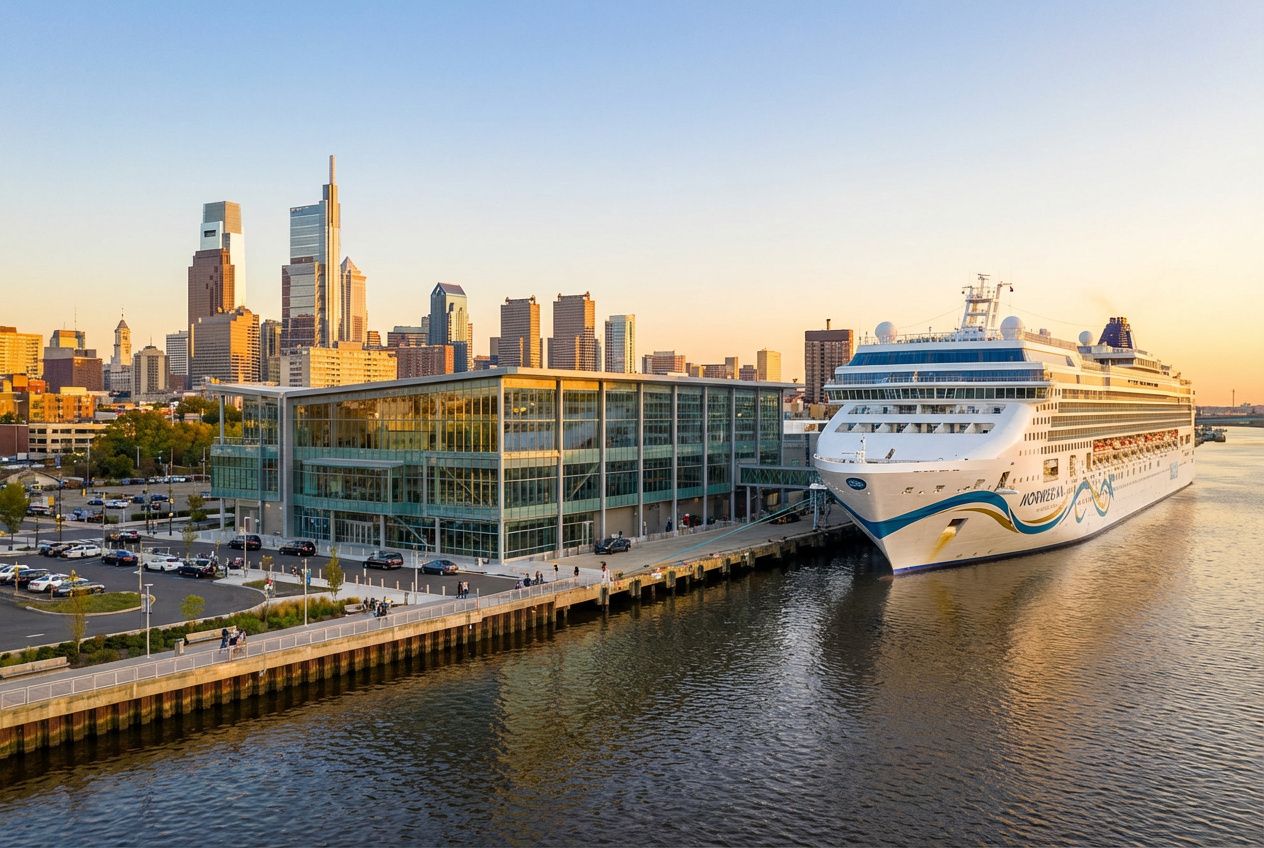
After a 15-year absence, cruise ships are returning to the City of Brotherly Love. Construction officially began on December 2, 2025, for the PhilaPort Cruise Terminal—a brand-new facility that will transform Philadelphia into a major departure point for East Coast cruisers. Norwegian Cruise Line has secured an exclusive homeport agreement to kick off operations in April 2026, just in time for America’s 250th birthday celebration.
For Mid-Atlantic cruise fans tired of driving to New York, Baltimore, or Cape Liberty, this development changes everything. Here’s what you need to know about Philadelphia’s cruise comeback and what it means for your next vacation.
The Big Picture: Philadelphia Rejoins the Cruise Map
According to the official announcement from PhilaPort, the new terminal is being built on a 16-acre site adjacent to Philadelphia International Airport. This strategic location creates a cruise-and-fly convenience that few other East Coast ports can match—you could literally fly into Philly and be at your ship within minutes.
The project represents a collaboration between PhilaPort, energy infrastructure company Energy Transfer, and Norwegian Cruise Line Holdings. Under the arrangement, PhilaPort handles all the marine-side improvements (think docks, berths, and waterside infrastructure), while Norwegian takes the lead on land-side construction and terminal development.
This division of labor is actually quite smart. Norwegian knows what cruise passengers need from a terminal—efficient check-in areas, baggage handling, comfortable waiting spaces—while PhilaPort brings expertise in managing marine operations and logistics. Together, they’re building a facility purpose-designed for modern cruise operations.
Norwegian’s Seven-Year Exclusive: What the Deal Means
Here’s where things get interesting for cruise shoppers. Norwegian Cruise Line Holdings has locked in a seven-year berthing agreement running from April 15, 2026, through March 31, 2033. For the first four years of this deal, Norwegian holds exclusive homeporting rights in Philadelphia, meaning they’ll be the only cruise line sailing roundtrip voyages from the city.
The commitment includes 41 sailings per year—basically a weekly departure schedule with room for some flexibility. Norwegian has announced that two ships will operate from Philadelphia: the Norwegian Jewel and Norwegian Gem (previously reported as Norwegian Pearl in some early announcements).
In years five through seven of the agreement, other cruise lines will be allowed to offer services from Philadelphia, opening up the possibility for additional options and competitive pricing. But Norwegian gets a four-year head start to build brand loyalty and establish Philadelphia as “their” port in the Mid-Atlantic region.
Where Can You Go? Destinations and Itineraries
Norwegian’s initial lineup focuses on classic East Coast cruise destinations that make geographic sense from Philadelphia’s location:
Bermuda will be the star attraction. Philadelphia sits at an ideal latitude for Bermuda runs—close enough for reasonable sailing times but far enough to feel like a proper getaway. Expect five- to seven-night Bermuda itineraries to dominate the summer season.
Caribbean cruises will also feature prominently. While Philadelphia is farther north than traditional Caribbean departure ports like Miami or Fort Lauderdale, Norwegian will likely offer longer seven- to eleven-night sailings to destinations in the Eastern Caribbean and Bahamas.
Canada and New England rounds out the destination mix. Fall foliage cruises visiting Canadian provinces and New England ports like Portland, Bar Harbor, Halifax, and Quebec City are natural fits for Philadelphia departures, especially during autumn when the region explodes with color.
According to early pricing information, Norwegian’s Philadelphia sailings will range from just under $900 to $2,159 per person for trips ranging from five to eleven days. That’s competitive with pricing from nearby New York and Baltimore departures, making Philadelphia a legitimate alternative rather than a premium-priced convenience option.
The Economics: Jobs, Money, and Regional Impact
Cruise terminals aren’t just about vacations—they’re economic engines. PhilaPort projects the new facility will generate 2,185 direct and indirect jobs and pump approximately $300 million in annual economic output into Pennsylvania’s economy.
Break that down and you’re looking at positions ranging from terminal operations staff and security personnel to shuttle drivers, food service workers, hotel employees (for pre-cruise overnights), and retail staff. Forty-one cruise ship arrivals and departures per year means steady, predictable economic activity throughout the cruise season.
The timing couldn’t be better for Philadelphia’s tourism industry. The terminal’s inaugural season begins in 2026—the year the United States celebrates its 250th anniversary. Philadelphia, as the birthplace of American independence, will be hosting major commemorative events and seeing elevated tourism numbers anyway. Adding cruise operations creates a perfect synergy: visitors can explore Independence Hall, the Liberty Bell, and Revolutionary War sites before or after their cruise.
What Took So Long? Philadelphia’s 15-Year Cruise Drought
Philadelphia last had regular cruise service back in 2011, making this comeback 15 years in the making. So why did it take so long?
The reality is that cruise terminals require significant infrastructure investment, and Philadelphia had other port priorities for years—mainly cargo operations and commercial shipping. Building a modern cruise facility isn’t cheap. The terminal needs dedicated berths capable of handling ships up to 1,000 feet long, passenger processing areas that can move thousands of people efficiently, parking for hundreds of vehicles, and security screening that meets post-9/11 standards.
Beyond infrastructure, ports need cruise line partners willing to commit capacity. Norwegian’s seven-year exclusive deal likely made this project financially viable. Without a guaranteed operator bringing 41 sailings annually, the business case for building a cruise terminal becomes much shakier.
The Philadelphia market also competes with established nearby ports. New York City’s Manhattan Cruise Terminal and Brooklyn Cruise Terminal, Cape Liberty in Bayonne, New Jersey, and the Port of Baltimore all serve the Mid-Atlantic market. Philadelphia needed to offer something compelling enough to justify adding another homeport option—and that something is convenience.
The Location Advantage: Why Airport Proximity Matters
The fact that the PhilaPort Cruise Terminal sits adjacent to Philadelphia International Airport cannot be overstated as a competitive advantage.
For cruisers who need to fly in before their sailing, the proximity is golden. No long taxi rides through city traffic. No expensive Uber trips. No stress about missing your ship because your flight was delayed and you hit rush-hour traffic getting to the port.
This setup particularly benefits:
- International travelers flying into Philadelphia from overseas
- West Coast cruisers who can fly into Philly the morning of departure and still make their afternoon boarding time
- Families with young children who want to minimize travel time and logistical complexity
- Anyone who hates long drives and would rather pay for a short flight than endure an eight-hour car trip
The airport proximity also helps on the back end. Disembarkation typically happens early in the morning. If you have an afternoon or evening flight home, you can explore Philadelphia’s historic sites for a few hours, grab a famous Philly cheesesteak, then head straight to the airport without worrying about hotel checkout times or luggage storage.
Norwegian Jewel and Norwegian Gem: The Ships You’ll Sail
Norwegian has designated the Norwegian Jewel and Norwegian Gem as the Philadelphia homeport ships. Both are Jewel-class vessels built in the early-to-mid 2000s, carrying approximately 2,400 passengers at double occupancy (around 2,800 at maximum capacity).
While these aren’t Norwegian’s newest ships—that honor goes to the Prima and Viva-class vessels—the Jewel-class ships have received significant refurbishments and offer solid amenities:
- Multiple dining options including specialty restaurants
- Broadway-caliber entertainment in main theaters
- Spa and fitness facilities
- Pools, hot tubs, and sundecks
- Casinos and nightlife venues
- Kids’ clubs and family programming
These mid-sized ships are actually ideal for Philadelphia operations. They’re large enough to offer the full range of modern cruise amenities but not so massive that they overwhelm port facilities or require specialized infrastructure. And frankly, for Bermuda and Canada/New England itineraries, you don’t necessarily need the newest mega-ship—you want a comfortable vessel that gets you to beautiful destinations.
What This Means for East Coast Cruise Competition
Norwegian’s Philadelphia move intensifies competition in the crowded East Coast cruise market—and that’s good news for consumers.
Baltimore has been the go-to option for Pennsylvania, Maryland, and southern New Jersey cruisers. Royal Caribbean and Carnival both operate from Baltimore with Caribbean and Bermuda itineraries. Philadelphia now offers a northern alternative that may be closer for residents of central and eastern Pennsylvania, northern Delaware, and New Jersey.
New York remains the premium option with the most ship variety and departure frequency, but also the highest prices and most complex logistics. Philadelphia positions itself as the convenient, less hectic alternative.
Cape Liberty in Bayonne has carved out a nice niche serving northern New Jersey and the greater New York metro area. Philadelphia’s airport proximity could peel away some of Cape Liberty’s fly-in customers.
More competition typically drives better pricing, improved service, and more itinerary variety. If Philadelphia proves successful for Norwegian, don’t be surprised if other cruise lines start circling once the exclusive period ends in 2030. Carnival, Royal Caribbean, and even smaller operators like American Cruise Lines could see Philadelphia as an underserved market worth entering.
Challenges and Considerations
No new cruise operation launches without challenges. Here are a few factors that could impact Philadelphia’s cruise success:
Weather and seasonality will play a role. Philadelphia winters are cold, limiting the cruise season compared to year-round ports like Miami. Expect operations to be heavily concentrated in spring through fall, with winter months seeing little to no activity.
Delaware River navigation requires ships to transit a significant distance from the Atlantic Ocean up the Delaware River to reach Philadelphia. This adds time to itineraries and requires experienced pilots. It’s not a dealbreaker—plenty of ports require river navigation—but it’s a logistical consideration.
Market education will be necessary. After 15 years without cruise service, many local residents may not even realize Philadelphia is a cruise port option. Norwegian and PhilaPort will need to invest in marketing to build awareness, especially in the crucial drive-market radius of 200-300 miles.
Ground transportation from the terminal to downtown Philadelphia and surrounding areas needs to be seamless. Cruise passengers want easy, affordable options to explore the city before or after their sailing. The airport location helps, but dedicated shuttle services, clear rideshare pickup zones, and good signage will be essential.
Looking Ahead: April 2026 and Beyond
Norwegian Cruise Line’s Philadelphia sailings officially begin on April 16, 2026, launching just as spring weather makes coastal cruising pleasant again. The timing aligns perfectly with America’s 250th anniversary celebrations, giving the new terminal an inaugural year filled with patriotic energy and elevated tourism.
Beyond the first season, the real question is whether Philadelphia can sustain cruise operations long-term. Success will be measured by:
- Load factors (how full the ships sail)
- Repeat business (do people cruise from Philly once, or do they come back?)
- Economic impact (does the $300 million projection hold up in reality?)
- Community support (do local businesses and residents embrace cruise tourism?)
If Norwegian’s bet pays off, we could see additional ships, more frequent departures, and eventually other cruise lines joining the fun when exclusivity ends. Philadelphia could even become a repositioning port for ships moving between Caribbean winter seasons and Canada/New England summer programs.
The fact that Norwegian committed to a seven-year deal suggests they see real potential. Cruise lines don’t lock in that kind of multi-year capacity without solid market research and financial projections. They clearly believe the Philadelphia market—Pennsylvania, New Jersey, Delaware, and parts of Maryland—has enough demand to fill ships week after week.
The Bottom Line for Cruisers
If you live anywhere in the Mid-Atlantic region, Philadelphia’s new cruise terminal expands your options significantly. The airport-adjacent location, competitive pricing, and quality Norwegian ships make this a legitimate alternative to driving to Baltimore or dealing with New York’s complexity.
For Norwegian loyalists, this adds another convenient homeport to the line’s growing East Coast network. And for anyone who’s wanted to explore Philadelphia’s Revolutionary War history, world-class museums, vibrant food scene, and iconic landmarks, this creates the perfect opportunity to bookend a cruise vacation with a city visit.
April 2026 can’t come soon enough. After 15 years away, Philadelphia is back in the cruise game—and this time, they’ve built a terminal designed for the modern cruise era with a major cruise line partner fully committed to making it work.
The City of Brotherly Love is about to show a lot of love to cruise travelers.