
Mystic Cruises Partners with China Merchants to Build Wind-Powered Sailing Ships
European expedition cruise operator Mystic Cruises signs groundbreaking contract with Chinese shipyard for 20,000 DWT wind-powered vessels, marking a major shift as European capacity constraints push cruise newbuilds to Asia.
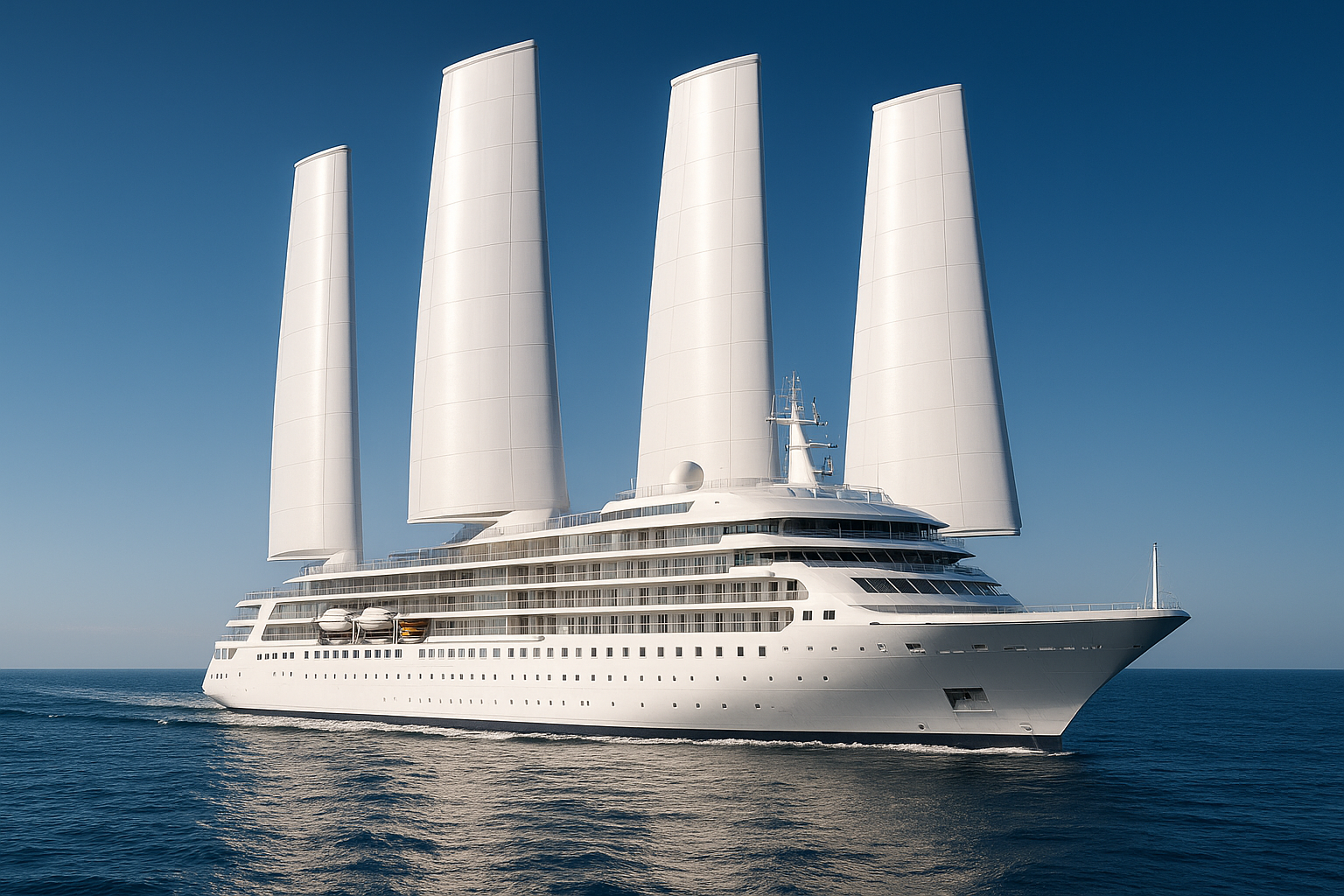
In a deal that signals both the cruise industry’s green future and the shifting landscape of global shipbuilding, Portuguese cruise operator Mystic Cruises has signed a contract with China Merchants Cruise Shipbuilding Co., Ltd. to construct a new class of wind-powered sailing cruise ships.
The agreement, formalized December 2, 2025, at Marintec China 2025 in Shanghai, marks the first time Mystic has turned to Asian shipyards for newbuilds—and it’s happening because European yards simply don’t have room on their order books.
The Deal Details
Mystic Cruises President Mario Ferreira and Mei Zhonghua, Deputy General Manager of China Merchants Shipbuilding Industry and General Manager of China Merchants Cruise Shipbuilding, signed a 1+3 vessel contract. That means one firm order with options for three additional ships—a structure that gives Mystic flexibility to expand the class if the first vessel proves successful.
The ships will be rated at 20,000 deadweight tonnage (DWT) and feature what China Merchants calls a “trinity new energy propulsion system” that leverages wind power as a primary energy source. These tri-fuel capable vessels represent an ambitious bet on sustainable cruise technology, with both companies stating their goal is to “establish this series of wind-powered cruise ships as a global benchmark for green cruising.”
For context, 20,000 DWT puts these vessels in a unique category—larger than traditional sailing yachts but considerably smaller than oceangoing mega-ships. They’ll likely accommodate several hundred passengers in an expedition or luxury sailing configuration.
Why This Deal Matters
This partnership is significant for several reasons, and the green technology angle is only part of the story.
The European Capacity Crunch
European shipyards are experiencing a golden age of cruise ship orders, but there’s a catch: they’re completely booked. Major yards in Germany, France, Italy, and Finland have order books stretching years into the future, driven by massive orders from Carnival Corporation, Royal Caribbean Group, MSC Cruises, and other major players.
For smaller operators like Mystic Cruises, this presents a problem. Even with solid financing and a proven track record, getting a slot at a European yard has become nearly impossible without waiting years or paying premium prices.
Mystic’s pivot to China Merchants reflects a practical reality: if you want to build innovative cruise ships on a reasonable timeline, you need to look beyond Europe’s overwhelmed shipyards.
China’s Growing Cruise Shipbuilding Expertise
While China has long dominated commercial shipping construction, cruise ships represent a different challenge. These vessels require specialized expertise in passenger comfort, complex HVAC systems, hospitality infrastructure, and intricate interior finishing that goes far beyond cargo vessels or tankers.
China Merchants Jiangsan Heavy Industry has been steadily building this expertise, particularly in the expedition cruise segment. Their experience constructing smaller, more specialized vessels makes them a logical partner for Mystic’s sailing ship concept.
This deal also signals China’s ambition to compete directly with European yards in the premium cruise market—not just on price, but on innovation and environmental technology.
Wind Power: More Than a Marketing Gimmick
The “wind-powered” designation deserves some unpacking. These won’t be pure sailing vessels relying exclusively on canvas and rope (though that would be quite a sight). Instead, they’ll use advanced sail technology—likely rigid wing sails or automated sail systems—integrated with tri-fuel engines.
The tri-fuel capability is particularly interesting. This typically means the vessels can run on traditional marine diesel, liquefied natural gas (LNG), and potentially methanol or another alternative fuel. By combining wind assistance with multiple fuel options, these ships can optimize for both environmental impact and operational flexibility depending on conditions and port availability.
Wind-assisted propulsion isn’t entirely new to shipping—cargo vessels have been experimenting with rotor sails and wing sails for years. But applying this technology to passenger cruise ships at this scale represents a significant step forward for the industry’s decarbonization efforts.
If successful, Mystic’s wind-powered vessels could demonstrate a viable path toward lower-emission cruising without sacrificing the range and flexibility passengers expect.
Mystic’s Expedition Cruise Track Record
Mystic Cruises isn’t an unknown quantity in the cruise shipbuilding world. The company has successfully delivered a series of luxury expedition vessels built at WestSea in Portugal, including World Voyager, World Navigator, World Traveller, and World Explorer.
These ships operate under Mystic’s Atlas Ocean Voyages brand, serving the growing expedition cruise market with vessels designed for remote destinations like Antarctica, the Arctic, and remote island chains. The company also operates Nicko Cruises, a German river and ocean cruise brand with a loyal European following.
The most recent vessel from Mystic’s Portuguese partnership, Star Seeker, is currently being delivered to Windstar Cruises. That ship represents the culmination of Mystic’s relationship with WestSea and demonstrates the company’s ability to deliver vessels that meet the exacting standards of established cruise brands.
Now, with European yards booked solid, Mystic is leveraging that experience to work with a new partner in China—bringing their expedition cruise expertise to a builder eager to prove itself in the global cruise market.
The Sustainability Imperative
The cruise industry faces mounting pressure to reduce emissions and environmental impact. European Union regulations are tightening, with new requirements for shore power, emissions monitoring, and fuel standards. Several port cities have implemented or are considering restrictions on the most polluting vessels.
This regulatory environment makes innovative green propulsion systems not just environmentally responsible but economically essential. Cruise lines that can demonstrate lower emissions may gain preferential access to desirable ports and avoid potential carbon taxes or emissions penalties.
Mystic’s wind-powered concept positions the company ahead of this curve. If these vessels can deliver on their environmental promises while maintaining the passenger experience and operational reliability, they could become highly sought-after in an industry increasingly scrutinized for its carbon footprint.
What This Means for the Cruise Industry
Mystic Cruises’ Chinese partnership could be the beginning of a broader shift in cruise shipbuilding geography.
For decades, Europe dominated cruise ship construction thanks to specialized expertise, established supply chains, and proximity to major cruise line headquarters. But as European yards reach capacity limits and Asian yards build expertise, we may see more cruise operators following Mystic’s lead.
This geographic diversification could actually benefit the industry by increasing shipbuilding capacity, fostering innovation through competition, and potentially moderating the sky-high costs of modern cruise ship construction.
The emphasis on wind-powered, sustainable propulsion also reflects a maturing industry willing to invest in technologies that might have seemed too risky or experimental just a few years ago. As climate concerns intensify and regulations tighten, operators who move early on green technology may find themselves with a significant competitive advantage.
The Road Ahead
No delivery timeline has been announced for Mystic’s first wind-powered vessel, but cruise ship construction typically takes two to three years from contract signing to delivery. That suggests we could see the first ship enter service sometime in 2027 or 2028.
The success of this first vessel will determine whether Mystic exercises its options for the three additional ships—and whether other cruise operators take note and pursue similar wind-assisted designs.
For Mystic Cruises, this represents an ambitious expansion of their fleet and capabilities. For China Merchants, it’s an opportunity to demonstrate they can build innovative, environmentally advanced cruise ships that compete with anything coming out of European yards.
And for the cruise industry as a whole, it’s a fascinating experiment in sustainable propulsion technology at a time when the sector desperately needs viable paths toward decarbonization.
The winds of change are quite literally filling the sails of cruise ship innovation.
Source: Mystic Signs Cruise Newbuild Deal in China - Cruise Industry News