
Tampa Bay's Mega-Cruise Port Plan Hits Rough Waters Over Wildlife Sanctuary Concerns
A $40 million proposal to build Florida's newest cruise terminal next to a manatee breeding ground has environmentalists and residents fighting back.
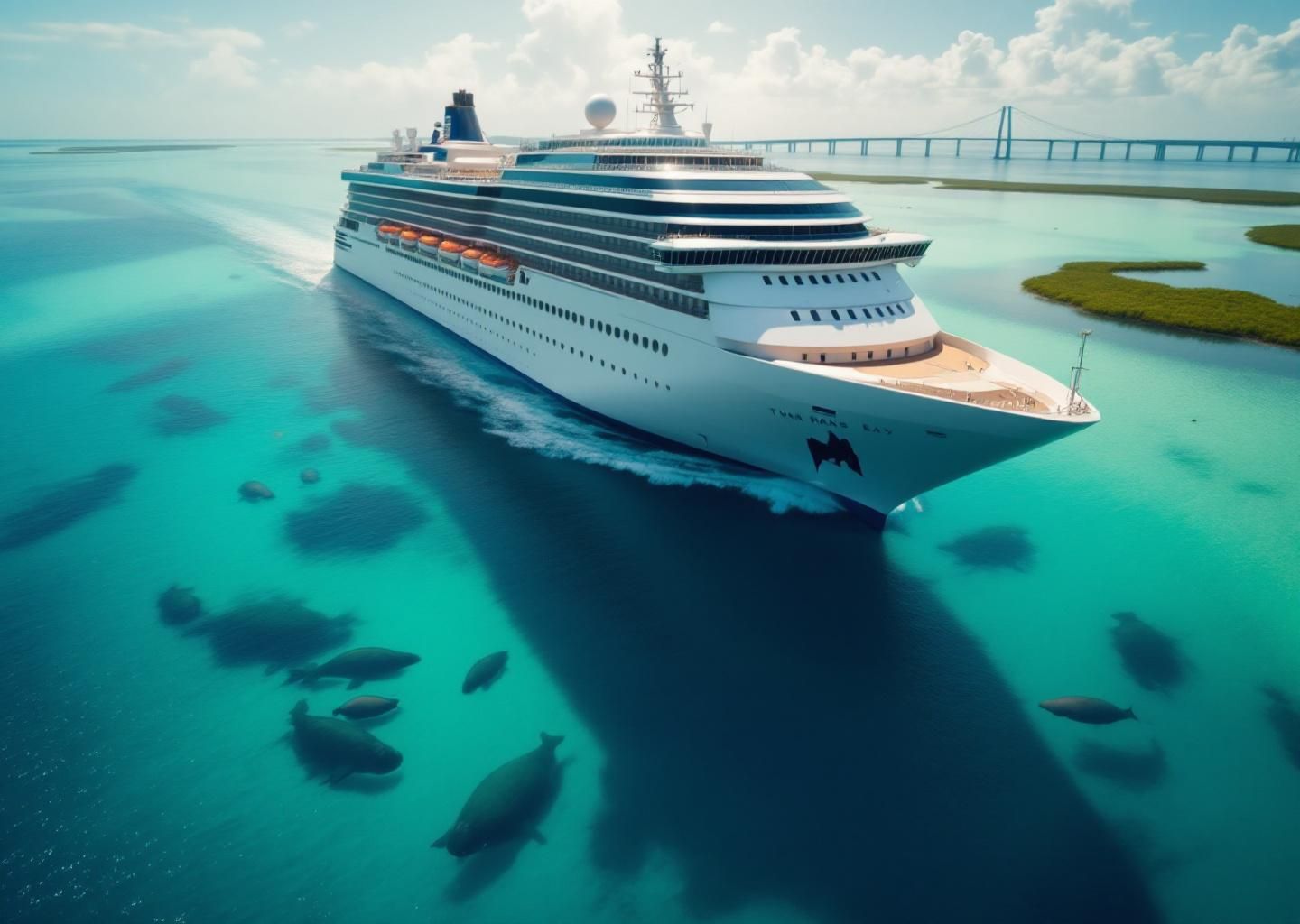
A proposal to build a massive cruise ship terminal in Manatee County, Florida, has ignited a fierce debate between economic development advocates and environmental conservationists. Just days after Seattle-based SSA Marine unveiled plans for the facility on January 16, 2026, residents and wildlife advocates are raising alarm bells about the project’s proximity to Rattlesnake Key—a critical breeding ground for Florida’s beloved manatees.
According to MySuncoast’s report published January 20, 2026, the controversy centers on what supporters promise will be a game-changing economic engine and what opponents fear could devastate one of Tampa Bay’s most ecologically sensitive coastal areas.
The Proposal: A Solution to Tampa’s Bridge Problem
The proposed cruise terminal would occupy 300 acres on the seaward side of the Sunshine Skyway Bridge, strategically positioned to accommodate today’s mega-cruise ships that physically cannot pass under the bridge to reach Tampa’s existing port facilities. SSA Marine, partnering with Tampa-based Slip Knott LLC, envisions a facility that would finally allow the region to compete for the newest, largest vessels in the global cruise fleet.
The economic promises are substantial. Developers estimate the terminal would support more than 13,000 direct, indirect, and induced jobs while generating approximately $40 million annually in tax revenue for Manatee County and its school district. Perhaps most appealing to local officials: the company insists this is a private investment requiring zero taxpayer dollars, with construction expected to take three to five years.
The Rattlesnake Key Controversy
Here’s where the story gets complicated. The development site sits immediately adjacent to Rattlesnake Key, a 710-acre island that serves as critical habitat for manatees, particularly as a breeding area. One resident quoted in the MySuncoast report didn’t mince words: “It’s a Manatee breeding area. It’s a very, very sensitive area on our coast.”
Sensing the public relations minefield, Slip Knott LLC announced that a subsidiary of SSA Marine purchased Rattlesnake Key itself specifically to protect it, stating unequivocally that “there will be no commercial development or construction on Rattlesnake Key.” Slip Knott LLC is the holding company for Tampa Bay Real Estate Investment Corporation, which acquired both Rattlesnake Key and the adjacent Knott-Cowen tract (the proposed terminal site) in December for a reported $18 million.
This protective purchase appears designed to alleviate concerns, but skeptics question whether a cruise terminal operating next door—with massive ships, increased vessel traffic, and industrial port operations—can truly preserve the environmental integrity of adjacent wildlife habitat.
Why This Matters for the Cruise Industry
This controversy represents a microcosm of tensions playing out across the cruise industry in 2026. As cruise lines continue building ever-larger ships, they’re running into literal and figurative obstacles at existing port infrastructure. Tampa’s Sunshine Skyway Bridge, with its fixed clearance, simply cannot accommodate the newest generation of cruise vessels. Other ports face similar constraints—whether from aging infrastructure, shallow harbors, or urban congestion.
The Tampa Bay region represents a prime market for cruise operations: year-round warm weather, proximity to Central Florida’s tourism corridor, and a large population base of potential cruisers. Currently, cruise passengers from the region often drive to Port Canaveral, Miami, or Fort Lauderdale—ports that can handle modern mega-ships. A new deepwater terminal on the Gulf side of the Skyway would capture that market while opening routes to the Western Caribbean, Mexico, and Central America.
But the Manatee County proposal also highlights the growing friction between cruise industry expansion and environmental protection. Florida’s manatees are an iconic species and a major tourist draw in their own right. They’re also federally protected, making any development near critical habitat legally and politically fraught.
The Bigger Picture: Cruise Infrastructure at a Crossroads
What makes this story particularly significant is its timing. The cruise industry is experiencing a massive capacity expansion, with 74 ships currently on order through 2036, representing over $76.5 billion in investment and more than 205,000 new berths. These ships need places to dock, and coastal communities are increasingly asking hard questions about whether the economic benefits justify environmental risks and quality-of-life impacts.
We’re seeing similar debates emerge across popular cruise destinations. European ports are implementing passenger caps and new taxes. Alaska communities are wrestling with overtourism. Caribbean islands are evaluating whether their infrastructure can sustainably handle ever-larger ships.
The Manatee County proposal forces a fundamental question: Can cruise industry growth and environmental protection coexist, or are they inherently in conflict?
What Happens Next
Residents and conservationists have made clear they intend to fight this proposal vigorously. The MySuncoast report notes strong opposition from those citing both environmental damage and quality-of-life concerns. Given that manatees are federally protected under the Marine Mammal Protection Act and the Endangered Species Act, any development this close to critical habitat will face intense regulatory scrutiny.
The developers will need to navigate a complex permitting process involving local, state, and federal agencies. Environmental impact assessments will be critical, particularly regarding vessel traffic, water quality, noise pollution, and potential disruption to manatee breeding and migration patterns.
For the cruise industry, the Manatee County battle is worth watching closely. If the project moves forward successfully, it could provide a blueprint for how to develop new cruise infrastructure near sensitive areas. If it fails, it may signal that environmental concerns will increasingly constrain where and how the industry can expand its physical footprint.
The Stakes Are High
Whether you care most about economic development, environmental protection, or the future of cruising from Florida’s Gulf Coast, the outcome of this proposal will matter. For Manatee County residents, it’s a choice between jobs and tax revenue versus coastal preservation and quality of life. For the cruise industry, it’s a test case for whether ambitious infrastructure expansion can overcome growing environmental and community resistance.
The next few months will reveal whether these competing visions can find common ground—or whether one side will claim victory while the other sounds the alarm about what’s been lost. With $40 million in annual tax revenue on one side of the scale and a manatee breeding sanctuary on the other, there’s no easy answer.
What’s certain is that the environmental concerns raised in the MySuncoast report reflect a broader reckoning the cruise industry will increasingly face: how to grow responsibly in a world where coastal communities and ecosystems are already under tremendous pressure.