
This Luxury Cruise Line Just Scrapped Its Multi-Million Dollar Plan—And What They're Doing Instead Will Blow Your Mind
Crescent Seas abandons ship charters for a custom-built residential vessel after billionaire buyers demanded bigger, more customizable floating residences.
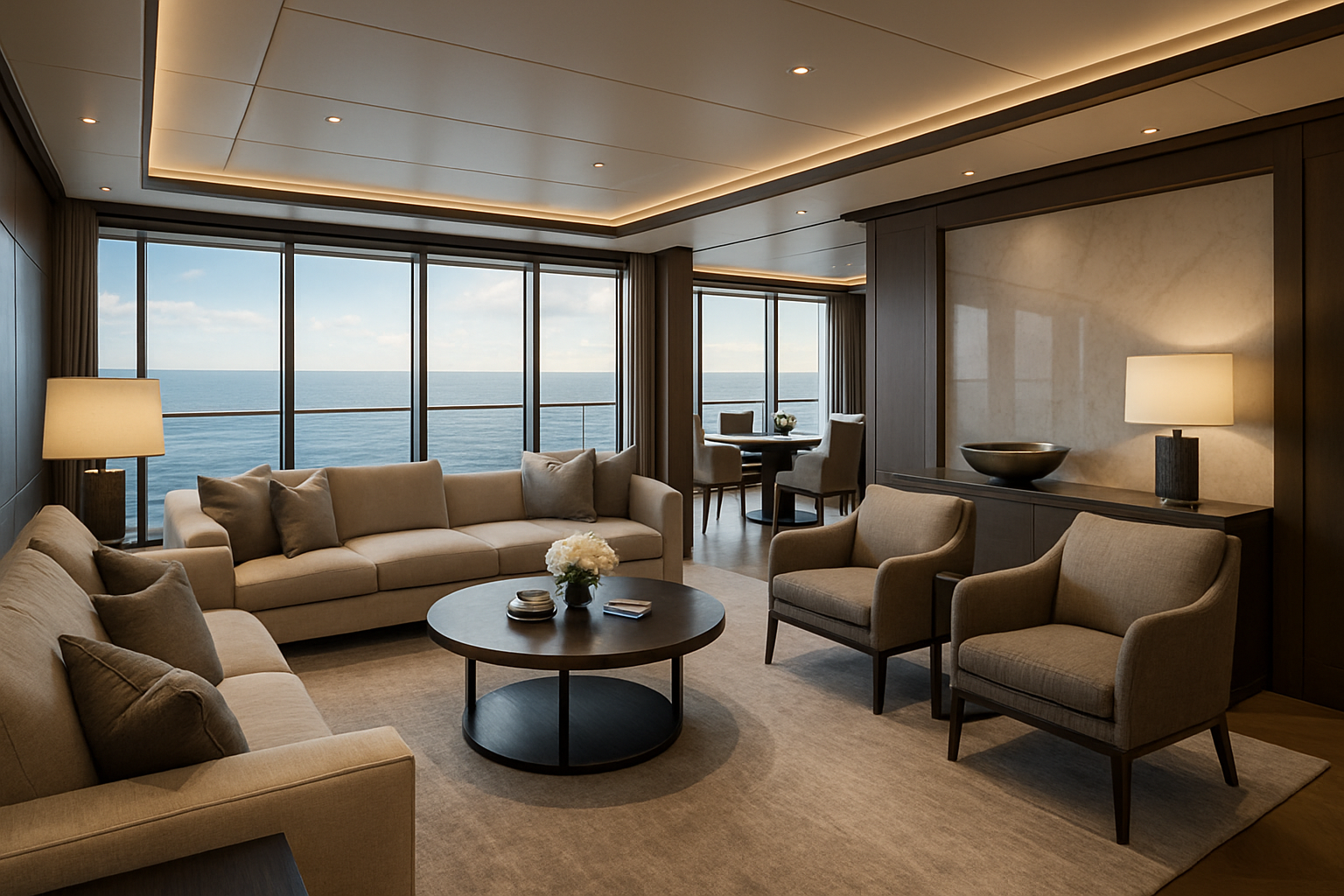
When a residential cruise line abandons not one but TWO ship deals worth tens of millions of dollars, you know something big is going on. And in this case, it’s not a failure—it’s because their ultra-wealthy clients demanded something even MORE extravagant.
Crescent Seas, the upstart residential cruise company that made waves earlier this year with plans to transform existing cruise ships into floating luxury condos, just pulled the plug on their entire strategy. According to Maritime Executive, the company announced on November 5 that they’re walking away from charter agreements with Norwegian Cruise Line Holdings (NCLH) for two ships—the Seven Seas Navigator and Insignia—and pivoting to an entirely new approach.
The reason? Their billionaire buyers wanted bigger, better, and more bespoke.
The Original Plan That Wasn’t Enough
Just eight months ago in March 2025, Crescent Seas unveiled an ambitious vision: charter two existing vessels from NCLH’s fleet and convert them into residential cruise ships. The Seven Seas Navigator, a 28,800-gross-ton ship from 1997, was slated for a $50+ million renovation and scheduled to relaunch in December 2026. The Insignia, slightly larger at 30,000 gross tons, would follow in November 2027 with its own extensive reconstruction.
The company planned to gut these ships, reduce cabin counts dramatically, and offer residences priced between $750,000 and $8 million on the Navigator, and $650,000 to $10 million on the Insignia. For the ultra-wealthy seeking a permanent life at sea, it seemed like a dream come true.
But apparently, it wasn’t dream-like enough.
When Billionaires Want More
After six months of active sales operations, Crescent Seas discovered something fascinating: their target market—high-net-worth individuals with money to burn—wanted something far more ambitious than retrofitted cruise ships.
A company representative told Maritime Executive that after conversations with potential buyers, it became clear that “demand is for larger, more customizable residences.” Translation: the ultra-rich don’t want to buy into someone else’s vision of luxury. They want to shape it themselves, and they want A LOT more space to do it in.
This feedback fundamentally changed Crescent Seas’ entire business model. Instead of taking existing ships and making them luxurious, they’re now building something entirely new from the ground up.
The New Plan: A Custom-Built Floating Palace
Crescent Seas is now focusing on developing a purpose-built newbuild vessel called the Ocean. And the specs are absolutely staggering.
This custom residential ship will be 55,000 gross tons—nearly double the size of the original Navigator. It will feature over 200,000 square feet of salable living space distributed across approximately 300 units. That’s an average of over 650 square feet per unit, though we can expect significant variation with penthouses and suites commanding much larger footprints.
The projected delivery date? Fourth quarter of 2031.
Yes, you read that right. Buyers are being asked to wait six years for their floating mansion to be built. But for the kind of clientele Crescent Seas is targeting—people with multiple homes, private jets, and more money than they could spend in several lifetimes—a six-year wait for a truly bespoke vessel apparently isn’t a dealbreaker.
What This Means for the Residential Cruise Market
This pivot is fascinating for several reasons, and it tells us a lot about where the residential cruise industry is headed.
First, it validates that there IS genuine demand for residential cruising among the ultra-wealthy. Crescent Seas didn’t abandon their plans because nobody was interested. They abandoned them because too many people were interested in something BETTER. That’s actually incredibly bullish for the concept.
Second, it reveals that the residential cruise market may be even more upscale than anyone anticipated. We’re not talking about well-off retirees looking for a permanent vacation. We’re talking about billionaires who view a $10 million cruise ship residence as a real estate investment comparable to a penthouse in Monaco or a villa in the Hamptons.
Third, it shows that customization and exclusivity matter enormously to this demographic. These buyers don’t just want luxury—they want INPUT. They want to participate in the design process and create spaces that reflect their personal taste and lifestyle. A retrofitted ship, no matter how beautifully renovated, will always have the limitations of its original architecture. A purpose-built vessel can be designed from day one with residential living in mind.
The Financial Implications
To their credit, Crescent Seas is handling the transition responsibly. According to Maritime Executive, early investors who placed deposits on residences aboard the Navigator or Insignia will receive full refunds. Additionally, they’ll get priority access to purchase units on the new Ocean vessel when sales launch.
This is smart business. It maintains goodwill with their early supporters and converts what could have been a PR disaster into a story of responsiveness to customer feedback. “We listened to our buyers and realized we needed to think bigger” is a much better narrative than “We couldn’t make our original plan work.”
For NCLH, the relinquished charters mean the Seven Seas Navigator and Insignia will remain in their fleet or potentially be deployed for other purposes. Given the strong demand for luxury cruising, it’s unlikely these ships will sit idle.
The Bigger Picture for Cruising
The Crescent Seas pivot is part of a larger trend in the cruise industry: the pursuit of ultra-luxury and personalization. While mainstream cruise lines continue to build bigger ships with more amenities for mass-market appeal, a parallel universe of hyper-exclusive cruising is emerging.
We’re seeing this with lines like Ritz-Carlton Yacht Collection, Four Seasons Yachts, and now residential concepts like Crescent Seas and competitors such as Storylines (which is building the MV Narrative). The common thread? Smaller vessels, higher prices, and experiences tailored to individuals rather than crowds.
The residential cruise concept takes this to its logical extreme: Why book an expensive suite when you can OWN your cabin outright? Why accept the cruise line’s design choices when you can customize your own floating residence? Why be limited to seasonal itineraries when you can influence where your home sails year-round?
The Six-Year Question
The elephant in the room, of course, is whether buyers will actually commit to a vessel that won’t be completed until 2031. Six years is an eternity in business, and a lot can change in that time—economically, technologically, and personally.
But here’s the thing: for the target demographic, a 2031 delivery date might not be as crazy as it sounds. These are people who are accustomed to multi-year waits for custom yachts, who invest in real estate developments that take a decade to complete, and who think in terms of legacy and long-term asset allocation.
Plus, they’ll still have their Manhattan penthouses, Aspen chalets, and Mediterranean villas to enjoy in the meantime.
What Happens Next
Crescent Seas now faces the monumental task of actually designing and building the Ocean. They’ll need to secure shipyard contracts, finalize vessel specifications, manage a complex sales process for 300 units with varying sizes and customization options, and navigate the regulatory requirements for a residential vessel that will sail internationally.
It’s an enormous undertaking, and plenty of skeptics will question whether they can pull it off. The cruise industry is littered with ambitious concepts that never made it past the rendering stage.
But if they do succeed, they’ll have created something truly unprecedented: a purpose-built floating community for the global elite, combining the freedom of cruising with the permanence of real estate ownership.
And for those of us watching from the affordable seats, it’ll be fascinating to see whether this gamble pays off—or becomes a cautionary tale about the perils of overshooting the market.
One thing’s for sure: when your customers demand MORE luxury, MORE space, and MORE customization than your already-extravagant plan offered, you’re definitely targeting the right economic bracket.
Source: Maritime Executive - “Residential Cruise Line Crescent Seas Relinquishes Charters on NCLH Ships”