
Los Angeles Unveils Game-Changing Plan That Could Reshape West Coast Cruising
The Port of Los Angeles selects Pacific Cruise Terminals to build a new Outer Harbor cruise facility with ring-shaped architecture, aiming to become the dominant West Coast cruise hub.
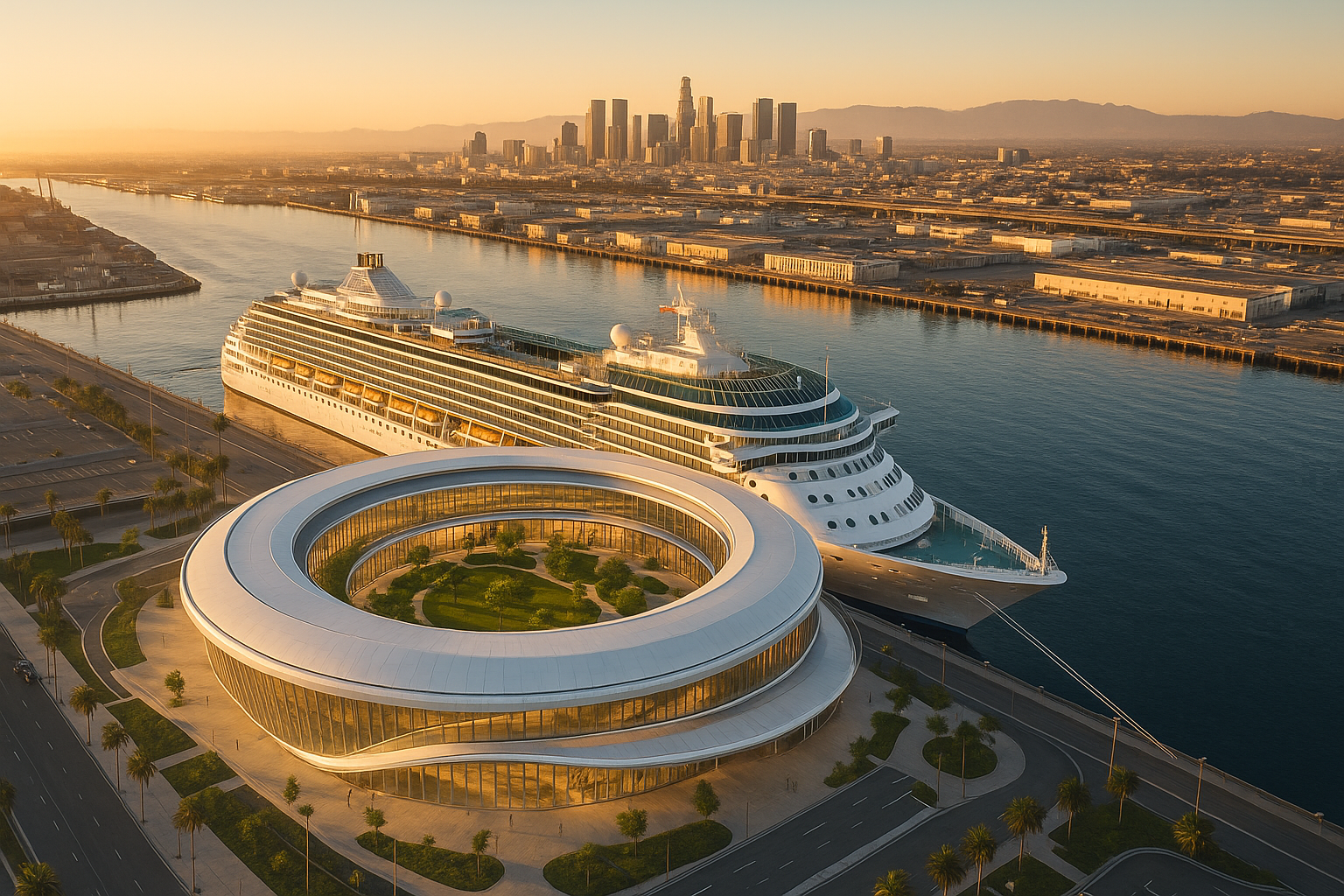
The Port of Los Angeles just dropped a bombshell that could fundamentally alter the cruise landscape on the West Coast. On January 22, the port announced it’s selected Pacific Cruise Terminals—a joint venture between industry heavyweights Carrix, Inc. and JLC Infrastructure—to develop a state-of-the-art Outer Harbor cruise terminal that officials say will cement LA’s position as the region’s cruise capital for decades to come.
According to The Real Deal, the new facility will feature striking ring-shaped architecture with a central green space and waterfront park, built on land currently occupied by surface parking at the port’s south corner. But this isn’t just about aesthetics—it’s a strategic play to capture billions in cruise revenue that’s been slipping through California’s fingers.
Why This Matters More Than You Think
Here’s the thing most headlines won’t tell you: every cruise ship that calls at the Port of Los Angeles generates approximately $1.3 million in local economic activity. With 241 cruise calls annually and 1.6 million passengers boarding in 2025 alone, we’re talking about a massive economic engine. And right now, LA is leaving money on the table.
The West Coast cruise market has been underserved for years compared to Florida’s dominance in the industry. While Miami and Fort Lauderdale have built multi-terminal mega-facilities, Los Angeles has been operating with aging infrastructure that can’t accommodate the newest generation of environmentally sustainable cruise ships. That’s about to change.
Port Executive Director Gene Seroka didn’t mince words about the ambition here: the goal is to “establish Los Angeles as the primary West Coast gateway for cruise operations.” Translation? LA wants to be the Miami of the Pacific, and this terminal is the opening salvo.
What Makes This Terminal Different
The renderings show a circular structure that’s more community amenity than industrial facility. We’re talking green spaces, recreational areas, and enhanced waterfront access designed for both cruise passengers and local residents. This isn’t your grandfather’s cruise terminal—it’s a genuine effort to integrate cruise infrastructure into the urban fabric rather than wall it off behind chain-link fencing.
Pacific Cruise Terminals won’t just be building the new Outer Harbor facility, either. They’re also taking on redevelopment of the existing World Cruise Center in San Pedro, suggesting a comprehensive reimagining of LA’s entire cruise operation.
The Bigger Picture for Cruisers
If you’re a West Coast cruiser, this development should have you excited. More terminal capacity means more ships, which means more itinerary options and potentially better pricing through increased competition. LA’s proximity to Mexico, Hawaii, and the Panama Canal makes it an ideal homeport for diverse cruise options—assuming the infrastructure can support it.
The timing is also strategic. With Amsterdam banning cruise ships by 2035 and other European ports implementing visitor caps, the industry is actively looking for growth markets. The Pacific Rim represents enormous untapped potential, and a modernized LA cruise hub could serve as the springboard for Asian expansion routes.
The Unanswered Questions
Here’s what we don’t know yet: When will this actually get built? The port hasn’t announced a completion timeline, which means we could be looking at 2028, 2030, or later. Major port infrastructure projects have a tendency to experience delays, cost overruns, and regulatory hurdles.
We also don’t know the terminal’s exact capacity, whether it’ll accommodate the newest mega-ships, or how parking and ground transportation will be handled. These details will determine whether this project actually delivers on its promise or becomes another underutilized white elephant.
Our Take
This announcement represents the kind of long-term infrastructure thinking the cruise industry desperately needs. While other ports rest on their laurels, LA is making a bet that West Coast cruising is poised for explosive growth—and they’re putting serious money behind that bet.
For cruisers based in California, Nevada, Arizona, and the broader Western US, better homeport options mean fewer cross-country flights to reach embarkation ports. That’s not just more convenient—it’s more sustainable and potentially more affordable.
The real test will be execution. Renderings are beautiful, but construction is complicated. If Pacific Cruise Terminals can deliver on schedule and budget, this could genuinely transform West Coast cruising. If not, well, at least we’ll have some nice architectural drawings to look at.