
Your Flight to Your Dream Cruise Just Got Cancelled—Here's What's Really Happening at Airports Right Now
FAA orders 10% flight cuts at 40 major airports including Miami, Fort Lauderdale, and Orlando—putting thousands of cruise passengers at risk of missing their ships. Here's what you need to know and do right now.
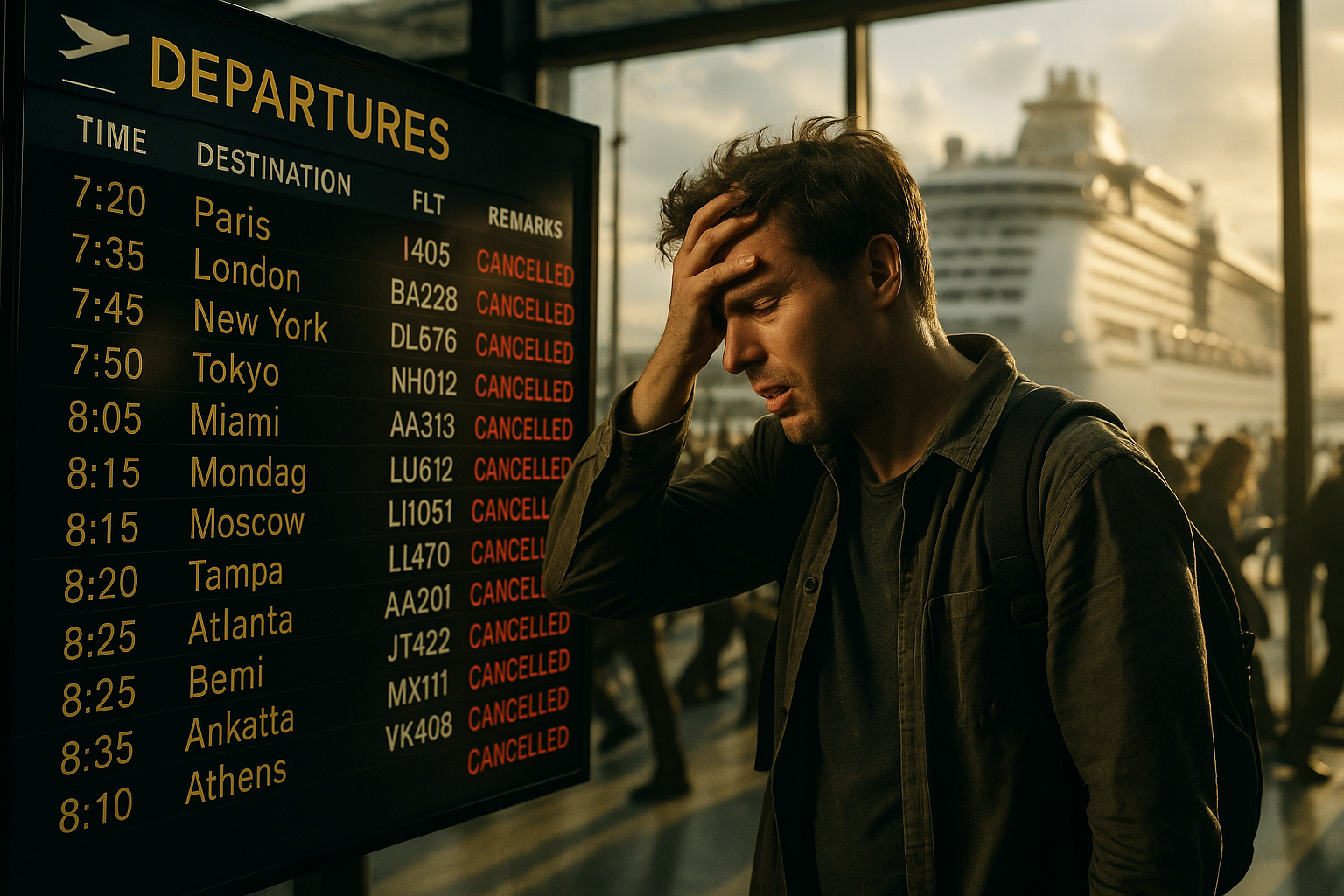
If you’re flying to catch a cruise this week, you need to read this immediately.
Starting Friday, November 7, 2025, the FAA has ordered airlines to cut flight capacity by 10% at 40 of the nation’s busiest airports—and several major cruise gateways are directly in the crosshairs. Miami, Fort Lauderdale, Orlando, and Tampa are all on the list, meaning thousands of cruise passengers could find themselves watching their ship sail away without them.
According to Royal Caribbean Blog, this disruption stems from the ongoing government shutdown, which has left over 11,000 air traffic controllers working without pay. The result? Reduced staffing, increased safety concerns, and a mandate to dramatically cut the number of flights in the sky.
The Airports That Will Hit Cruise Passengers Hardest
The FAA’s restrictions target 40 major airports, but cruise passengers should pay special attention to these key gateways:
Florida Airports:
- Miami International (MIA) - Primary gateway for PortMiami
- Fort Lauderdale-Hollywood (FLL) - Serves Port Everglades
- Orlando International (MCO) - Major hub for Port Canaveral passengers
- Tampa International (TPA) - Gateway to the Port of Tampa
Other Major Cruise Gateways:
- Houston airports - Serving Galveston cruise passengers
- New York area airports - Serving Cape Liberty and Manhattan terminals
We’re not talking about minor inconveniences here. According to industry experts, these cuts could represent as many as 1,800 cancelled flights and upward of 268,000 empty seats combined. That’s a massive reduction in capacity right as cruise season hits its stride.
Why Regional Flights Face the Biggest Axe
Here’s something crucial that many cruise passengers don’t realize: regional flights connecting smaller cities to major cruise ports are getting hit even harder than the big hub-to-hub routes. If you’re flying from a mid-sized city to Miami or Fort Lauderdale, your flight faces a higher risk of cancellation than someone flying direct from New York to Miami.
This creates a double-whammy for cruise passengers. Not only are there fewer flights available, but the connections you rely on to reach those major airports are disappearing first.
What Airlines Are Doing (And What They’re Not)
American, Delta, United, and Southwest have all issued travel waivers in response to the FAA directive. That sounds helpful—and it is—but here’s the catch: a waiver doesn’t create more seats on already-packed flights. It just gives you flexibility to rebook… if you can find available seats.
The reality is that with a 10% reduction in capacity during an already busy travel period, rebooking options are going to be severely limited. Every cancelled flight dumps dozens or hundreds of passengers into the system competing for those remaining seats.
The Cruise Passenger Dilemma: Miss Your Flight, Miss Your Ship
Here’s why this situation is particularly brutal for cruise passengers: if you miss your cruise departure because of a flight cancellation, the ship isn’t waiting for you. Unlike a missed hotel reservation, a missed cruise embarkation can mean thousands of dollars down the drain and a vacation completely derailed.
Travel insurance might cover flight cancellations and delays, but as Royal Caribbean Blog notes, “coverage depends on specific terms and conditions.” Many standard policies won’t cover government shutdowns or FAA directives, meaning you could be left holding the bag.
What Cruise Passengers Should Do RIGHT NOW
If you have a cruise departing this week or in the near future, here’s what we recommend based on advice from travel experts and experienced cruisers:
1. Move Your Flight Earlier—Like, Way Earlier
One Reddit user quoted in the Royal Caribbean Blog article shared their strategy: moving flights “from Friday to Thursday for a Saturday departure” and booking earlier morning flights. This is smart thinking.
The experts are unanimous: do NOT fly into your embarkation city on the day of departure. With these FAA restrictions in place, you need buffer time. Fly in at least a day early, preferably two days if you can swing it.
Morning flights are also less likely to face cancellations during these FAA reductions. If your ship leaves on Saturday, fly in Thursday morning rather than Friday evening.
2. Have a Backup Plan
Some savvy travelers are suggesting renting vehicles as a contingency option. As one commenter noted, “finding a Buccees along the way will make it an adventure.” While we don’t recommend last-minute 10-hour drives as your primary plan, knowing you have a car rental option as a backup provides peace of mind.
3. Monitor Your Flight Status Obsessively
Set up alerts through your airline’s app and check your flight status multiple times per day. Airlines are making cancellation decisions on a rolling basis as they figure out how to comply with the 10% reduction mandate.
The earlier you know about a cancellation, the better your odds of rebooking before all the alternative flights fill up.
4. Contact Your Airline Proactively
Don’t wait for your flight to be cancelled. If you’re scheduled to fly into Miami, Fort Lauderdale, Orlando, or Tampa in the coming days, call your airline now and ask about moving to an earlier flight. Those travel waivers mean you likely won’t face change fees.
5. Review Your Travel Insurance Policy
Dig out that policy and read the fine print. What does it cover? What does it exclude? If you don’t have travel insurance and your cruise is still weeks away, consider purchasing it now—though be aware that government shutdowns may not be covered events.
The Bigger Picture: How Long Will This Last?
Here’s the uncomfortable truth: nobody knows how long these flight restrictions will remain in place. They’re directly tied to the government shutdown and air traffic controller staffing levels. Until the shutdown ends and air traffic controllers are back on regular pay schedules, these capacity restrictions could continue indefinitely.
For cruise passengers, this means uncertainty extending well beyond this week. If you have a cruise booked for December, January, or even February, you need to be thinking about these potential disruptions now.
When Government Shutdowns Collide With Vacation Dreams
This situation highlights a frustrating reality of modern travel: our vacation plans are increasingly vulnerable to factors completely outside our control. Government shutdowns, FAA directives, staffing shortages—none of these things should theoretically affect your dream Caribbean cruise, but here we are.
The good news is that knowledge is power. Cruise passengers who understand what’s happening can take proactive steps to protect their vacations. Those who don’t find out the hard way when they’re stuck in an airport watching their cruise ship leave port on someone’s Instagram feed.
Our Take: Build Buffer Time Into Every Cruise Plan
We’ve said it before and we’ll say it again: the arrive-a-day-early rule for cruising isn’t just best practice anymore—it’s essential. Between airline disruptions, weather events, traffic nightmares, and now FAA capacity restrictions, the risks of same-day travel to your cruise embarkation are simply too high.
Yes, it costs extra for the hotel night. Yes, it means taking an additional day off work. But compared to missing a $3,000 cruise because your flight was one of the 1,800 cancelled? That hotel room is the cheapest insurance you’ll ever buy.
The current FAA situation is a perfect case study in why we recommend this approach. Cruise passengers who flew in a day or two early are sleeping soundly in Fort Lauderdale hotels right now. Those who cut it close are frantically refreshing flight status pages and calculating drive times from Atlanta.
What About Future Cruises?
If your cruise isn’t for several weeks or months, you’re in a better position—but you should still be paying attention. Monitor the government shutdown situation and any updates on FAA staffing. As your cruise approaches, consider the arrival-a-day-early strategy even more seriously than usual.
And here’s a tip that might save your vacation: when booking flights for future cruises, choose the earliest reasonable flight into your embarkation city. That morning flight has a better chance of operating even during capacity restrictions, and it gives you the entire day to find alternatives if something goes wrong.
The Bottom Line
The FAA’s 10% flight capacity reduction at 40 major airports is creating a perfect storm for cruise passengers travelling through Miami, Fort Lauderdale, Orlando, Tampa, and other major gateways. With over 11,000 air traffic controllers working without pay due to the government shutdown, these restrictions aren’t going away quickly.
If you have a cruise coming up, take action now: move your flights earlier, build in buffer time, have backup plans ready, and monitor the situation closely. The few hundred dollars you spend on an extra hotel night and an earlier flight could save your entire vacation.
Your dream cruise is waiting at the dock—make sure you’re there to board it.