
The Cruise Industry's $77 Billion Shipbuilding Spree Could Transform Your Next Vacation
The global cruise orderbook has hit a record 77 vessels worth $76.9 billion, representing over 200,000 new berths over the next decade—an unprecedented vote of confidence in cruising's future.
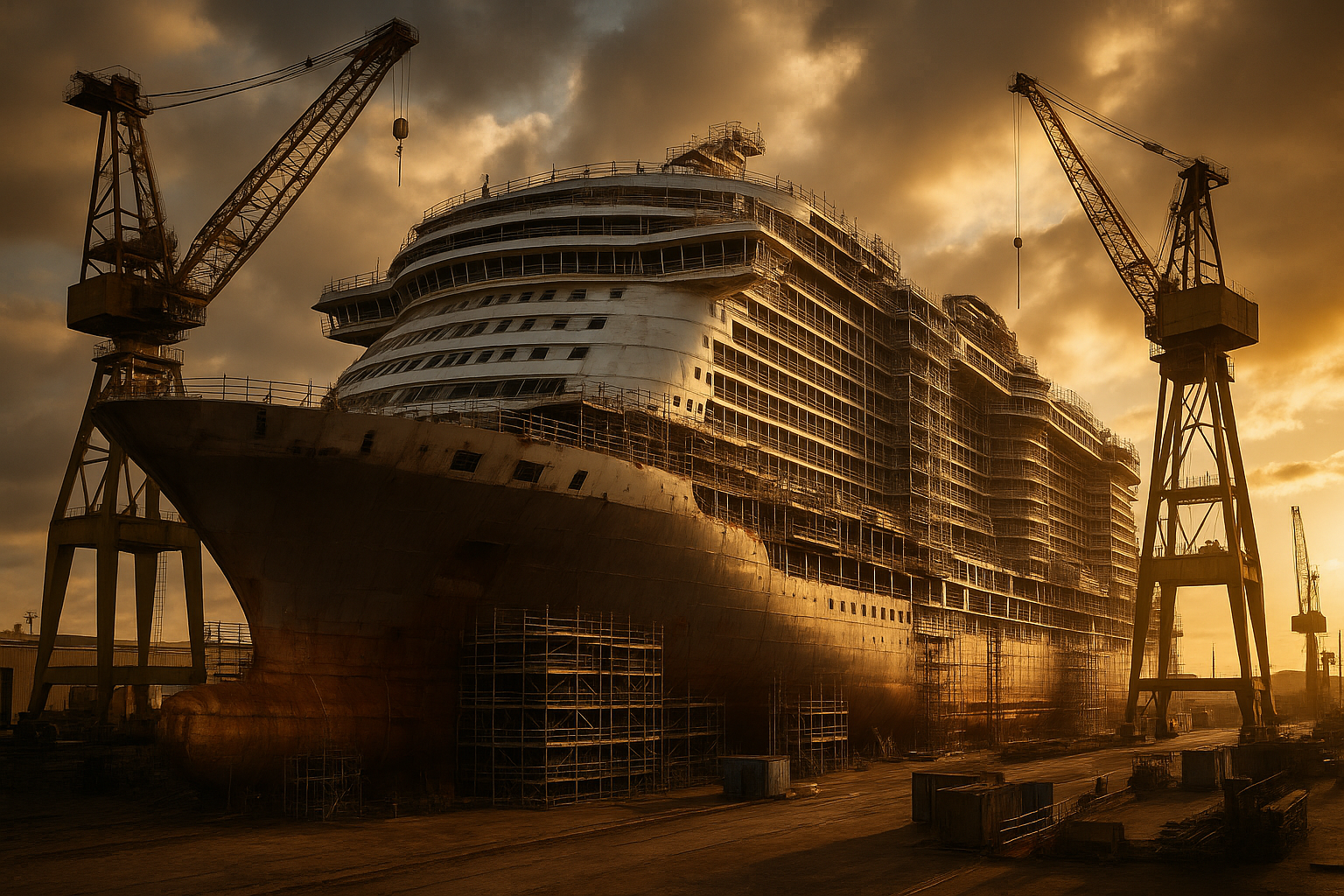
The cruise industry isn’t hedging its bets on the future—it’s going all in.
According to Cruise Industry News, recent ship orders from major cruise lines have pushed the global orderbook to an unprecedented 77 vessels, representing over 200,000 new berths and an estimated $76.9 billion in shipbuilding commitments over the next decade. That’s an average investment of roughly $1 billion per ship—a staggering vote of confidence in cruising’s continued growth.
Who’s Building What
The latest wave of orders comes from some of the industry’s biggest players. Royal Caribbean Group added two more Discovery Class vessels to its already substantial orderbook, with deliveries scheduled for 2029 and 2032 from the renowned Chantiers de l’Atlantique shipyard in France. These additions bring Royal Caribbean Group’s total ship orders to ten vessels.
MSC Cruises made an even bolder move, placing orders for four new ships with Germany’s Meyer Werft shipyard. This expansion pushes MSC’s orderbook to 14 vessels—the largest commitment of any single cruise line.
Even smaller operators are getting in on the action. Atlas Ocean Voyages announced a unique wind-powered newbuild from China Merchants shipyard, designed to carry 400 passengers and slated for a 2028 debut. It’s a signal that sustainability-focused expedition cruising is attracting serious investment.
What This Means for Cruise Travelers
With 77 ships on the horizon, the average vessel size in the orderbook clocks in at 2,600 guests and 115,000 tons. That’s squarely in the large-ship category, suggesting that cruise lines are doubling down on the resort-style experience that’s proven most popular with mass-market travelers.
But here’s the interesting part: while the pipeline is massive, it’s also spread across the next decade. The industry is being strategic, spacing out deliveries to avoid flooding the market and potentially driving down prices too aggressively. In 2026 alone, just 13 new ships are entering service, adding 27,107 berths across 12 different brands—from Viking’s expedition vessels to luxury operators like Regent Seven Seas Cruises and Explora Journeys.
The Bigger Picture
This orderbook isn’t just about more ships—it’s about confidence. After navigating the pandemic’s unprecedented challenges, cruise lines are making long-term financial commitments that suggest they believe demand will not only recover but continue to grow substantially.
The geographic spread of shipyards is also noteworthy. Orders are split between European yards with century-long shipbuilding traditions (Chantiers de l’Atlantique, Meyer Werft) and emerging Asian yards (China Merchants), reflecting both the industry’s European roots and its recognition of new manufacturing capabilities in Asia.
For travelers, this pipeline promises more choice, more itineraries, and potentially more competitive pricing as lines fill all those new berths. It also signals continued innovation—each new ship class typically brings fresh features, improved efficiency, and lessons learned from previous vessels.
The $76.9 billion question now is whether the market can absorb 200,000 new berths over the next decade. If recent booking trends and capacity growth are any indication, the cruise lines placing these orders are betting the answer is a resounding yes.
Source: New Orders Bring Cruise Orderbook to 77 Ships, 200,000 Berths — Cruise Industry News