
The Cruise Industry's $76.5 Billion Building Spree Will Reshape Cruising Through 2036
The cruise industry enters 2026 with a record-breaking orderbook of 74 new ships worth over $76.5 billion. Here's what this massive expansion means for cruisers.
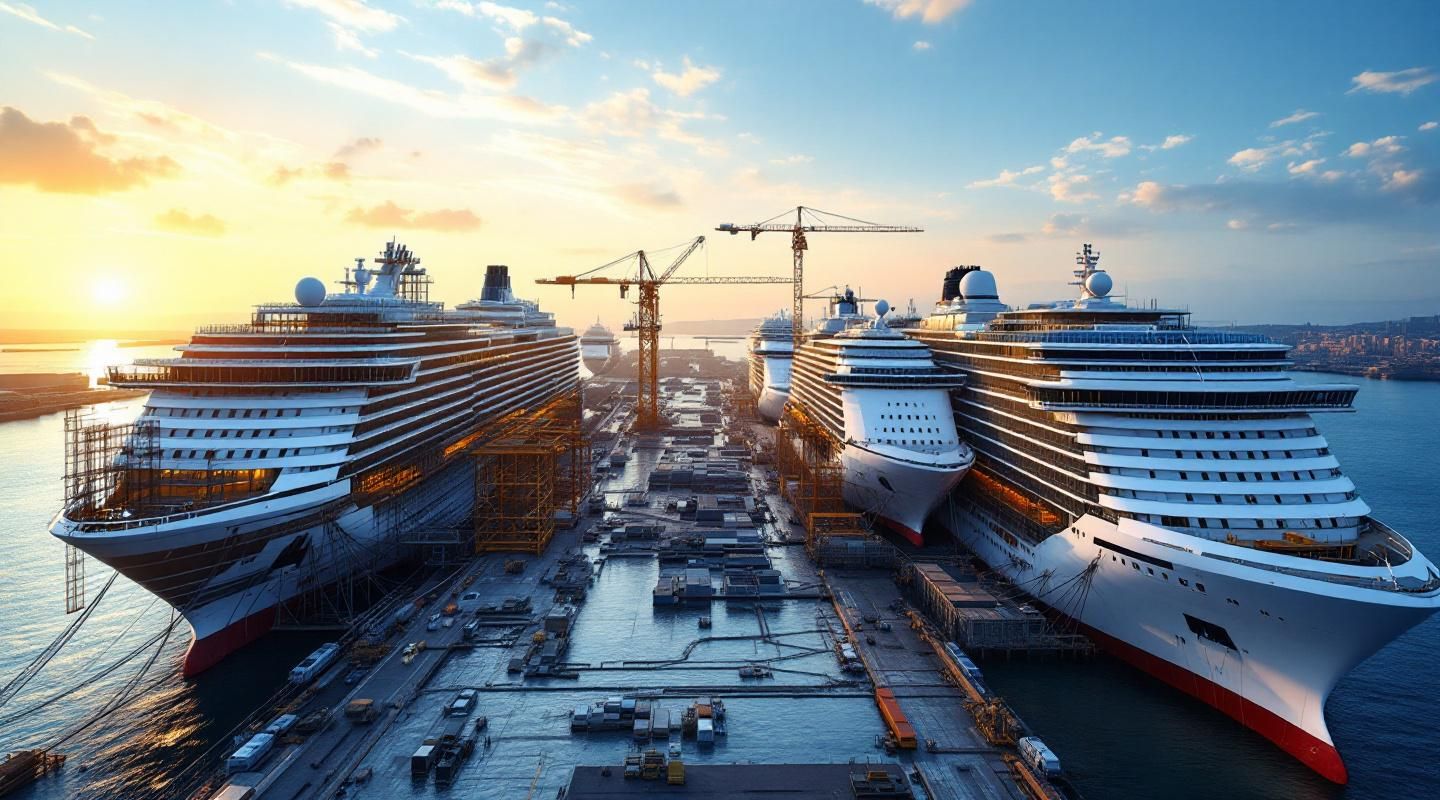
If you think cruise ships are everywhere now, just wait. The cruise industry is in the middle of the most ambitious shipbuilding program in its history, and the numbers are staggering.
According to the latest Global Cruise Ship Orderbook from Cruise Industry News, the industry starts 2026 with 74 vessels on order—representing over $76.5 billion in investment and more than 205,000 new berths that will hit the water through 2036.
To put that in perspective, we’re talking about an average of nearly $1.03 billion per ship. Each vessel will average 120,000 tons and accommodate approximately 2,770 passengers. That’s larger than most of today’s cruise ships, and there are 74 of them coming.
The Biggest Players Are Doubling Down
The orderbook reveals which cruise lines are betting biggest on cruising’s future. MSC Cruises and Norwegian Cruise Line Holdings are tied for the most aggressive expansion plans, each ordering 14 vessels.
MSC’s strategy is particularly bold. They’re adding over 57,000 berths across their brands by 2033, including four ships from a completely new class being built by Meyer Werft starting in 2030. Norwegian isn’t far behind, introducing roughly 40,000 berths across three brands by 2036, and they’re launching a prototype ship in 2030 that will accommodate 5,100 guests—a massive vessel even by today’s mega-ship standards.
Royal Caribbean Group has eight ships on order, adding more than 37,000 berths by 2032. Carnival Corporation has seven ships in the pipeline for two of its brands through 2033. Even Viking, known for its more intimate vessels, is expanding aggressively with 10 new ships by 2031. Disney has five ships on order as it continues building out its cruise presence.
What This Means for Cruisers
The sheer scale of this orderbook signals that cruise lines believe demand will continue to grow for at least the next decade. They’re not building these ships on speculation—each one represents hundreds of millions in upfront investment, and cruise lines don’t make those bets lightly.
For passengers, this massive influx of new capacity will likely mean a few things. First, more choices. With 74 new ships entering service over the next decade, there will be more itineraries, more departure ports, and more sailing dates to choose from. Competition among cruise lines will intensify, which historically has meant better pricing during wave season and shoulder periods.
Second, expect these ships to push boundaries. At an average cost exceeding $1 billion each, cruise lines will pack them with headline-grabbing features to justify the price tag and attract bookings. We’ll see innovations in dining, entertainment, accommodations, and onboard technology that we haven’t imagined yet.
Third, newer doesn’t always mean better for every cruiser. While some passengers love the newest mega-ships with their water parks, robotic bartenders, and multi-story slides, others prefer smaller, more intimate vessels. The good news is that as these new ships enter service, older ships will either get refurbished to compete or potentially move to different markets, creating opportunities at various price points.
The Industry’s Confidence Is Telling
What’s most striking about this orderbook isn’t just its size—it’s what it says about the cruise industry’s confidence in its future. Coming out of the pandemic years when the entire industry nearly ground to a halt, this $76.5 billion commitment represents an extraordinary vote of confidence.
The average cost per berth—over $372,000—shows that cruise lines aren’t cutting corners. They’re building premium vessels designed to compete for decades. These aren’t stopgap ships; they’re generational investments.
The timeline stretching to 2036 also reveals long-term strategic thinking. Cruise lines are planning for a world where cruising continues to attract new demographics, where capacity needs to expand to meet demand, and where the industry remains financially viable enough to support this level of capital investment.
The Bottom Line
Seventy-four ships. Over $76.5 billion. More than 205,000 new berths. Those numbers represent the cruise industry’s bet on its future—and by extension, a bet on continued consumer demand for cruise vacations.
For those of us who love cruising, it’s an exciting prospect. More ships mean more options, more competition, and likely more innovation. The industry that emerges from this building spree will look different than today’s cruise landscape—bigger, more diverse, and more competitive.
The only question is which of these 74 ships you’ll sail on first.