
China Forms Asia's Largest State-Backed Cruise Fleet Through Major Merger
Adora Cruises and Astro Ocean International Cruise unite under China Cruises, creating a state-backed cruise operator that challenges Western dominance in the rapidly growing Asian cruise market.
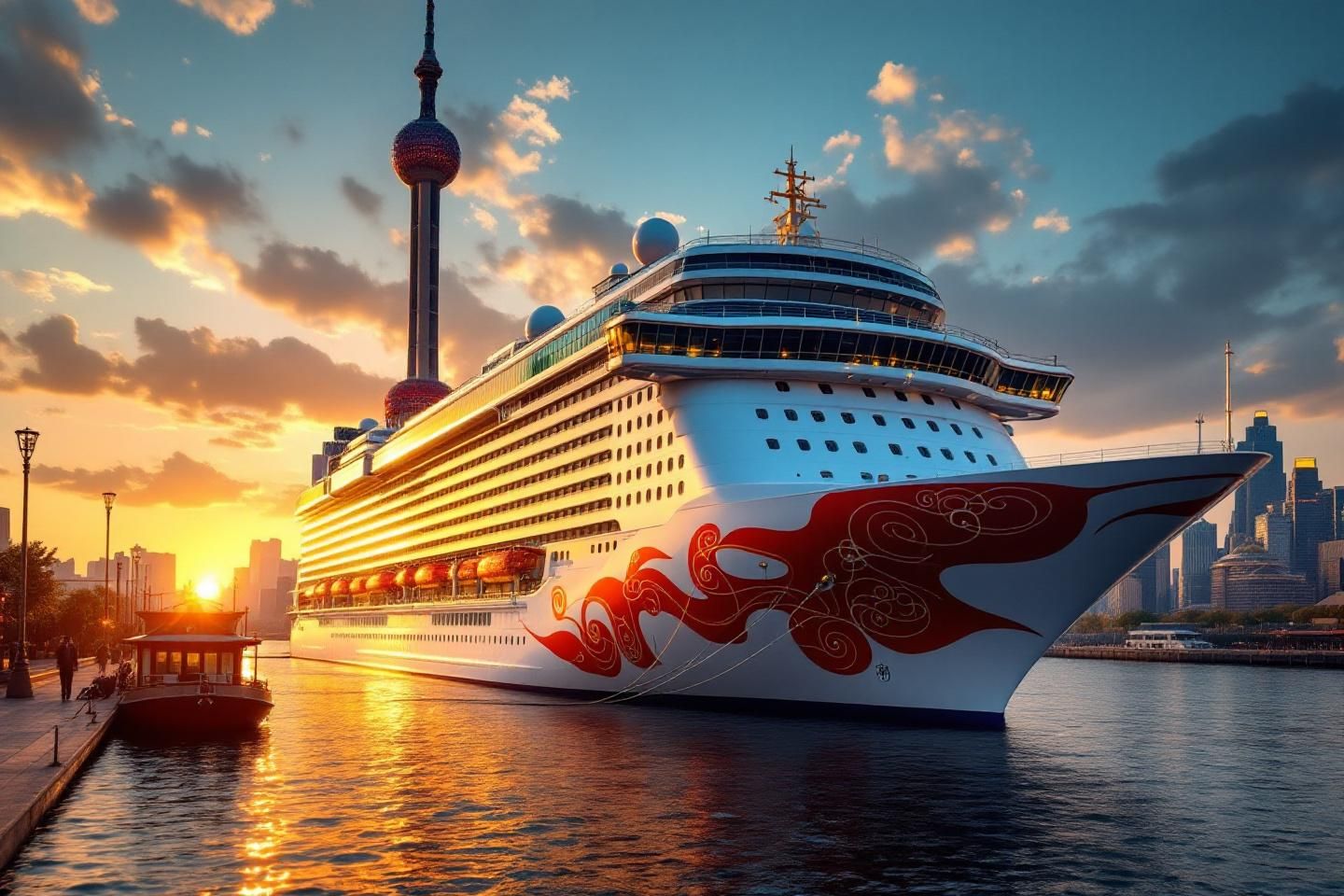
The global cruise industry just witnessed a significant shift in the Asian market. In January 2026, China’s two principal domestic cruise operators—Adora Cruises and Astro Ocean International Cruise—officially merged under a unified framework called China Cruises, creating what officials are calling Asia’s largest state-backed cruise fleet by tonnage.
This isn’t just another corporate consolidation. It’s a strategic play that signals China’s intention to dominate the Asian cruise market and challenge the decades-long supremacy of Western cruise giants in the region.
The Merger: More Than Just Numbers
According to The Traveler, the newly formed China Cruises is anchored by Huaxia International Cruise (registered in Shanghai in early 2024) and China Tourism Group, which will serve as the lead operator. Under this arrangement, Adora Cruises assumes operational management of both brands.
The combined fleet includes some impressive vessels:
Adora’s Ships:
- Adora Magic City — China’s first large domestically built cruise ship, delivered in late 2023 and entering full service in early 2024. Built at Shanghai Waigaoqiao Shipbuilding, this vessel represents a milestone in China’s shipbuilding capabilities.
- Adora Mediterranea — the former Costa Mediterranea, now refurbished and upgraded for the Chinese market.
- Adora Flora City — scheduled for delivery at the end of 2026, featuring expanded public spaces and Lingnan cultural design elements.
Astro Ocean’s Contribution:
- Piano Land — a 1995-built vessel (formerly the Oriana) that’s been refurbished specifically for Chinese passengers and deployed from multiple ports.
Why This Consolidation Changes Everything
The merger isn’t just about adding ships together. It’s a calculated move to address several strategic objectives that could reshape Asian cruising as we know it.
Scale and Competitiveness: By consolidating capacity, China Cruises can negotiate more effectively for port slots, bunkering contracts, and procurement deals. This unified bargaining power challenges international operators who’ve long dominated Asian itineraries.
Ecosystem Development: The merger accelerates China’s push toward a fully integrated domestic cruise ecosystem. Rather than relying on foreign ships and operators, China is building end-to-end control—from shipbuilding to operations to passenger services.
Post-Pandemic Resilience: The consolidation reduces operational fragmentation and decreases reliance on foreign-flagged vessels, a vulnerability exposed during the COVID-19 pandemic when international cruise operations collapsed.
Value Retention: Perhaps most importantly, this structure keeps a greater share of cruise tourism revenue onshore through Chinese-controlled entities. Every passenger, every port call, every onboard purchase—more of that money stays in China’s economy.
The Cultural Differentiation Strategy
What makes China Cruises particularly interesting is its emphasis on culturally tailored experiences. We’re not talking about simply translating menus and signage into Mandarin.
The fleet’s programming includes traditional opera performances, martial arts demonstrations, calligraphy workshops, and collaborations with institutions like the Dunhuang Academy. Themed voyages around Lunar New Year and National Day emphasize “travel at home” experiences designed specifically for middle-class Chinese travelers who want luxury and cultural familiarity.
This cultural differentiation creates a moat that Western cruise lines will struggle to replicate, even with their superior scale and experience.
The Port Strategy: Building a Coastal Network
China Cruises is developing an integrated homeport network spanning Shanghai’s Wusongkou terminal, Qingdao, Guangzhou’s Nansha port, Shenzhen, and Hong Kong. This multi-port strategy enables year-round capacity deployment across northern, eastern, and southern Chinese waters.
The Guangzhou-Shenzhen-Hong Kong cluster is positioned as an integrated “three-port” system for Greater Bay Area operations, tapping into one of the world’s most economically dynamic regions with a combined population exceeding 70 million people.
What This Means for the Industry
The formation of China Cruises represents a fundamental challenge to established cruise industry dynamics in Asia. Regional competitors in Japan, South Korea, Singapore, and Hong Kong now face a state-backed competitor with deep pockets, political support, and a massive domestic market.
For Western cruise lines that have long treated Asia as an expansion market, this consolidation complicates the competitive landscape. Royal Caribbean, Carnival Corporation, and Norwegian Cruise Line Holdings can no longer assume they’ll dominate Asian waters simply by deploying ships to the region.
The merger also signals that China views cruise tourism as strategically important enough to warrant state-level coordination and support. When Beijing decides an industry matters, resources follow. We’ve seen this pattern in everything from electric vehicles to solar panels to shipbuilding itself.
The Sustainability Angle
Interestingly, China Cruises has also announced a strategic cooperation with Lloyd’s Register (formalized in June 2025) focusing on safety, research and development, and green transition initiatives. This includes work on fuel efficiency and emissions management.
This partnership suggests China Cruises understands that modern cruise passengers—especially younger demographics—increasingly care about environmental impact. It’s also smart positioning as global regulations around maritime emissions continue to tighten.
The Road Ahead
The Adora Flora City, scheduled for delivery at the end of 2026, will be a test case for China’s shipbuilding ambitions and the merged entity’s operational capabilities. If China can successfully build, launch, and operate multiple large cruise ships domestically, it breaks one of the last remaining barriers to cruise industry self-sufficiency.
Long-term, this merger could be the first step toward China exporting its cruise model beyond its borders. With growing middle-class populations across Southeast Asia, there’s an obvious expansion opportunity for a cruise operator that understands Asian preferences and can deliver culturally relevant experiences at scale.
For now, Western cruise giants still dominate globally. But in the world’s most populous country and fastest-growing cruise market, they just got a much more formidable competitor.
Source: The Traveler - China Cruises Unites Adora, Astro Ocean to Build Asia’s Largest State-Backed Fleet