
Carnival's Newest Ship Just Delayed Embarkation—And It's NOT What You Think
Carnival Jubilee's December 27 sailing hit an unexpected embarkation delay due to LNG refueling requirements. Here's why this clean fuel technology caused the last-minute change.
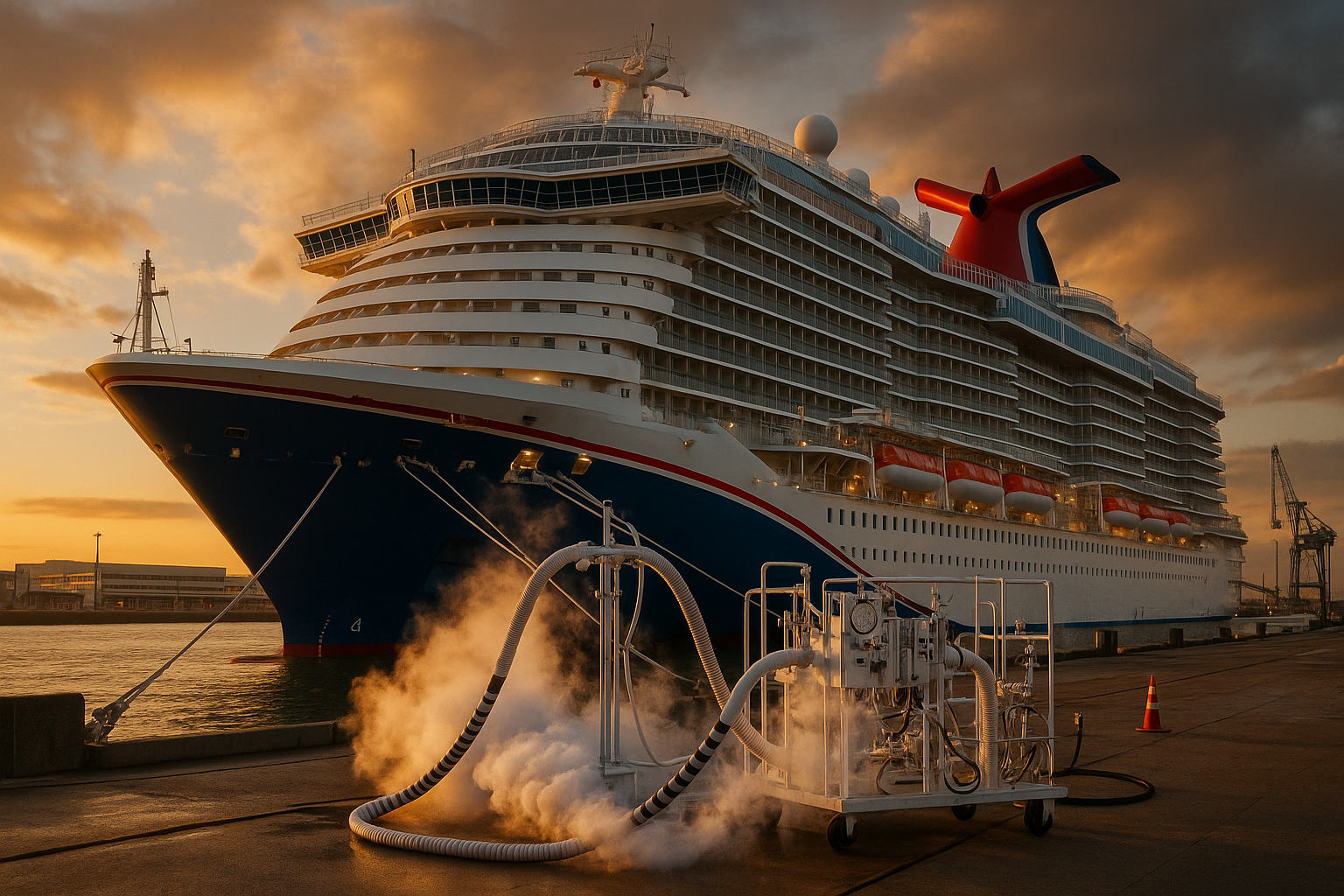
Carnival Cruise Line made a last-minute announcement this week that caught New Year’s Eve cruisers off guard. Guests booked on the December 27, 2025 sailing of Carnival Jubilee from Galveston received an unexpected email notifying them of embarkation delays—but not for the usual reasons like weather or port congestion.
The culprit? The ship’s cutting-edge liquefied natural gas (LNG) fuel system.
According to Cruise Hive, Carnival notified passengers that embarkation would be delayed due to mandatory LNG refueling operations that must be completed before guests can board.
Why LNG Refueling Caused the Delay
Unlike traditional cruise ships that run on marine diesel, the Carnival Jubilee is powered by liquefied natural gas—a cleaner, more environmentally friendly fuel that requires specialized handling and safety protocols.
“As directed by the United States Coast Guard, refueling operations on Saturday, December 27, must begin before we can start embarkation,” Carnival informed guests in the email.
The cruise line explained that for safety and security reasons, passengers cannot board while the LNG connections are being established. However, guests won’t need to wait until the entire refueling process is complete—embarkation will begin as soon as Coast Guard regulations permit.
What This Means for Guests
The good news? The 7-night Western Caribbean itinerary remains unchanged, and the delay is relatively minor.
Carnival updated the all-aboard time to 3:45 PM, just 15 minutes later than the originally scheduled 3:30 PM departure. The cruise line advised guests to adhere to their revised arrival times and warned that early arrivals may be turned away and asked to return at the designated time.
While Carnival didn’t provide extensive details beyond “refueling operations,” the reality is that port operations—especially involving specialized fuel systems—can impact embarkation timing.
The Complexity of LNG Refueling
What makes LNG refueling such a production? The numbers tell the story.
Carnival Jubilee is equipped with three cryogenic steel LNG tanks with a combined capacity of approximately 3,200 cubic meters. A single refueling operation takes about 8 hours to complete and provides enough fuel to power the ship for roughly 14 days—covering both propulsion and all onboard electrical systems.
The ship represents a significant investment in sustainable cruising technology. As Carnival’s first LNG-powered vessel based in Galveston, Jubilee required substantial infrastructure development, including a partnership with LNG supplier Seaside LNG to establish reliable fuel delivery at the Texas port.
Why This Matters Beyond One Sailing
This embarkation delay highlights a larger shift happening across the cruise industry. As more cruise lines invest in LNG-powered vessels to reduce emissions and meet increasingly strict environmental regulations, ports and operators must adapt to the operational realities of this cleaner fuel technology.
LNG refueling is more complex than traditional marine diesel. It requires specialized equipment, strict safety protocols, and coordination with Coast Guard regulations. The fuel must be kept at extremely low temperatures (around -162°C or -260°F) and transferred through insulated hoses with precise safety monitoring.
Carnival Jubilee can accommodate 5,228 guests at double occupancy—or up to 6,631 when fully booked—along with roughly 1,700 international crew members. Getting a ship that size fueled, loaded, and ready to sail is already a logistical ballet. Add in the specialized requirements of LNG, and you can see why Carnival opted to build in a cushion by delaying embarkation.
The Silver Lining
While no guest wants to hear about delays—especially right before a New Year’s cruise—this situation underscores Carnival’s commitment to environmental responsibility. LNG produces significantly lower emissions than traditional marine fuel, including:
- Up to 20% reduction in carbon dioxide emissions
- 85-90% reduction in nitrogen oxide emissions
- Virtually zero sulfur oxide and particulate matter emissions
The minor inconvenience of a 15-minute later departure is a small price to pay for sailing on one of the most environmentally advanced cruise ships in the world.
What’s Next for LNG Cruising
Carnival Jubilee is part of a growing fleet of LNG-powered cruise ships entering service across the industry. Royal Caribbean, MSC Cruises, and other major lines have all invested billions in LNG technology.
As infrastructure improves and refueling procedures become more streamlined, delays like this one should become less common. But for now, passengers on LNG ships may occasionally experience scheduling adjustments as ports and cruise lines work out the operational kinks of this newer fuel technology.
For the guests sailing on Carnival Jubilee’s December 27 departure, the message is clear: pack your patience along with your sunscreen. The 15-minute delay is a minor hiccup in what promises to be a fantastic New Year’s cruise—and you’ll be sailing on one of the most technologically advanced and environmentally friendly ships at sea.
Source: Cruise Hive - Carnival Jubilee’s New Year Cruise Hit by Last Minute Embarkation Change