
Barcelona Just Dropped a BOMBSHELL That Could Change Mediterranean Cruising Forever
Barcelona's Port Authority confirms plans to slash cruise terminal capacity by demolishing three terminals and cutting operations starting in 2027—a massive restructuring that could reshape Mediterranean cruising.
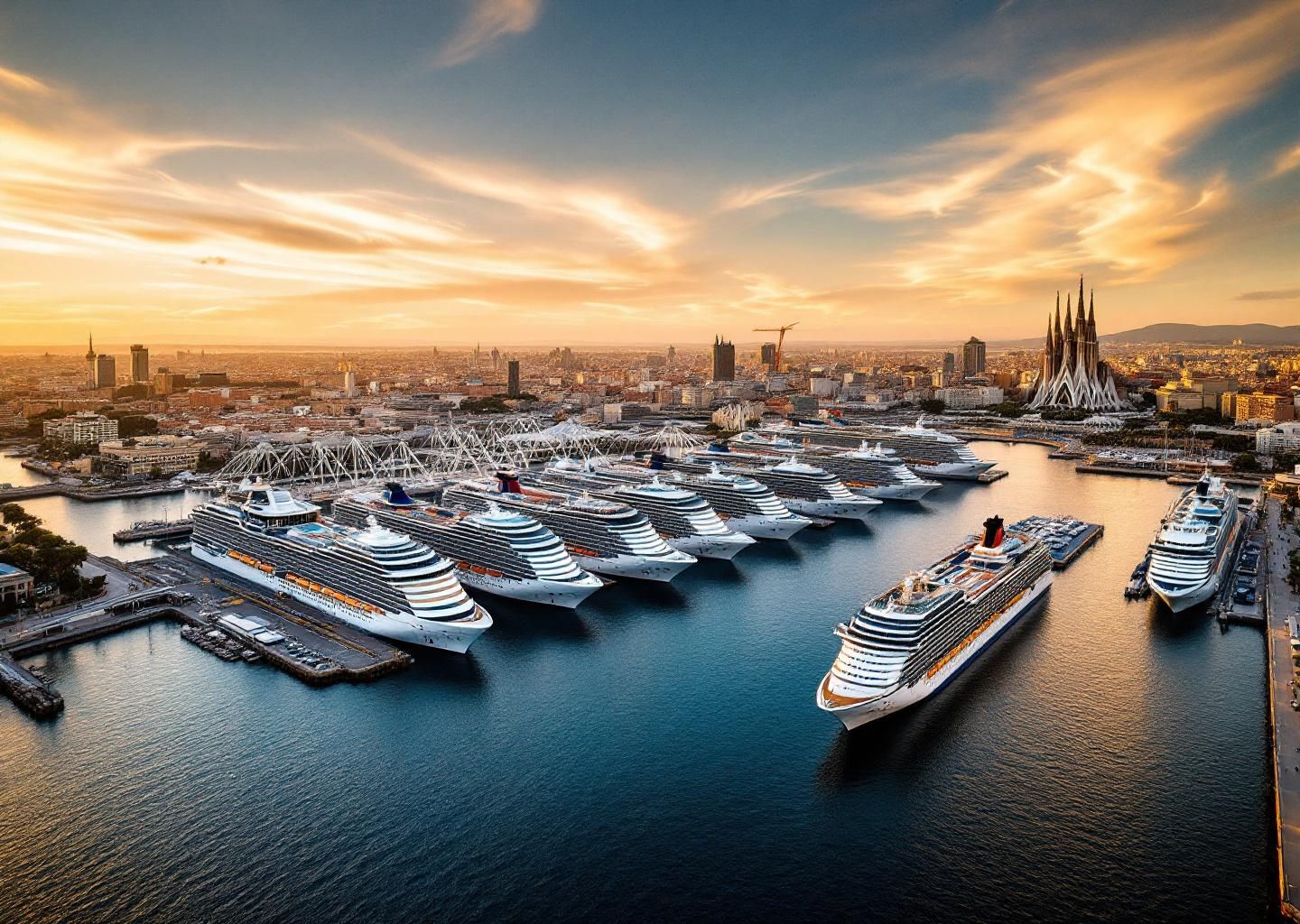
If you’ve got a Mediterranean cruise booked through Barcelona in the coming years, you need to read this right now.
Europe’s busiest cruise port just announced a massive reduction in cruise operations starting in 2027—and we’re talking about cutting capacity by the thousands, demolishing terminals, and completely reshaping how one of the world’s most popular cruise destinations handles ship traffic.
According to Cruise Industry News, Barcelona’s Port Authority has confirmed plans to slash cruise terminal capacity and demolish three of its seven current terminals by 2030. This isn’t a small tweak to operations—this is a fundamental restructuring of one of cruising’s most critical ports.
The Numbers Are Staggering
Here’s what Barcelona is planning:
- Reduce terminals from 7 to 5 (three terminals will be demolished)
- Demolition starts at the end of 2026 and won’t finish until 2030
- Investment of approximately 200 million euros in the renovation
- New facility designed for 7,000 guests daily, focusing exclusively on turnaround operations (embarkation/disembarkation days)
Port President José Alberto Carbonell made it official: “At the end of next year, we will start demolishing the first maritime station in a process that will finish in 2030, with an investment of around 200 million euros.”
The new terminal will partially open in 2028, but the entire renovation won’t be complete until 2030—meaning years of reduced capacity and potential disruption for Mediterranean cruise itineraries.
Why Is Barcelona Doing This?
The answer comes down to one word: overtourism.
Barcelona has been grappling with massive overcrowding for years, and cruise passengers have become a target of local frustration. But here’s the kicker—Carbonell himself pointed out that “cruise ship passengers are only five percent of the overall number of tourists.”
Despite being just 5% of total tourism, cruise passengers have drawn outsized attention from anti-tourism activists and local residents who argue the ships contribute to congestion, environmental issues, and what they see as low-value tourism.
The numbers tell an interesting story:
- Barcelona welcomed 2.8 million cruise passengers in 2024
- Those passengers contributed over 705 million euros to the local economy
- The cruise industry supports nearly 10,000 jobs in the region
- The port forecasts over 4 million cruise passengers in 2025 before the reductions begin
So Barcelona is essentially choosing to walk away from hundreds of millions of euros in economic activity and thousands of jobs to address overcrowding concerns—even though cruise passengers represent a tiny fraction of the city’s overall tourist traffic.
What This Means for Your Mediterranean Cruise
The reduction in Barcelona’s cruise capacity will have ripple effects throughout the Mediterranean cruise market:
For homeport cruises: Barcelona is one of the top embarkation ports for Western Mediterranean itineraries. With fewer terminals and reduced capacity, cruise lines may shift more homeport operations to other cities like Rome (Civitavecchia), Marseille, or even Barcelona’s regional competitor, Palma de Mallorca.
For port-of-call visits: The new terminal will be designed primarily for turnaround operations, which could mean fewer ships making Barcelona a mid-cruise stop. If you’re on an Adriatic or Western Mediterranean itinerary that includes a Barcelona port call, those might become less common after 2027.
For cruise pricing: Reduced capacity often means increased demand for limited slots. Don’t be surprised if Barcelona embarkations become more expensive or if cruise lines pass along higher port fees to passengers.
For the passenger experience: A brand-new, modern terminal designed for 7,000 daily guests could actually improve the embarkation/disembarkation experience for those who do sail through Barcelona. The current setup was built for a different era of cruising, and a purpose-built facility might streamline operations.
The Bigger Picture
Barcelona’s move is part of a broader trend across popular European destinations. Venice has already banned large cruise ships from its historic center. Santorini has capped daily cruise passenger arrivals. Dubrovnik has limited the number of cruise ships that can dock simultaneously.
The message is clear: some of Europe’s most iconic cruise destinations are actively working to reduce cruise traffic, even at significant economic cost.
For cruise passengers, this means two things:
- Book early: With reduced capacity at major ports, the most desirable sailings will fill up faster
- Stay flexible: Itineraries may shift as cruise lines adapt to changing port policies
Barcelona’s cruise reduction won’t take full effect until 2030, but demolition begins in late 2026—less than 14 months from now. If you’ve been dreaming of a Mediterranean cruise that starts or ends in Barcelona, you might want to book it sooner rather than later.
The golden age of unlimited cruise ship access to Europe’s most popular cities may be coming to an end. Barcelona is making that crystal clear.