
Could Amsterdam's 2035 Cruise Ban Start a Domino Effect Across Europe?
Amsterdam plans to phase out all ocean-going cruise ships by 2035, citing environmental concerns and overtourism—a move that could inspire other European ports to follow suit.
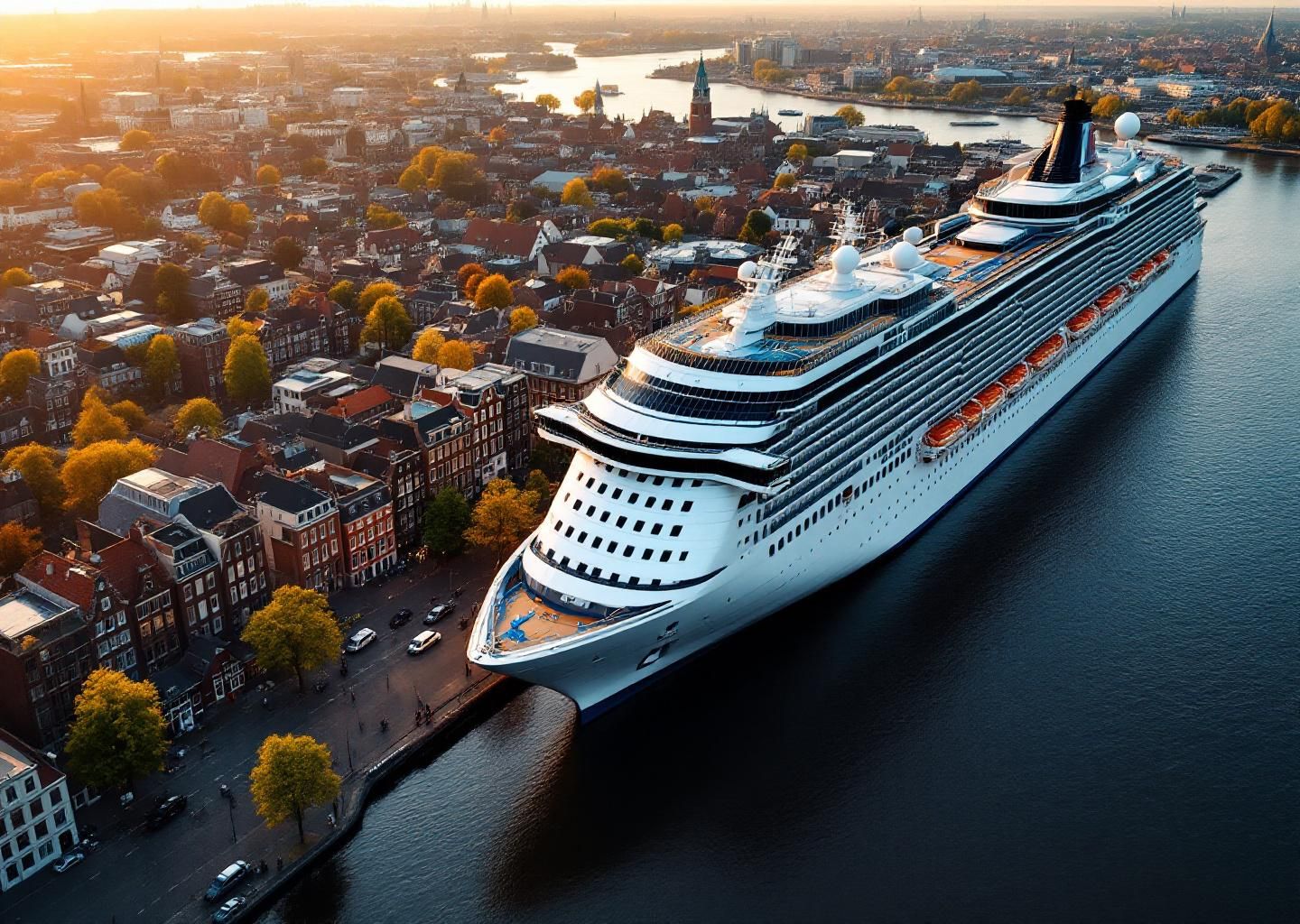
Amsterdam has drawn a line in the sand—or rather, in the water. The Dutch capital’s coalition government announced plans to ban all ocean-going cruise ships from the city by 2035, marking one of Europe’s most aggressive stances against cruise tourism to date.
The decision, reported by NL Times, represents a dramatic shift in Amsterdam’s approach to managing cruise tourism. Rather than relocating the Passenger Terminal Amsterdam to a new location in the city’s western harbor area, city officials have opted to phase out sea cruise traffic entirely over the next nine years.
Why Amsterdam Is Pulling the Plug
According to Alderman Hester van Buren, the city’s decision comes down to environmental impact and urban planning realities. Cruise ships generate “significant carbon dioxide emissions, particulate matter, and nitrogen emissions” that conflict with Amsterdam’s sustainability goals and air quality objectives.
But it’s not just about pollution. The massive vessels docked at Veemkade near Central Station have become a physical obstacle to the city’s development plans, blocking proposals for a western bridge over the IJ River that would connect the NDSM area and the Haven-Stad neighborhood. In a city where space is already at a premium, the hundreds of meters occupied by “floating apartment blocks”—as D66 party leader Rob Hofland called them—represent valuable real estate that could serve residents rather than tourists.
The overtourism angle can’t be ignored either. Amsterdam has been grappling with the pressures of mass tourism for years, and cruise passengers—who often spend just a few hours in the city before returning to their ships—have become a symbol of low-value, high-impact tourism that strains local infrastructure without delivering proportionate economic benefits.
The Math Behind the Decision
Amsterdam’s choice between relocation and elimination came down to cold, hard economics. Moving the cruise terminal from its current location to the Coenhaven in the Western Harbor Area would have cost €85 million, with no guarantee the city would recoup that investment.
By comparison, banning cruise ships entirely would result in an estimated €46 million revenue loss over 30 years. But city officials believe this gap can be closed through redevelopment of the Veemkade site and repurposing of the Coenhaven area for other uses—potentially generating more sustainable economic value than cruise tourism ever did.
Amsterdam has already been tightening the screws on cruise traffic. A 2023 City Council decision cut annual sea cruise arrivals from 190 to a maximum of 100—a 50% reduction. The 2035 ban represents the logical endpoint of this gradual phase-out strategy.
What Happens Next
The proposal isn’t set in stone just yet. Following Amsterdam’s local elections in March, the next coalition government will review the plan and make a final decision before presenting it to City Council for a vote. However, the current political momentum—with D66 calling it a “major breakthrough”—suggests the ban is likely to move forward.
Notably, river cruise vessels will continue to operate at the Veemkade under the new plan. These smaller ships have a much lighter environmental footprint and cater to a different type of tourism that typically involves longer stays and higher spending in the city.
The Ripple Effect
Amsterdam’s move could be the first domino to fall in what becomes a broader European reckoning with cruise tourism. Other popular ports have been wrestling with similar overtourism challenges. Barcelona has implemented restrictions on cruise arrivals. Venice has banned large ships from its historic center. And cities across the Mediterranean have been exploring ways to manage the environmental and social impact of cruise tourism.
What makes Amsterdam’s decision particularly significant is its totality. This isn’t about size restrictions or seasonal limits—it’s a complete phase-out of ocean cruise traffic from a major European port. If the ban moves forward and Amsterdam successfully transitions away from cruise tourism without economic catastrophe, it could provide a roadmap for other cities considering similar measures.
For cruise lines, Amsterdam’s decision is a warning shot. The industry has invested heavily in newer, cleaner ships with better environmental credentials, but those improvements may not be enough to satisfy cities that are fundamentally rethinking their relationship with cruise tourism. The message is clear: without demonstrable progress on emissions, overtourism, and economic value creation, more ports may follow Amsterdam’s lead.
The ban won’t take effect until 2035, giving the cruise industry nearly a decade to adapt. But the clock is already ticking. How cruise lines respond to Amsterdam’s decision—and whether they can address the legitimate concerns driving it—will likely determine whether this ban remains an outlier or becomes a trend.