
The Complete First-Time Cruiser's Guide: Everything You Need to Know
Everything first-time cruisers need to know: picking a ship, booking, what to pack, embarkation, dining, ports, entertainment, and avoiding rookie mistakes.
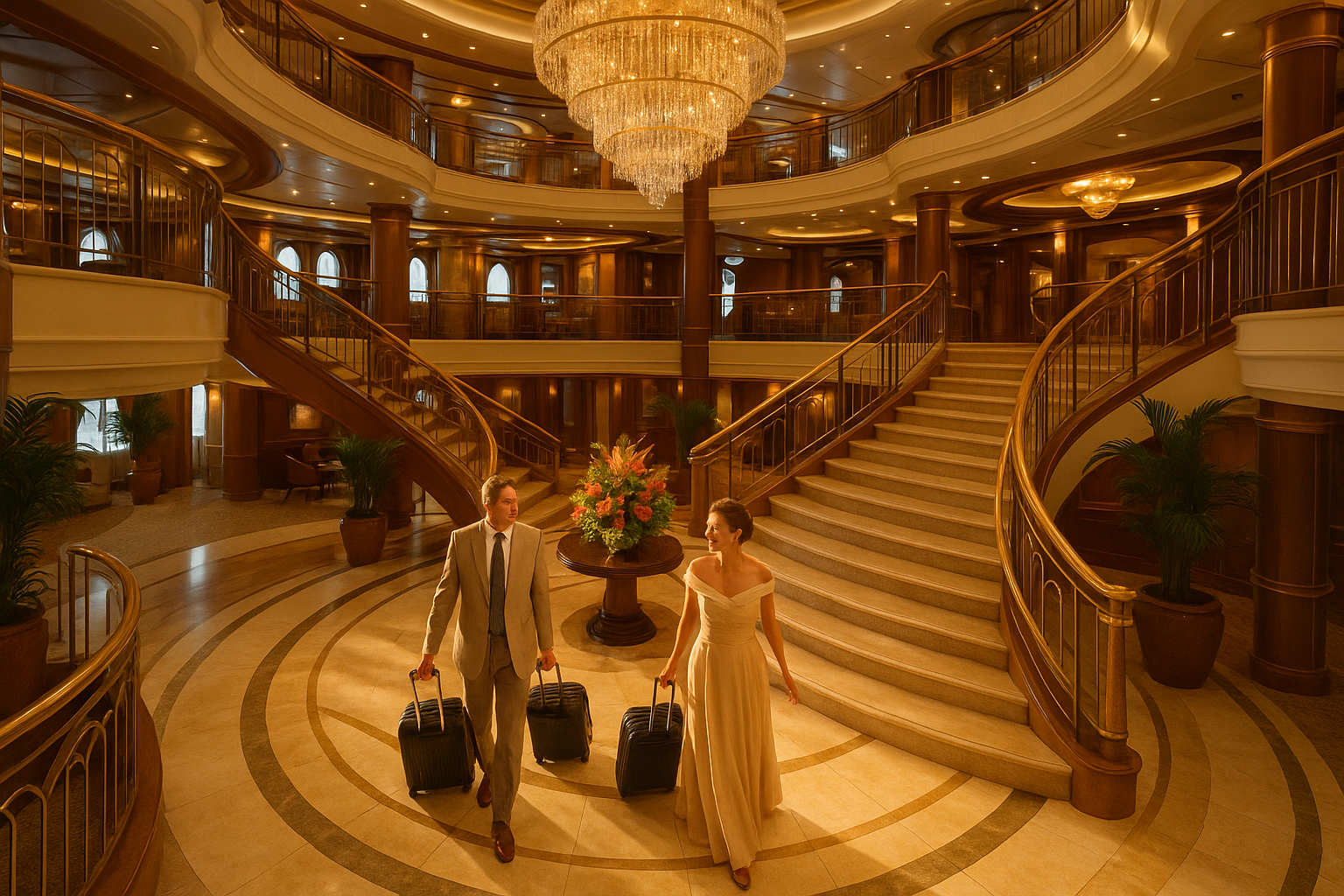
Your first cruise is about to upend every assumption you have about travel. There’s no repacking every two nights, no searching for restaurants, no worrying about transportation between cities. You unpack once, and the destinations come to you. But cruising has its own learning curve — and the first-timers who do their homework arrive on embarkation day relaxed instead of overwhelmed. This guide gives you everything you need to know.
Choosing Your First Cruise Line and Ship
The biggest mistake first-timers make is booking the cheapest thing available without considering fit. Cruise lines have personalities. Carnival is a floating party with great value and lively crowds. Royal Caribbean is the theme-park operator of the seas, with record-breaking ships full of activities. Norwegian pioneered the “freestyle” model with flexible dining and a more casual vibe. Celebrity skews upscale and sophisticated. Princess sits in a comfortable middle ground popular with adults. Disney is self-explanatory if you have children.
For most first-timers, we recommend starting with one of the large mainstream lines — Carnival, Royal Caribbean, Norwegian, or MSC — on a shorter itinerary. A 4- or 5-night Bahamas or Caribbean sailing gives you a genuine taste of cruising without a 10-night commitment if it turns out the lifestyle isn’t for you (it usually is).
Ship size matters too. Mega-ships (5,000+ passengers) have more restaurants, more activities, and more entertainment, but they also mean longer lines, louder pools, and more time tendering at some ports. Mid-size ships offer a more intimate experience with easier navigation. For your first cruise, a mid-to-large ship on a mainstream line is the sweet spot.
The Booking Process
You have two main options: book direct with the cruise line or use a travel agent who specializes in cruises. Both work. Agents often have access to group rates and onboard credits that the cruise line won’t offer publicly, and they do the legwork if something goes wrong. Direct booking gives you more control and sometimes promotional perks the line is running at that moment.
When to book: Prices generally follow a curve. Book 9-12 months out for the best cabin selection and reasonable fares. Watch for last-minute deals inside 90 days if your schedule is flexible — lines discount heavily to fill unsold inventory. Avoid the three-month window where prices sit at full retail.
What’s actually included: Your cruise fare covers your cabin, all main dining room meals, most buffet food, entertainment (shows, pools, gym), and port taxes. It does not automatically include specialty restaurants, most drinks, excursions, gratuities, spa treatments, or Wi-Fi. These can add $100-$200 per person per day if you’re not careful. Review drink packages, dining packages, and Wi-Fi bundles at booking — lines often offer them at a 30-40% discount pre-cruise versus buying onboard.
Deposit and final payment: Most cruises require a deposit (typically $100-$500 per person) to hold your cabin, with the balance due 60-90 days before sailing. Read the cancellation policy before you pay anything.
What to Pack
Packing for a cruise is different from any other vacation because you’re dressing for the beach, the dining room, the casino, and potentially a port city — sometimes all in the same day.
Essential documents: Passport (even on Caribbean itineraries where it’s technically optional — trust us), cruise boarding pass, travel insurance information, and the credit card you’re putting on your onboard account.
Clothing: Plan for your destination’s climate plus the ship’s air conditioning, which runs cold. For a 7-night Caribbean cruise, bring 2-3 swimsuits, cover-ups, casual daywear, 2 evenings of smart-casual attire, and one formal or semi-formal outfit if your itinerary includes dress-up nights. Pack comfortable walking shoes for ports.
Key items first-timers forget: A power strip with USB ports (cruise ship cabins have very few outlets), a hanging shoe organizer for bathroom storage, motion sickness medication (take it before you need it), sunscreen (dramatically overpriced onboard), and a reusable water bottle.
What not to pack: Clothes irons (fire hazard, confiscated), candles, any kind of heating element, and anything over the luggage restrictions your cruise line posts. Leave the drone at home — they’re banned on virtually every ship.
Embarkation Day: Getting on the Ship
This is the most chaotic part of the cruise for first-timers. Here’s how to make it smooth.
Arrive at the right time. Your cruise documents will specify a boarding window — respect it. Most lines open check-in at 10:30 or 11 AM and begin boarding in waves by check-in time. Showing up at 8 AM means standing outside in the sun. Showing up after 2 PM means longer lines and less time to explore.
The check-in process: You’ll present your passport and boarding documents, have your photo taken (this becomes your sea card for room entry and onboard purchases), and register a credit card. This takes 10-30 minutes depending on the line and terminal.
Your sea card (keycard): This small plastic card is everything — your room key, your ID when returning to the ship, and your payment method for anything charged onboard. Put it somewhere secure and never leave the ship without it.
The muster drill: Before the ship leaves port, you’re required by international maritime law to attend a safety drill. Every line handles it differently now — many moved to e-mustering post-pandemic where you watch a video on the app and then check in at your muster station. It’s brief but mandatory. Complete it as soon as you board to get it out of the way.
Your cabin won’t be ready immediately. Cabins typically aren’t available until 1-2 PM even if you board at 11 AM. Stow your carry-on at the check-in desk or a designated area and head straight to the buffet or pool deck. Checked bags get delivered to your cabin door later in the afternoon.
Navigating the Ship
Large ships have 14-20 decks and can feel genuinely disorienting for the first day. Here’s how to get oriented:
Use the ship’s app — every major line has one now, and it shows the deck map, current activities, dining hours, and your daily schedule. Download it before you leave home and log in. It’s your best navigation tool.
Learn three reference points: your cabin location (deck and forward/aft/midship), the buffet, and the main atrium or promenade. Everything else radiates from there.
Forward vs. aft: Forward is the front of the ship, aft is the back, and port/starboard are left/right when facing forward. Memorize your cabin’s position relative to these early — it saves a lot of confused hallway wandering.
Dining: What’s Included and What Isn’t
This is where first-timers are most surprised. Modern cruise ships are floating restaurant complexes.
Main dining room (MDR): Every ship has at least one formal dining room with a rotating menu of appetizers, entrees, and desserts served by a dedicated waitstaff team. This is included in your fare. You’ll either have a set dining time (early/late seating) or “anytime dining” where you request a table when you want it. The food quality is generally solid — not fine dining, but comfortably above what most people cook at home.
Buffet: The Lido Deck buffet is the casual alternative to the MDR. Open for breakfast, lunch, and often late-night snacks, it’s included and offers significant variety. Expect crowds at peak times.
Specialty restaurants: Most ships have 3-10 specialty venues — steakhouses, sushi bars, Italian trattorias, seafood grills. These typically cost $20-$60 per person extra. They’re worth it for a special night out; you don’t need to go every evening.
Room service: Available on virtually every ship, usually included for a basic menu and with a delivery fee or tip expected. Handy for early port mornings.
The trick with drinks: Non-alcoholic beverages (water, lemonade, iced tea, drip coffee) are typically included at meals. Specialty coffees, sodas, and all alcohol are not. If you drink more than 4-5 alcoholic beverages per day, a drink package usually pays for itself.
Port Days vs. Sea Days
You’ll have two types of days on a cruise: port days, when the ship docks at a destination and you go ashore, and sea days, when you’re at sea with full access to ship amenities.
Port days: You have three options when in port — book a ship-sponsored excursion, book independently, or explore on your own. Ship excursions are the safest option for first-timers because the ship waits for you if they run late (the ship will not wait for you if you’re late from an independent tour). Independent tours are often cheaper and better. Walking around on your own works well in easy-to-navigate ports.
Always know your all-aboard time. This is the time posted in the daily schedule (typically 30-60 minutes before the ship departs). If you miss it, you’ll be watching your ship sail away and paying for your own flights to the next port.
Sea days: These are beloved by regulars. The pool decks come alive, the shows are scheduled, specialty dining is easier to book, and the spa often runs sea-day specials. Don’t fill your sea days with nothing — there are trivia tournaments, cooking demonstrations, art auctions, fitness classes, dance lessons, and live music to fill every hour.
Onboard Entertainment
Modern cruise ships have more entertainment than you can possibly fit into one sailing. Main theater shows run nightly — Broadway-style productions, comedy acts, magic shows, acrobatics. These are included. Arrive 20-30 minutes early for popular productions on mega-ships.
Beyond the theater, there’s live music in bars and lounges throughout the evening, a casino (the slot machines are loose on embarkation night — or at least that’s the legend), trivia in the atrium, themed parties on the pool deck, and on newer ships, amenities like go-kart tracks, wave simulators, or multi-deck waterslides.
The daily schedule (printed and available on the ship app the night before) lists every activity with times. Review it each evening and flag what you want to do the next day. Popular activities fill up fast.
Disembarkation: Getting Off the Ship
The last morning is where first-timers often feel most lost. Here’s the process:
The night before arrival, you’ll receive disembarkation instructions in your cabin. You choose either self-disembarkation (you carry all your bags off yourself early, usually starting at 7 AM) or standard disembarkation (you put luggage outside your cabin door the night before, it gets off-loaded, and you collect it in the terminal by color-coded tag).
Self-disembarkation is fastest if you can manage your bags. Standard is more relaxed but requires waiting for your color/number to be called, which can take until 10 AM or later.
Don’t book a flight before noon. Even a 10 AM flight is risky. Disembarkation runs on port authority schedules, not the cruise line’s preferences. 11 AM is the minimum; 12 or 1 PM is safer. Miss your flight and you’re buying a new ticket.
Clear your onboard account the night before. You’ll receive a statement of all charges — review it for errors and settle any disputed items at guest services before the lines get long.
Common First-Timer Mistakes
Mistake 1: Overscheduling every port. You’re on vacation. Build in unstructured time.
Mistake 2: Ignoring the main dining room. Many first-timers default to the buffet every meal. The MDR experience — with the same waiter learning your preferences over seven nights — is one of the genuinely unique pleasures of cruising.
Mistake 3: Waiting to buy drink packages. Prices go up once you’re onboard. Buy before the cruise if you know you’ll use one.
Mistake 4: Skipping travel insurance. A medical evacuation at sea can cost $50,000 or more. A travel insurance policy costs a fraction of that and covers trip cancellations too.
Mistake 5: Forgetting to tip beyond gratuities. Most lines add automatic daily gratuities to your account ($16-$20 per person per day). These go to the service staff pool. But exceptional service — from your room steward, your favorite bartender, your MDR team — is always appreciated with additional cash tips at the end of the sailing.
Mistake 6: Not drinking enough water. Ocean air and sun exposure dehydrate you faster than you expect. Carry a refillable water bottle and use it.
Your first cruise is going to be better than you expect. The hardest part is choosing the itinerary. After that, the ship takes care of everything else.