
Cruising with Kids: The Complete Family Cruise Planning Guide
Everything parents need to know about cruising with kids — the best family cruise lines, kids clubs, cabin configurations, shore excursions, and age-by-age tips.
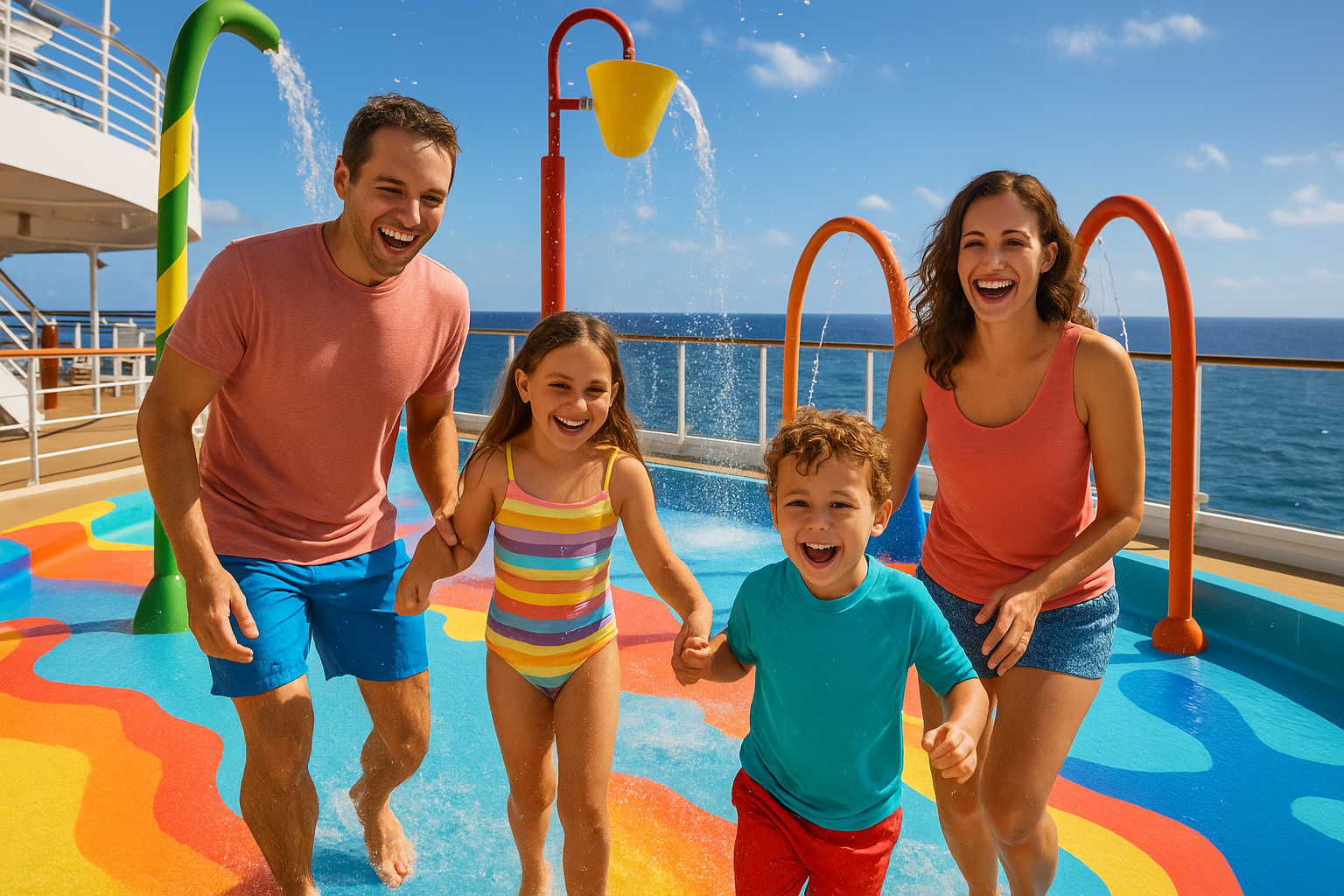
A family cruise is, on paper, one of the most logistically sensible vacations you can take. You unpack once. Your accommodation moves with you to multiple destinations. The ship takes care of meals, entertainment, and childcare — often simultaneously. You get a vacation; your kids get a vacation; sometimes those two things even overlap.
But not all cruise lines are equally equipped for families. Some ships have world-class kids programs and water parks; others treat children as an afterthought. Choosing the right line — and the right ship — makes all the difference between a vacation you want to repeat and one you white-knuckle through.
Best Cruise Lines for Families: The Rankings
Royal Caribbean: The Clear Leader
No cruise line invests more aggressively in family infrastructure than Royal Caribbean. Its Icon-class ships (Icon of the Seas, Star of the Seas) were explicitly designed to be the ultimate family vacation product, with more water park square footage than most land-based water parks, a dedicated kids-only splash area called Category 6, dedicated teen programming, and family-specific cabin categories that sleep 5–8 people.
Royal Caribbean’s Adventure Ocean kids club is one of the best in the industry, with programming segmented by age and full-day availability on sea days. The entertainment lineup — ice shows, AquaTheater aquatic performances, Broadway productions, mini-golf, rock climbing, laser tag, escape rooms — essentially guarantees that children of any age and temperament will find something they want to do.
Best for: Families with kids ages 3–17 who want maximum onboard activity.
Carnival: Best Budget Family Option
Carnival’s Camp Ocean program is well-run and widely praised. Ships have dedicated children’s pool areas, splash zones, and waterslides. Carnival’s larger ships (Mardi Gras, Jubilee, Firenze) have added BOLT, an at-sea roller coaster, which teenagers in particular respond to with enthusiasm.
Carnival is also the most affordable major family-friendly line, making it the entry point for many families cruising for the first time.
Best for: Budget-conscious families, first-time cruising families, shorter 3–7 night itineraries.
Norwegian Cruise Line: Best for Flexible Families
Norwegian’s Splash Academy kids club operates across its fleet and is well-regarded for its structure and activity variety. Norwegian’s freestyle dining model is particularly family-friendly — no assigned dinner times means you eat when your kids are hungry, not when the ship schedules you.
Norwegian’s Aqua Park water parks and its newer Prima-class ships (Norwegian Prima, Norwegian Viva, Norwegian Aqua) have invested heavily in family-oriented thrills including The Drop, a free-fall water slide.
Best for: Families who want dining flexibility, teens who want independence.
Disney Cruise Line: Best for Young Children and Disney Fans
Disney Cruise Line is the most expensive mainstream family cruise option and also the most intentional about the family experience. The character interactions are far more accessible than at Disney parks (no 90-minute waits). The onboard programming is designed specifically for families traveling together rather than separating children from parents.
Disney ships sail limited itineraries (Caribbean, Alaska, Europe, Bahamas) and sail from limited ports. But for families with kids 3–10 who love Disney characters, no other cruise line compares.
Best for: Families with young Disney fans, ages 3–10.
Kids Clubs Compared: What Your Children Actually Do All Day
Kids clubs are the infrastructure that makes family cruising viable. A good kids club means your 8-year-old is happily supervised while you have lunch without negotiating a tablet screen time truce.
Royal Caribbean: Adventure Ocean
- Ages: 6 months–17 years (segmented into Aquanauts, Explorers, Voyagers, Teens)
- Hours: Sea days typically 9am–12pm, 2pm–5pm, 7pm–10pm; port days vary
- Cost: Free during standard hours; late-night (10pm–2am) costs extra
- Highlights: STEM activities, talent shows, interactive game shows, dedicated teen lounges (Studio B, The Living Room)
Carnival: Camp Ocean
- Ages: 2–17 years (Penguins 2–5, Sting Rays 6–8, Sharks 9–11, Circle C teens 12–14, Club O2 teens 15–17)
- Hours: Sea days 9am–12pm, 2pm–5pm, 7pm–10pm
- Cost: Free during standard hours; after 10pm is paid
- Highlights: STEM activities, cooking classes, sports tournaments, scavenger hunts
Norwegian: Splash Academy
- Ages: 3–17 years (Turtles 3–5, Seals 6–9, Dolphins 10–12, teens 13–17)
- Hours: Sea days 9am–noon, 2pm–5pm, 7pm–10pm
- Cost: Free during standard hours; late-night is $6–8/hour per child
- Highlights: Science experiments, cooking classes, fitness activities, teen gaming areas
Disney Cruise Line: Youth Clubs
- Ages: 3–17 (It’s a Small World nursery for under 3, Oceaneer Club/Lab 3–12, Edge teens 11–14, Vibe 14–17)
- Hours: Sea days effectively all day
- Cost: Included in cruise fare; nursery charges hourly
- Highlights: Character meet-and-greets inside the club, immersive themed environments, Marvel and Star Wars programming
Age-by-Age Guide: Cruising with Children at Every Stage
Infants and Toddlers (Under 3)
Most cruise lines have a minimum age of 6 months for sailing. For this age group, cruising is logistically intensive. Pack everything: diapers, formula, baby food, medications, portable crib if you need a specific type (ships provide pack-n-plays on request).
Key considerations:
- Request a crib in advance, not at check-in
- Confirm your ship has a nursery and understand the cost (Disney’s nursery is hourly; most lines charge per session)
- Book a cabin near the elevator to minimize long corridor walks with a stroller
- Avoid ships with only stairs between certain decks
- The pool temperature matters — many outdoor pools are cold; look for a dedicated toddler splash zone
Young Kids (Ages 3–8)
This is arguably the sweet spot for family cruising. Kids are old enough for kids club, old enough to remember and appreciate the experience, and still young enough to be thrilled by character experiences and simple thrills.
- Kids club eligibility typically begins at age 3 (must be potty-trained)
- Water parks and splash zones are the main draw; any ship with a dedicated family pool is a win
- Disney Cruise Line’s character experiences are most accessible for this age group
- Shore excursions: beach days, animal encounters, and simple snorkel experiences work well
Preteens (Ages 9–12)
This age group is the most activity-hungry and benefits most from ships with diverse onboard options: FlowRider surf simulators, laser tag, rock climbing, mini-golf, escape rooms, and dedicated preteen programming in kids clubs.
- Royal Caribbean’s Voyagers program and Carnival’s Shark Reef program are particularly well-designed for this age
- Preteens often want to “graduate” from the main kids club but aren’t quite ready for teen programming — look for lines that have a bridge program for ages 10–12
Teenagers (Ages 13–17)
Teenagers on cruises want independence, peers their age, and Wi-Fi. The best cruise ships for teens provide all three.
- Norwegian’s Haven (private ship-within-a-ship) actually appeals to teens because the Haven Teen Lounge has gaming consoles, a private pool, and exclusive access
- Royal Caribbean builds dedicated teen zones: The Living Room lounge, outdoor teen-only deck area, and late-night teen programming
- Teens may prefer to eat independently — Norwegian’s freestyle dining is ideal for this
- Wi-Fi packages for teens are worth buying; plan for it in your budget
Cabin Configurations for Families
The biggest practical challenge in family cruising is the cabin. Standard cruise cabins sleep 2–3. Families of 4+ need to plan carefully.
Connecting Cabins
Two adjacent cabins with an interior connecting door. Parents in one room, kids in another, with a door between. This is the most flexible option and available on most major cruise lines.
Book early: Connecting cabins are the first to sell out on family-popular ships and sailings.
Family Staterooms
Some ships (particularly Royal Caribbean and Norwegian) offer dedicated family cabin categories: a single large cabin with a pull-down bunk for a third or fourth person, a partition creating a mini-bedroom, or a sofa that converts to a full bed. These vary dramatically in size — read the square footage before booking.
Suites
Suite-class cabins on Royal Caribbean (Star Loft Suite), Norwegian (The Haven), and Celebrity (The Retreat) offer separate bedrooms, significantly more space, and exclusive access to private restaurants, pools, and concierge service. For families who can afford it, the Haven in particular is transformative — it effectively removes the crowding problem entirely.
Babysitting Services
Most major cruise lines offer in-room or group babysitting for parents who want an adults-only dinner or a late night. Rates typically run $6–$12 per hour per child. Some lines (Disney, Celebrity) include evening group babysitting in their kids club operating hours.
Book in advance for port days — babysitting slots fill up when parents want to do adult-only excursions.
Shore Excursions with Kids
Not all shore excursions work for families with young children. Here’s how to approach port days:
Beach days work for nearly all ages and are the single most reliable family excursion type. Look for excursions that include calm, shallow water areas and beach chair setup — you don’t want to wrangle a 4-year-old on a rocky shoreline.
Animal encounters (swimming with dolphins, stingray interactions, sea turtle releases) are consistently family favorites but book fast. Age and height minimums apply to most — read them carefully.
Cultural tours work well for older kids (10+) who have some historical context. For younger kids, long walking tours in heat are a recipe for meltdown.
Adventure excursions (zip-lining, ATV tours) typically have minimum age and weight requirements. Check before booking.
For port days when you want to split the family, some cruise lines offer kids club operation during port stops, allowing parents to do an adult excursion while children remain supervised onboard.
What to Pack for Kids
Beyond your own packing list, children require:
- Swim diapers — Not sold onboard; bring several days’ worth
- Life jackets for toddlers — The ship provides these at the pool but a personal puddle-jumper may fit your child better
- Sunscreen, sunscreen, sunscreen — Kids burn faster. SPF 50 mineral sunscreen for faces.
- Motion sickness remedies — Children’s Dramamine or Sea-Bands; consult your pediatrician before departure
- Nightlight — Cruise cabins are very dark; a small USB nightlight prevents middle-of-the-night terror
- Small backpack per child — For port days; kids who carry their own stuff complain less
- Favorite snack foods — The ship has food everywhere, but familiar snacks prevent hunger meltdowns at inconvenient moments
- One special toy or stuffed animal — For comfort in an unfamiliar environment
Family-Friendly Itineraries
Best itineraries for families:
- Bahamas and Caribbean — Short sailings, beach-forward ports, calm water. Best first family cruise.
- Alaska — Whale watching, glaciers, and wildlife viewing are genuinely awe-inspiring for kids of all ages. Norwegian and Princess are the leading Alaska family options.
- Hawaii — Long sailing time (5+ days at sea between ports) but the destinations are spectacular. Norwegian Pride of America is the only ship that sails Hawaii year-round without crossing the Pacific.
- Europe — Best for families with older children (10+) who can handle cultural and historical immersion. Mediterranean sailings in July–August are extremely busy but rewarding.
Family cruising requires more planning than an adult-only vacation, but the payoff is real: multiple destinations, built-in entertainment, and the kind of shared experience that families talk about for years. Match the ship to your kids’ ages, book the kids club in advance, and give yourself permission to split up when everyone needs different things.