
Cruises from New York: Year-Round Departures, Lines, and Port Guide
The complete guide to cruising from New York City — Manhattan Cruise Terminal vs Cape Liberty, which lines sail, seasonal itineraries, getting to port, and hotel recommendations.
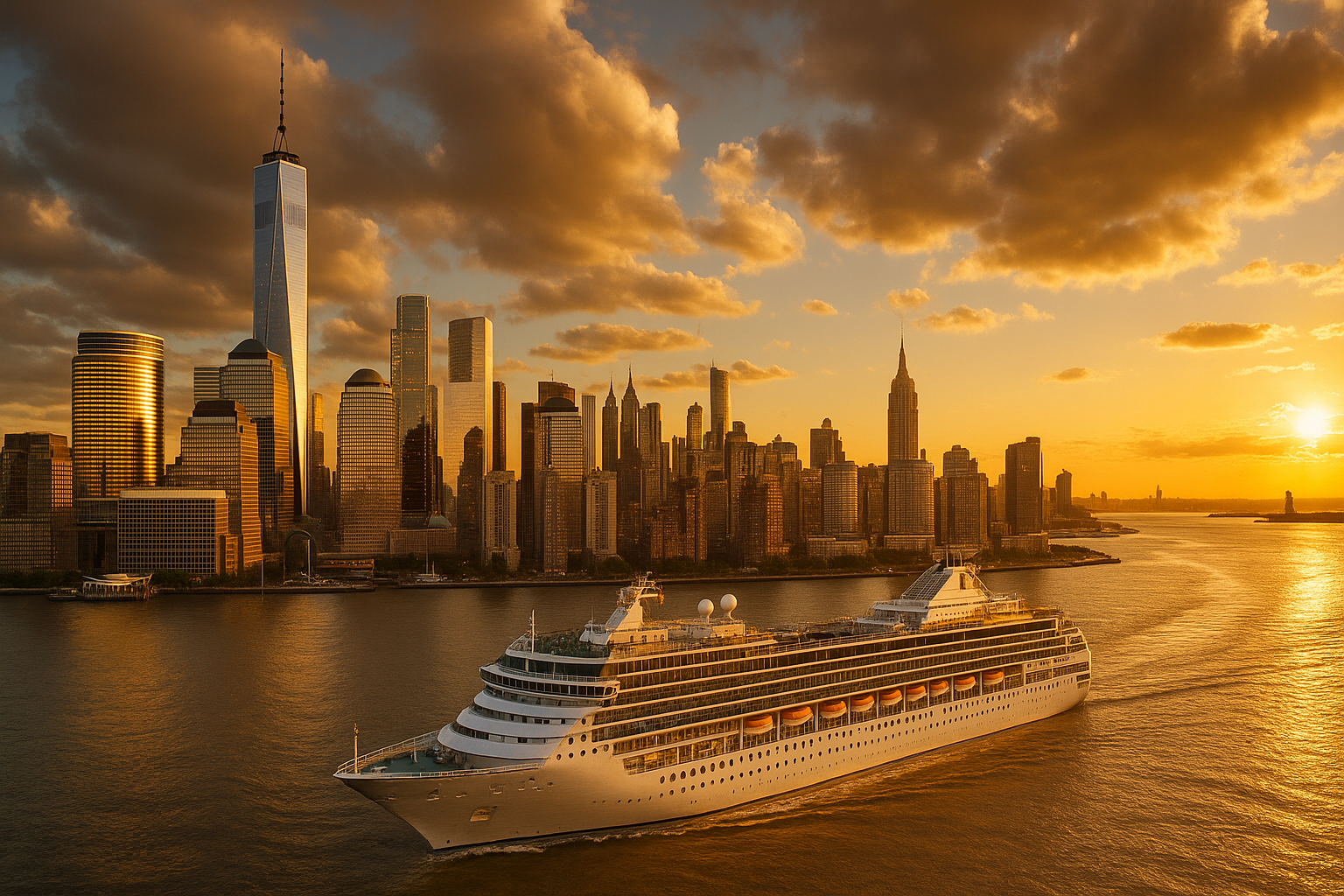
Sailing from New York City is one of the great cruise experiences — not because of what happens onboard, but because of what happens as the ship leaves. The Manhattan skyline receding across the water at sunset is the kind of departure you remember. For the millions of people who live within a three-hour drive or train ride of the New York metro area, cruising from New York also eliminates the most stressful part of most cruise vacations: getting there. No connecting flights, no airport baggage chaos. You show up and board.
Here’s everything you need to know about cruising from New York.
Two Ports, Two Very Different Logistics
The New York cruise market operates from two distinct ports: the Manhattan Cruise Terminal and Cape Liberty in Bayonne, New Jersey. These are not interchangeable — they serve different cruise lines and involve very different logistics.
Manhattan Cruise Terminal (Pier 88 / 90 / 92)
The Manhattan Cruise Terminal occupies three piers on the west side of Midtown Manhattan at the Hudson River, between 46th and 55th Streets. Its location is spectacular — you board with views of the Hudson, the New Jersey Palisades, and, if your ship faces south, the lower Manhattan skyline. Disembarkation offers the same views in reverse.
Getting to the Manhattan terminal by taxi or rideshare is straightforward from anywhere in Manhattan or from Penn Station. The Port Authority Bus Terminal is close. The M12 bus stops nearby. It is not, however, a simple port to reach if you’re driving from outside the city — the Hudson River tunnel and parking situation make it genuinely inconvenient for cars.
On-site parking is available in the terminal’s garage structure but runs $35–$45 per day and books out far in advance for popular departure dates. If you’re driving to the Manhattan terminal, reserve parking early or seriously consider alternatives (nearby Manhattan parking garages, drop-off/pickup by car service).
Cruise lines: Norwegian Cruise Line operates a significant portion of its New York sailings from the Manhattan terminal. Cunard’s Queen Mary 2 departs from Pier 92 for its transatlantic crossings — one of the genuinely iconic embarkation experiences in cruising.
Cape Liberty Cruise Port (Bayonne, NJ)
Cape Liberty sits on a peninsula in Bayonne, New Jersey, across Upper New York Bay from Staten Island and Lower Manhattan. It’s not a glamorous port — the surrounding industrial landscape is unremarkable — but the views of the Manhattan skyline from the ship as you depart more than compensate.
Logistically, Cape Liberty is much better suited to car travel than the Manhattan terminal. The parking facility is large ($30–$35/day), less congested, and easy to navigate. From the New Jersey side, getting there by car is straightforward. From Manhattan, it requires crossing the Goethals or Bayonne Bridge — plan 30–60 minutes depending on traffic.
By public transit from Manhattan: Take the subway to Bayonne via NJ Transit, then a short taxi or rideshare to the terminal. It takes 60–90 minutes from Midtown — doable but not seamless.
Cruise lines: Royal Caribbean’s New York operations are almost entirely based at Cape Liberty. Carnival also operates from here seasonally.
Seasonal Itineraries: Where You’ll Go and When
One of the things that makes New York a genuinely interesting homeport is the seasonal variety of itineraries. No other U.S. cruise port offers as much destination diversity across the calendar year.
Caribbean (November–April)
Caribbean cruises from New York are the dominant winter option. These are typically longer sailings — 10 to 14 nights — than Caribbean departures from Florida, because the ship needs several days to reach warm water from the northeast. Royal Caribbean, Norwegian, and Carnival all offer Caribbean departures from New York in the winter months.
The trade-off is the first two or three days of the voyage: the Atlantic in November through March can be rough, and temperatures don’t become pleasant deck weather until you’re well south of Cape Hatteras. Travelers who are prone to motion sickness should be aware that mid-Atlantic winter crossing conditions are meaningfully rougher than sailing from Miami.
The upside: longer Caribbean sailings from New York often visit more ports than a standard 7-night Florida departure, and the ship serves as genuine transportation — you earn the Caribbean sunshine by sailing through colder waters first.
Bermuda (May–October)
Bermuda is the signature New York summer cruise destination, and it’s a particularly well-matched pairing. Bermuda is only about 1,000 miles southeast of New York — roughly two days at sea each way from a 7-night sailing — which means itineraries can offer two to three days docked in the Great Sound (Hamilton or King’s Wharf) without sacrificing the on-ship experience.
Norwegian and Royal Caribbean both operate dedicated Bermuda itineraries from New York and Cape Liberty throughout the summer. These are popular sailings that book well in advance. Bermuda itself is gorgeous, unusually safe, and very well set up for cruise visitors: pink sand beaches, pastel-colored towns, scooter rentals, and world-class snorkeling and diving are all accessible from the docking points.
Pro tip: In Bermuda, ships dock directly at the pier (not at anchor/tender) which makes coming and going easy. A $4 ferry connects King’s Wharf to Hamilton and St. George’s — it’s scenic and practical for getting around the islands without booking expensive excursions.
Canada and New England (September–November)
The Canada and New England autumn foliage cruise is one of the most popular voyages in the world for a very good reason: watching fall color unfold across coastal Maine, Nova Scotia, and the St. Lawrence River from a ship is genuinely spectacular. These sailings typically run 7 to 14 nights and call at ports including Bar Harbor (Maine), Halifax (Nova Scotia), Saint John (New Brunswick), Québec City, and Boston.
Québec City is the crown jewel of this route — a walled Old City with a European character unlike anything else in North America. If you have a 14-night sailing that includes Québec City, budget a full day there and walk the ramparts.
Royal Caribbean, Celebrity, Norwegian, Holland America, and Cunard all operate Canada/New England sailings from New York. These book up quickly for the peak foliage weeks of mid-October.
Transatlantic (April–May and October–November)
New York is the primary U.S. port for transatlantic crossings — a category of voyage completely different from a standard cruise. Cunard’s Queen Mary 2 does the crossing between New York and Southampton roughly monthly, with the crossing taking seven nights each way. This is not a cruise in the ports-and-excursions sense; it’s ocean liner travel, with the crossing itself as the experience.
If you’re comfortable with seven consecutive sea days — and many travelers find this deeply appealing, particularly for reading, writing, lecturing, or simply disconnecting — a QM2 crossing is one of the great travel experiences available. Pricing is comparable to a mid-tier transatlantic flight on a per-night basis, and you arrive in England without jet lag.
Norwegian and other lines also operate repositioning crossings in spring and fall, often offering strong pricing as ships move between U.S. and European summer/winter deployments.
Getting to the Port
From Manhattan
Taxi or rideshare: The most practical option for most travelers with luggage. Budget $15–$30 to the Manhattan terminal depending on your starting point; $40–$60 to Cape Liberty.
Car service: For groups or travelers with significant luggage, a pre-booked car service offers reliability that rideshare apps in Manhattan can’t always match during busy periods.
Subway: For the Manhattan terminal, the A/C/E lines to 50th Street put you within easy luggage-rolling distance of Pier 88/90. For Cape Liberty, the combination of NJ Transit and rideshare works but is best for nimble solo travelers.
From New Jersey and Surrounding States
Cape Liberty is the obvious choice for drivers from New Jersey, the Hudson Valley, Connecticut, and Long Island. I-278 (Staten Island Expressway) via the Goethals Bridge is the most direct approach from the south. From the north and east, the Garden State Parkway to I-278 works well.
Allow extra time during rush hours — particularly Friday afternoon/evening embarkation days, when cross-Hudson traffic can be severe.
From Airports
JFK: Best connection is the AirTrain to Jamaica station, then the Long Island Rail Road to Penn Station, then subway or taxi. Total time: 60–90 minutes depending on wait times. Alternatively, rideshare directly from JFK to the port costs $40–$60 but avoids transfers.
Newark (EWR): The most convenient airport for Cape Liberty. NJ Transit train from EWR to Bayonne (30–40 minutes) then a short taxi, or a direct taxi/rideshare for $25–$40.
LaGuardia (LGA): Taxi or rideshare is generally the most practical. Budget 45–90 minutes depending on traffic.
Pre-Cruise New York Hotels
New York is not a budget hotel city, but several neighborhoods make particular sense for cruise travelers.
Midtown West / Hell’s Kitchen: The most practical for Manhattan terminal departures. Dozens of hotels within walking or short taxi distance of the piers. The Ink48 Hotel on 11th Avenue has cruise-adjacent positioning if you want to splurge. More affordable options in the 40s–50s between 8th and 11th Avenues work well.
Jersey City / Hoboken: A significantly more affordable alternative for Cape Liberty departures. PATH train connections to Manhattan make sightseeing easy, and the waterfront views of the skyline are excellent. Hotel prices are typically 30–50% lower than comparable Manhattan properties.
Newark: If you’re flying into EWR and departing from Cape Liberty, a night near Newark Liberty Airport (Marriott, Hilton, and others are airport-adjacent) eliminates transit complexity and can be surprisingly cost-effective.
What to Do Before Your Cruise
Arriving a day early in New York isn’t just logistically prudent — it’s an opportunity. If you’re not a New York regular:
One day in New York itinerary: Start with a walk across the Brooklyn Bridge (start from City Hall side, end in DUMBO for lunch). Afternoon: Chelsea High Line and the Whitney Museum. Evening: dinner in Greenwich Village. If you’re Manhattan terminal-bound, walk along the Hudson River Greenway as far as Pier 88 to scout your embarkation point.
For theater fans, Broadway tickets can be secured day-of at TKTS booths in Times Square at 40–50% discounts. The booth opens at 3 p.m. for evening performances.
If you’re arriving post-cruise and have time in the city, the 9/11 Memorial and Museum at the World Trade Center site is essential for first-time visitors and profound for any visitor.
A Word on Cruise Season Timing
New York’s cruise season technically runs year-round, but the sweet spot is May through October for the most comfortable sailings and widest itinerary selection. The Bermuda season (May–October) and Canada/New England foliage season (September–November) represent the peak demand periods — book at least four to six months in advance for popular departure dates during these windows.
Winter Caribbean sailings from New York offer some of the best value pricing available anywhere in the industry, particularly for shoulder-period departures in January and February. Just be prepared for those first few days of gray Atlantic seas.
New York is a departure port that rewards flexibility. The sheer variety of itineraries available — Caribbean, Bermuda, New England, transatlantic — means that nearly any travel preference can be matched to a New York sailing. For the millions of people within reach of the metro area, that variety combined with the ability to skip the airport entirely makes it one of the best homeports in the country.